2026 AKC Scent Work Competition Guide: Essential Gear & Training
Master the 2026 AKC Scent Work season with our expert guide. Discover essential competition gear, updated rules, and step-by-step training strategies.
The Rise of Canine Scent Work in 2026
Canine scent work, often referred to as nose work, has exploded in popularity over the last decade, and the 2026 competition season is shaping up to be the most exciting yet. Originally modeled after the training of professional detection dogs, this sport allows pet dogs to use their most powerful sense—smell—to locate specific target odors in various environments. According to the American Kennel Club (AKC), scent work is now one of the fastest-growing canine sports globally, celebrated for its inclusivity and profound mental health benefits for dogs.
Unlike high-impact sports such as agility or flyball, scent work is exceptionally low-impact, making it an ideal competition for senior dogs, dogs with physical limitations, and even reactive dogs who struggle in crowded, high-energy environments. As we navigate the 2026 trial circuit, organizations like the AKC and the National Association of Canine Scent Work (NACSW) have continued to refine their rulebooks to prioritize canine welfare, introducing stricter heat protocols and more accessible trial venues.
Whether you are aiming for your first Novice title or pushing toward the Elite levels, success in modern scent work requires a blend of foundational training, environmental awareness, and the right equipment. This comprehensive guide will walk you through the essential gear, training progressions, and trial-day strategies you need to excel in the 2026 season.
Essential Gear for the 2026 Trial Season
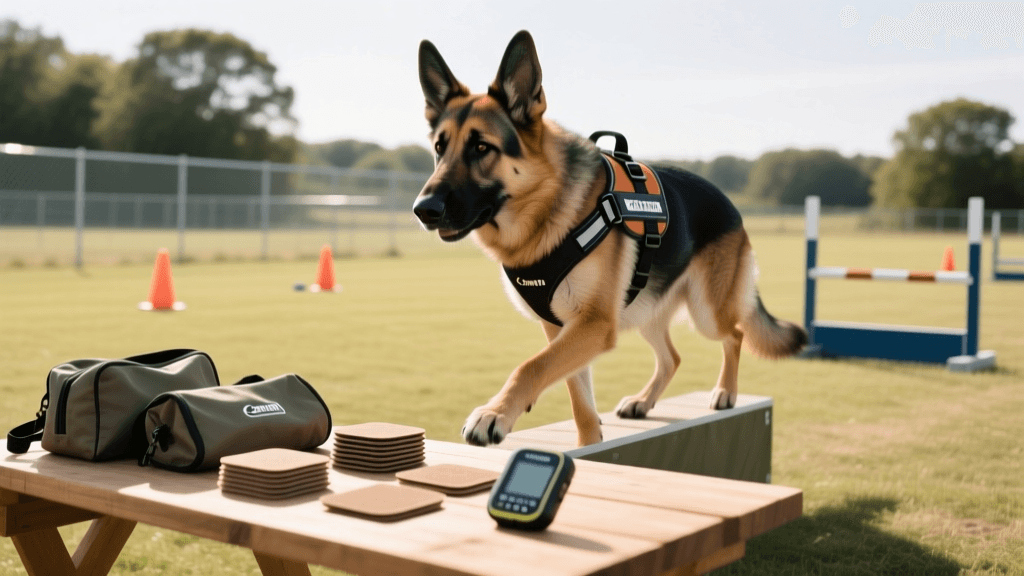
While scent work is famously a 'minimal gear' sport compared to agility or obedience, having the right equipment is crucial for clear communication and canine comfort. In 2026, manufacturers have released updated versions of harnesses and treat delivery systems specifically designed for the fluid movements required in search areas.
| Gear Category | Top Pick for 2026 | Key Features | Best For |
|---|---|---|---|
| Competition Harness | Julius-K9 IDC Powerharness | Customizable patches, ergonomic chest strap, sturdy handle. | Dogs needing clear 'work mode' cues and handler support. |
| Lightweight Harness | Ruffwear Web Master | Five-point adjustable fit, dual leash attachment, breathable mesh. | Agile dogs and complex exterior searches requiring mobility. |
| Treat Pouch | Doggy Bag Pro 2026 Edition | Magnetic silent closure, multiple compartments, waterproof liner. | Handlers needing rapid, silent reward delivery during searches. |
| Odor Vessel Kit | NACSW Approved Stainless Tubes | Magnetic mounts, waterproof, odor-proof when sealed. | Official trial prep and advanced hide placement training. |
Selecting the Right Harness
Your harness serves two purposes: it provides safety and support, and it acts as a contextual cue for your dog. When you put on the search harness, your dog should immediately understand that it is time to hunt. The Julius-K9 IDC remains a top choice for many handlers in 2026 because of its rigid handle, which is invaluable when guiding large dogs over rough exterior terrain or helping smaller dogs reach elevated hides. However, for dense brush searches or vehicle searches where a bulky harness might snag, the streamlined Ruffwear Web Master is highly recommended.
Treat Delivery Systems
In scent work, timing is everything. When your dog indicates the source of the odor, you must reward them at the source within seconds to build value for the hide. Fumbling with zippers or velcro (which can startle sensitive dogs) ruins the training moment. Modern magnetic-closure pouches allow for silent, instant access to high-value rewards like freeze-dried liver or chicken.
Understanding Scent Cone Dynamics and Environmental Factors
To train effectively for 2026 competitions, handlers must understand the physics of scent. When a target odor (such as Birch, Anise, or Clove) is placed in a search area, it does not sit in a static bubble. Instead, it creates a 'scent cone' that disperses based on airflow, temperature, and humidity.
As detailed in AKC Expert Advice on Scent Work, environmental factors heavily dictate how a dog must work a room. In an interior search with air conditioning, the scent might be pulled across the floor and pool in corners. In an exterior search on a hot summer day, thermal lift will carry the odor high into the air, requiring your dog to work elevated surfaces or even catch the scent on the wind from a distance. Training your dog to work the 'fringes' of the scent cone and track it back to the source is the hallmark of an elite competition team.
Step-by-Step Training Progression
Building a reliable search dog takes time, patience, and a systematic approach. Here is the proven progression for preparing your dog for the 2026 trial season:
Phase 1: Odor Imprinting
Before your dog can search, they must learn what they are looking for. Imprinting pairs the target essential oil with a high-value food reward. Using a 'hide box' or a specialized odor vessel, you present the scent and immediately feed the dog at the source. This phase is repeated until the dog offers a specific behavior (like a sit, a down, or a sustained nose freeze) solely to access the odor.
Phase 2: The Search Command and Pattern Training
Once the odor has value, you introduce the search cue (e.g., 'Find it' or 'Search'). Start in small, low-distraction environments like your living room. Place the hide in plain sight, then gradually move it to corners, under chairs, and behind doors. Teach your dog to systematically check the perimeter of a room before moving to the center.
Phase 3: Adding Complexity and Elevation
Competition hides are rarely on the floor. You must introduce elevation early in your training. Place hides on chair legs, door handles, and tree branches. This teaches the dog to work in three dimensions and prevents 'floor-sniffing' habits. In 2026, judges are increasingly utilizing complex elevated hides in the Excellent and Master classes to test a dog's ability to track thermal lift.
Phase 4: Proofing and Distractions
A trial environment is full of distractions: other dogs, food crumbs, strange noises, and nervous handlers. You must 'proof' your dog's search by introducing intentional distractions. Place high-value food or interesting toys in the search area alongside the target odor. Your dog must learn to ignore these distractors and only alert on the essential oil.
Trial Day Strategy and Canine Conditioning
Showing up to a trial requires as much strategy as the training itself. The environment of a scent work trial can be highly stimulating, with dozens of dogs crated in close proximity. Developing a robust 'crating protocol' is essential. Your dog should view their crate as a sanctuary where they can decompress between searches. Use white noise machines or calming pheromone sprays to help block out the ambient noise of the trial grounds.
The Warm-Up Routine
Never take a 'cold' dog into the search ring. About fifteen minutes before your run time, take your dog out for a physical and mental warm-up. Do a quick, easy 'find it' game with a known toy or a simple food scatter in the grass to engage their nose and get blood flowing to the olfactory bulb. Practice your start-line routine: put on the harness, give your focus cue, and wait for your dog to offer eye contact before crossing the threshold into the search area.
Leash Handling in the Ring
One of the most common reasons for disqualification or 'Not Qualifying' (NQ) scores in 2026 trials is poor leash handling. The leash should be a communication tool, not a steering wheel. Keep a loose 'J' curve in the leash at all times. If you pull your dog away from a hide they are investigating, you risk breaking their concentration or accidentally signaling that they are wrong. Trust your dog's nose, follow their lead, and only use the leash to gently guide them away from out-of-bounds areas.
Conclusion: A Lifelong Journey
Scent work is more than just a competition; it is a profound way to bond with your dog by honoring their natural instincts. As you prepare for the 2026 AKC and NACSW seasons, remember that every dog learns at their own pace. Celebrate the small victories, prioritize your dog's physical and mental well-being, and enjoy the incredible journey of watching your canine partner unlock the invisible world of scent. With the right gear, a solid training foundation, and a strategic approach to trial day, you and your dog are well on your way to earning those coveted ribbons and titles.
tom-renshaw
All our authors care for dogs every day — read more of their work on the authors page.