Sniffspot Private Yards for Reactive Dog Training in 2026
Master leash reactivity in 2026 using Sniffspot private yards. Learn the engage-disengage protocol, threshold management, and essential gear for anxious dogs.
The Rise of Urban Leash Reactivity in 2026
As we navigate the dog ownership landscape of 2026, urban density and the lingering behavioral echoes of the early-2020s puppy boom have made leash reactivity one of the most common challenges faced by modern pet parents. Reactivity—characterized by barking, lunging, or freezing in the presence of triggers like other dogs, strangers, or fast-moving vehicles—is not a sign of a 'bad' dog. Rather, it is a manifestation of deep-seated anxiety and an overactive amygdala. For dogs suffering from leash reactivity, the traditional advice of simply 'walking them more' often backfires, leading to chronic stress and a breakdown of the human-canine bond.
According to the American Veterinary Society of Animal Behavior (AVSAB), positive reinforcement and carefully managed environmental exposure are the absolute gold standards for treating fear-based behaviors. Aversive tools and forced exposure (flooding) only suppress warning signs while increasing internal panic. To truly rehabilitate a reactive dog, trainers and behaviorists in 2026 are heavily relying on controlled, trigger-free environments to establish foundational skills before gradually introducing stimuli. This is where private yard rentals have revolutionized the behavioral conditioning space.
Why Sniffspot is the Ultimate Controlled Environment
Platforms like Sniffspot have evolved from simple off-leash play areas into indispensable tools for professional dog trainers and dedicated owners. Often described as the 'Airbnb for dog yards,' Sniffspot allows you to rent private, fenced-in spaces by the hour. For a reactive dog, the unpredictability of public parks or busy sidewalks is a recipe for cortisol stacking. You cannot control when an off-leash dog might round a corner or when a delivery truck might backfire.
By renting a private Sniffspot, particularly one with acreage or a partially fenced boundary that allows for distant visual access to the outside world, you gain total control over the training environment. This controlled setting allows you to practice desensitization and counter-conditioning (DS/CC) protocols without the constant threat of an unexpected trigger pushing your dog over their stress threshold.
The Engage-Disengage Protocol: Step-by-Step
The Engage-Disengage game, originally developed by Leslie McDevitt, is a cornerstone of reactive dog training. It teaches the dog that noticing a trigger predicts a high-value reward, effectively rewiring their emotional response from 'threat' to 'opportunity.' Here is how to execute this protocol effectively within a private yard setting in 2026.
Phase 1: Decompression and Baseline Setting
Before any active training begins, your dog must decompress. Upon arriving at your rented Sniffspot, allow your dog 10 to 15 minutes of unstructured exploration on a 15-foot long line. Sniffing is a naturally calming behavior that lowers a dog's heart rate and engages their parasympathetic nervous system. Do not issue commands during this time. Let them map the environment, mark their territory, and process the novel scents. Only once you see relaxed body language—loose wagging, soft eyes, and a relaxed jaw—should you begin your training session.
Phase 2: Pattern Games and Orientation
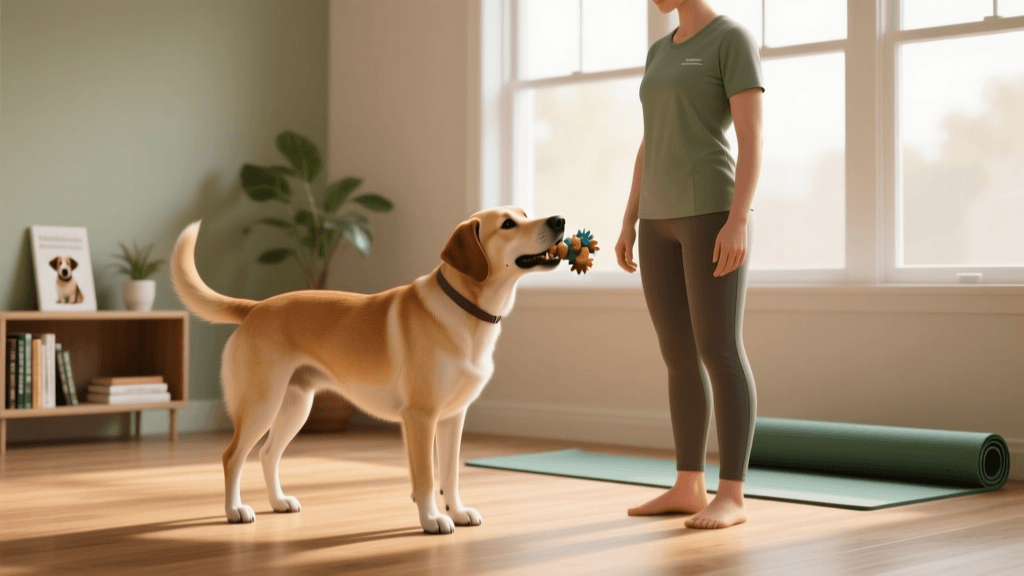
Before introducing a real trigger, practice the mechanics of the game using neutral stimuli. Place a traffic cone or a stationary object at the edge of the yard. When your dog looks at the cone, mark the behavior with a clicker or a verbal marker like 'Yes!' and immediately deliver a high-value treat (such as freeze-dried beef liver or boiled chicken) directly to their mouth. Repeat this until the dog consistently looks at the cone and immediately whips their head back to you in anticipation of the reward. This builds a strong reinforcement history for the 'engage-disengage' loop.
Phase 3: Introducing Sub-Threshold Triggers
Once the mechanics are solid, it is time to introduce a real trigger at a sub-threshold distance. If you have rented a large Sniffspot that borders a quiet road or a distant walking trail, position yourself far enough away that your dog notices the trigger (a distant dog or person) but does not react with barking or lunging. This is known as being 'under threshold.'
Reactivity is not disobedience; it is a panic response. Our goal in 2026 is not to suppress the growl, but to change the underlying emotional response to the trigger through sub-threshold exposure.
When your dog spots the distant trigger, mark the exact moment they look at it, and reward them when they turn back to you. If your dog stares intensely, stiffens, or refuses the treat, you are too close. Immediately increase the distance. The core principles of Fear Free Pets emphasize that giving the animal agency and the ability to retreat is vital for long-term behavioral modification. Never force a reactive dog to endure a trigger at a distance that causes panic.
Essential Gear for Reactive Dog Management
Success in reactive dog training relies heavily on having the right equipment. In 2026, the market offers highly specialized gear designed to maximize safety and comfort for anxious dogs. Below is a comparison of the essential tools you should bring to your Sniffspot sessions.
| Gear Category | Top 2026 Recommendation | Why It Works for Reactivity | Estimated Cost |
|---|---|---|---|
| Harness | Rabbitgoo No-Pull (2026 Edition) | Front-clip attachment redirects forward momentum safely without choking the dog during a sudden lunge. | $35 - $45 |
| Long Line | DoggyManor Biothane 15ft Line | Biothane is waterproof, dirt-proof, and doesn't tangle or burn your hands like nylon when the dog pulls. | $40 - $60 |
| Treat Pouch | Froggypod Magnetic Closure Pouch | Silent magnetic closure prevents the 'zipper noise' that can startle anxious dogs; allows lightning-fast treat delivery. | $25 - $30 |
| Calming Aid | Adaptil Calm On-The-Go Collar | Releases synthetic dog-appeasing pheromones to help lower baseline anxiety during novel environment exposure. | $20 - $25 |
Understanding Cortisol Stacking and Recovery
One of the most critical concepts in modern behavioral conditioning is 'cortisol stacking.' When a dog encounters a trigger, their body releases cortisol and adrenaline to prepare for a fight-or-flight response. If the dog encounters multiple triggers in quick succession—such as a loud truck, followed by a barking dog, followed by a stranger approaching—the stress hormones compound. It can take up to 72 hours for a dog's cortisol levels to return to baseline after a severe reactive episode.
This is why renting a private Sniffspot is so highly recommended. By eliminating the random, uncontrollable triggers of public spaces, you prevent cortisol stacking. Furthermore, keep your training sessions short. A 15 to 20-minute session of intense cognitive work is far more beneficial—and less exhausting—than an hour of stressful exposure. End the session on a positive note with a 'sniffari' or a simple game of find-it in the grass to help the dog decompress before loading them back into the car.
Common Mistakes to Avoid
Even with the best intentions, owners often make critical errors that hinder their dog's progress. Avoid these common pitfalls during your private yard training sessions:
- Working Over Threshold: If your dog is barking, lunging, or refusing high-value treats, they are over threshold. The learning center of the brain (the prefrontal cortex) has shut down. Increase distance immediately.
- Using Aversive Tools: Prong collars, e-collars, and choke chains suppress the outward symptoms of reactivity (the bark) but do nothing to change the internal fear. This often leads to a dog that bites 'without warning' later on.
- Inconsistent Marking: Timing is everything. You must mark the behavior within half a second of the dog noticing the trigger. Late marking can accidentally reinforce the dog staring or fixating on the threat.
- Ignoring the Handler's Anxiety: Dogs are incredibly adept at reading human body language. If you tense up, hold your breath, or shorten the leash when you see a trigger, your dog will assume there is something to be afraid of. Practice deep breathing and keep your leash loose.
Final Thoughts on Empowering Your Anxious Dog
Managing a reactive dog in 2026 requires patience, empathy, and strategic environmental management. By leveraging private spaces like Sniffspot, you are providing your dog with the safety and predictability they desperately need to learn that the world is not a threatening place. Remember that behavioral modification is a marathon, not a sprint. Celebrate the micro-victories—a moment of eye contact, a relaxed ear flick, or a willing recall—and trust the science of desensitization. With consistent, positive reinforcement and the right controlled environment, your anxious dog can learn to navigate the world with confidence and calm.
marcus-aldridge
All our authors care for dogs every day — read more of their work on the authors page.