Training Quiet Apartment Dog Breeds: Full 2026 Guide
Discover 2026 training methods to keep quiet apartment dog breeds calm. Learn hallway desensitization and the quiet command for peaceful city living.
Introduction to Urban Canine Living in 2026
As urban landscapes continue to evolve in 2026, apartment living has become the primary housing choice for millions of dog owners. Modern apartment complexes offer incredible amenities, but they also present unique acoustic and spatial challenges for our canine companions. While many prospective owners seek out naturally quiet dog breeds to avoid noise complaints and maintain a peaceful environment, simply adopting a low-vocalization breed is not enough. Even the most stoic hounds and gentle spaniels require specialized, apartment-specific training to navigate shared walls, busy hallways, and close-proximity elevator encounters.
In this comprehensive 2026 guide, we will explore the specific training protocols required to maintain the calm demeanor of quiet apartment breeds. From hallway desensitization to mastering the 'Place' command, these techniques will ensure your dog remains a welcomed and stress-free resident in any multi-family housing community.
The Myth of the 'Zero-Training' Quiet Breed
A common misconception among first-time apartment dwellers is that choosing a breed known for being quiet equates to a 'zero-training' lifestyle. While breeds like the Greyhound, Cavalier King Charles Spaniel, and Basenji are genetically predisposed to bark less frequently than terriers or herding dogs, they are not immune to environmental stressors. In fact, many quiet breeds internalize their stress, which can manifest as destructive chewing, pacing, or sudden reactivity if left unaddressed.
According to the American Kennel Club's overview of apartment-friendly breeds, a dog's suitability for apartment living relies just as much on their training and socialization as it does on their genetic baseline. A quiet dog that is terrified of hallway footsteps will eventually develop anxiety-based vocalizations or neurotic behaviors. Therefore, proactive behavioral conditioning is mandatory for maintaining a harmonious living space.
Breed-Specific Apartment Triggers and Training Needs
Different quiet breeds process apartment stimuli in unique ways. Understanding your dog's specific psychological profile is the first step in designing an effective 2026 training regimen.
1. The Greyhound: Sensitivity to Sudden Acoustics
Greyhounds are famously known as '45-mph couch potatoes.' They rarely bark and are incredibly docile indoors. However, their deep-chested build and sighthound heritage make them highly sensitive to sudden, sharp noises—such as a neighbor dropping a heavy object on the floor above or the sudden clank of the building's HVAC system engaging. Training must focus on acoustic desensitization and creating a 'safe zone' where they can retreat when startled.
2. Cavalier King Charles Spaniel: Separation Anxiety in Small Spaces
Cavaliers are exceptionally quiet and deeply bonded to their owners. In an apartment setting, their primary trigger is not noise, but isolation. When left alone in a compact space, they may develop separation anxiety, leading to whining or scratching at the door. Training must prioritize incremental departure conditioning and interactive enrichment to build their confidence when solo.
3. The Basenji: Impulse Control and the 'Yodel'
The Basenji is famously 'barkless' due to the unique shape of its larynx. However, they are not silent; they produce a distinctive yodel or 'baroo' when excited or frustrated. In an apartment, a Basenji's high prey drive and curiosity can lead to intense frustration if they spot a squirrel from the window or hear a dog in the hallway. Impulse control training and the 'Quiet' command are essential to manage their vocal yodeling.
4. Shiba Inu: Door-Darting and Stubborn Reactivity
Shibas are fastidious, cat-like dogs that rarely bark without a profound reason. Their apartment challenge lies in their independence and tendency to door-dart. When the apartment door opens for a delivery or a guest, a Shiba may attempt to bolt into the shared hallway, which is a massive safety risk and a nuisance to neighbors. Strict threshold training is non-negotiable for this breed.
Hallway Desensitization: The 2026 Protocol
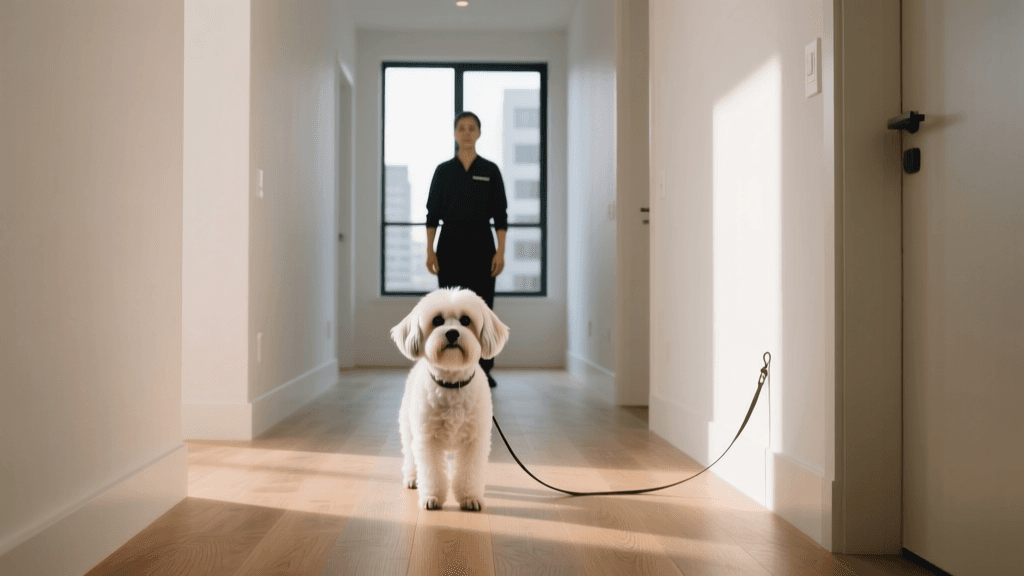
The shared hallway is the primary source of anxiety for apartment dogs. Footsteps, rolling luggage, and muffled conversations can trigger a dog's territorial instincts. To combat this, we utilize a modernized approach to counterconditioning, leveraging 2026 smart home technology.
The ASPCA's guidelines on desensitization and counterconditioning emphasize exposing the dog to a trigger at a sub-threshold level while pairing it with high-value rewards. Here is how to execute this in an apartment:
- Step 1: Audio Mapping. Use a smart speaker to play recordings of hallway sounds (footsteps, doors closing, elevator dings) at a very low volume while your dog is eating or playing.
- Step 2: The Treat Scatter. The moment the audio plays, scatter high-value treats (like freeze-dried salmon or chicken) on a snuffle mat. This shifts the dog's emotional response from 'alert' to 'foraging'.
- Step 3: Volume Escalation. Over several weeks, gradually increase the volume of the audio. If your dog shows signs of stress (panting, lip licking, ear pinning), lower the volume immediately.
- Step 4: Live Environment Application. Once your dog is relaxed with the audio, sit near your actual apartment door. When you hear a real neighbor walk by, calmly feed a treat before your dog has the chance to react.
Mastering the 'Place' Command for Close Quarters
In a multi-family building, maintenance workers, delivery personnel, and guests will frequently approach your door. The 'Place' command is a vital management tool that instructs your dog to go to a specific mat or bed and remain there until released.
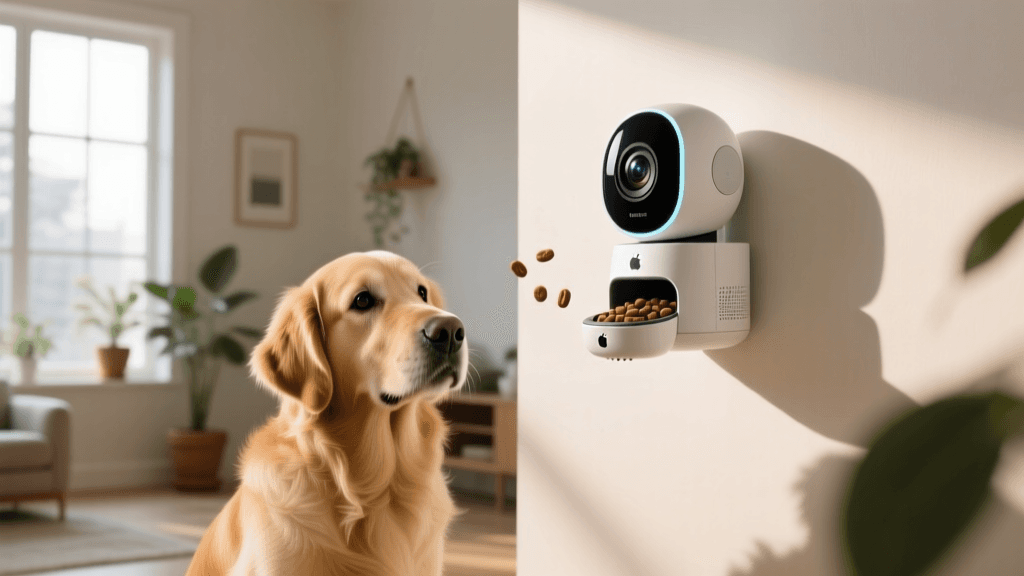
Unlike a simple 'sit' or 'down,' 'Place' provides a clear physical boundary. To train this, select a raised cot or a specific textured mat. Lure your dog onto the mat, mark the behavior with a clicker or a verbal 'Yes,' and reward. Gradually increase the duration and distance. By 2026, many trainers recommend using automated treat dispensers equipped with AI cameras to remotely reward your dog for staying on their 'Place' while you are at work or answering the door, reinforcing the behavior even when you are across the room.
Window Reactivity and Visual Barriers
Many apartments feature large, ground-to-ceiling windows. While great for natural light, they act as television screens for your dog, broadcasting triggers like passing dogs, pedestrians, and wildlife. Even quiet breeds can develop chronic stress from unmanaged window reactivity.
Training should involve teaching a 'Leave It' command directed at the window, but environmental management is equally crucial. Apply frosted window film to the bottom half of the glass, or use smart blinds that automatically close during peak pedestrian hours. This reduces the visual stimulus, allowing your dog to relax without needing constant behavioral correction.
Elevator and Lobby Etiquette
Elevators are confined, unpredictable metal boxes that force dogs into close proximity with strangers. For quiet, reserved breeds like the Shiba Inu or Greyhound, this can be deeply unsettling.
Train your dog to enter the elevator and immediately move to the back corner, sitting or lying down facing the wall or you, rather than staring at the door. Use a specific cue like 'Elevator Corner' and reward heavily for calm behavior in that specific spot. If your dog is highly sensitive to the presence of strangers, consider using a 'Do Not Pet' patch on their harness to politely signal to neighbors that your dog is in training and requires space.
Apartment Trigger Training Matrix
Use the following matrix to identify your dog's specific apartment triggers and apply the correct 2026 training protocol.
| Apartment Trigger | Breed Most Affected | Training Protocol | Expected Timeline |
|---|---|---|---|
| Hallway Footsteps | Greyhound, Basenji | Audio Desensitization & Treat Scattering | 4 to 6 Weeks |
| Doorbell / Knocking | Cavalier, Shiba Inu | 'Place' Command & Threshold Management | 3 to 5 Weeks |
| Elevator Proximity | Shiba Inu, Sighthounds | Corner Targeting & Desensitization | 6 to 8 Weeks |
| Window Reactivity | Basenji, Terrier Mixes | Visual Barriers & 'Leave It' Command | 2 to 4 Weeks |
| Isolation / Departure | Cavalier King Charles | Incremental Departure & Enrichment | 8 to 12 Weeks |
Leveraging 2026 Smart Tech for Consistency
Modern technology has revolutionized how we manage apartment dog behavior. In 2026, biometric smart collars can track your dog's Heart Rate Variability (HRV) and stress markers in real-time. By monitoring your dog's biometric data via your smartphone, you can identify exactly which apartment noises cause a spike in anxiety before your dog even begins to pace or whine, allowing you to intervene proactively with a calming treat or a white noise machine.
Furthermore, the Humane Society's resources on curbing excessive barking highlight the importance of addressing the root cause of vocalization rather than just punishing the symptom. Smart home routines can now be programmed to automatically trigger calming pheromone diffusers and play classical music when your smart lock detects you have left the apartment, creating a soothing environment that prevents separation anxiety before it begins.
Conclusion
Living in an apartment with a quiet dog breed is a deeply rewarding experience, but it requires a proactive, educated approach to training. By understanding your dog's breed-specific triggers, implementing rigorous hallway desensitization, and leveraging modern 2026 smart home technology, you can ensure your canine companion remains calm, confident, and perfectly adapted to urban life. Remember that a quiet dog is not necessarily a relaxed dog; true peace in an apartment comes from a dog that feels safe, trained, and secure in their environment.
hannah-wickes
All our authors care for dogs every day — read more of their work on the authors page.