Joint Supplements For Agility Training Dogs: 2026 Guide
Learn how to time joint supplements for agility training dogs in 2026. Maximize mobility and recovery with our expert supplement and workout guide.
The Biomechanics of Canine Agility and Joint Stress
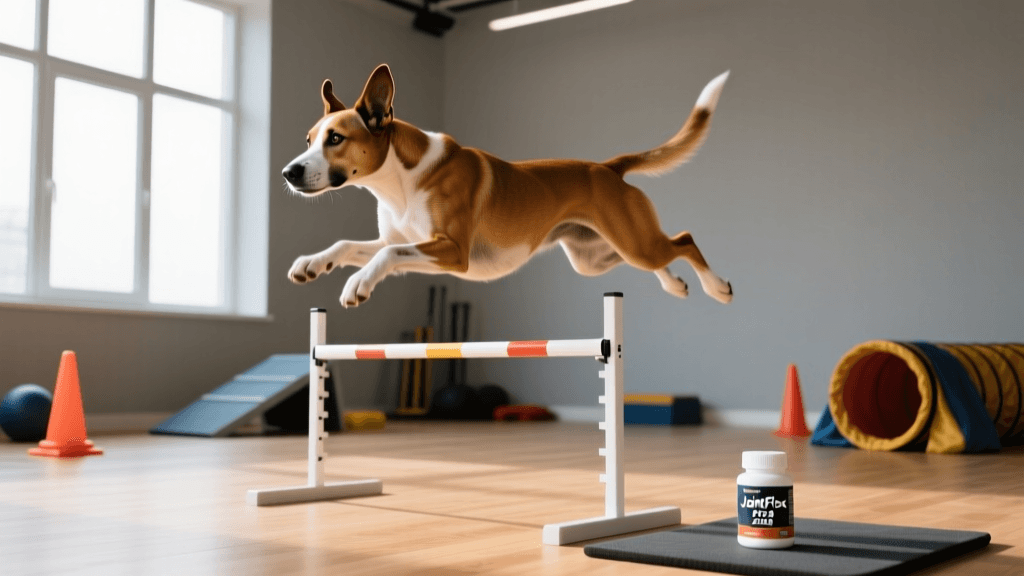
As we navigate the competitive and recreational landscape of 2026, canine agility and advanced obedience training have reached new heights of athletic demand. Dogs are running faster, turning tighter, and executing complex obstacles with incredible precision. However, this high-level performance places immense biomechanical stress on a dog's articular cartilage, synovial fluid, and supporting ligaments. According to the American Kennel Club (AKC), agility requires dogs to absorb forces equivalent to several times their body weight upon landing from jumps, weaving through poles, or descending the steep incline of the A-frame. For active sporting dogs, senior competitors, and even weekend warriors, integrating a targeted joint supplement protocol into their daily training regimen is no longer optional. It is a fundamental pillar of preventative canine sports medicine and long-term behavioral conditioning, ensuring your dog remains physically comfortable and mentally eager to train.
The 2026 Standard: Evidence-Based Joint Supplements
In 2026, veterinary sports medicine has moved far beyond basic glucosamine and chondroitin formulations. While those traditional ingredients still have a place in general senior care, high-drive agility and obedience dogs require advanced, bioavailable compounds that actively modulate inflammation and support synovial fluid viscosity. When building a supplement stack for a training dog, you must focus on ingredients that address both the micro-trauma of repetitive impact and the systemic inflammatory response caused by intense physical exertion.
Undenatured Type II Collagen (UC-II)
Unlike hydrolyzed collagen, which acts as a building block, UC-II works through a fascinating immune mechanism known as oral tolerance. When administered on an empty stomach, UC-II interacts with the Peyer's patches in the dog's gut-associated lymphoid tissue. This interaction trains the immune system to stop attacking the dog's own articular cartilage, significantly reducing joint degradation during high-impact agility training. It is highly effective at micro-doses (typically 40mg for dogs) and is a staple for 2026 canine athletes.
New Zealand Green-Lipped Mussel (GLM)
Green-Lipped Mussel extract is prized for its unique fatty acid profile, specifically eicosatetraenoic acid (ETA). Unlike the standard EPA and DHA found in fish oils, ETA actively inhibits the lipoxygenase (LOX) inflammatory pathway. For a dog performing repetitive jump grids or explosive obedience retrieves, GLM helps manage the acute soft-tissue inflammation that occurs post-training without suppressing the immune system or causing gastrointestinal upset.
Hyaluronic Acid (HA) and Boswellia Serrata
Hyaluronic acid is a primary component of synovial fluid, acting as a shock absorber and lubricant within the joint capsule. Oral HA supplements in 2026 utilize advanced molecular weight formulations designed to survive the canine digestive tract and reach the joints intact. Paired with Boswellia Serrata, a potent herbal extract that blocks the 5-LOX enzyme, this combination provides immediate comfort and joint fluidity, allowing older dogs to maintain their rear-end awareness and hind-end drive during complex obedience heelwork.
Supplement Comparison Chart for Active Dogs
| Active Ingredient | Primary Mechanism of Action | Ideal Training Phase | Administration Timing |
|---|---|---|---|
| UC-II Collagen | Immune modulation (Oral Tolerance) | Long-term cartilage preservation | Fasting (Morning or before bed) |
| Green-Lipped Mussel | LOX pathway inflammation inhibition | Heavy jump grids, A-frame work | With meals (Fat-soluble) |
| Hyaluronic Acid | Synovial fluid lubrication | Weave poles, tight turning drills | With meals or post-training |
| Boswellia Serrata | 5-LOX enzyme blocking | Recovery days, senior dog training | With meals (Divided doses) |
Strategic Timing: When to Administer Supplements
The efficacy of joint supplements is heavily dependent on timing. Simply tossing a chewable tablet into your dog's food bowl at random intervals will not yield the biomechanical support required for agility training. To maximize the bioavailability and therapeutic effect of these compounds, you must align their administration with your dog's training schedule.
The Fasting Protocol for UC-II
Because Undenatured Type II Collagen relies on interaction with the gut's immune receptors, it must not be broken down by stomach acids and digestive enzymes meant for complex proteins. Administer UC-II supplements first thing in the morning, at least 30 to 45 minutes before your dog's breakfast, or late at night before bed. This ensures the compound reaches the small intestine intact to trigger the oral tolerance response.
Pre-Training Inflammatory Modulation
If you are scheduling a high-impact agility session, such as full-course runs or repetitive teeter-totter contacts, administer your Green-Lipped Mussel and Omega-3 fatty acids with your dog's meal roughly two to three hours prior to training. This allows the lipid-based anti-inflammatory compounds to enter the bloodstream and begin modulating the inflammatory response before the micro-trauma of the workout even begins.
Post-Training Synovial Support
After an intense training session, your dog's joints have experienced temporary compression and synovial fluid depletion. Providing a Hyaluronic Acid supplement alongside a high-protein recovery meal helps replenish joint lubrication and supports the immediate tissue repair process. The ASPCA notes that consistent joint support is vital for preventing the onset of osteoarthritis in active breeds, making post-workout nutrition a critical window for intervention.
Low-Impact Training Drills for Joint Preservation
Supplements alone cannot save a dog's joints if the training methodology is inherently destructive. In 2026, top canine sports medicine specialists, including researchers referenced by the FDA's veterinary health guidelines, emphasize the importance of 'flatwork' and low-impact conditioning. By modifying your training plan, you allow the supplements to repair and maintain the joints without fighting a losing battle against excessive impact.
Shadow Handling and Course Analysis
Shadow handling involves the handler running the agility course or performing obedience routines without the dog. This builds the handler's muscle memory, timing, and spatial awareness while allowing the dog to rest in a down-stay or crate. You can practice complex front crosses, blind crosses, and deceleration cues without subjecting your dog's carpus and stifle joints to unnecessary pounding on the turf or grass.
Ground-Level Cavaletti and Ladder Work
Rear-end awareness is crucial for agility dogs to safely navigate the dog-walk and A-frame. Instead of using elevated equipment for every repetition, utilize ground-level cavaletti poles or an agility ladder. This forces the dog to engage their core, lift their hind legs deliberately, and build the stabilizing muscles around the hips and stifles without any concussive landing forces. This is the perfect drill for senior dogs or puppies whose growth plates have not yet fused.
Scent Work as Active Recovery
On days when your dog's joints need a break from physical exertion, but their high-drive brain still requires stimulation, pivot to nose work or scent detection. Searching for birch, anise, or clove hides engages the dog's olfactory system and provides immense mental fatigue, fulfilling their training needs while allowing their articular cartilage to recover under the support of their daily joint supplement stack.
Surface Selection and Environmental Management
The environment in which you train plays a massive role in joint longevity. While modern 2026 agility trials often feature advanced, shock-absorbing artificial turf, many training facilities and backyard setups still rely on hard-packed dirt, slick grass, or concrete. Training on unforgiving surfaces negates the benefits of even the most expensive joint supplements. Always prioritize training on natural, well-maintained grass or specialized rubber-infill turf. If you must train on a slick surface, utilize canine paw wax for grip and limit the session to flat obedience work rather than jumping or tight turning drills.
Furthermore, a proper warm-up and cool-down routine is non-negotiable. Before any agility or obedience session, spend 10 minutes doing dynamic stretching, figure-8s through the legs, and slow trotting to increase blood flow to the synovial membranes. After training, a slow 15-minute walk helps flush lactic acid from the muscles, reducing the secondary tension that tight muscles place on the joints.
Monitoring Mobility: When to Adjust the Training Plan
Even with a perfect supplement protocol and low-impact drills, you must continuously monitor your dog's mobility. Watch for subtle signs of joint fatigue: a slight hesitation before entering the weave poles, a wider stance when sitting, or a reluctance to jump into the vehicle after a session. If you notice these behavioral shifts, it is a clear signal that the current training volume exceeds the dog's physical capacity, regardless of their supplement intake. Consult with a certified canine rehabilitation therapist to adjust your exercise regimen and potentially introduce therapeutic laser or hydrotherapy.
Conclusion
Training a dog for agility, advanced obedience, or any high-drive sport is a profound commitment that extends far beyond the course itself. As we look at the best practices for 2026, it is clear that joint health is inextricably linked to a dog's willingness, confidence, and ability to learn and perform. By strategically timing advanced supplements like UC-II and Green-Lipped Mussel, embracing low-impact flatwork drills, and carefully managing your training surfaces, you ensure that your canine partner remains sound, happy, and ready to tackle the next challenge for years to come. Remember, a comfortable dog is an attentive dog, and preserving their physical foundation is the ultimate act of training advocacy.
anouk-beaumont
All our authors care for dogs every day — read more of their work on the authors page.