Best 2026 Joint Recovery Routines for Agility Dogs
Discover the best 2026 joint recovery routines for agility dogs. Learn about hydrotherapy, supplements, and sports massage to keep your competitor healthy.
The Physical Demands of the 2026 Agility Season
As we navigate the 2026 canine sports season, agility courses are faster, tighter, and more technically demanding than ever before. Modern agility requires dogs to execute rapid decelerations, sharp 180-degree turns, and explosive jumps that place immense biomechanical torque on their joints. The carpus (wrist), stifle (knee), and shoulder assemblies absorb the majority of this impact. Without a structured, science-backed recovery routine, even the most elite canine athletes are at risk of early-onset osteoarthritis, soft tissue strains, and chronic joint fatigue.
For handlers and competitors, understanding the intersection of veterinary rehabilitation and sports conditioning is no longer optional; it is a necessity. According to the international competition standards outlined by the Fédération Cynologique Internationale (FCI), the physical welfare of the dog is paramount, and proactive joint management is the cornerstone of a long, successful career. This guide explores the most effective, cutting-edge joint recovery routines for agility dogs in 2026, combining hydrotherapy, targeted bodywork, and advanced nutritional support.
Core Joint Recovery Routines for Canine Athletes
1. Canine Hydrotherapy and Underwater Treadmills
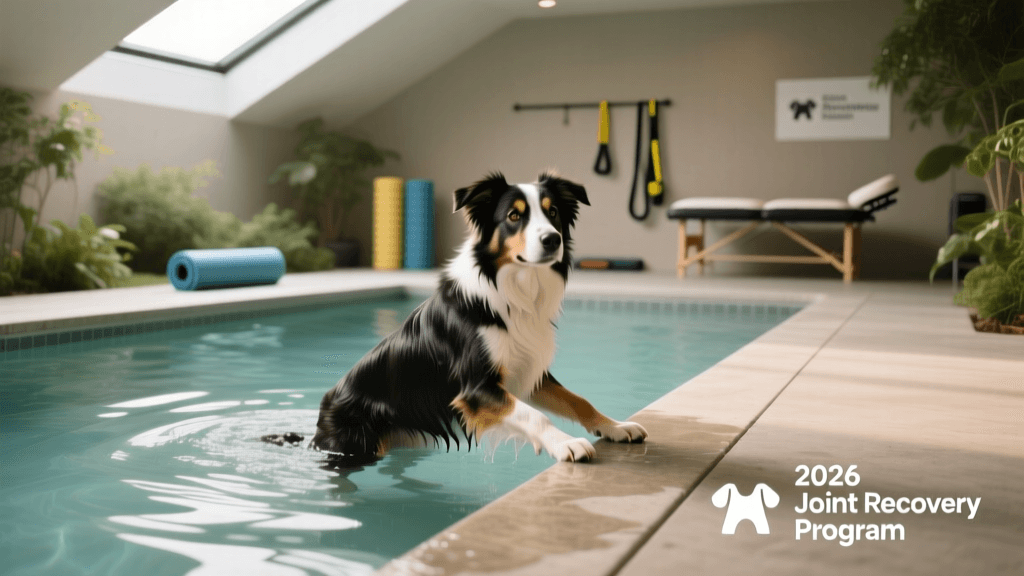
Hydrotherapy remains the gold standard for canine joint recovery in 2026. The buoyancy of water significantly reduces weight-bearing stress on compromised or fatigued joints, while the hydrostatic pressure helps decrease localized edema and inflammation. For agility dogs, there are two primary modalities used in modern rehabilitation centers:
- Underwater Treadmills (UWTM): Ideal for gait re-education and building specific muscle groups without concussive impact. In 2026, variable-resistance jet systems allow therapists to tailor the drag coefficient, forcing the dog to engage their core and stabilizing muscles while maintaining a controlled, low-impact stride.
- Therapeutic Swimming Pools: Better suited for cardiovascular conditioning and global range-of-motion exercises. The water temperature is typically maintained between 83°F and 88°F to promote vasodilation, which increases blood flow to damaged tissues and accelerates the removal of metabolic waste products like lactic acid.
For a competitive agility dog, a 15-to-20-minute UWTM session twice a week during the peak competition season can drastically reduce recovery time between trial weekends.
2. Targeted Sports Massage and Myofascial Release
While joint health is heavily dependent on cartilage and synovial fluid, the muscles and fascia that cross those joints dictate their alignment and function. Tight iliopsoas muscles, for example, can alter a dog's pelvic tilt, leading to abnormal wear on the hips and stifles. Canine sports massage in 2026 has evolved beyond simple petting; it involves precise myofascial release, trigger point therapy, and effleurage techniques.
Focus areas for agility dogs include the epaxial muscles (which stabilize the spine during weave pole entries), the triceps and biceps brachii (which absorb the shock of jump landings), and the semitendinosus (crucial for explosive propulsion). Regular sessions with a certified canine rehabilitation therapist help maintain tissue elasticity, prevent compensatory movement patterns, and ensure the joints track correctly during high-speed maneuvers.
3. Active Recovery and Proprioception Drills
Rest is important, but 'active recovery' is superior for joint health. Proprioceptive exercises stimulate the mechanoreceptors within the joint capsules and surrounding ligaments, improving the dog's spatial awareness and neuromuscular control. Using equipment like FitPAWS balance pods, inflatable peanuts, and cavaletti poles, handlers can guide their dogs through slow, controlled movements. Walking over raised cavaletti poles at a walking pace forces the dog to consciously articulate each joint through its full range of motion, promoting synovial fluid circulation without the concussive forces of running.
Top Joint Supplements for Agility Dogs (2026 Formulations)
Nutraceuticals play a vital role in mitigating inflammation and providing the building blocks for cartilage repair. The 2026 market has shifted away from basic, low-absorption glucosamine blends toward highly bioavailable, multi-modal joint support formulas. Below is a comparison of the most effective joint supplements for canine athletes:
| Active Ingredient | Primary Benefit | Ideal Scenario | 2026 Veterinary Consensus |
|---|---|---|---|
| UC-II (Undenatured Type II Collagen) | Modulates the immune system to prevent the destruction of joint cartilage. | Dogs with early signs of autoimmune-mediated joint degradation or chronic osteoarthritis. | Highly recommended for its low dosage requirement and high efficacy in reducing pain scores. |
| Green-Lipped Mussel (GLM) | Provides a rich source of ETA (eicosatetraenoic acid), a potent anti-inflammatory omega-3. | Post-trial inflammation and general joint stiffness. | Preferred over standard fish oil for targeted joint inflammation due to its unique ETA profile. |
| Hyaluronic Acid (HA) | Increases the viscosity of synovial fluid, improving joint lubrication and shock absorption. | High-impact jumpers and dogs competing on artificial turf or hard surfaces. | Oral bioavailability has improved significantly in 2026 formulations; often paired with MSM. |
| Curcumin (Phytosome-bound) | Interrupts inflammatory pathways (COX-2) without the gastrointestinal side effects of NSAIDs. | Acute flare-ups after intensive competition weekends. | Must be phytosome-bound or formulated with piperine for adequate absorption in canines. |
When selecting a supplement, always look for products that carry the National Animal Supplement Council (NASC) seal of quality, ensuring the ingredient list matches the actual contents of the bottle. For comprehensive daily health monitoring and nutritional guidelines, the American Kennel Club (AKC) Health Hub remains an invaluable resource for competitors.
Recognizing Early Signs of Joint Fatigue
Agility dogs are notoriously stoic; they will often run through pain because their drive to work with their handler overrides their physical discomfort. By the time a dog is visibly limping, significant joint or soft tissue damage has already occurred. Handlers must become fluent in the subtle language of canine biomechanics. Early warning signs of joint fatigue include:
- Knocking Bars: A sudden increase in dropped jump bars, particularly on the back jump of a sequence, often indicates stifle or carpal fatigue.
- Wide Turns: Taking wider paths around jumps or tunnel entrances to avoid tight, painful spinal or hip flexion.
- Reluctance to Load: Hesitation when jumping into the car or onto a raised grooming table, which requires intense hip and shoulder extension.
- Altered Gait in the Ring: A shortened stride length or a 'bunny-hopping' gait when galloping between obstacles.
If you notice any of these micro-changes, it is imperative to pull the dog from competition and consult a veterinary sports medicine specialist immediately. The resources available through the AKC Agility community often include directories of certified canine rehabilitation veterinarians who specialize in sports injuries.
Building a Weekly Recovery Schedule
Integrating recovery into your training schedule is just as important as the agility training itself. Below is a sample weekly recovery protocol designed for an elite agility dog competing on weekends:
| Day | Activity Level | Recovery Focus |
|---|---|---|
| Monday | Active Recovery | 20-minute UWTM session (low speed, medium water level) + 15 mins myofascial release massage focusing on the hindquarters. |
| Tuesday | Light Training | Ground-level obstacle work (no jumps) + Cavaletti pole walking for proprioception + Joint supplement administration. |
| Wednesday | Moderate Training | Handling drills with lowered jump heights + Therapeutic swimming (10 mins) to flush metabolic waste. |
| Thursday | Rest / Stretching | Full rest from running. Passive range of motion (PROM) stretching exercises for all major joints + Curcumin dosing. |
| Friday | Pre-Trial Prep | Short, explosive motivation drills (max 3 mins) + Dynamic warm-up routines (trotting, figure-eights) to prime the joints. |
| Saturday | Competition | Thorough warm-up before runs, cooling down with 10-minute leash walks, and immediate post-run icing of carpal joints if indicated. |
| Sunday | Competition | Same as Saturday. Post-trial evening: Epsom salt paw soaks and gentle effleurage massage to promote lymphatic drainage. |
Conclusion
The 2026 agility season demands a holistic approach to canine health. By combining advanced hydrotherapy, precise sports massage, bioavailable joint supplements, and strict active recovery schedules, handlers can protect their dogs from the cumulative trauma of high-impact sports. Remember, a well-recovered dog is not only healthier but also faster, more confident, and more capable of achieving podium finishes. Prioritize joint health today to ensure your canine partner enjoys a long, vibrant, and pain-free life both on and off the agility course.
beth-carrasco
All our authors care for dogs every day — read more of their work on the authors page.