Affordable Dog Dental Care: Prevent Costly Vet Bills
Learn how to maintain your dog's dental health on a budget. Discover affordable toothpaste, brushing routines, and DIY tips to prevent costly vet bills.
The Hidden Cost of Canine Dental Disease
When we think about our dog's health, we often focus on diet, exercise, and vaccinations. However, one of the most critical—and frequently overlooked—aspects of canine wellness is oral hygiene. According to the American Veterinary Medical Association (AVMA), over 80 percent of dogs show signs of periodontal disease by the age of three. This progressive condition starts as plaque buildup, hardens into tartar, and eventually causes gum recession, tooth loss, and even systemic infections that can damage the heart, liver, and kidneys.
For budget-conscious pet owners, the financial reality of canine dental disease is staggering. A professional veterinary dental cleaning under general anesthesia typically ranges from $500 to $1,500, and severe cases requiring multiple extractions can easily exceed $3,000. Fortunately, with a proactive, budget-friendly at-home dental care routine, you can drastically reduce your dog's risk of periodontal disease and save thousands of dollars in unexpected veterinary bills over your pet's lifetime.
The True Cost: Professional Cleaning vs. At-Home Prevention
Understanding the financial difference between reactive veterinary treatments and proactive at-home care is the first step toward budget-friendly dog ownership. Below is a comparison of the estimated costs associated with canine dental care.
| Dental Care Item or Service | Estimated Cost | Frequency |
|---|---|---|
| Professional Vet Dental Cleaning (with Anesthesia) | $500 - $1,500 | Annually or Bi-annually |
| Dental X-Rays and Bloodwork (Pre-anesthesia) | $150 - $300 | With Cleaning |
| Surgical Tooth Extraction (Per Tooth) | $500 - $1,000+ | As Needed (Disease) |
| Enzymatic Dog Toothpaste and Brush Kit | $10 - $18 | Every 3-4 Months |
| VOHC-Approved Daily Dental Chews | $20 - $35 | Monthly |
| Dog-Safe Water Additive | $10 - $15 | Monthly |
As the table illustrates, investing roughly $40 to $60 a month in at-home preventive supplies is a fraction of the cost of a single professional cleaning or emergency dental surgery.
Building a Budget-Friendly Dental Kit
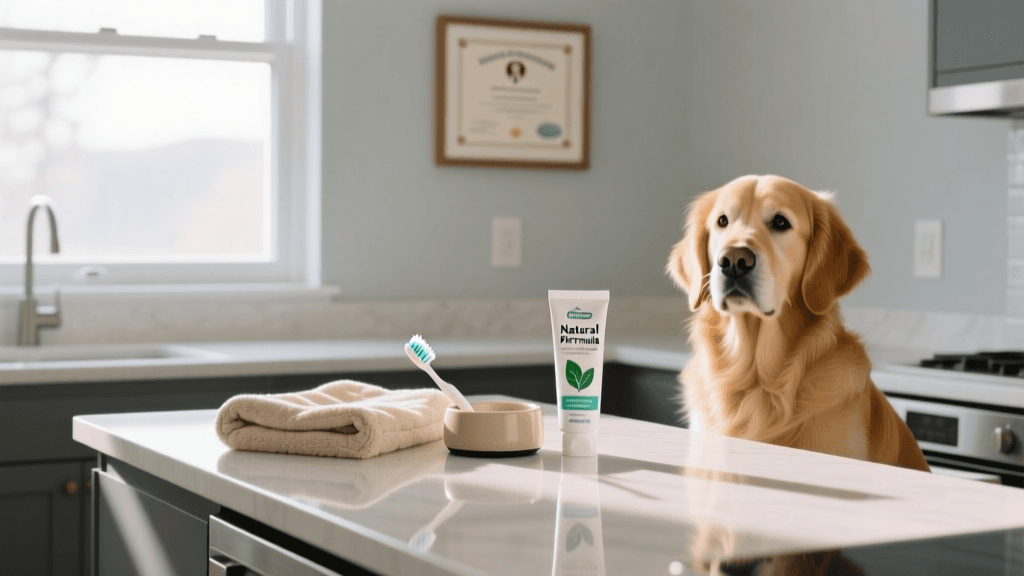
You do not need expensive gadgets to maintain your dog's oral health. A highly effective, low-cost dental kit requires only a few specific items. Never use human toothpaste, as ingredients like xylitol and fluoride are highly toxic to dogs.
1. Enzymatic Dog Toothpaste
Enzymatic toothpastes contain active ingredients that continue to break down plaque even after you finish brushing. A highly recommended and affordable option is the Virbac C.E.T. Enzymatic Dog Toothpaste, which typically costs between $10 and $14 per tube. It comes in dog-friendly flavors like poultry, beef, and seafood, making the experience more pleasant for your pet. A single tube, used correctly, will last three to four months for a medium-sized dog.
2. The Right Brush
Skip the expensive electric pet brushes. A dual-headed canine toothbrush or a simple silicone finger brush is all you need. The Curadent Finger Brush or generic silicone slip-on brushes cost around $5 to $8 and offer excellent control, allowing you to reach the back molars where tartar accumulates most rapidly. For small breeds, a pediatric soft-bristle toothbrush from your local pharmacy (costing under $3) also works brilliantly.
The 5-Minute Daily Brushing Routine
Consistency is far more important than duration. Brushing your dog's teeth for two to three minutes every single day is vastly superior to a vigorous ten-minute session once a week. Here is a step-by-step guide to establishing a stress-free, budget-friendly brushing routine.
- Step 1: Desensitization (Week 1). Let your dog lick a pea-sized amount of the enzymatic toothpaste off your finger. Do this daily so they associate the taste with a positive treat experience.
- Step 2: Introduce the Brush (Week 2). Apply the toothpaste to the finger brush or soft bristle brush. Allow your dog to lick it directly off the bristles. Gently rub the brush along their front canine teeth for just five seconds, then praise and reward.
- Step 3: Lift the Lip (Week 3). Gently lift your dog's upper lip to expose the premolars and molars. Brush in a circular motion at a 45-degree angle to the gumline, where plaque hides. Spend about 30 seconds on each side of the mouth.
- Step 4: Focus on the Outside. If your dog resists having the inside of their teeth brushed, do not force it. The dog's tongue naturally keeps the inner tooth surfaces relatively clean. The outer surfaces, particularly the upper premolars and lower molars, are where 90 percent of periodontal disease occurs.
By keeping sessions under five minutes and ending on a positive note with verbal praise or a quick game of fetch, you will build a lifelong habit that costs pennies a day but saves hundreds in vet bills.
Leveraging VOHC-Approved Chews and Water Additives
If your dog absolutely refuses a toothbrush, or if you want to supplement your brushing routine, dental chews and water additives are excellent secondary defenses. However, not all dental chews are created equal. Many cheap, rawhide-based chews sold in big-box stores pose choking hazards and offer zero clinical benefit.
When shopping on a budget, always look for the Veterinary Oral Health Council (VOHC) seal of acceptance on the packaging. The VOHC is an independent entity that evaluates pet dental products against strict scientific standards for plaque and tartar reduction.
Budget-Friendly VOHC Chews
Purina Pro Plan Dental Chewz and Pedigree Dentastix are among the most affordable VOHC-approved options on the market, often costing between $20 and $30 for a month's supply. These chews utilize a mechanical scraping action and specialized texture to reduce tartar buildup. Give one chew per day, preferably after your dog's dinner, to maximize the cleaning effect while they are still satiated and chew slowly.
Water Additives
Products like Tropiclean Fresh Breath Clean Teeth Oral Care Gel or standard water additives (approx. $12 per bottle) work by altering the pH of your dog's mouth, making it difficult for plaque-causing bacteria to adhere to the teeth. Simply add the measured capful to your dog's daily water bowl. It is a virtually effortless, low-cost way to provide continuous 24-hour protection.
Budget-Friendly Diet and Natural Alternatives
What you feed your dog plays a massive role in their dental health. While the idea that dry kibble automatically cleans teeth is largely a myth (most dogs swallow kibble whole or shatter it before it scrapes the gums), avoiding high-sugar and high-starch treats is crucial. Bacteria in the mouth feed on carbohydrates, producing the acids that destroy tooth enamel.
Instead of buying expensive, heavily processed training treats, utilize natural, teeth-cleaning alternatives from your local grocery store:
- Raw Carrots: A large, raw carrot is an excellent, low-calorie chew that provides mild mechanical scraping action. (Always supervise to prevent choking).
- Apple Slices: Crisp apples (with the core and seeds completely removed) contain malic acid, which naturally stimulates saliva production and helps wash away food particles.
- Frozen Broth Cubes: Freeze low-sodium, onion-free chicken broth in ice cube trays. It provides a soothing, hydrating treat that encourages chewing without leaving starchy residue on the teeth.
These whole-food alternatives cost a fraction of commercial dental treats and provide superior nutritional value without the artificial preservatives.
When to Seek Professional Veterinary Care
While at-home prevention is the cornerstone of budget-friendly dog care, it cannot reverse existing dental disease. Once tartar has calcified into a hard, yellow-brown crust on the teeth, no amount of brushing or chewing will remove it. At this stage, professional scaling under anesthesia is the only safe and effective solution.
According to the ASPCA, you should schedule a veterinary dental exam immediately if you notice any of the following red flags:
- Persistent, foul-smelling bad breath (halitosis)
- Red, swollen, or bleeding gums
- Visible yellow or brown tartar crust along the gumline
- Excessive drooling or dropping food while eating
- Pawing at the mouth or face
- Reluctance to eat hard kibble or chew on toys
The Bottom Line
Budget-friendly dog care is not about cutting corners; it is about being proactive. By investing ten minutes a day and roughly $40 a month in enzymatic toothpaste, VOHC-approved chews, and natural dietary alternatives, you can protect your dog from the pain of periodontal disease. Preventive care is the ultimate financial hack for pet owners, ensuring your furry best friend stays happy, healthy, and pain-free without draining your savings account.
hannah-wickes
All our authors care for dogs every day — read more of their work on the authors page.