Adopting a Dog With OA: 2026 Home Prep & Treatment Guide
Discover how to prepare your home and manage treatment when adopting a senior dog with osteoarthritis in 2026. Essential tips for new special-needs owners.
The Reward of Adopting a Senior Dog With Osteoarthritis
Bringing a new dog into your home is a life-changing experience, and choosing to adopt a senior dog with osteoarthritis (OA) is one of the most compassionate decisions a pet parent can make. While the 'Getting a Dog' phase usually focuses on puppies and high-energy breeds, senior dogs offer a calm, deeply rewarding companionship. However, adopting a dog with mobility issues requires specialized home preparation and a clear understanding of modern veterinary care. As we navigate 2026, veterinary medicine has made unprecedented strides in managing canine OA, transforming what was once a debilitating condition into a highly manageable aspect of your dog's golden years.
According to the American College of Veterinary Surgeons, osteoarthritis affects roughly 20% of adult dogs and over 80% of senior dogs. When you adopt a shelter dog with a known OA diagnosis, you are not just giving them a home; you are giving them access to advanced 2026 pain management protocols that can drastically improve their quality of life. This guide will walk you through the essential first-day preparations, the latest treatment options, and the critical questions you must ask the rescue organization before finalizing your adoption.
First-Day Essentials: Preparing Your Home for an OA Dog
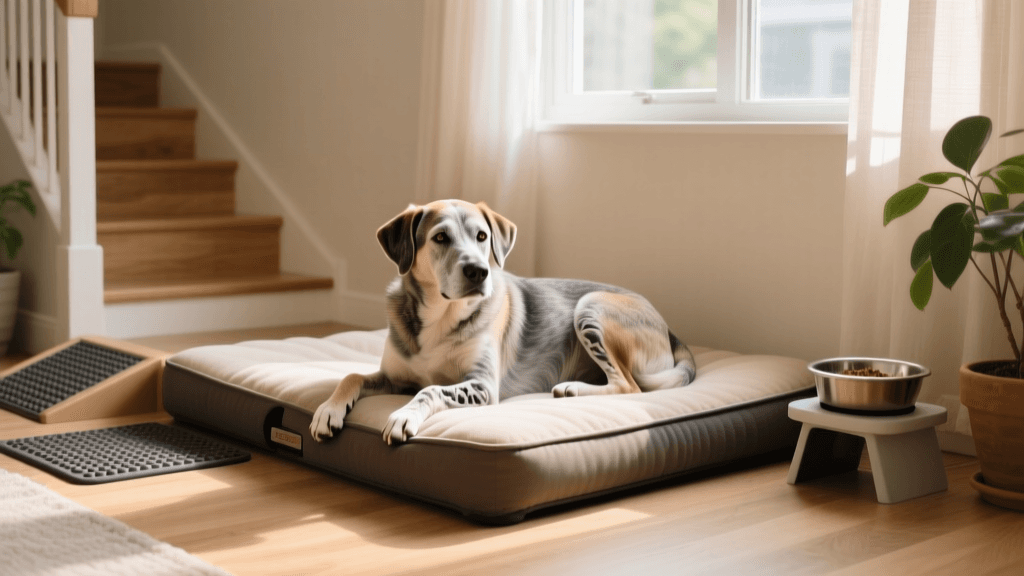
Before your new companion crosses the threshold, your home must be optimized for a dog with compromised joints. The goal is to minimize slip hazards, reduce the need for jumping, and provide orthopedic support.
Orthopedic Bedding and Rest Zones
Standard dog beds will not suffice for a dog with OA. In 2026, the gold standard for large breeds and seniors is therapeutic foam with cooling properties. Look for beds that offer at least 4 to 7 inches of high-density, medical-grade orthopedic foam. Brands like Big Barker have updated their 2026 lines to include temperature-regulating gel layers, which help reduce joint inflammation overnight. Place the bed in a quiet, draft-free corner on the ground floor to eliminate the need for stair climbing.
Mobility Aids: Ramps and Stairs
If your new dog will be allowed on furniture or needs to enter an SUV, jumping is strictly prohibited. Invest in a high-traction, adjustable ramp. The PetSafe Happy Ride Telescoping Pet Ramp remains a top choice due to its lightweight aluminum frame and high-traction surface, which prevents paw slipping. For indoor use, such as accessing a low sofa, foam-based pet stairs with a wide base are essential to prevent tipping.
Flooring Modifications
Hardwood and tile floors are the enemy of arthritic joints. You do not need to replace your flooring, but you should lay down interlocking foam puzzle mats or non-slip yoga mats in high-traffic areas, hallways, and near the dog's bed and water bowls. This provides immediate grip, giving your dog the confidence to walk without the fear of splaying their legs.
2026 Veterinary Treatment Protocols for Canine OA
The landscape of canine OA treatment has evolved significantly. The American Animal Hospital Association (AAHA) emphasizes a multimodal approach to pain management, combining pharmaceuticals, supplements, and physical therapy. When you adopt a dog with OA, you will work with your veterinarian to establish a tailored protocol.
Monoclonal Antibody Therapy (Anti-NGF)
The most significant breakthrough in recent years, which has become a cornerstone of OA management in 2026, is anti-Nerve Growth Factor (anti-NGF) monoclonal antibody therapy. Monthly injections, such as Librela (bedinvetmab), target the specific proteins that transmit pain signals in arthritic joints. Unlike traditional NSAIDs, this therapy does not process through the liver or kidneys in the same way, making it exceptionally safe for senior dogs with underlying organ concerns.
NSAIDs and Adjunct Medications
Non-Steroidal Anti-Inflammatory Drugs (NSAIDs) like Galliprant (grapiprant) remain highly effective for reducing acute inflammation. Galliprant specifically targets the EP4 receptor, minimizing the gastrointestinal side effects associated with older NSAIDs. For dogs that experience breakthrough pain during weather changes or after mild exertion, veterinarians may prescribe adjunct medications like gabapentin or amantadine to modulate nerve pain.
Disease-Modifying Osteoarthritis Drugs (DMOADs)
Injectable polysulfated glycosaminoglycans, commonly known as Adequan, help inhibit cartilage degradation and stimulate the production of healthy joint fluid. A typical loading dose involves a series of injections over four weeks, followed by monthly maintenance.
Comparison Chart: 2026 Canine OA Treatments & Estimated Costs
| Treatment Type | Specific Product/Therapy | Primary Benefit | Estimated 2026 Monthly Cost |
|---|---|---|---|
| Monoclonal Antibody | Librela (bedinvetmab) | Targets NGF pain signals; highly safe for senior organs | $120 - $180 (Weight-dependent) |
| Targeted NSAID | Galliprant (grapiprant) | Reduces joint inflammation with fewer GI side effects | $80 - $150 |
| DMOAD Injection | Adequan Canine | Slows cartilage loss; improves joint lubrication | $60 - $100 (Maintenance phase) |
| Nutraceutical | Dasuquin Advanced with ESM | Supports cartilage matrix; reduces oxidative stress | $50 - $90 |
| Physical Therapy | Underwater Treadmill / Laser | Builds muscle mass without joint impact | $80 - $150 per session |
Diet, Weight Management, and Physical Therapy
As highlighted by the American Kennel Club, maintaining a lean body condition is arguably the most critical non-pharmaceutical treatment for canine OA. Every extra pound of body weight places exponentially more stress on compromised joints. When you bring your new dog home, consult your vet about transitioning to a joint-support metabolic diet, such as Hill's Prescription Diet j/d or Royal Canin Veterinary Diet Mobility Support. These formulas are enriched with high levels of EPA (an omega-3 fatty acid) that naturally interrupt the enzymatic destruction of cartilage.
In addition to diet, incorporating low-impact physical therapy is vital. Muscle atrophy is common in shelter dogs with OA due to prolonged crate confinement or lack of exercise. Hydrotherapy (swimming or underwater treadmills) allows the dog to build supporting muscle mass without bearing weight on their joints. At home, you can practice 'sit-to-stand' exercises on a non-slip mat to strengthen the hindquarters, performing 3 to 5 repetitions twice daily.
Critical Questions to Ask the Rescue Before Adopting
To ensure you are fully prepared for the financial and time commitments of an OA dog, ask the shelter or foster-based rescue the following questions before signing the adoption papers:
- What is the exact diagnosis? Ask if the OA is localized (e.g., bilateral hip dysplasia, elbow dysplasia) or generalized. Request copies of any orthopedic X-rays.
- What is their current pain management protocol? Determine if the dog is already on Librela, NSAIDs, or supplements, and ask for the medical records to ensure a seamless transition to your personal veterinarian.
- Have they had any orthopedic surgeries? Some shelter dogs may have had a femoral head ostectomy (FHO) or a cruciate ligament repair (TPLO) prior to surrender. This drastically alters their physical therapy needs.
- What are their mobility limitations? Ask the foster parent if the dog can navigate standard stairs, if they need help standing up after sleeping, and if they exhibit signs of pain when touched in specific areas.
Final Thoughts on Your Adoption Journey
Getting a dog with osteoarthritis is not a burden; it is an opportunity to provide profound comfort to an animal in their twilight years. By preparing your home with orthopedic essentials, leveraging the advanced 2026 veterinary treatments like anti-NGF therapies, and committing to strict weight management, you can ensure your new companion experiences a life defined by comfort, dignity, and love. The moment you see your senior dog walk pain-free across the living room, you will know that every bit of preparation was entirely worth it.
beth-carrasco
All our authors care for dogs every day — read more of their work on the authors page.