Adopting a Dog With Canine OA: 2026 Treatment & Home Prep Guide
Learn how to prepare your home and manage treatment when adopting a rescue dog with canine osteoarthritis in 2026, including Librela and mobility tips.
Bringing Home a Rescue: The Reality of Canine Osteoarthritis
Adopting a rescue dog is one of the most rewarding experiences a pet parent can have. However, when you choose to bring home a senior dog or a rescue with pre-existing mobility issues, the standard "getting a dog" checklist is no longer sufficient. Canine osteoarthritis (OA) is a progressive, degenerative joint disease that affects an estimated 20% of adult dogs and over 80% of senior dogs. According to the American College of Veterinary Surgeons, OA involves the breakdown of joint cartilage, leading to chronic pain, stiffness, and a significantly reduced quality of life if left unmanaged.
If you are adopting a dog with canine OA in 2026, you are stepping into a golden era of veterinary pain management. The days of relying solely on harsh, stomach-upsetting painkillers are over. Today, bringing home an OA rescue requires a strategic blend of advanced biologics, environmental modifications, and targeted nutrition. This guide will walk you through exactly how to prepare your home, budget for modern treatments, and set your new best friend up for a pain-free life from day one.
Evaluating Your Rescue Dog Before Finalizing Adoption
Before signing the adoption papers, spend time observing the dog's movement in the shelter or foster home. Look for the subtle signs of OA that untrained eyes might miss. Does the dog "bunny hop" with their hind legs when running? Are they reluctant to jump into a car or climb stairs? Do they exhibit stiffness during the first few minutes of walking after a long nap? Identifying these baseline behaviors will help you communicate effectively with your veterinarian during your first-week wellness exam.
The 2026 Standard of Care for Canine OA Treatment
Veterinary medicine has made massive leaps in pain management. The current 2026 consensus emphasizes a multimodal approach—combining medications, physical therapy, and environmental changes to target pain from multiple angles. The WSAVA Global Pain Council strongly advocates for this multimodal strategy, noting that it minimizes the side effects of any single drug while maximizing comfort.
Breakthrough Biologics: Librela (Bedinvetmab)
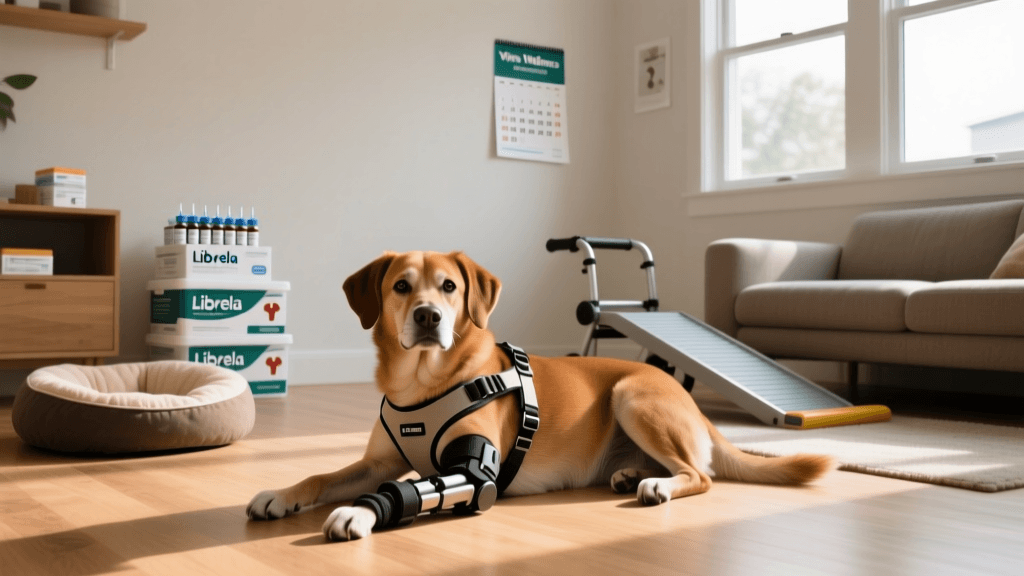
The most significant game-changer for adopting a dog with OA is the widespread availability of monoclonal antibodies (mAbs). Librela (bedinvetmab) is a monthly subcutaneous injection that specifically targets and neutralizes Nerve Growth Factor (NGF), a key protein involved in the transmission of OA pain signals. Unlike traditional NSAIDs, Librela is not metabolized by the liver or kidneys, making it exceptionally safe for senior rescues with underlying organ disease. As of 2026, a monthly dose of Librela typically costs between $85 and $140, depending on your dog's weight tier and regional veterinary pricing.
Traditional and Adjunctive Therapies
While biologics are revolutionary, they are often paired with other treatments for severe cases. Grapipant (Galliprant) is a targeted NSAID that blocks the EP4 receptor, reducing inflammation with a much safer gastrointestinal profile than older drugs. Additionally, polysulfated glycosaminoglycans (Adequan Canine) are frequently used as a series of intramuscular injections to help inhibit cartilage breakdown and stimulate joint lubrication.
Comparative Guide to 2026 OA Medications
When planning your post-adoption veterinary budget, use this comparison table to understand the current landscape of canine OA pharmacology.
| Medication Type | Brand Examples (2026) | Mechanism of Action | Est. Monthly Cost | Administration |
|---|---|---|---|---|
| Anti-NGF Biologic | Librela (bedinvetmab) | Neutralizes Nerve Growth Factor to stop pain signaling | $85 - $140 | Vet-administered subcutaneous injection |
| Targeted NSAID | Galliprant (grapipant) | Blocks EP4 prostaglandin receptors to reduce inflammation | $60 - $110 | Daily oral chew/tablet |
| Cartilage Protectant | Adequan Canine | Inhibits cartilage-degrading enzymes, promotes synovial fluid | $40 - $70 (maintenance) | Intramuscular injection series |
| Neuropathic Pain Modulator | Gabapentin | Alters calcium channel activity to dampen nerve pain | $15 - $30 | Oral capsule/liquid (2-3x daily) |
Essential Home Modifications for Your OA Rescue
Treating the dog is only half the battle; treating the environment is equally critical. A home with slippery hardwood floors and high couches is a nightmare for a dog with compromised joints. Before your rescue dog crosses the threshold, implement these 2026 home-prep essentials:
- Non-Slip Flooring: Slippery surfaces force dogs to splay their legs, putting immense torque on dysplastic hips and arthritic knees. Invest in interlocking high-density foam puzzle mats or low-pile, rubber-backed non-slip runners for all primary walking paths.
- Orthopedic Support Beds: Do not skimp on the bed. The Big Barker Orthopedic Dog Bed remains the gold standard in 2026, featuring 7 inches of therapeutic foam that prevents joints from pressing into the hard floor. Expect to invest around $250 to $350, but it comes with a 10-year warranty against flattening.
- Mobility Ramps and Steps: If your dog is allowed on furniture or needs to enter an SUV, use a ramp. The PetSTEP Original Folding Pet Ramp supports up to 500 pounds, features a soft rubbery surface for paw grip, and costs approximately $140. For couches, high-density foam pet stairs with a 4-inch rise per step are ideal for smaller breeds.
- Elevated Feeding Stations: Bending down to the floor strains the cervical spine and front shoulders. An adjustable bamboo elevated feeder set at your dog's lower-chest height will make mealtimes significantly more comfortable.
Nutrition, Weight Management, and Supplements
Every extra pound on an arthritic dog equates to roughly four pounds of extra pressure on their joints. Keeping your rescue dog at a lean body condition score (BCS of 4/9) is the single most effective non-medical treatment for OA. In 2026, veterinary nutritionists heavily recommend prescription joint diets like Hill's Prescription Diet j/d or Royal Canin Mobility Support, which are clinically proven to improve mobility through high levels of EPA (an Omega-3 fatty acid) and targeted antioxidants.
If you prefer a non-prescription route, ensure your dog's daily supplement includes a minimum of 1,000 mg of combined EPA/DHA per 20 lbs of body weight, alongside green-lipped mussel extract and undenatured type II collagen (UC-II) to support cartilage health.
Your First 30 Days: A Step-by-Step Action Plan
The transition into a new home can cause stress, which exacerbates pain perception. Follow this 30-day timeline to ensure a smooth, comfortable onboarding for your OA rescue.
Week 1: Decompression and Baseline Mapping
Limit intense exercise. Allow the dog to explore the home at their own pace. Schedule a comprehensive veterinary exam, including full orthopedic and neurological evaluations, and baseline bloodwork to ensure their liver and kidneys are healthy enough for daily medications if needed.
Week 2: Initiating the Protocol
Begin the prescribed multimodal treatment plan. If starting Librela, note that it can take up to two full monthly cycles to see the maximum peak effect. Start your dog on their new joint-support diet, measuring food with a digital kitchen scale rather than a cup to ensure precise caloric restriction if weight loss is required.
Week 3: Introducing Controlled Rehabilitation
Swap unstructured dog park runs for controlled, low-impact movement. Look for a local canine rehabilitation center offering underwater treadmill therapy or therapeutic laser treatments. Short, 10-minute leash walks on flat, even terrain are better than one long, exhausting hike.
Week 4: Re-evaluation and Adjustment
Assess your home setup. Are they still slipping in the kitchen? Do they need a ramp to get onto the bed? Track their mobility using a simple journal, noting their stiffness levels in the morning versus the evening. Share these observations with your vet to fine-tune dosages and ensure your newly adopted companion is thriving in their forever home.
jonas-cole
All our authors care for dogs every day — read more of their work on the authors page.