Best No-Pull Dog Harnesses for New Rescues in 2026
Discover the best front-clip no-pull dog harnesses for new rescues in 2026. Learn expert fitting tips to ensure safe, comfortable first walks together.
Welcome Home: Why Your First Walk Sets the Tone
Bringing a new dog home in 2026 is an exciting milestone, whether you have just adopted a rescue from a local shelter or welcomed a new puppy into your family. However, the transition period can be overwhelming for both you and your new canine companion. Animal behaviorists frequently reference the '3-3-3 Rule' for newly adopted dogs: three days to decompress, three weeks to learn your routine, and three months to truly feel at home. During those critical first few days, your dog is likely to be overstimulated, anxious, and prone to unpredictable behaviors, especially on a leash.
One of the most crucial first-day essentials you can prepare before your dog even crosses the threshold is a high-quality, front-clip no-pull dog harness. Relying on a standard flat collar or a back-clip harness for a dog with an unknown walking history or high prey drive is a recipe for frustration, escaped dogs, and potential physical injury. In this comprehensive 2026 guide, we will explore the biomechanics of no-pull harnesses, review the top models currently on the market, and provide a step-by-step fitting and training guide to ensure your first walks together are safe and enjoyable.
The Hidden Dangers of Traditional Collars for New Dogs
When adopting a dog, you rarely know their complete medical or behavioral history. Many rescue dogs have spent months or years in high-stress shelter environments, resulting in 'barrier frustration' or severe leash pulling the moment they step outside. When a dog pulls forcefully against a traditional flat collar or slip lead, all that kinetic energy is concentrated directly on their delicate cervical spine and trachea.
According to the ASPCA, improper walking equipment and severe leash pulling are leading contributors to tracheal collapse, particularly in smaller breeds, as well as chronic neck pain and thyroid gland damage in larger dogs. A no-pull harness completely removes the pressure from the neck, distributing the force safely across the dog's robust chest and shoulder musculature. This is not just a training tool; it is a vital piece of safety equipment for any new dog owner in 2026.
The Biomechanics of a Front-Clip No-Pull Harness
To understand why a front-clip harness is superior for a new, untrained dog, we must look at canine biomechanics. A dog's center of gravity and primary pulling power originate from their chest and shoulders. When you use a back-clip harness, you are essentially engaging their natural 'opposition reflex.' This is the same instinct that allows sled dogs to pull heavy loads; when they feel pressure on their back, they instinctively lean forward and push harder.
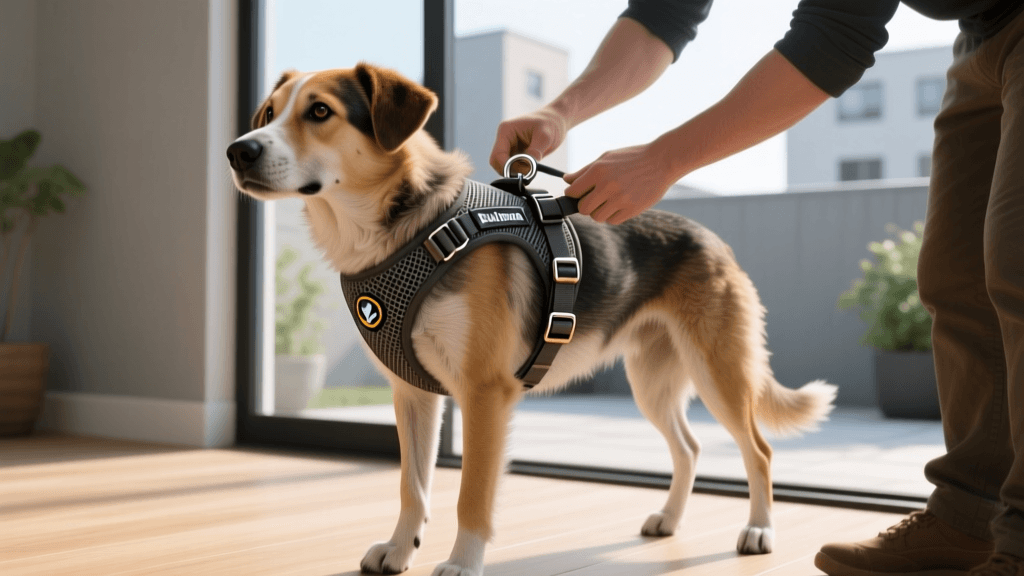
A front-clip harness features a D-ring located on the sternum (chest strap). When the dog pulls forward and the leash goes taut, the front attachment point gently pivots the dog's shoulders toward the handler. Instead of allowing the dog to use their full body weight to drag you down the street, the harness redirects their momentum sideways, effectively neutralizing their pulling power without causing pain or restricting their natural gait. This redirection gives you the critical split-second needed to regain your dog's attention and reward them for re-engaging with you.
Top 3 Front-Clip Harnesses for New Dogs in 2026
The pet gear market has evolved significantly, with 2026 models offering improved sustainable materials, better breathability, and escape-proof designs. Here are the top three no-pull harnesses we recommend for new dog owners this year.
1. Ruffwear Front Range Dog Harness
The Ruffwear Front Range remains the gold standard for everyday walking and hiking. The 2026 iteration features updated, eco-friendly recycled ripstop nylon and an even more padded chest plate to prevent chafing on short-haired breeds. It offers two leash attachment points: an aluminum V-ring on the back for casual strolls, and a reinforced webbing loop on the chest for no-pull training. Its four points of adjustment make it highly customizable for the awkward, gangly proportions of adolescent rescue dogs.
2. 2 Hounds Design Freedom No-Pull Dog Harness
If you have adopted a notorious escape artist—such as a Greyhound, Whippet, or a highly anxious mixed breed—the 2 Hounds Design Freedom harness is your best defense. It features a unique dual-clip system that allows you to attach the included dual-attachment leash to both the front and back rings simultaneously. When the dog pulls, the front ring steers them, while the back ring provides gentle, even pressure. The interior of the chest strap is lined with a soft, velvet-like material that prevents the armpit chafing common in cheaper harnesses.
3. Kurgo Tru Fit Smart Harness
For new owners who plan to travel frequently with their rescue, the Kurgo Tru Fit Smart Harness is a dual-purpose investment. Not only does it feature a front D-ring for no-pull walking, but it is also crash-tested to automotive safety standards. The 2026 model includes an upgraded, quick-release buckling system that makes taking the harness on and off a struggling, nervous dog much easier. The broad, padded chest plate is excellent for deep-chested breeds like German Shepherds and Boxers.
2026 No-Pull Harness Comparison Chart
| Feature | Ruffwear Front Range | 2 Hounds Freedom | Kurgo Tru Fit |
|---|---|---|---|
| Best For | Everyday walks & hiking | Escape artists & anxious dogs | Car travel & large breeds |
| Front Clip Type | Reinforced Webbing Loop | Stainless Steel D-Ring | Welded Steel D-Ring |
| Adjustment Points | 4 | 4 | 5 |
| Estimated 2026 Price | $45.00 | $40.00 | $35.00 |
| Escape-Proof Rating | Moderate | Very High | High |
The Perfect Fit: Measuring Your New Dog
Even the most expensive, technologically advanced harness will fail if it does not fit correctly. A poorly fitted harness can cause severe chafing, restrict shoulder extension, or allow the dog to back out and bolt into traffic. Before ordering your harness, you must take two critical measurements.
1. The Girth Measurement: Using a soft tailor's tape measure, wrap it around the widest part of your dog's ribcage, usually just behind their front elbows. Ensure the tape is snug but not tight. If you do not have a soft tape measure, use a piece of string and then measure the string against a standard ruler.
2. The Lower Neck Measurement: Measure the base of the neck where it meets the chest, not the upper neck where a collar would sit. This ensures the chest plate will sit correctly on the sternum without pressing against the throat.
The Two-Finger Rule: Once the harness is on your dog, you should be able to comfortably slide exactly two fingers under any strap. If you can fit your whole hand, the harness is too loose and poses an escape risk. If you cannot fit two fingers, it is too tight and will restrict blood flow and breathing.
Desensitization and First Walk Strategies
Do not make the mistake of strapping a new harness onto a nervous rescue dog and immediately dragging them outside. To a dog who has never worn one, a harness can feel like a restrictive trap. The American Kennel Club strongly recommends positive reinforcement and desensitization when introducing new walking gear.
Start indoors. Lay the harness flat on the floor and reward your dog with high-value treats (like boiled chicken or freeze-dried liver) for simply sniffing it. Next, hold the harness open and lure your dog's head through the neck hole with a treat, immediately rewarding them. Do not fasten the buckles on the first day. Let them wear it unfastened for five minutes while they eat their dinner or play with a favorite toy. This builds a positive psychological association with the gear.
When you are ready for the first outdoor walk, keep your expectations realistic. Your goal for the first week is not a perfect, loose-leash heel; your goal is simply to keep the leash loose enough that the front-clip never engages. If the dog pulls, stop walking immediately. Become a tree. Wait for the dog to look back at you or take a single step backward to release the tension on the leash. The moment the leash goes slack, mark the behavior with a cheerful 'Yes!' and reward them with a treat delivered right at your hip seam. This teaches the dog that staying near your leg is the most rewarding place to be in the world.
Final Thoughts for New Owners
Investing in a premium front-clip no-pull harness in 2026 is one of the smartest decisions you can make as a new dog owner. It protects your dog's physical health, saves your shoulders from strain, and provides the mechanical advantage needed to communicate effectively with a dog who is still learning your language. Pair the right equipment with patience, high-value treats, and a solid understanding of canine behavior, and you will lay the foundation for a lifetime of safe, joyful adventures together.
marcus-aldridge
All our authors care for dogs every day — read more of their work on the authors page.