Adopting a Dog With Osteoarthritis: 2026 Home Prep Guide
Discover how to prepare your home and manage treatment when adopting a dog with osteoarthritis in 2026. Essential gear, meds, and first-day tips.
Why Adopt a Dog with Osteoarthritis?
Choosing to bring a dog into your home is a life-changing decision, and opting to adopt a senior dog or a rescue diagnosed with canine osteoarthritis (OA) is one of the most profoundly rewarding choices you can make. While the term 'osteoarthritis' might sound intimidating to first-time adopters, the veterinary landscape in 2026 has evolved dramatically. Today, managing joint pain is easier, more effective, and more accessible than ever before. According to the American Kennel Club, osteoarthritis is a degenerative joint disease that affects a significant portion of the senior dog population, particularly in large breeds like Labrador Retrievers, German Shepherds, and Golden Retrievers. However, with the right home preparation and modern treatment protocols, an OA diagnosis is no longer a barrier to a high quality of life.
If you are in the 'getting a dog' phase and have your heart set on a senior rescue with mobility issues, this guide will walk you through the essential home modifications, 2026 veterinary treatments, and first-day necessities to ensure your new companion thrives in their forever home.
First-Day Essentials: Preparing Your Home for an OA Dog
Before your new dog crosses the threshold, your home must be optimized for a dog with compromised joints. Dogs with OA struggle with slipping, jumping, and navigating stairs, which can lead to painful micro-injuries and acute flare-ups.
Traction and Flooring Modifications
Hardwood, tile, and laminate floors are the enemies of arthritic joints. When a dog's paws slip, their muscles and joints overcompensate, causing severe pain. Before bringing your dog home, cover high-traffic areas with non-slip solutions:
- Interlocking Foam Mats: Ideal for play areas and feeding stations. Look for high-density EVA foam mats that provide both grip and shock absorption.
- Non-Slip Rug Runners: Use runners with natural rubber backings to create 'safe pathways' through hallways and living rooms.
- Paw Grip Pads: Products like Dr. Buzby's ToeGrips (approximately $35 in 2026) are small rubber cylinders that slide onto a dog's claws to provide instant traction on hard surfaces without the need for uncomfortable dog boots.
Orthopedic Sleeping Arrangements
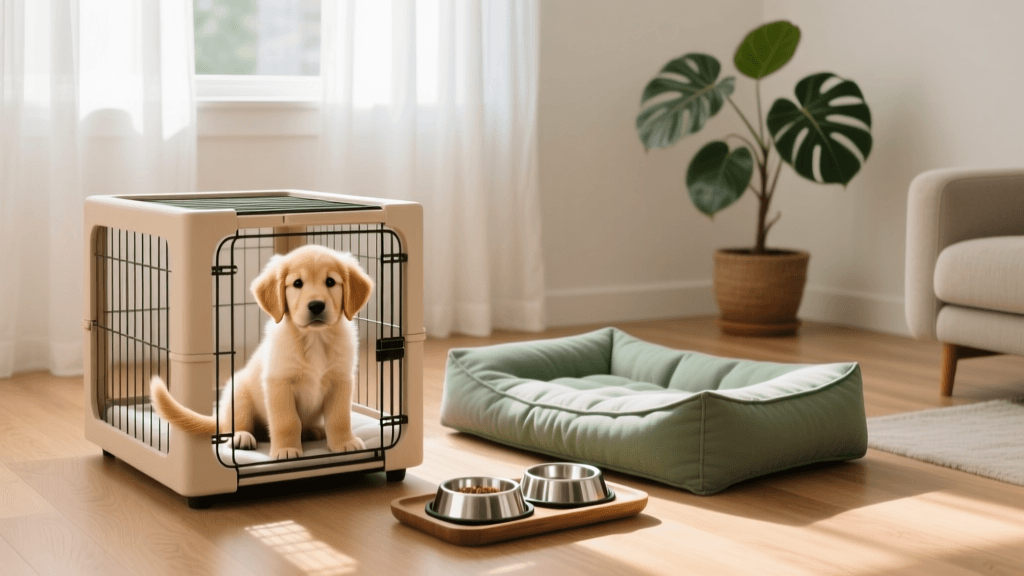
Standard dog beds do not provide the structural support required for a dog with OA. You must invest in a high-quality orthopedic bed. The Big Barker 7-inch Orthopedic Dog Bed remains the gold standard in 2026, utilizing therapeutic foam that prevents the bed from pancaking over time. Priced around $280 to $340 depending on the size, it is a non-negotiable investment for large breed rescues. For smaller breeds, the K&H Pet Products Ortho Bolster Sleeper offers excellent joint relief and edge support for under $90.
Ramps and Mobility Aids
Jumping onto couches, beds, or into vehicles can cause catastrophic joint damage for an OA dog. Eliminate the need for jumping entirely:
- Vehicle Ramps: The PetSafe Happy Ride Folding Pet Ramp (approx. $85) is lightweight and features a high-traction surface, making loading your dog into an SUV safe and painless.
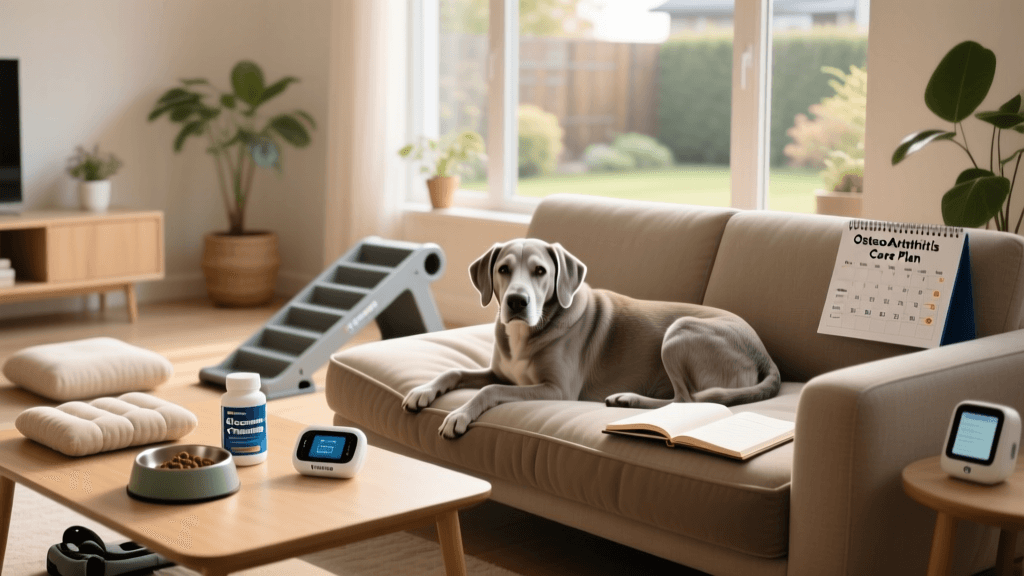
- Indoor Pet Stairs: For couches and beds, use high-density foam pet stairs with a 45-degree incline rather than steep, traditional steps. Ensure the stairs have a non-slip microfiber cover.
The 2026 Veterinary Treatment Landscape for Canine OA
One of your first tasks after adoption is scheduling a comprehensive veterinary exam to establish a pain management protocol. The American College of Veterinary Surgeons emphasizes that OA management requires a multimodal approach, combining medication, weight management, and environmental modifications. Here is what you need to know about the 2026 treatment options.
Monoclonal Antibodies: The Game Changer
By 2026, anti-Nerve Growth Factor (NGF) monoclonal antibodies, specifically Librela (bedinvetmab), have revolutionized canine OA treatment. Unlike traditional painkillers that are metabolized by the liver or kidneys, Librela is a monthly injection administered by your vet that specifically targets and neutralizes NGF, a primary driver of OA pain. Because it bypasses the hepatic and renal systems, it is incredibly safe for senior rescues who may have underlying kidney or liver issues. Expect to pay between $60 and $120 per monthly injection, depending on your dog's weight.
NSAIDs and Pain Modulators
Non-Steroidal Anti-Inflammatory Drugs (NSAIDs) are still utilized for acute flare-ups. Galliprant (grapiprant) is a popular choice in 2026 because it specifically targets the EP4 receptor, minimizing the gastrointestinal and renal side effects associated with older, non-selective NSAIDs. Additionally, veterinarians frequently prescribe Amantadine or Gabapentin to manage chronic neuropathic pain that often accompanies advanced osteoarthritis.
Nutrition and Joint Supplements
Weight management is arguably the most critical factor in treating canine OA. Every extra pound of body weight places four pounds of additional pressure on your dog's joints. Your dog should be kept at a lean body condition score (BCS of 4 out of 9).
- Prescription Joint Diets: Hill's Prescription Diet j/d and Royal Canin Veterinary Diet Mobility Support are formulated with high levels of EPA (an Omega-3 fatty acid) that naturally interrupt the metabolic pathways causing cartilage degradation.
- Joint Supplements: Look for supplements containing UC-II collagen, green-lipped mussel extract, and ASU (avocado/soybean unsaponifiables). Dasuquin Advanced and Glyde Mobility Chews are top-tier choices in 2026, costing roughly $50 to $70 for a one-month supply.
2026 OA Management Essentials Comparison Chart
| Category | Product / Treatment | Estimated 2026 Cost | Primary Benefit for OA Dogs |
|---|---|---|---|
| Monthly Injection | Librela (bedinvetmab) | $60 - $120 / month | Targets NGF pain signals; safe for senior organs |
| Daily Medication | Galliprant (grapiprant) | $40 - $90 / month | Reduces joint inflammation with fewer GI side effects |
| Orthopedic Bed | Big Barker 7-inch Bed | $280 - $340 | Prevents joint pressure from bottoming out on the floor |
| Mobility Aid | PetSafe Happy Ride Ramp | $85 | Eliminates joint impact from jumping into vehicles |
| Supplement | Dasuquin Advanced | $50 - $70 / month | Protects cartilage and provides ASU anti-inflammatory support |
| Traction | Dr. Buzby's ToeGrips | $35 | Provides immediate grip on hardwood and tile floors |
At-Home Physical Therapy and Rehabilitation
Treatment for canine OA extends beyond medication. As a new owner, you can incorporate gentle, at-home physical therapy to maintain your dog's muscle mass, which acts as a crucial scaffold for their failing joints.
- Passive Range of Motion (PROM): Gently flex and extend your dog's affected joints while they are lying on their orthopedic bed. This keeps the joint capsule lubricated without bearing weight.
- Sniffaris and Decompression Walks: Replace long, fast-paced walks with short, 15-minute 'sniffaris.' Allowing your dog to wander at their own pace and engage their brain through scent work provides mental stimulation without the physical toll of endurance walking.
- Hydrotherapy: If your budget allows, weekly sessions at a canine rehabilitation center using an underwater treadmill or warm-water pool are phenomenal for building hind-end muscle mass without joint impact.
Your First 30 Days: A Step-by-Step Action Plan
Bringing home a dog with osteoarthritis requires patience. During the first 30 days, focus on decompression and baseline establishment. Week one should be strictly limited to potty breaks and indoor bonding. By week two, introduce your dog to their ramps and non-slip pathways, using high-value treats to build positive associations with the equipment. By week three, schedule your comprehensive veterinary orthopedic exam to finalize your 2026 multimodal pain management plan.
Adopting a dog with OA is not about mourning the activities they can no longer do; it is about celebrating the comfort, dignity, and love you can provide in their golden years. With modern veterinary science, specialized home gear, and a compassionate approach to daily care, your new companion will find that their forever home is a place where pain takes a backseat to joy.
robin-maitland
All our authors care for dogs every day — read more of their work on the authors page.