2026 Adaptive Training Guide for Dogs With Osteoarthritis
Discover 2026 adaptive training techniques for dogs with osteoarthritis. Learn low-impact tricks, scent work, and modified obedience to keep your senior dog mentally sharp.
The Intersection of Osteoarthritis Treatment and Dog Training
When a dog is diagnosed with canine osteoarthritis (OA), the immediate focus is often strictly medical: joint supplements, NSAIDs, or newer 2026 biologic therapies like bedinvetmab (Librela). However, veterinary behaviorists now recognize that cognitive enrichment and adaptive training are critical components of a holistic osteoarthritis treatment plan. Dogs with chronic pain still possess a deep drive to work, learn, and engage with their handlers. In fact, removing training from an arthritic dog's routine can lead to cognitive decline, anxiety, and depression.
According to the Texas A&M Veterinary Medicine department, osteoarthritis affects a significant percentage of senior dogs, manifesting not just as limping, but as behavioral changes, reluctance to perform previously known commands, and irritability. As we navigate dog care in 2026, the paradigm has shifted from "let the dog rest" to "adapt the dog's work." This guide explores how to modify obedience training, introduce low-impact tricks, and use cognitive conditioning to support your dog's osteoarthritis treatment without exacerbating joint pain.
Modifying Core Obedience Commands for Joint Health
Traditional obedience training often relies on repetitive physical movements that can be devastating to compromised joints. To support your dog's osteoarthritis treatment, you must audit your current command list and modify the physical requirements of each cue.
Rethinking the "Sit" and "Down"
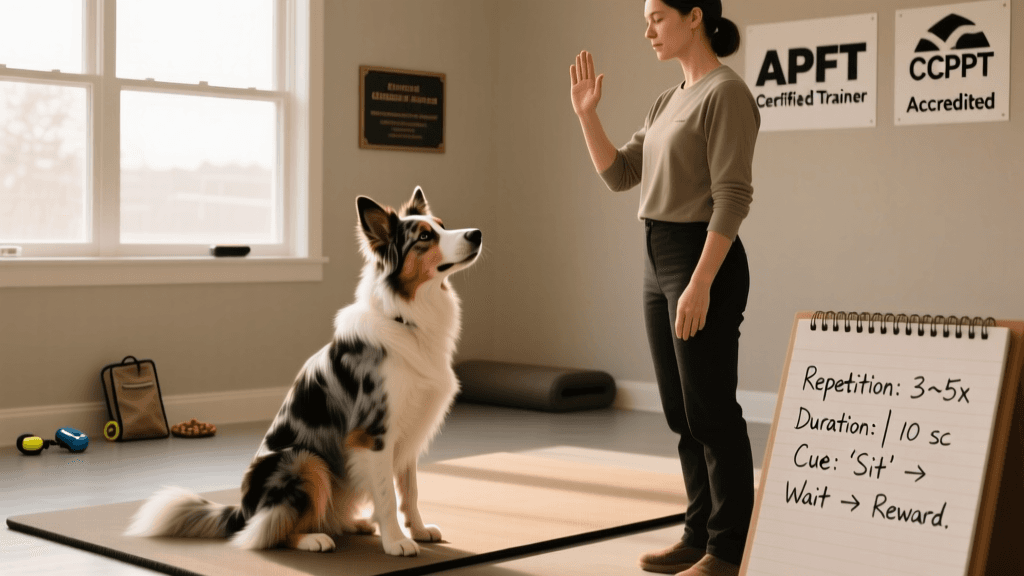
The "sit-stand-sit" drill is a common obedience exercise used to teach rapid compliance. For a dog with hip dysplasia or severe knee osteoarthritis, the biomechanical load of repeatedly folding and unfolding their hindquarters causes micro-trauma and inflammation. In 2026, adaptive trainers recommend replacing repetitive sits with a sustained "Place" or "Settle" command.
Teach your dog to go to a specific, high-density orthopedic mat. The mat provides traction, which is essential because slipping on hardwood floors forces arthritic dogs to overcompensate with their spinal and shoulder muscles. When asking for a "Down," allow the dog to perform a "Sphinx down" (front legs extended forward) rather than a tucked "lazy down," which requires extreme hip flexion and can cause acute pain in dogs with compromised hip joints.
Recall Without the Rush
A traditional recall ("Come!") often encourages the dog to sprint toward the handler, stopping abruptly at the front position. This sudden deceleration places immense stress on the carpal (wrist) joints and the cranial cruciate ligaments. Modify your recall by teaching an "Emergency Walking Recall" or a "Meander" cue. Use a specific verbal marker and a slow, sweeping hand signal that tells the dog to close the distance at a walking pace, rewarding them heavily for calm, controlled movement rather than speed.
Low-Impact Trick Training and Cognitive Conditioning
Trick training is not just for show; it is a vital tool for maintaining neuroplasticity in aging dogs. The American Kennel Club (AKC) emphasizes that mental stimulation can tire a dog out just as effectively as physical exercise, making it an ideal osteoarthritis treatment adjunct.
Scent Work and Nose Games
Olfaction requires immense brain power. Fifteen minutes of focused scent work can equate to an hour of moderate physical walking in terms of caloric burn and mental fatigue.
- Box Searches: Set up a grid of identical cardboard boxes in a carpeted room. Place a high-value, strongly scented treat (like freeze-dried salmon) in one box. Encourage your dog to use only their nose to find it, keeping all four paws firmly on the ground.
- Snuffle Mats: Utilize dense snuffle mats to mimic foraging. This encourages natural neck extension and sniffing behaviors without requiring the dog to bend down to a hard floor or jump up to a counter.
Target Training and Paw Touches
Target training involves teaching the dog to touch a specific object with a body part. For arthritic dogs, "Nose Targeting" (touching the end of a target stick or your palm with their nose) is exceptional. It allows you to guide the dog through doorways, onto veterinary scales, or into the car without using a leash that might pull on their sensitive cervical spine.
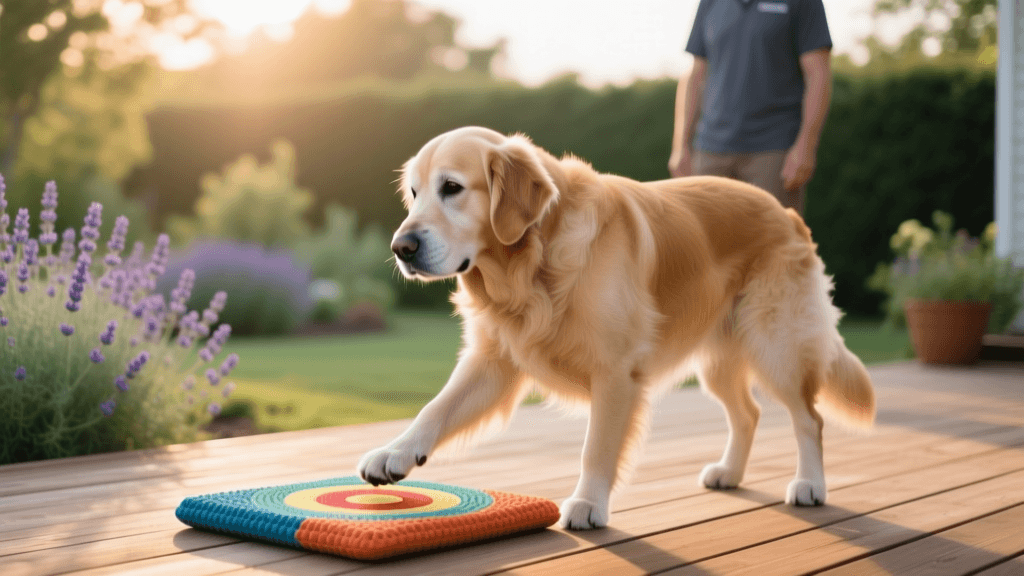
Conversely, avoid "Paw" or "High Five" tricks. Lifting a front leg shifts the dog's entire body weight onto the remaining three limbs, overloading the contralateral joints and the spine. If you want to teach a paw-based trick, teach a "Chin Rest" (resting the chin on a low stool or your knee), which promotes stillness and allows for easy administration of eye drops or ear medications without physical restraint.
Eye-Shaping and Focus Games
For dogs with severe mobility restrictions, you can train complex behaviors using only their eyes and facial muscles. "Eye-shaping" involves clicking and rewarding the dog for looking at specific objects in the room. Start by rewarding a glance toward a cone, then shape the behavior until the dog is intensely focusing on the object on command. This builds incredible handler focus and impulse control without requiring a single step to be taken. Pair this with interactive, nose-operated puzzle boards mounted at chest height to keep the dog's problem-solving skills sharp while their joints rest.
2026 Veterinary Pain Management and Training Timelines
Effective training must be synchronized with your dog's medical osteoarthritis treatment. In 2026, the widespread use of anti-NGF (Nerve Growth Factor) monoclonal antibodies has revolutionized pain management, but it requires careful monitoring. Because these medications can mask pain so effectively, dogs may overexert themselves during training, leading to secondary soft-tissue injuries.
| OA Severity Stage | Primary 2026 Medical Protocol | Recommended Training Session Length | Best Adaptive Training Type |
|---|---|---|---|
| Mild (Early Stage) | Omega-3 Fatty Acids, Daily Joint Chews | 10-15 Minutes, Twice Daily | Low-impact trick training, introductory scent work, modified obedience. |
| Moderate (Active Pain) | Monthly Anti-NGF Injections, PRP Therapy | 5-10 Minutes, Once Daily | Stationary nose targeting, snuffle mat foraging, chin rests. |
| Severe (Mobility Compromised) | Multi-modal (NSAIDs, Gabapentin, Acupuncture) | 3-5 Minutes, Embedded in Daily Care | Eye-tracking games, muzzle conditioning, gentle handling exercises. |
Essential Gear for Adaptive Training in 2026
To successfully implement an adaptive training routine, your environment must be optimized for a dog with limited mobility and chronic pain.
- High-Traction Orthopedic Mats: Look for mats featuring a memory foam core with a textured, rubberized top layer. This prevents the splaying of the hind legs during "Down" or "Place" commands.
- Adjustable Raised Puzzle Feeders: Bringing the work up to the dog's chest level prevents the need for painful neck flexion and reduces the strain on the front shoulders when interacting with cognitive puzzles.
- Harnesses with Dual Handles: A well-fitted orthopedic harness with a handle over the shoulders and another over the pelvis allows you to provide gentle physical support during training transitions without pulling on the dog's limbs.
Monitoring Pain Signals During Training
Even with the best osteoarthritis treatment, dogs will have "bad days." As a handler, you must become an expert in reading canine body language. If your dog exhibits sudden lip licking, yawning, "whale eye" (showing the whites of the eyes), or a vigorous "shake off" when not wet, these are displacement behaviors indicating stress or a spike in pain.
When you see these signals, immediately lower your criteria. If you were asking for a "Down" and the dog hesitates, reward them simply for looking at the mat. Furthermore, keep a daily "Pain and Performance Journal." Note the weather (barometric pressure drops often exacerbate joint pain), the time of day, and your dog's responsiveness to cues. If you notice a pattern of reluctance during evening sessions, shift your training to the morning when your dog's anti-inflammatory medications or joint supplements have reached peak efficacy in their bloodstream.
Training a dog with osteoarthritis is not about pushing through the pain; it is about maintaining a joyful, cooperative relationship while honoring the physical limitations of their aging body. By combining modern 2026 veterinary medicine with empathetic, adaptive training techniques, you can ensure your senior dog remains mentally vibrant and deeply connected to you throughout their golden years.
beth-carrasco
All our authors care for dogs every day — read more of their work on the authors page.