Adaptive Training For Dogs With Osteoarthritis: 2026 Guide
Learn how to safely train and teach low-impact tricks to dogs with osteoarthritis in 2026. Discover adaptive obedience routines and joint-friendly tips.
Introduction to Adaptive Training for Canine Osteoarthritis
When a dog is diagnosed with osteoarthritis (OA), many owners mistakenly believe that training, tricks, and active engagement must come to an abrupt halt. However, the exact opposite is true. Mental stimulation and controlled, low-impact physical movement are critical components of managing canine OA. As we navigate the veterinary and behavioral best practices of 2026, the consensus among rehabilitation specialists is clear: 'motion is lotion.' Keeping your dog's brain engaged and their joints moving through adapted, gentle training routines can significantly improve their quality of life, reduce anxiety, and maintain muscle mass that supports deteriorating joints.
This comprehensive guide will walk you through modifying your training environment, adapting core obedience commands, teaching joint-friendly tricks, and utilizing therapeutic conditioning exercises tailored for dogs managing osteoarthritis in 2026.
The 2026 Veterinary Consensus on Canine OA and Activity
Osteoarthritis is a progressive, degenerative joint disease that affects the cartilage, causing pain, stiffness, and reduced mobility. According to the U.S. Food and Drug Administration (FDA), arthritis is one of the most common chronic conditions seen in older dogs, but it can also affect younger dogs due to genetics, injury, or developmental issues. While high-impact activities like agility, frisbee, and repetitive jumping are strictly contraindicated, complete rest leads to muscle atrophy, which places even more stress on compromised joints.
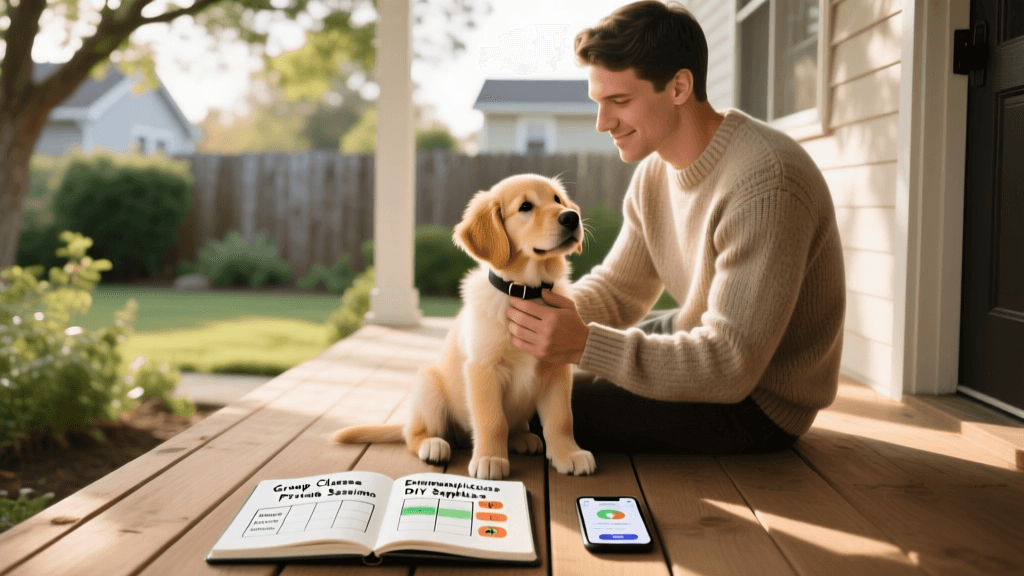
Modern 2026 canine rehabilitation standards emphasize 'micro-training sessions.' Instead of a single 30-minute obedience drill, trainers and veterinary behaviorists now recommend three to five 5-minute sessions spread throughout the day. This prevents joint fatigue while keeping the dog's mind sharp and engaged.
Creating a Joint-Safe Training Environment
Before you begin any adaptive training, you must audit your training environment. Hardwood, tile, and laminate floors are incredibly slippery and can cause micro-slips that aggravate inflamed joints.
- Orthopedic Training Mats: Invest in a high-density memory foam mat specifically designed for canine training. In 2026, many top-tier brands offer waterproof, non-slip orthopedic mats that provide a stable, cushioned surface for your dog to sit, lie down, and perform tricks.
- Yoga Mats and Runners: For larger training areas, lay down interlocking foam puzzle mats or secure non-slip rug runners. Ensure the edges are taped down to prevent tripping hazards.
- Accessible Heights: Avoid training on elevated grooming tables or high couches. Keep all training activities at ground level or on low, stable platforms to eliminate the need for jumping on or off surfaces.
Modifying Core Obedience Commands
Core obedience is still essential for safety, but the mechanics of how your dog performs these commands must be adjusted to protect their joints.
The 'Down' Command
Lying down on a hard surface puts immense pressure on a dog's elbows, hips, and hocks. Always ask your dog to 'down' on an orthopedic mat, a thick rug, or a raised, padded cot. If your dog struggles with the transition from a sit to a down, use a lure to guide them into a 'sphinx down' (lying with their front legs extended forward) rather than a 'tucked down' (where the hips roll to the side), as the sphinx position promotes better spinal alignment and hip symmetry.
The 'Recall' Command
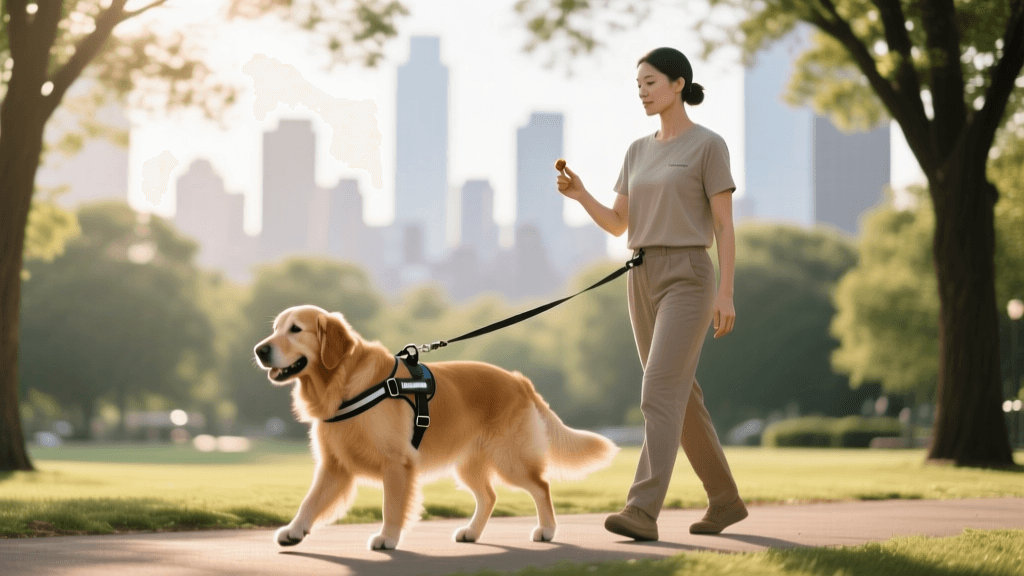
Frantic sprinting and sudden stops are highly destructive to arthritic joints. When practicing recall, keep the distance short (5 to 10 feet). Use a calm, encouraging tone rather than an overly exciting one to prevent your dog from sprinting. Reward them heavily for a steady, controlled walk or trot toward you. The ASPCA's guide on senior dog care highlights that adjusting your expectations and rewarding calm, deliberate movements is key to keeping aging dogs safe and happy.
Top Low-Impact Tricks for Mental Stimulation
Mental fatigue is just as tiring for a dog as physical exercise. Teaching low-impact tricks allows your dog to 'work' without putting stress on their skeletal system.
1. Hand Targeting ('Touch')
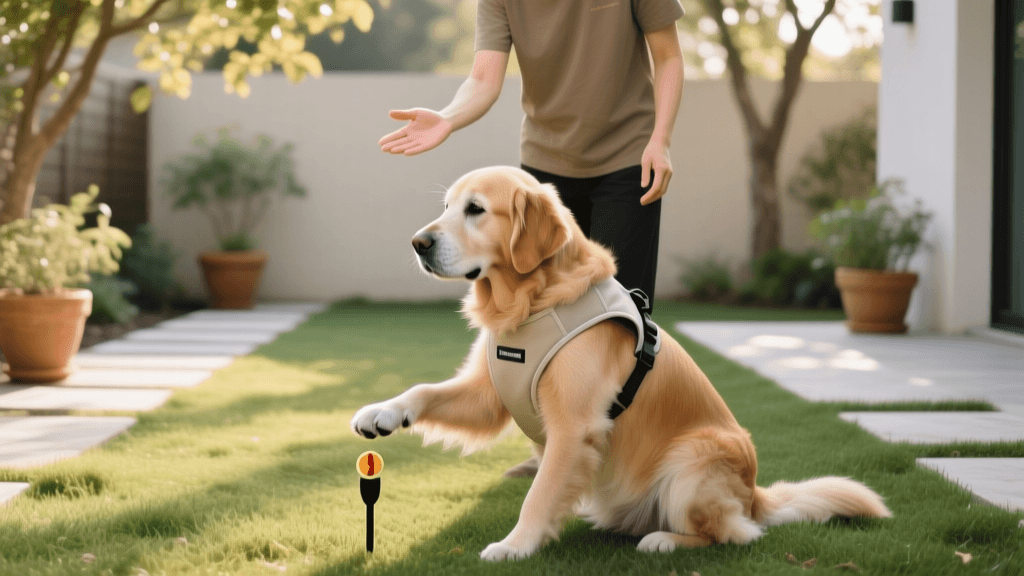
Hand targeting teaches your dog to touch their nose to your palm. This is an excellent way to guide your dog through doorways, into cars, or onto veterinary scales without needing to pull on a leash or manipulate their body.
- Hold your open palm a few inches from your dog's nose.
- When they sniff or bump your hand, mark the behavior with a 'Yes!' or a clicker, and reward with a soft treat.
- Gradually move your hand further away, encouraging them to take a step or two to reach it, but avoid making them jump or stretch uncomfortably.
2. Scent Work and Nosework
Nosework is arguably the best activity for a dog with OA. It requires zero jumping, minimal walking, and provides intense mental stimulation. You can start by hiding strong-smelling treats (like freeze-dried liver or low-sodium sardines) in a muffin tin and covering the cups with tennis balls. Encourage your dog to use their nose to find the treat and their paw or nose to dislodge the ball. As they progress, hide treats around a single room, encouraging slow, deliberate sniffing.
3. 'Speak' and 'Quiet'
Vocalization tricks require no physical movement at all. Find a trigger that makes your dog bark (like a doorbell sound played on your phone), say 'Speak,' and reward the bark. Once they understand, introduce the 'Quiet' cue by waiting for a pause in the barking, marking the silence, and rewarding. This is highly engaging and completely joint-friendly.
Therapeutic Conditioning Exercises
Incorporating physical therapy concepts into your training routine helps maintain proprioception (body awareness) and core strength, which are vital for supporting arthritic joints.
Cavaletti Poles
Cavaletti poles are low obstacles placed on the ground that encourage a dog to lift their legs deliberately, increasing joint flexion and extension without high impact. You can use PVC pipes or broomsticks resting on low supports (like books or dedicated Cavaletti bases). For a dog with OA, the poles should be set at a height of just 2 to 3 inches—enough to make them lift their paws, but not high enough to force exaggerated, painful stretching. Space the poles roughly the distance of your dog's shoulder height apart to encourage a natural, rhythmic stride.
Balance Discs and Pads
Having your dog place their front paws on an inflatable canine balance disc or a folded, thick towel while keeping their hind paws on the floor engages their core and shoulder stabilizers. Hold this position for 10 to 15 seconds, rewarding heavily. This static hold builds muscle without requiring repetitive joint movement.
Traditional vs. Adaptive OA Training
Understanding the difference between standard training and adaptive training is crucial for preventing flare-ups. Review the table below to ensure your routines are aligned with 2026 OA management standards.
| Training Element | Traditional Approach | Adaptive OA Approach (2026) |
|---|---|---|
| Session Length | 15–30 continuous minutes | 3–5 micro-sessions spread daily |
| Recall Practice | Long-line sprinting across yards | Short-distance, controlled walking/trotting |
| Trick Selection | Roll over, jump, spin, weave | Nosework, hand target, speak, paw |
| Training Surface | Grass, dirt, hard indoor floors | Orthopedic mats, non-slip foam tiles |
| Reward Type | Hard biscuits, kibble | Soft chews, joint-support pastes |
Recognizing Pain and Discomfort During Training
Dogs are stoic creatures and will often try to please their owners even when they are in pain. As a handler, you must become an expert in reading subtle canine body language. Stop the training session immediately if you notice any of the following signs:
- Reluctance or Hesitation: If your dog is slow to respond to a cue they normally know well, they may be experiencing a pain flare-up.
- Shifting Weight: Constantly shifting weight from one hind leg to another, or frequently lifting a paw while standing.
- Calming Signals: Excessive lip licking, yawning when not tired, or avoiding eye contact can indicate physical discomfort or stress.
- Trembling: Muscle shaking, particularly in the hindquarters, indicates muscle fatigue and joint strain.
- Treat Refusal: If a food-motivated dog suddenly turns away from high-value treats, their pain levels are likely overriding their appetite.
Treat Selection for Senior and OA Dogs
Finally, consider the physical act of chewing. Many older dogs with OA also suffer from dental disease. Hard biscuits can cause dental pain, which distracts from the training process. Opt for soft, easily chewable treats, or use squeeze tubes filled with dog-safe bone broth or peanut butter. Furthermore, utilize training time to administer joint supplements. Many 2026 veterinary-recommended joint chews containing Green-Lipped Mussel, EPA/DHA Omega-3s, and glucosamine are soft and highly palatable, making them perfect training rewards that double as therapeutic treatments.
By adapting your training methods, you are not just teaching your dog commands; you are actively participating in their pain management and cognitive health. With patience, the right environment, and a focus on low-impact engagement, your dog can continue to learn, bond, and thrive despite an osteoarthritis diagnosis.
anouk-beaumont
All our authors care for dogs every day — read more of their work on the authors page.