How to Train Multiple Dogs at Once Without Chaos
Learn how to train multiple dogs at once without chaos. Discover group vs individual sessions, essential gear, and turn-taking protocols for multi-pet homes.

The Challenge of Multi-Dog Training in Shared Spaces
Living with multiple dogs is a rewarding experience that brings immense joy, companionship, and entertainment to any household. However, when it comes to obedience training, behavioral conditioning, and trick teaching, managing a multi-dog environment can quickly devolve into chaos if not approached with a strategic plan. Dogs are highly social animals, and their natural pack dynamics can either work for you or against you during training sessions. According to the American Kennel Club, dogs often learn through social facilitation, meaning they mimic the behaviors of their canine housemates. While this can be a powerful tool for reinforcing good habits, it can also amplify bad behaviors, such as excessive barking, jumping, or breaking a 'stay' command.
To successfully train multiple dogs at once without losing your sanity, you must understand the delicate balance between individual attention and group dynamics. This comprehensive guide will walk you through the exact methodologies, gear, and step-by-step protocols required to foster harmony, focus, and obedience in your multi-pet household.
Individual vs. Group Training: A Strategic Comparison
Before attempting to train your dogs simultaneously, it is crucial to understand when to work with them individually and when to combine them. The ASPCA notes that behavioral issues often stem from a lack of clear communication, which is easily exacerbated when a dog is distracted by a sibling. Below is a comparison to help you structure your weekly training schedule.
| Training Type | Best Used For | Pros | Cons |
|---|---|---|---|
| Individual Sessions | Teaching new commands, addressing behavioral issues, building foundational focus. | Zero distractions; allows for tailored pacing; builds individual confidence. | Time-consuming; does not teach impulse control around other dogs. |
| Group Sessions | Proofing known commands, practicing 'stay' and 'leave it', socialization. | Capitalizes on social facilitation; teaches impulse control; highly efficient. | High risk of frustration; requires advanced management; not for new concepts. |
Essential Gear for Multi-Dog Obedience
You cannot manage multiple dogs effectively with subpar equipment. Investing in the right tools will prevent tangles, ensure safety, and allow you to deliver timely rewards.
- Stationary Tethers or Waist Leashes: Use a hands-free waist leash like the Ruffwear Roamer or install eye-hooks in your baseboards with a 3-foot carabiner tether. This keeps the 'off-duty' dog secured while you work with the 'on-duty' dog.
- Designated Training Mats: Purchase two distinct, rubber-backed mats (approximately 24x36 inches). The Ruffwear Highlands Sleeping Bag or simple bathroom rugs work perfectly. These serve as visual 'place' boundaries.
- High-Value, Low-Calorie Treats: When training multiple dogs, treat volume adds up quickly. Use Zuke's Mini Naturals (only 3 calories per treat) to maintain high motivation without causing gastrointestinal upset or obesity.
- Magnetic Treat Pouch: A pouch with a magnetic closure, such as the Dog Gone Smart Reward Pouch, allows for silent, one-handed access to treats, which is critical when you are managing two leashes and multiple dogs.
The 'Turn-Taking' Protocol: Step-by-Step
The most effective way to train multiple dogs in the same room is the 'Turn-Taking' protocol. This method teaches impulse control, patience, and polite observation. Do not attempt this until both dogs have a reliable 'sit' and 'place' command individually.
Step 1: Establish the 'Place' Command on Mats
Set up two training mats about six feet apart. Leash both dogs. Guide Dog A to their mat and give the 'place' command. Reward heavily for staying on the mat. Next, guide Dog B to their mat and do the same. The goal is for both dogs to remain on their respective mats while you stand in the center. If a dog breaks the command, calmly reset them without offering a treat, and try again.
Step 2: Implement the 15-Second Interval System
With both dogs on their mats, set a timer on your phone for 15-second intervals. For the first 15 seconds, you will engage only with Dog A. Ask for a 'sit', 'down', or 'shake', and reward. During this time, Dog B must remain on their mat. If Dog B stays quiet and on their mat, toss them a treat every 5 seconds simply for being polite. When the 15 seconds are up, say 'All done' to Dog A, and immediately pivot to Dog B for the next 15 seconds. This rapid switching prevents frustration and teaches the dogs that patience yields rewards.
Step 3: Scaling Up to Group Commands
Once both dogs can comfortably handle 5 minutes of turn-taking without breaking their mat command, you can introduce simultaneous group commands. Stand in front of both dogs and ask for a 'sit' together. Reward the dog who complies first, then immediately reward the second dog. If one dog breaks the sit before you can deliver the reward, reset both dogs and try again. This builds a cooperative environment rather than a fiercely competitive one.
Managing Canine Social Dynamics and Resource Guarding
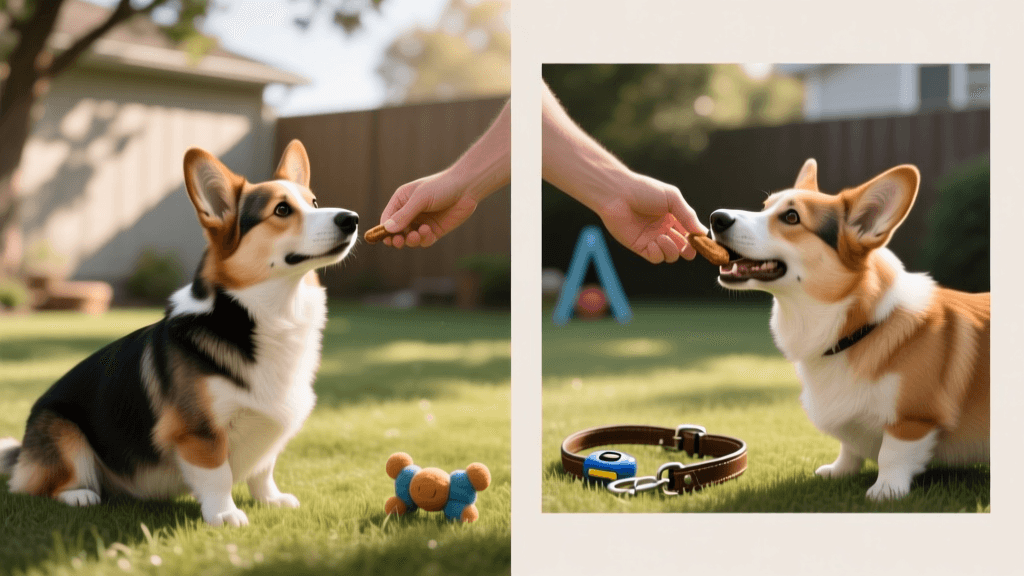
When training multiple dogs, you must be hyper-aware of resource guarding and social jealousy. Even dogs that cuddle on the couch can become aggressive when high-value resources (like treats, toys, or your undivided attention) are introduced. To mitigate this, always feed treats from your hand rather than tossing them on the floor, which can trigger a competitive scramble. If you notice one dog stiffening, staring intensely, or blocking the other dog from approaching you, immediately end the session and separate them. This is a clear sign of resource guarding, which requires individual desensitization and counter-conditioning before group work can safely resume.
Furthermore, be mindful of 'learned helplessness.' In multi-dog households, a more submissive or slower-learning dog may simply give up and shut down if a more dominant or faster-learning dog always receives the rewards. To combat this, ensure you are training the slower dog individually at least three times a week to build their independent confidence and problem-solving skills.
Conclusion
Training multiple dogs at once is an advanced skill that requires patience, meticulous planning, and the right equipment. By balancing individual foundational work with structured group sessions, utilizing the turn-taking protocol, and remaining vigilant about social dynamics, you can transform your chaotic living room into a well-oiled machine of canine obedience. Remember that consistency is your greatest ally; stick to your protocols, celebrate the small victories, and enjoy the incredible bond that comes from a harmonious multi-dog household.
tom-renshaw
All our authors care for dogs every day — read more of their work on the authors page.