Force-Free Loose Leash Walking: Front-Clip Harness Guide 2026
Master force-free loose leash walking in 2026 using front-clip harnesses and positive reinforcement. Expert steps, gear reviews, and reward timing tips.
The 2026 Consensus: Why Force-Free is the Only Way
As we navigate the dog training landscape in 2026, the veterinary and behavioral science communities have reached a unified consensus: force-free, positive reinforcement methods are not just kinder, they are scientifically superior for long-term behavioral modification. The days of relying on aversive tools like prong collars, choke chains, or electronic shock collars are firmly in the past. Modern behavioral science emphasizes that suppressing a behavior through pain or fear does not teach a dog what to do instead; it merely creates a suppressed, anxious animal prone to behavioral fallout, including reactivity and aggression.
According to the definitive position statements published by the American Veterinary Society of Animal Behavior (AVSAB), reward-based training is the standard of care for all canine behavioral issues, including leash pulling. When a dog pulls on the leash, they are typically exhibiting an opposition reflex or simply trying to reach a rewarding environmental stimulus (like a fascinating scent or another dog) faster than we are walking. Force-free training addresses this by managing the environment, utilizing biomechanically sound gear, and heavily reinforcing the desired behavior of maintaining slack in the leash.
Choosing the Right Front-Clip Harness in 2026
The foundation of any successful loose leash walking protocol is the right equipment. Back-clip harnesses, while great for hiking or car safety, actually encourage pulling by engaging a dog's natural opposition reflex—the same biomechanical mechanism that allows sled dogs to pull heavy loads. Head halters can be effective but require extensive, careful desensitization to prevent neck strain or canine discomfort. The undisputed gold standard for force-free leash training in 2026 is the front-clip harness.
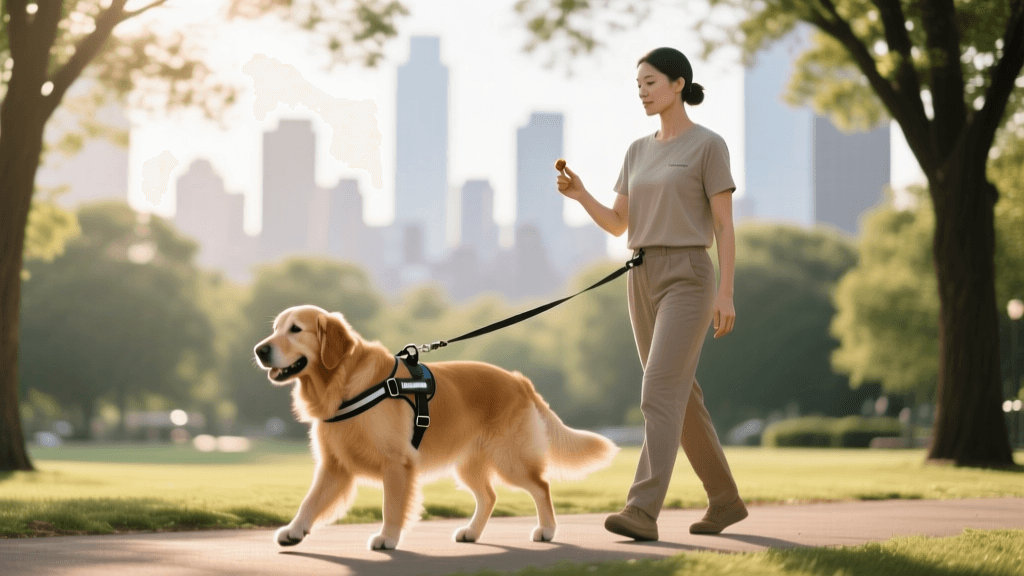
A front-clip harness features a leash attachment ring located on the chest strap, directly over the dog's sternum. When the dog pulls forward, the front attachment gently redirects their momentum laterally, turning their body back toward the handler. This disrupts the pulling cycle without causing pain, choking, or tracheal damage, giving the handler a crucial window of opportunity to mark and reward the dog for re-engaging.
Walking Tool Comparison Chart
| Walking Tool | Attachment Point | Biomechanical Impact on Pulling | Force-Free Rating |
|---|---|---|---|
| Front-Clip Harness | Chest Sternum | Redirects momentum laterally; disrupts forward drive safely | ★★★★★ |
| Back-Clip Harness | Upper Back | Engages opposition reflex; encourages pulling | ★★☆☆☆ |
| Flat Collar | Neck | Places pressure on trachea; high risk of injury | ★☆☆☆☆ |
| Head Halter | Muzzle/Snout | Steers the head; requires careful desensitization | ★★★★☆ |
| Martingale Collar | Neck (Limited Slip) | Tightens under tension; discourages pulling via discomfort | ★★☆☆☆ |
Top Front-Clip Harness Picks for 2026
- Ruffwear Front Range (2026 Edition): Featuring upgraded breathable mesh and dual attachment points, this remains a top choice for active dogs. The padded chest plate ensures comfort during long training sessions.
- 2 Hounds Design Freedom No-Pull Harness: Utilizing a unique Swiss velvet-lined chest strap and a patented control loop, this harness offers superior steering for strong, barrel-chested breeds.
- Kurgo Tru-Fit Smart Harness: Designed with a nested buckling system and a V-neck design that relieves throat pressure, it is an excellent, budget-friendly option for deep-chested breeds like Greyhounds and German Shepherds.
The 'Stop and Reset' Positive Reinforcement Protocol
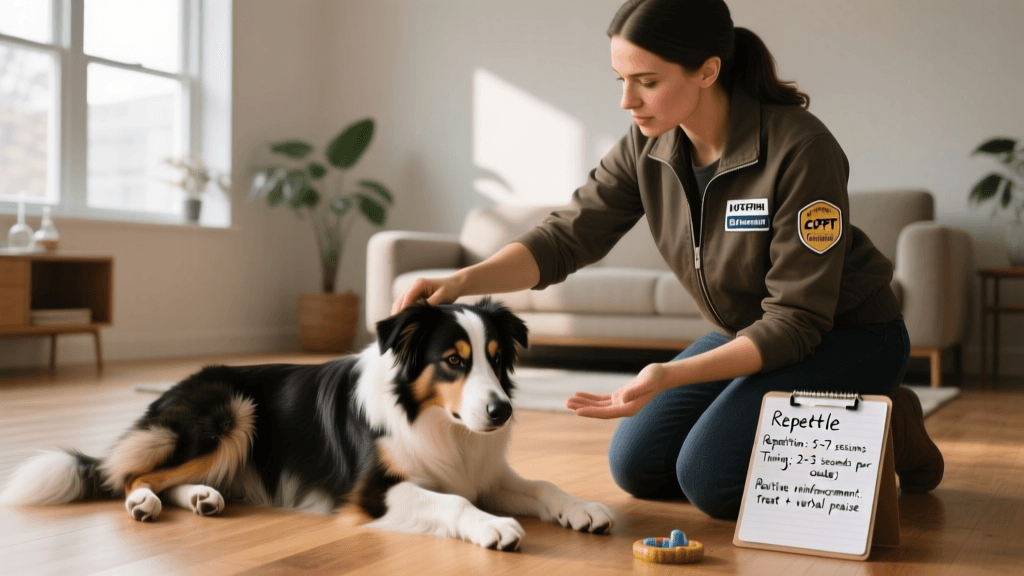
Equipped with a front-clip harness, you are ready to begin the active training phase. The goal is to teach your dog that a slack leash is the key that unlocks forward movement and environmental rewards.
Step 1: The 'Tree' Method (Negative Punishment)
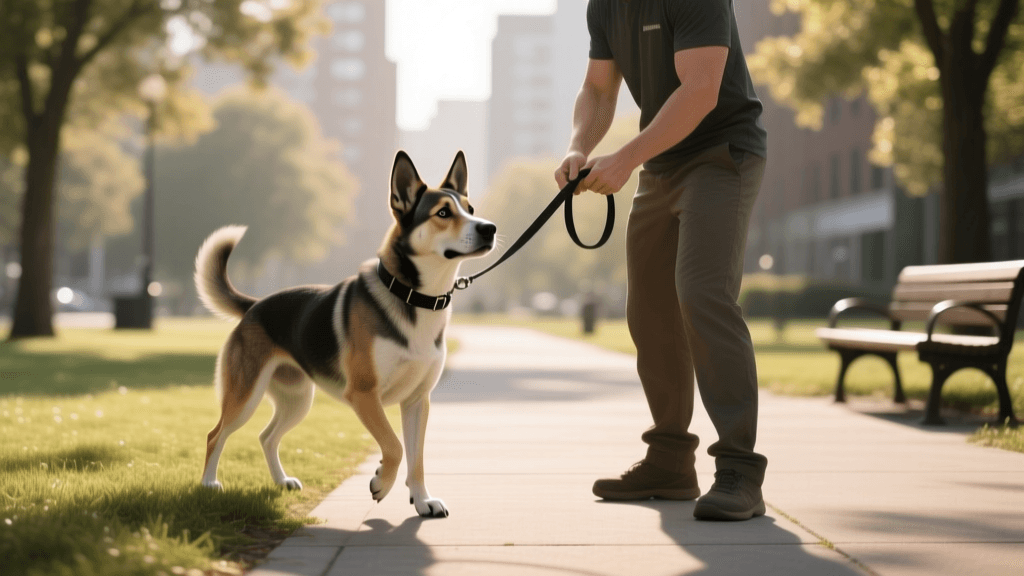
In operant conditioning, negative punishment means removing a desired stimulus to decrease a behavior. When your dog hits the end of the leash and pulls, immediately stop walking. Become a 'tree.' Do not yank the leash, do not yell, and do not reel the dog in. Simply stand still. The moment the dog turns their head back toward you, or takes a single step backward that creates slack in the leash, mark the behavior with a verbal 'Yes!' or a clicker, and resume walking. This teaches the dog that pulling results in a cessation of forward movement, while a loose leash results in progress.
Step 2: The 'Magnet Hand' Technique
For dogs that are highly distracted or have a long history of reinforced pulling, the 'Tree' method alone may not be enough. Enter the Magnet Hand. Load your hand closest to the dog with high-value, soft treats (like freeze-dried liver or boiled chicken). Hold your hand down by the seam of your pants, right where you want the dog's head to be when walking politely. Deliver a treat every two to three steps. This creates a 'magnetic' effect, keeping the dog in the heel position. As the dog becomes proficient, gradually increase the number of steps between treat deliveries (a variable reinforcement schedule).
Advanced Marker Training and Treat Delivery
Timing is everything in force-free training. According to certified professionals at Fear Free Pets, clear communication bridges the gap between the desired behavior and the reward. Using a distinct marker—such as a mechanical clicker or a consistent verbal marker like 'Yes!'—tells the dog exactly which micro-behavior earned the reward.
When training loose leash walking, treat delivery location is just as important as the timing. If you deliver the treat at chest height or in front of the dog's face, you risk encouraging jumping or forging ahead. Always deliver the treat low, near the seam of your pants, and slightly behind your leg. This reinforces the physical position of walking politely at your side rather than surging forward.
The Premack Principle: Using the Environment as a Reward
One of the most powerful tools in a modern force-free trainer's arsenal is the Premack Principle, often referred to as 'Grandma's Rule' (you must eat your vegetables before you can have dessert). In dog training, this means using a high-probability behavior (something the dog naturally wants to do, like sniffing a fire hydrant) to reinforce a low-probability behavior (walking politely on a loose leash).
Instead of relying solely on food treats, use the environment. If your dog sees a fascinating bush and begins to pull, stop. Wait for the leash to go slack and for the dog to make eye contact with you. Mark that engagement, and then use the release cue 'Go Sniff!' to allow them to investigate the bush. The ASPCA notes that allowing dogs to engage in natural, species-specific behaviors like scent work significantly reduces overall anxiety and hyperactivity on walks. By controlling access to the environment, you become the gateway to all the good things the walk has to offer.
Common Mistakes to Avoid in 2026
- Inconsistent Criteria: If you allow your dog to pull to the dog park on Tuesday, but correct them for pulling on Wednesday, you are putting them on a variable reinforcement schedule for pulling. This makes the pulling behavior much harder to extinguish. Consistency is non-negotiable.
- Using a Retractable Leash: Retractable leashes inherently teach dogs that pulling creates more leash. The thin cord also poses severe friction burn risks to both humans and dogs. Stick to a standard 4-to-6-foot biothane or leather leash for training.
- Expecting Perfection in High-Distraction Areas: If your dog cannot walk on a loose leash in your quiet living room, they will not be able to do it at a busy outdoor cafe. Proof the behavior in low-distraction environments first, gradually increasing the difficulty as your dog succeeds.
Conclusion
Loose leash walking is not an innate skill for dogs; it is a complex, unnatural behavior that we are asking them to learn. By utilizing a well-fitted front-clip harness, precise marker timing, and the Premack Principle, you can build a reliable, joyful walking routine. Embrace the force-free methodologies of 2026, and transform your daily walks from a frustrating tug-of-war into a cooperative, bonding experience.
tom-renshaw
All our authors care for dogs every day — read more of their work on the authors page.