Preventing Separation Anxiety: 2026 Puppy Safe Zone Setup
Discover how to build a separation anxiety-proof safe zone for your new puppy in 2026 using Adaptil, Furbo cameras, and a proven 14-day alone-time protocol.
The Rising Challenge of Puppy Separation Anxiety in 2026
Bringing a new dog or puppy into your home is one of life’s most rewarding experiences, but as hybrid work models solidify in 2026, new pet owners face a unique challenge: the transition between work-from-home days and office days. Dogs are incredibly perceptive creatures, and the sudden absence of their owner after a weekend of constant companionship can trigger severe distress. According to the ASPCA, separation anxiety is triggered when a dog becomes upset because of separation from their guardians, often resulting in destructive behavior, excessive vocalization, and house-soiling.
The key to preventing separation anxiety is not waiting until your dog panics when you grab your car keys. Instead, proactive owners in 2026 are utilizing advanced smart-home technology, veterinary-backed pheromone therapies, and structured desensitization protocols to build a 'safe zone' before the anxiety ever takes root. This comprehensive guide will walk you through setting up a separation-proof environment and executing a 14-day alone-time training schedule for your new dog.
Designing the Ultimate Alone-Time Safe Zone
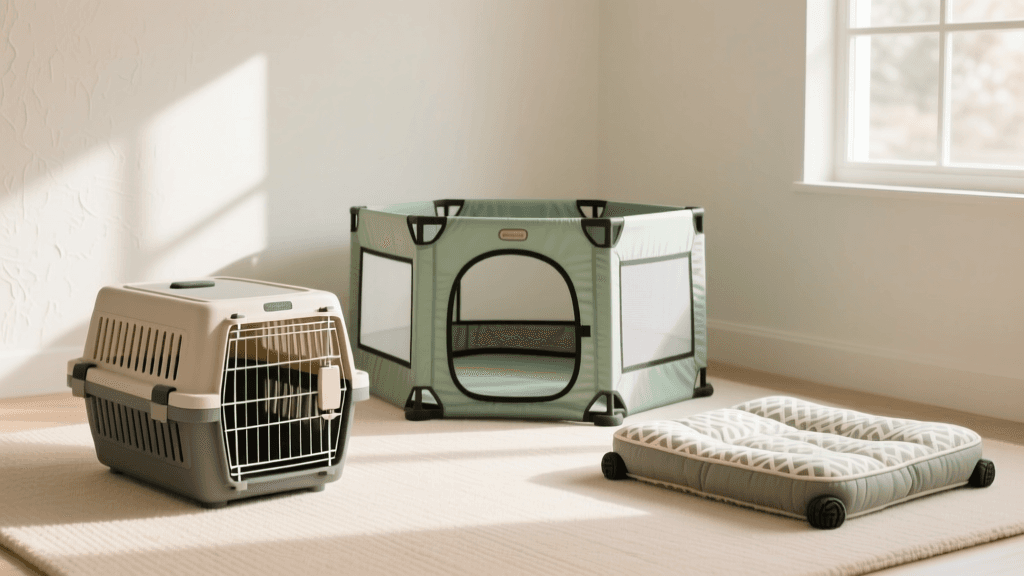
A safe zone is not simply a locked crate in a dark corner. In modern dog behavioral science, a safe zone is a designated, enriched environment where your dog feels secure, stimulated, and relaxed when left unattended. For puppies and newly adopted adult dogs, this space should be located in a low-traffic area of your home that still carries the ambient sounds of the household, such as a corner of the living room or a dedicated home office.
Pheromone Therapy: Adaptil Optimum Diffuser
To establish a baseline of calm in your dog's safe zone, veterinary behaviorists highly recommend synthetic pheromone therapy. The Adaptil Optimum Diffuser is the gold standard for 2026. Unlike older models that simply mimicked a nursing mother's pheromones, the Optimum formula utilizes a patented complex of dog-appeasing pheromones that specifically target the brain's receptors associated with security and comfort. Plug the diffuser into an outlet near the safe zone at least 48 hours before bringing your new dog home. The continuous release creates an invisible 'blanket of calm' that significantly lowers the dog's baseline cortisol levels when they are left alone.
Visual and Auditory Monitoring: Furbo 360 Dog Camera
You cannot manage what you cannot measure. The Furbo 360 Dog Camera has become an essential tool for new owners navigating alone-time training. Featuring 1080p HD video, a rotating 360-degree lens, and advanced AI activity alerts, the Furbo allows you to monitor your dog's stress signals in real-time from your smartphone. Crucially, the two-way audio and treat-tossing features allow you to interrupt mild whining before it escalates into a full-blown panic attack. In 2026, the AI features can also detect specific behaviors like vomiting or excessive barking, sending instant push notifications to your phone so you can assess whether your dog is resting peacefully or struggling with isolation.
Auditory Masking: LectroFan Evo White Noise Machine
Dogs have highly sensitive hearing, and the sound of a neighbor's door slamming or a delivery truck driving away can trigger isolation distress. Place a LectroFan Evo White Noise Machine just outside the safe zone. Set it to a continuous, non-repeating white noise or brown noise frequency. This masks unpredictable outdoor sounds that might otherwise cause your dog to bark or pace while you are away.
Cognitive Distraction Tools for Solo Sessions
A safe zone must include 'job-oriented' enrichment. When a dog is left alone with nothing to do, their brain defaults to scanning the environment for threats or seeking out their missing owner. By providing high-value, long-lasting cognitive distractions, you rewire the dog's brain to associate your departure with a positive, rewarding experience.
- The Classic Kong (Frozen): Stuff a rubber Kong toy with a mixture of plain Greek yogurt, kibble, and a smear of xylitol-free peanut butter. Freeze it overnight. Licking is a naturally soothing behavior for dogs that releases endorphins, and a frozen Kong can occupy a puppy for 30 to 45 minutes.
- Outward Hound Nina Ottosson Dog Brick Puzzle: For adult dogs or older puppies, this intermediate-level puzzle toy requires the dog to slide, flip, and lift compartments to find hidden treats. It engages their problem-solving skills and tires them out mentally, making them more likely to nap once the treats are gone.
- Snuffle Mats: Scatter a portion of their daily meal into a dense fabric snuffle mat. Foraging for food mimics natural scavenging behaviors and lowers the heart rate.
The 14-Day Alone-Time Desensitization Protocol
The American Kennel Club emphasizes that counterconditioning and desensitization are the most effective methods for treating and preventing separation anxiety. You must teach your dog that your departure is temporary and entirely unremarkable. Follow this structured 14-day protocol, utilizing your Furbo camera to monitor their stress levels. If your dog exhibits severe panic (drooling, frantic scratching, continuous howling), you have moved too fast; return to the previous step.
| Phase (Days) | Duration | Owner Action | Dog State / Goal |
|---|---|---|---|
| Days 1-3 | 5 - 10 Minutes | Step into another room, close the door, and sit quietly. Do not leave the house. | Dog remains calm, engages with Kong or puzzle toy. |
| Days 4-6 | 15 - 20 Minutes | Put on your shoes and coat, step outside the front door, lock it, and wait on the porch. | Dog settles down after initial 1-2 minutes of sniffing the door. |
| Days 7-9 | 30 - 45 Minutes | Leave the house entirely. Drive around the block or take a short walk. Monitor via Furbo. | Dog eats treats, plays with toys, and eventually falls asleep. |
| Days 10-12 | 1 - 2 Hours | Run a standard errand (e.g., grocery shopping). Maintain low-key departure and arrival. | Dog sleeps for the majority of the absence; no destructive behavior. |
| Days 13-14 | 3 - 4 Hours | Simulate a standard workday or long outing. Ensure Adaptil and white noise are active. | Dog demonstrates complete independence and comfort in the safe zone. |
Crucial Rules for Departures and Arrivals
During this 14-day protocol, your behavior is just as important as the environment. When you leave, do not say a drawn-out, emotional goodbye. Simply toss the frozen Kong into the safe zone and walk out. When you return home, ignore your dog for the first three to five minutes. Do not make eye contact, do not speak in a high-pitched voice, and do not pet them until they have all four paws on the floor and are entirely calm. This teaches the dog that your comings and goings are completely mundane events, not major emotional milestones.
What to Avoid: Common 2026 Mistakes
Even with the best gear, new owners often inadvertently sabotage their alone-time training. Avoid these critical errors:
- Stealth Departures: Sneaking out while the dog is sleeping might save you from hearing them whine, but it destroys their trust. When they wake up and realize you vanished without warning, their baseline anxiety will spike the next time you try to leave. Always give a clear departure cue (like handing them the Kong).
- Using the Safe Zone for Punishment: Never use the crate or the playpen as a 'time-out' for bad behavior. The safe zone must exclusively be associated with high-value treats, comfort, and relaxation.
- Punishing Destruction: If you come home to a chewed-up dog bed or scratched doorframe, do not yell at your dog. They cannot connect your anger to an action they performed hours ago. Destructive behavior is a symptom of panic, not disobedience. If this happens, it means the alone-time duration was pushed too far, too fast.
- Over-Exercising Before Departure: While a tired dog is generally a good thing, pushing a dog to physical exhaustion right before you leave can actually increase their cortisol levels and make them restless. Opt for a 20-minute mental enrichment walk (sniffari) instead of a high-intensity run.
Conclusion: Setting the Stage for a Confident Dog
Preventing separation anxiety requires patience, consistency, and the right environmental setup. By investing in a comprehensive safe zone featuring the Adaptil Optimum diffuser, a Furbo 360 camera, and white noise masking, you are providing your new dog with the tools they need to self-soothe. Combine this technology with the structured 14-day desensitization protocol, and you will cultivate a confident, independent companion who feels entirely secure whether you are sitting on the couch or miles away at the office. Remember, the time you invest in alone-time training during your dog's first month home will pay dividends in peace of mind for the next decade of your lives together.
priya-sutaria
All our authors care for dogs every day — read more of their work on the authors page.