The Best Puppy Crates and Starter Gear: Buyer's Guide
Discover the best puppy crates, playpens, and confinement gear. Our buyer's guide covers sizing, costs, and top picks to prepare your home for a new dog.
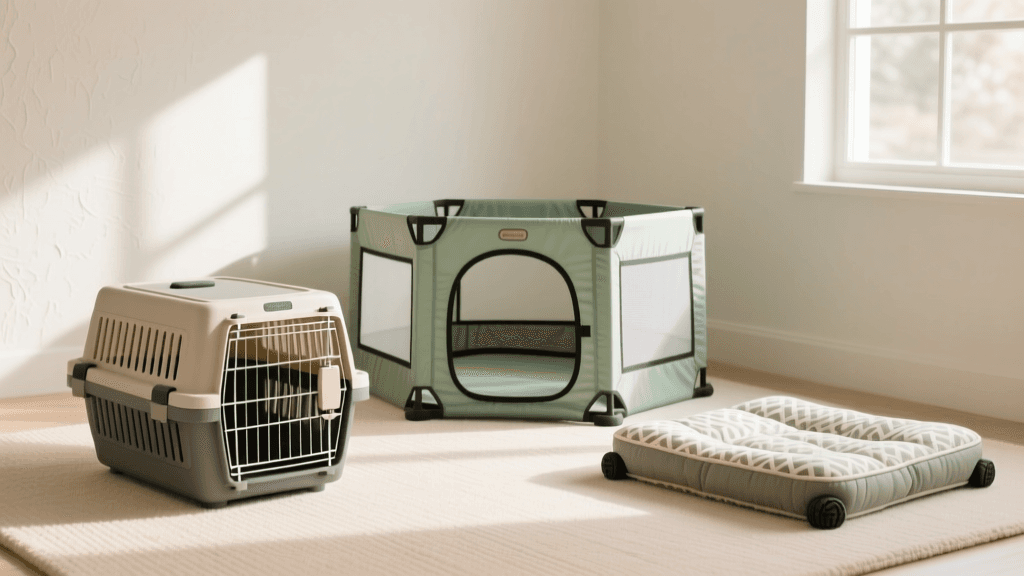
Why Proper Confinement is Crucial for New Puppies
Bringing a new puppy home is an exhilarating experience, but it also comes with the immediate responsibility of keeping your new family member safe. Puppies explore the world with their mouths and have zero concept of household dangers like electrical cords, toxic plants, or fragile heirlooms. Proper confinement is not about punishment; it is about management, safety, and establishing a predictable routine.
According to The Humane Society of the United States, crate training takes advantage of a dog's natural denning instinct. Dogs are inherently den animals, and a properly sized crate becomes a sanctuary where they feel secure. Furthermore, confinement is the cornerstone of successful housetraining. Puppies naturally avoid soiling their sleeping area, making a crate an invaluable tool for teaching bladder control and establishing a potty schedule.
How to Measure Your Puppy for a Crate
Buying the right size crate is arguably the most critical decision in this process. If a crate is too large, a puppy will use one corner as a bedroom and the opposite corner as a bathroom, completely defeating the purpose of housetraining. If it is too small, it will cause physical discomfort and anxiety.
Expert guidelines from Preventive Vet recommend the following measurement formula for growing puppies:
- Length: Measure from the tip of the nose to the base of the tail (do not include the full tail length). Add 2 to 4 inches to this measurement.
- Height: Measure from the top of the head (or the tips of the ears, if they are erect) to the ground. Add 2 to 4 inches.
- Width: Ensure the crate is wide enough for the puppy to turn around in a full circle without hitting the walls.
Pro Buyer Tip: If you are adopting a puppy that will grow into a large breed (like a Golden Retriever or German Shepherd), do not buy a small crate and upgrade later. Instead, purchase a large adult-sized crate that includes an adjustable divider panel. This allows you to expand the living space as your puppy grows, saving you money in the long run.
Top Puppy Crate Reviews: Wire, Plastic, and Premium
The market is flooded with confinement options, but not all crates are created equal. Below, we review the top three crate styles based on durability, ease of cleaning, and puppy comfort.
1. Best Overall Wire Crate: MidWest Homes for Pets iCrate
The MidWest iCrate is the gold standard for wire crates and a staple in the dog training community. It features a double-door design (front and side), which makes it incredibly easy to place in various room configurations. The slide-bolt latches are secure enough to keep most young puppies contained, and the composite plastic pan at the bottom is removable and easy to hose down after inevitable housetraining accidents.
- Best Feature: Includes a free divider panel, making it highly cost-effective for growing puppies.
- Drawback: Wire crates can feel drafty and offer little privacy unless paired with a crate cover.
- Estimated Cost: $50 - $80 (depending on size).
2. Best for Travel and Den Instincts: Petmate Sky Kennel
For puppies that exhibit high anxiety or for owners who plan to travel by air or car, a heavy-duty plastic kennel is ideal. The Petmate Sky Kennel provides a more enclosed, den-like atmosphere that naturally calms nervous dogs. It features a vault-like door with four-way locking mechanisms and is constructed from eco-friendly, heavy-duty plastic that withstands chewing and scratching far better than soft-sided alternatives.
- Best Feature: Meets most airline cargo specifications (always verify with your specific airline before flying).
- Drawback: Heavier and bulkier to move around the house compared to collapsible wire crates.
- Estimated Cost: $40 - $70.
3. Best Premium Upgradable Crate: Revol Dog Crate
The Revol crate has revolutionized the wire crate market with its modern, garage-style rolling door and single-hand operation. Unlike traditional wire crates that require two hands and awkward folding to collapse, the Revol collapses in seconds. The diamond-shaped wire mesh is specifically designed to prevent puppy paws and snouts from getting caught, a common hazard with standard square wire grids.
- Best Feature: Aesthetic design that blends into modern home decor, plus an incredibly smooth, adjustable divider.
- Drawback: Significant premium price point compared to traditional wire crates.
- Estimated Cost: $150 - $250.
Must-Have Confinement Accessories
A crate alone is not enough to ensure a smooth transition. To create a positive association with the confinement area, you need to outfit it with the right accessories:
- SmartPetLove Snuggle Puppy ($40): This plush toy features a real-feel heartbeat and a heat pack. It mimics the presence of a littermate, drastically reducing whining and separation anxiety during the first few nights.
- KONG Classic Puppy Toy ($15): Fill this durable rubber toy with puppy-safe peanut butter or plain yogurt and freeze it. It provides mental enrichment and keeps the puppy occupied while you leave the room.
- Nature's Miracle Enzymatic Cleaner ($15): Accidents will happen. Standard household cleaners do not break down uric acid, meaning your puppy will still smell the urine and return to the same spot. An enzymatic cleaner is non-negotiable for new owners.
- Fleece Crate Cover ($20 - $30): Covering a wire crate at night blocks visual stimuli, helping the puppy's brain recognize that it is time to sleep rather than time to play or bark at passing shadows.
Puppy Crate Sizing, Type, and Cost Comparison
Use the chart below to quickly reference the estimated costs and ideal use-cases for different crate types based on your puppy's projected adult weight.
| Projected Adult Weight | Recommended Crate Size | Wire Crate Cost | Plastic Kennel Cost | Premium Crate Cost |
|---|---|---|---|---|
| Under 25 lbs | 24-inch (Small) | $40 - $50 | $30 - $40 | $120 - $150 |
| 26 - 40 lbs | 30-inch (Medium) | $50 - $65 | $45 - $55 | $160 - $180 |
| 41 - 70 lbs | 36-inch (Large) | $60 - $80 | $55 - $70 | $190 - $220 |
| 71 - 90 lbs | 42-inch (XL) | $75 - $95 | $70 - $90 | $230 - $260 |
| Over 90 lbs | 48-inch (XXL) | $90 - $120 | $90 - $130 | N/A |
Setting Up the Crate for Day One
How you introduce the crate on the very first day will set the tone for your puppy's lifelong relationship with confinement. The American Kennel Club (AKC) strongly advises against forcing a puppy into the crate or using it as a time-out zone for bad behavior. The crate must always be associated with positive experiences.
Before bringing the puppy home, set the crate up in a high-traffic family area, such as the living room, so the puppy does not feel isolated. Leave the door propped open and toss high-value treats inside. Feed all of your puppy's meals inside the crate with the door open during the first week. When it is time for a nap, place the tired puppy inside with a safe chew toy, close the door, and sit nearby. Gradually increase the distance between you and the crate over the first two weeks.
Investing in the right crate and accessories before your puppy arrives is one of the most proactive steps you can take as a new dog owner. By selecting a properly sized, secure enclosure and pairing it with comforting accessories, you are setting the stage for a well-adjusted, safely housetrained, and happy companion.
jonas-cole
All our authors care for dogs every day — read more of their work on the authors page.