Managing Leash Reactivity 2026: Adaptil Collars & Counterconditioning
Discover how to manage canine leash reactivity in 2026 by combining Adaptil Optimum pheromone collars with the proven Engage-Disengage training protocol.
Leash reactivity remains one of the most pervasive and emotionally taxing behavioral challenges for dog owners in 2026. Whether your dog lunges at passing bicycles, barks frantically at other dogs, or freezes in fear at the sight of a stranger, managing these outbursts requires a multifaceted approach. In the modern era of canine behavioral science, we no longer rely solely on obedience commands to suppress reactions. Instead, the 2026 gold standard for reactive dog management integrates physiological calming aids with evidence-based counterconditioning protocols.
In this comprehensive guide, we will explore how to combine the Adaptil Optimum pheromone collar with the highly effective Engage-Disengage training protocol to lower your dog's arousal threshold and transform your daily walks from a source of stress into an opportunity for bonding and mental enrichment.
Understanding the Neurology of Canine Reactivity
Before implementing any training protocol, it is crucial to understand that leash reactivity is rarely rooted in true aggression. According to the Cornell University College of Veterinary Medicine, the vast majority of reactive behaviors are driven by fear, anxiety, or barrier frustration. When a dog is confined to a leash, their natural 'flight' option is removed. Consequently, they resort to 'fight' or 'fright' displays—such as barking and lunging—to increase the distance between themselves and the perceived threat.
When a dog spots a trigger, their amygdala hijacks the brain, flooding their system with cortisol and adrenaline. In this heightened state of arousal, the dog is physically incapable of learning new obedience cues. This is why traditional correction-based methods often fail or exacerbate the problem. To achieve lasting behavioral change in 2026, certified behaviorists emphasize the need to keep the dog 'under threshold' while simultaneously providing physiological support to lower their baseline anxiety.
The Physiological Foundation: Adaptil Optimum in 2026
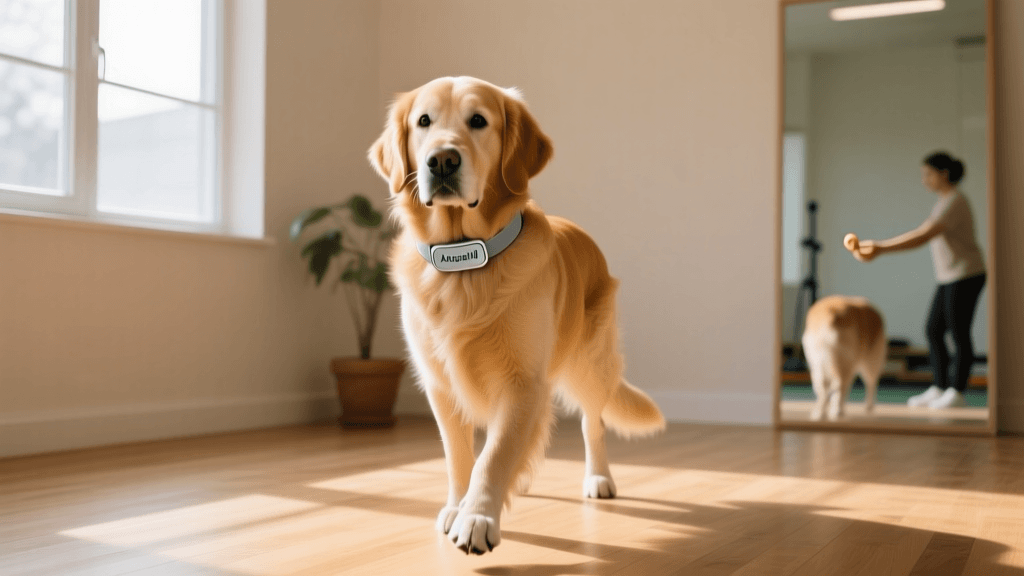
One of the most reliable tools for lowering a dog's baseline anxiety is the Adaptil Optimum collar. Unlike its predecessors, the 2026 formulation of the Adaptil Optimum utilizes an advanced synthetic dog-appeasing pheromone (DAP) complex that mimics the comforting pheromones released by a nursing mother dog.
How It Works for Reactive Dogs
When worn continuously, the Adaptil Optimum collar uses the dog's natural body heat to activate the pheromone release. These chemical signals are detected by the vomeronasal organ in the dog's snout, sending a direct neurochemical message to the brain that the environment is safe. While it is not a 'magic cure' that will instantly stop a dog from barking, it significantly widens the dog's reactivity threshold. A dog that might normally react to another dog at 50 feet may now remain calm until the trigger is 30 feet away, giving you a critical window to implement behavioral training.
Usage and Pricing for 2026
- Cost: Approximately $34.99 for a single collar (lasting 30 days) or $89.99 for a 3-pack in 2026.
- Fitting: The collar must be snug against the skin (you should be able to fit two fingers between the collar and the dog's neck) and must not be removed during baths or swims, as the pheromone matrix is water-resistant.
- Timeline: It takes 48 to 72 hours for the pheromones to reach full efficacy. Begin your Engage-Disengage training protocol only after the collar has been worn for three full days.
The Behavioral Protocol: The Engage-Disengage Game
Developed by Leslie McDevitt in her seminal 'Control Unleashed' framework, the Engage-Disengage game is a classical counterconditioning and operant conditioning exercise. It teaches the dog that seeing a trigger predicts a high-value reward from the handler, effectively rewiring their emotional response. The American Kennel Club (AKC) frequently recommends this style of desensitization for dogs struggling with barrier frustration and fear-based reactivity.
Step 1: The Setup and Threshold Management
Find an environment where triggers (like other dogs or joggers) are present but at a distance where your dog notices them but does not react. This is your 'working distance.' If your dog is barking, lunging, or refusing treats, you are over threshold. Move further away immediately.
Step 2: Engage (Mark the Look)
The moment your dog looks at the trigger, use a verbal marker like 'Yes!' or click a clicker. This marks the exact behavior you are rewarding: noticing the trigger calmly.
Crucial Detail: Do not wait for the dog to react. Mark the look the second their eyes lock onto the trigger, before they have time to process fear or frustration.
Step 3: Disengage (The Treat Delivery)
Immediately after the marker, present a high-value treat directly to your dog's nose, luring their head away from the trigger and toward you. The treat must be of exceptional value—think freeze-dried beef liver or roasted chicken, not dry kibble. The dog eats the treat, successfully 'disengaging' from the trigger.
Step 4: Repetition and Fading the Lure
Repeat this process 10 to 15 times per session. As the dog begins to understand the game, you will notice a shift: the dog will look at the trigger, and then voluntarily turn their head to look at you, anticipating the treat. Once this voluntary disengagement occurs consistently, you have successfully shifted from classical conditioning to operant conditioning. The dog is now actively choosing to look at you rather than react to the trigger.
'The goal of counterconditioning is not to force the dog to obey a command while stressed, but to change the underlying emotional response to the trigger from threat to predictor of good things.' — Principles of Fear Free Behavioral Modification.
2026 Gear and Treat Comparison for Reactive Dogs
Success in the Engage-Disengage protocol relies heavily on the right equipment. Fumbling with treat pouches or using restrictive gear that causes pain will elevate your dog's stress and ruin your timing. Below is a comparison of the top recommended gear for reactive dog management in 2026.
| Category | Recommended 2026 Product | Why It Works for Reactivity | Estimated Cost |
|---|---|---|---|
| Harness | Perfect Fit Fleece-Lined Y-Harness | Y-shape prevents shoulder restriction; fleece lining reduces tactile anxiety and chafing during sudden movements. | $65.00 |
| Leash | Leather Brothers Biothane Long Line (15ft) | Provides a safe buffer zone for threshold management without the tangling and friction burns of nylon. | $38.50 |
| Treat Pouch | Treatpod 2.0 Quick-Release Silicone | Magnetic closure allows for sub-second treat retrieval; silicone is easily washable for messy high-value meats. | $22.99 |
| High-Value Treat | Ziwi Peak Air-Dried Venison | Novel protein with high palatability; soft texture allows for rapid consumption without breaking the dog's focus. | $45.00 / lb |
Environmental Management and Smart Tracking
In 2026, managing a reactive dog extends beyond the training session. Environmental management is critical to prevent 'trigger stacking'—a phenomenon where multiple minor stressors accumulate over the day, causing the dog's cortisol levels to spike and resulting in an explosive reaction to a minor trigger.
To mitigate trigger stacking, utilize smart home technology and wearables. While the Adaptil Optimum collar handles the pheromone baseline, pairing it with a smart activity tracker like the Fi Series 4 collar can help you monitor your dog's sleep quality and resting heart rate. A sudden drop in deep sleep or an elevated resting heart rate indicates that your dog's nervous system is overloaded. On these days, skip the leash walks entirely and opt for indoor scent work or lick-mat enrichment to allow their cortisol levels to return to baseline.
Furthermore, the Fear Free Pets initiative emphasizes the importance of creating a 'safe haven' at home. For reactive dogs, this means providing a sound-dampened crate or a designated quiet room equipped with white noise machines and blackout curtains, especially if your dog is also sensitive to neighborhood noises that might compound their outdoor reactivity.
Tracking Your Progress
Behavioral modification is a marathon, not a sprint. Keep a digital or physical 'Reactivity Journal' to track your Engage-Disengage sessions. Note the date, the distance to the trigger, the type of trigger, and your dog's reaction level on a scale of 1 to 5. Over the course of 8 to 12 weeks, you should see a measurable decrease in the reaction level and a reduction in the working distance required to keep your dog under threshold.
Conclusion
Managing leash reactivity in 2026 requires empathy, patience, and a reliance on modern behavioral science. By utilizing the Adaptil Optimum collar to provide a continuous stream of calming pheromones, and systematically applying the Engage-Disengage protocol to rewire your dog's emotional associations, you can profoundly improve your dog's mental wellbeing. Remember that the goal is not to create a robotically obedient dog, but to foster a confident, relaxed companion who feels safe navigating the world by your side. If your dog's reactivity includes biting or severe panic, always consult a certified veterinary behaviorist to develop a tailored, safe intervention plan.
anouk-beaumont
All our authors care for dogs every day — read more of their work on the authors page.