How to Train Your Dog to Take Pills: A Step-by-Step Guide
Learn how to train your dog to take pills and daily medication stress-free with our step-by-step guide, expert tips, and treat recommendations.
The Challenge of Canine Medication Administration
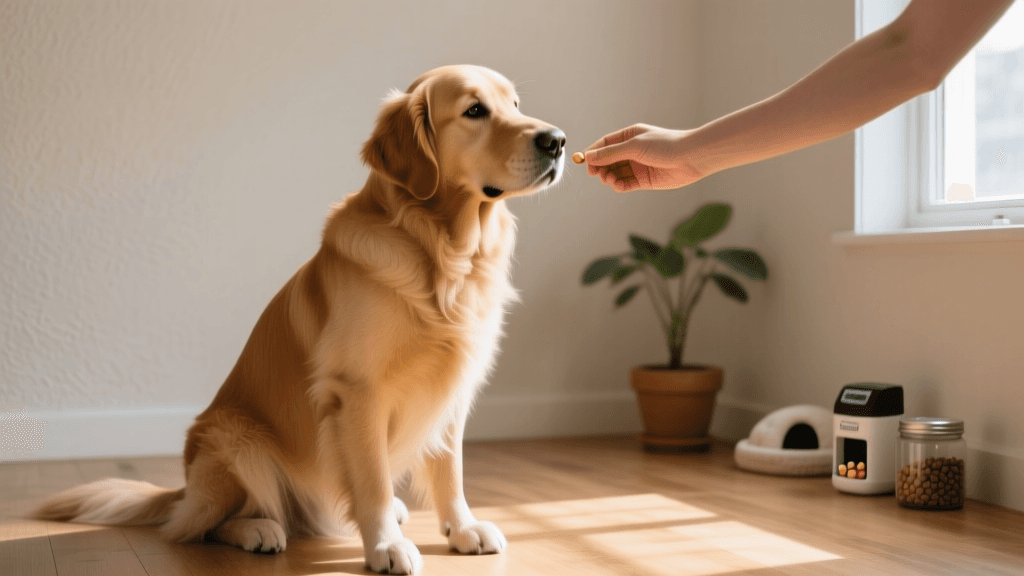
Administering daily medication to a dog is one of the most common stressors for pet owners. Whether your dog requires a short course of antibiotics for an infection or a lifelong supplement for joint health, the battle of giving your dog a pill can quickly turn into a stressful wrestling match. Dogs have an extraordinary sense of smell and an evolutionary instinct to be wary of unfamiliar objects in their food. When a dog detects a pill, they will often eat the food around it and leave the bitter tablet on the floor, or worse, spit it out directly into your hand.
According to the American Kennel Club (AKC), positive reinforcement and strategic treat-hiding are the most effective ways to administer oral medications without causing fear or anxiety. Training your dog to take pills is not just about tricking them once; it is about building a routine where accepting medication becomes a predictable, rewarding experience. This step-by-step guide will walk you through the psychology, tools, and training techniques required to make pill time a breeze.
Essential Supplies for Medication Training
Before beginning your training sessions, gather the right tools. Having high-value, aromatic treats is crucial to masking the scent and taste of the medication.
- Commercial Pill Pockets: Products like Greenies Pill Pockets or Tomlyn Pill-Masker Paste are specifically designed to conceal pills. They are highly aromatic and moldable. Expect to spend between $6 and $12 per package.
- High-Value Training Treats: Small, soft treats like boiled chicken breast, low-sodium hot dog slices, or freeze-dried liver. These should be pea-sized to ensure rapid swallowing.
- Decoy Kibble: Your dog's standard dry food to use as a warm-up.
- Pill Gun (Pet Piller): A plastic syringe-like device with a soft rubber tip, costing around $5 to $10, used for manual administration if hiding methods fail.
Foods to Strictly Avoid When Hiding Pills
While many human foods are great for hiding pills, some are highly toxic to dogs. Never use the following to conceal medication:
- Peanut butter containing Xylitol (birch sugar), which is fatal to dogs.
- Grapes or raisins, which can cause acute kidney failure.
- Chocolate, caffeine, or macadamia nuts.
- Any foods seasoned with onion or garlic powder.
Step 1: Understand the Medication and Prepare
Before attempting to give your dog any pill, consult your veterinarian or the prescription label. You must determine if the medication can be crushed, split, or taken with food. Some medications, such as certain extended-release antibiotics or enteric-coated drugs, must be swallowed whole to be effective and to prevent stomach ulcers. If the pill can be crushed, your job becomes significantly easier, as you can mix the powder into a spoonful of plain, unsweetened yogurt or wet dog food. If it must remain whole, proceed to the decoy training method.
Step 2: The Decoy Method (Three-Treat Technique)
The Decoy Method, often referred to as the 'Three-Treat Technique,' relies on canine greed and rapid swallowing. The goal is to make the dog swallow the third treat without chewing it, thereby ingesting the hidden pill.
How to execute the Decoy Method:
- Treat One (The Warm-Up): Show your dog an empty pill pocket or a piece of hot dog. Let them sniff it and eat it normally. This builds anticipation.
- Treat Two (The Decoy): Immediately offer a second, identical empty treat. The dog will eat this quickly, realizing that more treats are coming.
- Treat Three (The Pill): Present the treat with the pill hidden inside. Because the dog is anticipating a fourth treat (which you should have ready in your other hand), they will likely gulp the third treat whole to get to the next one.
Timing is Critical: The VCA Animal Hospitals note that the transition between treats should take less than 1.5 seconds. If you pause to fumble with the pill pocket, the dog will slow down, chew carefully, and discover the pill.
Step 3: Desensitization Training Sessions
If your dog is already 'pill-shy'—meaning they have learned to associate pill pockets with the bitter taste of medicine—you must reset their expectations through desensitization. Do not use real medication during this phase.
A 5-Day Desensitization Schedule
- Days 1-2: Feed your dog 3 to 5 empty pill pockets randomly throughout the day as high-value rewards for basic commands like 'sit' or 'down'.
- Day 3: Introduce the Decoy Method using only empty pill pockets. Practice the 1.5-second timing.
- Day 4: Insert a 'fake pill' into the third treat. A small piece of kibble, a tiny vitamin, or a pea works perfectly. Practice the Decoy Method with the fake pill.
- Day 5: Administer the actual medication using the established routine.
By removing the negative stimulus (the bitter pill) for several days, you rebuild the dog's trust in the delivery vehicle.
Comparison Chart: Pill Delivery Methods
Not all dogs respond to the same methods. Below is a comparison of the most common pill administration techniques to help you choose the best approach for your pet's temperament.
| Method | Success Rate | Pros | Cons | Average Cost |
|---|---|---|---|---|
| Pill Pockets / Paste | High | Easy, highly palatable, low stress | Adds calories, some dogs spit the pill | $6 - $12 |
| Decoy Method | Very High | Encourages gulping, uses psychology | Requires good timing and prep | $0 (uses treats) |
| Manual Pilling | Medium | No extra calories, guaranteed ingestion | High stress, risk of bite or throat scratch | $0 |
| Pill Gun (Pet Piller) | Medium-High | Keeps fingers safe, places pill deep | Can cause gagging, requires practice | $5 - $15 |
| Compounded Flavors | Very High | Tailored taste (beef/chicken), liquid form | Requires pharmacy, wait time, higher cost | $15 - $40+ |
Step 4: Manual Administration (When Hiding Fails)
If your dog is a master at spitting out pills, or if they are on a strict diet that prohibits high-calorie pill pockets, manual administration may be necessary. The American Veterinary Medical Association (AVMA) advises pet owners to remain calm and gentle during manual pilling to prevent the dog from developing a long-term phobia of handling.
Step-by-Step Manual Pilling Guide
- Positioning: Kneel beside your dog or have them sit in a corner so they cannot back away. Place one arm gently over their shoulders to steady them.
- Opening the Jaw: With your non-dominant hand, grasp the upper jaw just behind the canine teeth. Tilt the dog's head back so their nose points toward the ceiling. Their lower jaw will naturally drop open.
- Placing the Pill: Use your dominant hand to hold the pill between your thumb and index finger. Use your middle finger to gently pull the lower jaw down further. Place the pill as far back on the base of the tongue as possible.
- The Swallow Reflex: Immediately close the dog's mouth and hold it gently but firmly shut. Stroke their throat in a downward motion or blow a quick, gentle puff of air onto their nose. This triggers the natural swallow reflex.
- The Reward: The moment you feel or see the swallow, release the head, offer enthusiastic praise, and give a high-value liquid treat like low-sodium chicken broth to wash the pill down.
Step 5: Exploring Veterinary Alternatives
If training and manual administration are causing severe stress for both you and your dog, it is time to consult your veterinarian about alternative formulations. Modern veterinary medicine offers several solutions for pill-averse dogs:
- Compounding Pharmacies: Vets can send prescriptions to compounding pharmacies that flavor the medication with beef, chicken, or fish. The medication can be turned into a flavored liquid, a chewable treat, or even a transdermal gel that is rubbed into the hairless part of the inner ear.
- Chewable Formulations: Many common medications, such as Apoquel for allergies or Bravecto for flea and tick prevention, are manufactured as flavored chewables that dogs willingly eat off the floor.
- Long-Acting Injections: For certain conditions, vets can administer an injection that lasts for weeks or months, completely eliminating the need for daily oral medication.
Troubleshooting Common Issues
My dog is foaming at the mouth after taking the pill.
This is usually a reaction to the extremely bitter taste of the medication's outer coating, not necessarily a toxic reaction. If the pill was crushed or partially chewed, the bitter powder causes immediate salivation. Next time, ensure the pill is hidden deeper inside a larger ball of Pill-Masker paste, or ask your vet if the medication can be coated in a gel capsule.
My dog holds the pill in their cheek and spits it out later.
Dogs are notorious for 'cheeking' pills. If using the Decoy Method, ensure the third treat is small enough that it cannot be comfortably stored in the cheek pouch. If using manual pilling, ensure you are placing the pill past the tongue's hump and waiting for a definitive swallow before letting go.
Conclusion
Training your dog to take pills is an investment in their long-term health and your mutual bond. By utilizing the Decoy Method, practicing desensitization, and understanding the tools available, you can transform medication time from a daily battle into a quick, rewarding routine. Always prioritize positive reinforcement, and never hesitate to reach out to your veterinarian or a compounding pharmacy if you need a customized solution for your furry friend.
anouk-beaumont
All our authors care for dogs every day — read more of their work on the authors page.