Stop Puppy Pulling: 2 Hounds Freedom Harness Guide 2026
Discover how the 2 Hounds Design Freedom No-Pull Harness stops puppy pulling in 2026. Includes sizing, fitting, and leash training tips for young dogs.
The Critical Window: Why Puppy Leash Training Matters in 2026
Welcome to the challenging but deeply rewarding world of puppy leash training. As we navigate the dog care and behavioral science landscape in 2026, the consensus among veterinary behaviorists and certified professional dog trainers is overwhelmingly clear: force-free, positive reinforcement methods yield the absolute best long-term results for canine mental health, physical safety, and obedience. When your new puppy arrives home, typically around eight weeks of age, introducing them to the concept of walking on a leash is one of the most crucial developmental milestones you will tackle together.
However, puppies are not born with an innate understanding of leash pressure. In fact, their natural biological instinct when feeling tension against their body is to pull harder against it—a phenomenon known as the opposition reflex. This is where selecting the right equipment becomes non-negotiable. Using outdated tools or poorly fitted gear can not only stall your training progress but also cause lasting physical and psychological harm to your growing dog. In this comprehensive guide, we will explore why the 2 Hounds Design Freedom No-Pull Harness remains the gold standard for puppy leash training in 2026, how to properly size it for a growing dog, and the exact step-by-step protocol to stop pulling before it becomes a lifelong habit.
Why Traditional Collars Fail (and Harm) Growing Puppies
Before diving into harness mechanics, it is vital to understand why traditional flat collars and slip leads are no longer recommended for puppy walking. A puppy's trachea (windpipe) and cervical spine are incredibly delicate and still developing. When a puppy pulls on a flat collar, all the kinetic force is concentrated directly on their throat.
According to the Humane Society of the United States, front-clip harnesses are strongly advocated over traditional neck collars to protect a dog's delicate airway and spine. Breeds particularly prone to tracheal collapse, such as Pomeranians, Chihuahuas, Toy Poodles, and Yorkshire Terriers, are at an elevated risk. Even in larger, sturdier breeds, repeated pressure on the neck can lead to chronic inflammation, thyroid damage, and increased intraocular pressure. By shifting the point of contact from the neck to the chest and shoulders, a well-designed no-pull harness completely eliminates these respiratory and orthopedic risks while giving you superior steering control.
Product Spotlight: 2 Hounds Design Freedom No-Pull Harness
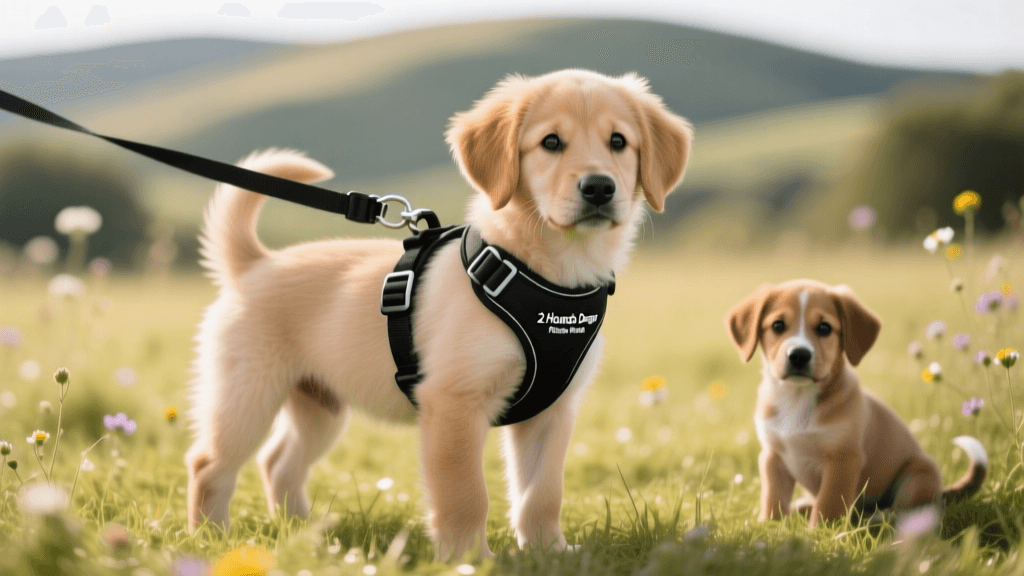
In 2026, the market is flooded with cheap, generic harnesses that promise to stop pulling but fail in execution. The 2 Hounds Design Freedom No-Pull Harness stands out because it was engineered with input from veterinary behaviorists to address the specific biomechanics of a pulling dog. Retailing for approximately $44.99 in 2026, it is an investment that pays dividends in your puppy's safety and your peace of mind.
Key Features for Puppy Comfort and Control
- Patented Front Martingale Loop: Unlike standard front-clip harnesses that simply pivot the dog, the Freedom harness features a martingale loop on the chest. When the puppy pulls, the loop gently and evenly tightens just enough to create a tactile sensation that discourages pulling, without ever choking or restricting breathing.
- Dual-Clip System: It features both a front chest D-ring and a back D-ring. Using a double-ended leash (clipped to both rings simultaneously) provides unparalleled steering and braking power for strong, excitable puppies.
- Swiss Velvet Lining: Puppies have sensitive skin that is easily chafed by rough nylon webbing. The chest strap of this harness is lined with plush Swiss velvet, preventing the armpit rubbing that plagues cheaper alternatives.
- Four-Point Adjustment: Puppies are awkwardly proportioned and grow in unpredictable spurts. The four adjustment points ensure a custom, secure fit that prevents the puppy from backing out and escaping.
2 Hounds Freedom Harness Sizing Chart for Puppies
One of the biggest mistakes new owners make is buying a harness that is far too large, assuming the puppy will 'grow into it.' A loose harness will chafe, restrict shoulder movement, and allow the puppy to slip out. You must measure your puppy's girth (the widest part of the ribcage, just behind the front legs) and buy the size that fits them today. You may need to size up once or twice during their first year.
| Breed Category | Example Breeds | Weight at 3 Months | Estimated Girth at 3 Months | Recommended Harness Size |
|---|---|---|---|---|
| Toy / Small | Chihuahua, Toy Poodle | 3 - 6 lbs | 11 - 14 inches | XS (14-20 inch girth) |
| Medium | Beagle, Cocker Spaniel | 8 - 12 lbs | 15 - 18 inches | S (18-24 inch girth) |
| Large | Labrador, Golden Retriever | 15 - 25 lbs | 19 - 22 inches | M (22-28 inch girth) |
| Giant | Great Dane, Mastiff | 30 - 45 lbs | 24 - 28 inches | L (28-34 inch girth) |
Note: Always use a soft measuring tape to measure your puppy's actual girth rather than relying solely on weight estimates, as individual body condition and coat thickness vary wildly.
Step-by-Step Puppy Leash Training Protocol
Equipping your puppy with the right harness is only half the battle. The American Kennel Club emphasizes that early positive exposure to walking gear is essential for preventing leash reactivity and pulling habits later in life. Follow this phased approach to build a reliable loose-leash walk.
Phase 1: Indoor Desensitization (Weeks 8-10)
Before you ever attach a leash, your puppy must view the harness as a predictor of wonderful things. Place the harness on the floor and reward your puppy with high-value treats (like boiled chicken or freeze-dried liver) simply for sniffing it. Next, slip it over their head without clipping the buckles, feed a handful of treats, and immediately remove it. Repeat this until the puppy shows excitement when the harness appears. Once they are comfortable, buckle it on, let them wear it during meal times or play sessions indoors, and ignore any initial scratching or rolling.
Phase 2: Front-Clip Redirection (Weeks 10-14)
Once your puppy is fully vaccinated and cleared for outdoor walks, attach your leash exclusively to the front chest D-ring. When the puppy surges forward to chase a squirrel or greet a stranger, the front clip will gently redirect their momentum back toward you. The moment the leash goes slack, mark the behavior with a verbal 'Yes!' or a clicker, and deliver a treat right at the seam of your pants. This teaches the puppy that the 'slack leash zone' is where all the rewards happen. If they pull, simply stop walking like a tree. Do not yank the leash; just wait for them to turn and look at you, which naturally creates slack, then reward and resume walking.
Phase 3: Proofing the Behavior Outdoors (Months 4-6)
As your puppy enters adolescence, environmental distractions will peak. This is where the dual-clip system shines. Use a double-ended leash attached to both the front and back D-rings. This gives you the steering control of the front clip with the stabilizing security of the back clip. Practice 'engagement checks' by calling your puppy's name every few steps and rewarding them for making eye contact while moving. If they begin to pull toward a distraction, use the front clip to guide them in a U-turn away from the trigger, resetting their brain and rewarding them when they return to your side.
Troubleshooting Common Puppy Walking Quirks
Even with the best no-pull harness, puppies will test your patience. Here is how to handle the most common 2026 puppy walking challenges:
- The Leash Biter: Puppies explore the world with their mouths, and a moving leash looks like a tug toy. If your puppy bites the leash, do not pull back (this triggers a game of tug). Instead, carry a designated 'decoy toy.' When they latch onto the leash, immediately offer the decoy toy and praise them for biting the appropriate item.
- The 'Brake' Maneuver: Some puppies become overwhelmed and simply sit down, refusing to move. Never drag a puppy by the harness. Instead, crouch down, offer a high-value treat a few feet away, and encourage them to come to you. If they are truly overstimulated, pick them up, move to a quieter environment, and end the training session on a positive note.
- Chafing or Hair Loss: If you notice missing hair behind the front legs, the harness is either too loose (causing friction) or you are leaving it on for too long. The 2 Hounds Freedom harness should be snug enough that you can slide two fingers under the webbing, and it should be removed immediately after your walk is over.
Conclusion
Raising a well-mannered dog in 2026 requires patience, consistency, and the right tools. By ditching the traditional neck collar and utilizing the humane, biomechanically sound design of the 2 Hounds Design Freedom No-Pull Harness, you are protecting your puppy's physical health while accelerating their learning curve. Remember that leash training is a marathon, not a sprint. Celebrate the small victories, keep your training sessions short and joyful, and enjoy the journey of exploring the world together on a perfectly slack leash.
aaron-whyte
All our authors care for dogs every day — read more of their work on the authors page.