Safe Chew Toys for Dogs
Find the best safe chew toys for dogs and learn a step-by-step behavior protocol to stop destructive chewing.

Destructive chewing is one of the most common reasons dog owners seek behavioral help—and it's also one of the most solvable. The right approach combines identifying why your dog is chewing inappropriate items with redirecting that drive toward safe chew toys for dogs that satisfy their needs without destroying your home.
This guide walks you through the root causes, medical conditions to rule out first, a structured training protocol, and exactly which chew toys are safe (and which are dangerous). Whether you're dealing with a teething puppy or an adult dog who destroys furniture when left alone, you'll find actionable steps here.
Destructive chewing is defined as a dog repeatedly chewing household items (furniture, shoes, walls, baseboards, cords, remote controls) rather than designated chew toys. The clinical threshold for a behavior problem—rather than normal exploratory behavior—is:
- Frequency: 3+ incidents per week over a period of 2+ weeks
- Value of items destroyed: Targeting items with owner scent (shoes, pillows, remotes) rather than random objects
- Context pattern: Chewing occurs primarily when the dog is alone, crated, or separated from the owner
- Escalation: The behavior is worsening over time, not diminishing
Normal chewing (puppies exploring, dogs gnawing on their own toys) does not meet this threshold. If your dog chews a toy you gave them until it falls apart, that's a product durability problem, not a behavior problem.
Why Does My Dog Chew Everything? Root Cause Analysis
Before selecting safe chew toys for dogs or starting any training protocol, you need to understand the driver behind the behavior. Chewing is a symptom, not the disease. Here's a diagnostic framework to identify your dog's root cause:
Work through these in order. The first match is most likely your dog's primary driver:
- Teething (puppies 3–7 months): Gums are inflamed, dog seeks relief through chewing hard or textured surfaces. Look for: drooling, pawing at mouth, baby teeth found around the house. Timeline: Resolves naturally by 7–8 months with proper teething toys.
- Separation Anxiety: Chewing happens only when the owner is absent or the dog is confined. Items targeted are near exit points (door frames, window sills) or carry the owner's scent. Often accompanied by vocalization, pacing, or elimination. Accounts for roughly 20–40% of destructive chewing cases in adult dogs, per Merck Veterinary Manual.
- Boredom/Understimulation: Dog has adequate physical exercise but insufficient mental enrichment. Chewing is indiscriminate—not targeted at scent-laden items. Often seen in high-drive breeds (Border Collies, Belgian Malinois, Siberian Huskies) and working-line dogs kept in low-activity households.
- Fear/Stress Response: Chewing intensifies during thunderstorms, fireworks, construction noise, or after environmental changes (moving, new household member). The dog chews as a self-soothing displacement behavior.
- Medical/Pain-Related: Sudden onset of chewing in an adult dog who previously didn't chew. May indicate dental pain, gastrointestinal discomfort (dogs sometimes chew to trigger saliva production for acid reflux relief), or nutritional deficiencies. This requires veterinary evaluation before any behavior modification.
Medical Rule-Out: When to See Your Vet First
Before investing in a training protocol or buying a new set of safe chew toys for dogs, rule out medical causes. Approximately 10–15% of sudden-onset destructive chewing in adult dogs has an underlying medical component, and no amount of training will fix a pain-driven behavior.
Consult your veterinarian if your dog's chewing behavior matches any of these red flags:
- ☐ Sudden onset in a dog over 2 years old with no prior chewing history
- ☐ Chewing accompanied by drooling, pawing at the mouth, or reluctance to eat hard food (possible dental disease, fractured tooth, or oral tumor)
- ☐ Chewing non-food items and eating unusual substances like dirt, feces, or rocks (pica—may signal anemia, zinc deficiency, or GI disease)
- ☐ Weight changes, coat deterioration, or lethargy alongside the chewing (thyroid dysfunction screening recommended)
- ☐ Chewing that appears compulsive—repetitive, ritualized, and difficult to interrupt (may indicate a compulsive disorder requiring medication evaluation)
- ☐ Signs of GI distress: vomiting, diarrhea, or straining alongside increased chewing (GI discomfort can drive surface-licking and chewing)
Expected diagnostic costs: Basic dental exam $50–$100; bloodwork panel $80–$200; dental X-rays under anesthesia $200–$600 depending on your region.
How Do I Stop My Dog From Chewing Everything? Immediate Management
While you work on the root cause through training, you need to prevent your dog from rehearsing the unwanted behavior. Every time your dog successfully chews a shoe, the behavior is reinforced—it feels good, it tastes interesting, and it relieves tension. Management stops the cycle.
Step 1: Environmental Proofing (Do This Today)
- Remove all accessible high-value targets: shoes in closed closets, remotes in drawers, cords behind cable management covers ($12–$25 on Amazon for split-loom tubing)
- Use bitter apple spray (Grannick's Bitter Apple, ~$8–$12/bottle) on baseboards and furniture legs as a temporary deterrent—note that roughly 30% of dogs are unaffected by bitter sprays, so this is not a standalone solution
- Set up baby gates or exercise pens to restrict access to un-proofed rooms when you cannot directly supervise
- If crate-trained, use the crate during high-risk periods (when you're showering, cooking, or leaving briefly)—but never as punishment
Step 2: Provide Appropriate Outlets Immediately
Your dog needs to chew. Chewing is a natural canine behavior that releases endorphins and reduces stress. The goal isn't to eliminate chewing—it's to channel it to safe chew toys for dogs.
The Best Safe Chew Toys for Dogs: A Buyer's Guide by Chewing Style
Not all chew toys are created equal. A toy that's safe for a gentle chewer can become a choking hazard or cause tooth fractures in a power chewer. Here's how to match the toy to your dog:
| Chewing Style | Recommended Toy Types | Specific Product Examples (2026) | Price Range |
|---|---|---|---|
| Gentle/Gnawer — Licks, nibbles, carries toys around | Plush with internal squeakers, soft rubber, fabric ropes | KONG Cozie plush ($8–$14), Outward Hound Hide-a-Squirrel ($15–$25) | $8–$25 |
| Moderate Chewer — Chews actively but doesn't destroy toys within hours | Medium-density rubber, nylon, rope with rubber core | KONG Classic Red ($12–$18), Nylabone Moderate Chew DuraChew ($6–$12), West Paw Zisc ($16–$22) | $6–$22 |
| Power/Destructive Chewer — Destroys most toys within days; has broken teeth on hard items | Ultra-dense rubber, GoughNuts-style safety-indicator toys, filled KONG frozen | KONG Extreme Black ($15–$25), GoughNuts Maxx ($30–$40), Benebone Wishbone ($14–$20) | $14–$40 |
| Teething Puppy — Under 7 months, sore gums, needs soothing texture | Freezable rubber, chilled wet washcloths (supervised), puppy-specific softer rubber | KONG Puppy (pink/blue, softer rubber, $10–$14), Nylabone Puppy Chew ($5–$9), frozen carrot sticks (free) | $0–$14 |
Critical Safety Standards for Chew Toys
According to the American Kennel Club, safe chew toys should meet these criteria:
- Size rule: The toy must be large enough that it cannot be swallowed whole or become lodged in the throat. When in doubt, go one size up.
- Fingernail test: Press your thumbnail into the toy. If it leaves no indentation at all, it's too hard and can fracture your dog's teeth (carnassial fractures are a $800–$2,000 veterinary dental bill). Avoid antlers, hooves, and ultra-hard nylon bones for power chewers.
- Breakability check: Can pieces break off and be swallowed? Rawhide (especially compressed rawhide chews) poses a significant intestinal blockage risk. Bully sticks are a safer digestible alternative ($3–$8 per stick).
- Supervision requirement: No chew toy is 100% safe unsupervised. Even KONG toys should be monitored, especially when stuffed and frozen—check for chunks breaking off.
- Real bones (cooked or raw): Cooked bones splinter and cause GI perforation. Raw bones carry bacterial contamination risk (Salmonella, E. coli) and still fracture teeth. The AVMA advises against feeding raw bones.
- Antlers and hooves: Extremely hard—leading cause of slab fractures on the upper fourth premolar (carnassial tooth). Dental repair costs $600–$2,500 per tooth.
- Cheap imported rubber toys: May contain phthalates, BPA, or lead. Stick to brands that publish material safety testing (KONG, West Paw, GoughNuts all manufacture in the USA with tested materials).
- Tennis balls: The felt exterior is abrasive and gradually wears down tooth enamel over months of chewing. Fine for fetch, not for extended chewing sessions.
Step-by-Step Training Protocol: Redirect and Reinforce
Once medical causes are ruled out and management is in place, use this positive reinforcement protocol to teach your dog what to chew rather than punishing them for what they shouldn't.
Phase 1 — Catch and Redirect (Weeks 1–2)
- Supervise your dog closely in chew-vulnerable areas. Keep 2–3 approved chew toys in every room your dog accesses.
- When you see your dog approach or mouth an inappropriate item, calmly say "oops" or "ah-ah" (a neutral interrupter, not a scolding tone).
- Immediately present an approved chew toy. If they take it and begin chewing, praise calmly and offer a high-value treat (small piece of chicken, cheese, or freeze-dried liver) while they're chewing the appropriate toy.
- Repeat 5–10 times per day. You're building the association: "Chewing my toy = good things happen."
Phase 2 — Proactive Offering (Weeks 2–4)
- Before your dog has the opportunity to chew something inappropriate, proactively offer a stuffed KONG or long-lasting chew (bully stick in a holder like the Bully Grip, ~$15).
- Time this for high-risk moments: when you sit down to work, when guests arrive, 30 minutes before you leave the house.
- Pair departure with a high-value frozen KONG (fill with peanut butter + banana + a drizzle of honey, freeze for 4+ hours). The licking and chewing releases calming endorphins.
Phase 3 — Independence Building (Weeks 4–8)
- Gradually increase alone time while your dog has access to their approved chew toys.
- Start with 5-minute absences, then 10, 15, 30, building to your normal departure length.
- If destruction occurs when you return, you increased the time too quickly. Drop back to the last successful duration and build more slowly.
- Use a pet camera (Furbo, ~$100–$170; Wyze Cam, ~$35–$50) to monitor your dog's behavior when alone and identify the exact timing of anxiety-driven chewing.
Tools That Help vs. Tools to Avoid
| Category | Recommended Tools | Avoid These Tools |
|---|---|---|
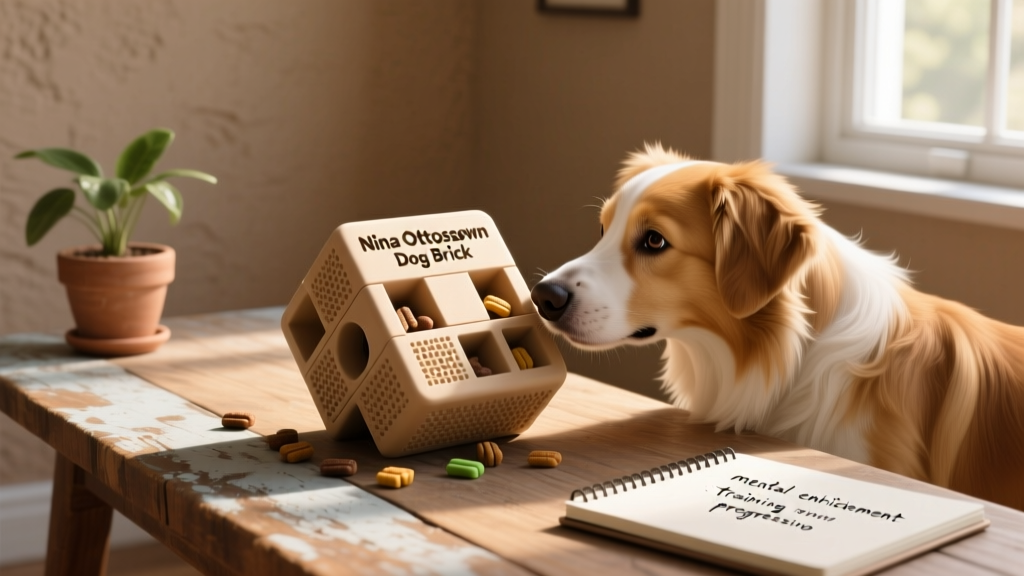
| Mental Enrichment | KONG Classic/Extreme, Snuffle mats ($15–$30), Outward Hound Nina Ottosson puzzle toys ($12–$30), lick mats ($8–$15) | Toys with small detachable parts that can be swallowed |
| Calming Aids | Adaptil DAP diffuser ($25–$40, lasts ~30 days), Thundershirt ($40–$50), calming supplements with L-theanine (e.g., Zesty Paws Calming Bites, $25–$30) | Essential oil diffusers (many are toxic to dogs—tea tree, eucalyptus, citrus oils) |
| Confinement | Wire crates (Midwest iCrate, $35–$70), exercise pens ($30–$60), baby gates ($25–$50) | Using the crate as punishment, crating for 8+ hours without breaks |
| Training | Clicker ($2–$5), treat pouch ($10–$20), high-value training treats (Zuke's Mini Naturals, $6–$10) | Shock collars, prong collars, alpha rolls, physical punishment—these increase anxiety and worsen destructive behavior. The American Veterinary Society of Animal Behavior opposes aversive methods. |
Timeline Expectations: How Long Will It Take to Fix Destructive Chewing?
Realistic progress depends on the root cause and your dog's history. Here are evidence-based milestones:
| Root Cause | Expected Improvement Window | Full Resolution |
|---|---|---|
| Puppy teething | Improvement as adult teeth emerge (6–7 months) | Naturally resolves by 8–9 months with proper outlets |
| Boredom/understimulation | 2–4 weeks with daily enrichment | 4–8 weeks with consistent routine |
| Mild separation anxiety | 4–6 weeks with desensitization protocol | 2–4 months; may require medication for moderate-severe cases |
| Fear/stress-related | Improvement during non-trigger periods immediately | Ongoing management; counter-conditioning to specific triggers takes 2–6 months |
| Medical (once treated) | Often resolves within days to weeks of treatment | Depends on condition prognosis |
Note: These timelines assume consistent daily implementation. Inconsistency is the #1 reason behavior modification fails. Dogs with histories of reinforcement for chewing (e.g., a dog who has been "allowed" to chew old shoes and now can't distinguish old from new) may take 30–50% longer.
Is Destructive Chewing Normal? When to Hire a Professional
Exploratory chewing in puppies and occasional gnawing on toys in adult dogs is completely normal canine behavior. It becomes a problem requiring intervention when it meets the threshold defined at the top of this article—persistent, targeted, escalating destruction of household items.
Should you use punishment to correct destructive chewing? No. Punishment (yelling, physical correction, rubbing the dog's nose in damage) is counterproductive for three reasons:
- Dogs cannot connect punishment to an action that happened in the past. If you come home to a destroyed pillow and scold your dog, they associate the punishment with your arrival, not the chewing.
- Punishment increases anxiety, which is a driver of destructive chewing—creating a vicious cycle.
- It damages the trust relationship, making your dog less likely to seek you out for guidance.
Seek professional help if:
- You've followed the management + training protocol above for 4+ weeks with no improvement
- Your dog shows signs of severe separation anxiety (self-injury, escape attempts that result in broken teeth or nails, panic-level vocalization recorded on camera)
- The chewing is accompanied by aggression when you attempt to take items away (resource guarding)
- You suspect a compulsive disorder (chewing appears ritualized, your dog seems unable to stop even when interrupted)
- The destruction is creating safety hazards (chewing electrical cords, swallowing foreign objects)
Who to hire:
- Certified Applied Animal Behaviorist (CAAB/ACAAB): Holds a PhD or DVM with behavior specialization. Best for severe anxiety, compulsive disorders, and cases requiring medication. Cost: $150–$350/hour. Find one via the Animal Behavior Society.
- IAABC-Certified Dog Behavior Consultant: Specialized training in behavior modification without a veterinary degree. Good for moderate cases. Cost: $80–$200/hour.
- Your veterinarian: Can prescribe anti-anxiety medication (fluoxetine, clomipramine, trazodone) to support behavior modification. Medication + training is significantly more effective than training alone for anxiety-driven chewing. Medication costs: $15–$60/month depending on drug and dog size.
Prevention: Setting Up Puppies and Newly Adopted Dogs for Success
The most effective approach to destructive chewing is preventing it from becoming a habit in the first place. Here's a prevention protocol for puppies and newly adopted adult dogs:
For Puppies (8 weeks – 7 months)
- Puppy-proof before arrival: Use the "toddler test"—crawl around at puppy eye level and remove anything you wouldn't want chewed. Expect to spend 2–3 hours on initial proofing.
- Toy rotation system: Keep 8–12 chew toys but only offer 3–4 at a time. Rotate every 2–3 days to maintain novelty. This costs $40–$80 upfront but saves hundreds in destroyed belongings.
- Frozen relief: During peak teething (4–6 months), offer frozen KONG toys, chilled carrot sticks, and frozen wet washcloths (twist a clean washcloth, wet it, freeze—supervise use to prevent fabric ingestion).
- Crate training from day one: The crate becomes a safe den and prevents unsupervised chewing. Start with 15–30 minute sessions while you're home, gradually building duration.
For Newly Adopted Adult Dogs
- Assume nothing is safe for the first 30 days: Even dogs who were fine in a foster home may chew in a new environment due to transition stress.
- Restrict access gradually: Start with one puppy-proofed room or exercise pen area. Expand access only after 2+ weeks of no incidents in the current area.
- Introduce approved chew toys on day one: Offer a variety of textures (rubber, nylon, edible chews) and observe preferences. Your dog will tell you what they like.
- Establish a predictable routine: Dogs in transition are stressed. Predictability (same feeding times, walk times, alone times) reduces anxiety-driven chewing within the first 2–3 weeks.
Frequently Asked Questions
Why does my dog only chew things when I'm not home?
This is a hallmark sign of separation anxiety or isolation distress. When you're present, your dog feels secure and doesn't need to self-soothe through chewing. When alone, the anxiety triggers displacement behaviors—chewing, licking, pacing. The items they target (your shoes, pillow, the couch you sit on) are chosen because your scent provides temporary comfort. This requires a separation anxiety-specific protocol, not just chew toy redirection.
How do I stop my dog from chewing furniture specifically?
Combine three strategies: (1) Block access with furniture covers, baby gates, or exercise pens when unsupervised. (2) Apply a deterrent spray to furniture legs—test Grannick's Bitter Apple or a DIY solution of 1 part white vinegar to 2 parts water (reapply daily for 2 weeks). (3) Provide a more appealing alternative: a frozen KONG placed near the furniture they target, so they learn to go to their toy instead. Consistency across all three strategies is essential—doing just one will not resolve the behavior.
Is it normal for adult dogs to still chew?
Yes—chewing is a lifelong natural behavior for dogs. Many healthy adult dogs enjoy daily chewing sessions with appropriate toys well into senior years. The key distinction is what they chew. An adult dog who chews their KONG daily is exhibiting normal, healthy behavior. An adult dog who chews door frames and baseboards is signaling an unmet need (anxiety, boredom, or medical issue).
Are rawhide chews safe for dogs?
Traditional rawhide carries significant risks: choking, intestinal blockage (especially in dogs who gulp large pieces), and chemical contamination from processing. If you choose to offer rawhide, select single-origin, USA-made pressed rawhide and supervise closely. Safer alternatives include bully sticks (fully digestible, $3–$8 each), yak cheese chews ($4–$8 each), and rubber stuffable toys like KONG. The ASPCA recommends supervising all chew sessions regardless of the product.
Should I use punishment to correct destructive chewing?
No. Punishment is ineffective and counterproductive for destructive chewing. Dogs cannot connect after-the-fact punishment to the chewing event—they learn to fear your return home, which worsens anxiety-driven chewing. Instead, use management (prevent access), redirection (offer appropriate alternatives), and positive reinforcement (reward chewing on approved toys). Force-free methods are supported by the American Veterinary Society of Animal Behavior and produce more reliable long-term results.
When do I need a professional behaviorist for my dog's chewing?
Consult a certified behaviorist (CAAB/ACAAB) or veterinary behaviorist (DACVB) if: your dog has injured themselves trying to escape confinement, chewing is accompanied by other anxiety signs (excessive panting, drooling, self-mutilation), you've followed a structured protocol for 4+ weeks with no improvement, or the behavior includes resource guarding aggression. A veterinary behaviorist can also evaluate whether anti-anxiety medication would support your training efforts. Medication is not a "last resort"—it's a tool that, combined with behavior modification, often accelerates progress significantly.
Disclaimer: This article provides general behavioral guidance. Always consult your veterinarian before starting any behavior modification program, especially if your dog's chewing is sudden-onset, accompanied by other symptoms, or if you suspect a medical cause. For toxic ingestion (e.g., your dog swallowed a non-food item), contact ASPCA Animal Poison Control at (888) 426-4435 (24/7, consultation fee applies).
Dr. Hannah Wickes
All our authors care for dogs every day — read more of their work on the authors page.