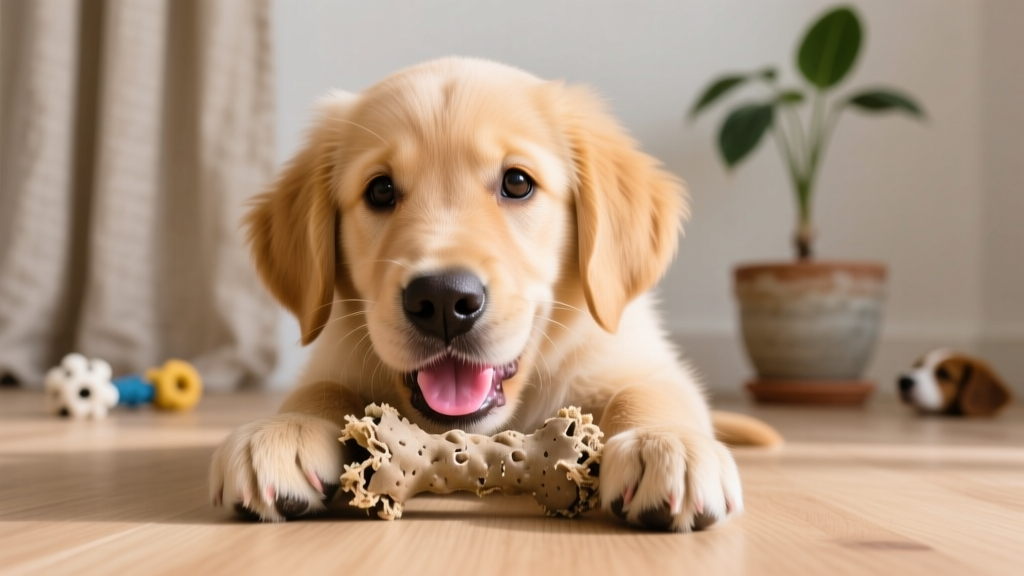
Best Chew Toys for Dogs That Destroy Everything: A Behavior-Fix Guide
Destructive chewing driving you crazy? Learn root causes, behavior modification protocols, and the best chew toys for dogs to redirect the habit safely.

Every dog chews. It's a natural, healthy behavior that keeps jaws strong, teeth clean, and minds stimulated. But when your baseboards look like a beaver lodge and your favorite sneakers are reduced to confetti, you've crossed from normal exploration into a behavior problem that needs a plan — and the right chew toys for dogs who can't seem to stop.
This guide walks you through exactly why destructive chewing happens, how to tell if it's behavioral or medical, and a step-by-step protocol to fix it using positive reinforcement and the best chew toys for dogs at each stage. No punishment, no gimmicks — just canine science and real-world results.
When Chewing Becomes a Problem: Defining Destructive Chewing
Destructive chewing is any chewing behavior directed at non-toy household items, personal belongings, or the dog's own body (paws, tail, flanks) that results in property damage, injury risk, or indicates underlying distress.
- Mild threshold: Chewing 1-2 household items per week, redirectable when interrupted
- Moderate threshold: Daily destruction of household items, difficulty redirecting, chewing when owner is present
- Severe threshold: Multiple items destroyed daily, chewing only when left alone (separation anxiety indicator), self-injury from chewing own body, ingestion of non-food objects (pica)
Normal puppy mouthing and exploratory chewing of appropriate toys is not destructive chewing — even if those toys are demolished quickly.
The distinction matters because the intervention differs. A 14-week-old Labrador demolishing a Kong within 20 minutes isn't displaying a behavior problem — they're teething and have the jaw strength of a future 70-lb retriever. A 4-year-old Greyhound who only chews door frames when left alone for more than 30 minutes likely has separation anxiety, and no chew toy alone will solve it.
Why Does My Dog Chew Things They Shouldn't?
Understanding the root cause determines whether you need a better chew toy, a behavior modification protocol, a veterinary visit, or some combination of all three. Here's a diagnostic framework based on the five most common underlying causes I see in practice.
- Teething / Oral Discomfort (puppies 3-7 months, occasionally seniors with dental disease)
- Clues: Drooling more than usual, pawing at mouth, preference for cold or textured items, swollen or bleeding gums
- Peak intensity: 12-20 weeks (baby teeth erupting), 16-28 weeks (adult teeth pushing through)
- Boredom / Under-Stimulation (any age, especially working breeds)
- Clues: Chewing happens throughout the day, dog seems restless, chewing decreases after long walks or play sessions, targets items with interesting textures (leather, wood, fabric)
- High-risk breeds: Border Collies, Australian Shepherds, Belgian Malinois, Huskies, Pointers — dogs bred for 8-12 hours of daily activity
- Separation Anxiety / Stress (adults and adolescents, onset often triggered by routine change)
- Clues: Chewing occurs only or primarily when left alone, concentrated at exit points (doors, windows, crates), accompanied by vocalization, pacing, house-soiling, or escape attempts
- Video confirmation: Set up a camera (Wyze, Furbo — $25-$150) to observe behavior in your absence. If your dog paces, pants, drools, and chews door frames within 5-15 minutes of departure, anxiety is the likely driver
- Attention-Seeking / Learned Behavior (any age)
- Clues: Dog picks up an item, looks at you, waits for reaction. Chewing escalates when you're busy (on phone, working at computer). Stops or drops item when you engage
- How it develops: Owner consistently reacts (even negatively) when dog chews shoes but ignores dog when they're chewing appropriate toys
- Medical Causes (any age, often overlooked)
- Clues: Sudden onset in a previously non-destructive dog, obsessive licking/chewing of specific body parts, changes in appetite, weight loss, or other concurrent symptoms
- Conditions to rule out: dental disease, gastrointestinal discomfort, nutritional deficiencies, cognitive dysfunction (seniors), pica (compulsive ingestion of non-food items)
Medical Rule-Out: When to See Your Vet Before Training
Before you invest in a behavior modification plan, rule out medical causes. This isn't optional — the Merck Veterinary Manual lists numerous medical conditions that manifest as destructive or compulsive chewing. Treating the behavior without addressing the disease wastes time and can worsen the condition.
Consult your veterinarian if your dog's chewing is accompanied by any of the following:
- ☐ Sudden onset in an adult dog with no history of destructive chewing
- ☐ Chewing or licking focused on one specific body area (paws, flanks, tail base)
- ☐ Bad breath, drooling, difficulty eating, or dropping food (dental disease — affects over 80% of dogs by age 3 per AVMA data)
- ☐ Weight changes, vomiting, diarrhea, or changes in stool consistency
- ☐ Increased restlessness, panting, or apparent discomfort
- ☐ Cognitive changes in senior dogs (confusion, altered sleep-wake cycles, decreased responsiveness)
- ☐ Chewing and swallowing non-food items compulsively (pica — can indicate anemia, nutritional deficiency, or GI disease)
Expected vet visit costs: Basic exam ($50-$80) + dental assessment. If bloodwork is needed to rule out metabolic causes, add $100-$250. Dental cleaning under anesthesia (if dental disease is found): $300-$800 depending on extractions needed.
Immediate Management: Stop the Damage While You Train
Behavior modification takes weeks to months. In the meantime, every time your dog successfully chews a forbidden item, the behavior is rehearsed and reinforced. Management prevents rehearsal while you work on the underlying cause.
Environmental Management Protocol
| Strategy | Implementation | Cost Range |
|---|---|---|
| Remove access | Shoes in closed closets, remotes in drawers, laundry in hampers with lids. Use baby gates to restrict access to high-risk rooms. | $0-$40 (gates) |
| Taste deterrents | Bitter Apple or Bitter Yuck! spray on baseboards, furniture legs, and cords. Reapply every 2-3 days. Test on a small area first — some dogs are unfazed by bitter sprays. | $8-$15 per bottle |
| Crate training | For unsupervised periods only. Crate must be appropriately sized (dog can stand, turn, lie down). Provide a safe chew toy inside. Never use crate as punishment. | $40-$120 (crate) |
| Exercise before alone time | 30-45 minutes of physical exercise + 15 minutes of mental enrichment (sniffing, training, puzzle toys) before you leave or before high-risk chewing times. | $0 |
| Rotate chew toys | Keep 2-3 toys available at a time, rotate every 2-3 days to maintain novelty. Store others out of sight. Novelty is a powerful reinforcer for chewing. | $0 (reorganize existing toys) |
The "Trade-Up" Technique for Caught-in-the-Act Moments
When you catch your dog chewing something inappropriate, resist the urge to yell, chase, or pry their mouth open. These reactions either frighten the dog (creating resource guarding) or inadvertently reward the behavior with attention.
Instead, use the trade-up protocol:
- Calmly approach with a high-value chew toy or treat (freeze-dried liver, bully stick, stuffed Kong)
- Offer the trade item near their nose — most dogs will drop the forbidden item to take the better option
- Once they release the item, calmly pick it up and put it away — no fanfare, no scolding
- Praise calmly as they chew the appropriate item: "Good choice" in a relaxed tone
- If they won't trade, don't force it — scatter treats on the floor nearby to redirect, then remove the forbidden item when they move away
Step-by-Step Training Protocol: Teaching Appropriate Chewing
This protocol uses positive reinforcement, desensitization, and counter-conditioning — methods supported by the American Veterinary Society of Animal Behavior (AVSAB) as the safest and most effective approach to behavior modification.
- Identify your dog's chew preferences. Offer 5-6 different textures over 3-4 days: rubber (Kong Classic, $15-$20), nylon (Benebone Wishbone, $14-$20), natural wood (coffee wood stick, $12-$18), rope (Mammoth Flossy Chews, $10-$15), edible (Yak cheese chew, $8-$14 for a large). Note which 2-3 textures your dog gravitates toward.
- Make appropriate toys irresistible. Stuff rubber toys with a mixture of peanut butter (xylitol-free — always check the label), mashed banana, and kibble, then freeze for 4+ hours. This increases engagement time from 5 minutes to 20-40 minutes.
- Supervised chew sessions. 2-3 times daily, present an appropriate chew toy during your dog's typical chewing windows (after meals, after naps, during evening relaxation). Sit nearby and calmly praise when they engage: "Yes, that's yours."
- Mark and reward toy selection. Every time your dog independently picks up an appropriate toy, mark the behavior with a clicker or the word "Yes!" and deliver a treat within 1-2 seconds. You're building a positive association with choosing the right items.
- Leave appropriate toys accessible in all rooms. Place a designated chew toy in each area your dog has access to — near the couch, by the bed, in the kitchen. The appropriate option should always be closer than the nearest forbidden item.
- Practice "Leave It" with forbidden items. Place a shoe or remote on the floor. When your dog looks at it, say "Leave it." When they look away or at you, mark "Yes!" and reward with a treat AND an appropriate chew toy. Gradually increase difficulty: item on floor while you're seated, item on floor while you walk past, item on floor in another room.
- Practice "Drop It" with appropriate toys. During chew sessions, offer a high-value treat. When your dog drops the toy, mark and reward, then immediately return the toy. This teaches that giving up items doesn't mean losing them permanently — reducing resource guarding risk.
- Increase alone-time gradually. If separation-related chewing is a factor, practice departures in 1-minute increments. Give a frozen Kong, leave for 1 minute, return calmly. Build to 5, 10, 15, 30 minutes over 2-3 weeks. If your dog shows distress at any increment, drop back to the last successful duration.
- Continue rotation schedule. 3-4 toys available at any time, rotated every 2-3 days. Retire toys that are small enough to swallow or show deep cracks.
- Maintain exercise and enrichment baseline. Minimum daily requirements vary by breed and age, but most dogs with chewing problems need at least 60 minutes of physical exercise + 20 minutes of mental enrichment daily.
- Periodic "proofing" sessions. Once a month, place a mildly tempting forbidden item (a sock, a pen) on the floor during a supervised session. If your dog goes for their toy instead, celebrate. If they go for the forbidden item, revisit Phase 2 exercises.
- Expect occasional setbacks. Adolescence (6-18 months), routine changes, new stressors, or even just a particularly boring day can trigger regression. This is normal — return to management and Phase 1 exercises for a few days.
Choosing the Right Chew Toys for Dogs: A Comparison
Not all chew toys are created equal. The best chew toys for dogs depend on your dog's size, chew style, and the root cause of the behavior. Here's a comparison of the most effective categories based on durability, safety, and engagement value.
| Chew Toy Category | Best For | Top Picks & Price | Durability (1-5) | Safety Notes |
|---|---|---|---|---|
| Hollow Rubber (stuffable) | Boredom chewers, separation anxiety (when stuffed and frozen), teething puppies | Kong Classic ($15-$20), West Paw Toppl ($17-$24), Starmark Bob-A-Lot ($18-$22) | 4/5 (Classic Red); 5/5 (Extreme Black) | Size appropriately — dog should not be able to fit entire toy in mouth. Replace when cracks develop. |
| Nylon / Composite | Power chewers, aggressive jaw breeds (pit bulls, Rottweilers, Mastiffs) | Benebone Wishbone ($14-$20), Nylabone Dura Chew ($8-$14), Goughnuts Ring ($30-$36) | 4-5/5 | Monitor for sharp edges from wear. Goughnuts has a safety indicator layer (red = replace). Not edible — supervise. |
| Edible Long-Lasting Chews | Dogs who destroy non-edible toys, high-value reward for training, enrichment | Yak cheese chews ($8-$14/large), Bully sticks ($5-$12 each), Collagen chews ($10-$18/3-pack) | 2-3/5 (consumed over 15-60 min) | Calorie-dense — factor into daily intake. Supervise to prevent choking on large end pieces. Bully sticks: high odor, some dogs get GI upset. |
| Natural Wood Alternatives | Dogs who seek out furniture legs, sticks, and wooden items | Coffee wood stick ($12-$18), Olive wood chew ($14-$20), Benebone Maplestick ($14-$18) | 3-4/5 | Coffee/olive wood splinters less than real sticks. Replace when small enough to swallow. Never give actual sticks (splinter risk). |
| Puzzle / Interactive Feeders | Boredom chewers, intelligent working breeds, mental enrichment seekers | Outward Hound Nina Ottosson puzzles ($15-$30), Kong Wobbler ($15-$22), Snuffle mats ($15-$25) | 3-4/5 | Start with easiest difficulty level. Some dogs frustrate easily — match puzzle difficulty to temperament. |
| Rope / Tug Toys | Interactive play, dental flossing, dogs who prefer fabric textures | Mammoth Flossy Chews ($10-$15), Tuffy's Tug-O-Plush ($12-$18) | 2-3/5 | Supervise — ingested rope fibers can cause intestinal blockage. Replace when strands unravel significantly. |
Pro tip for power chewers: If your dog destroys every toy within days, look for products with manufacturer replacement guarantees. Goughnuts offers a lifetime replacement policy (return the worn toy with red safety indicator showing, receive a replacement for ~$10 shipping). Kong's Extreme line (black rubber) is significantly more durable than the Classic (red) and costs only $3-$5 more.
Tools That Help — and Tools to Avoid
| Tool Category | ✅ Recommended | ❌ Avoid |
|---|---|---|
| Chew toys | Size-appropriate, durable rubber/nylon, stuffable, natural chews with supervision | Rawhide (choking/blockage risk), cooked bones (splintering), toys smaller than dog's mouth |
| Enrichment tools | Puzzle feeders, snuffle mats, lick mats (frozen), treat-dispensing balls | Feeding exclusively from bowls (missed enrichment opportunity) |
| Calming aids | Adaptil pheromone diffusers ($25-$40), calming music (Through a Dog's Ear), ThunderShirt ($30-$40) for anxiety-related chewing | Unproven supplements without veterinary guidance |
| Training equipment | Clicker ($2-$5), treat pouch ($10-$20), baby gates ($25-$50), crate ($40-$120) | Shock collars, prong collars, spray bottles, alpha rolls — these suppress behavior without addressing cause and can create fear/aggression |
| Deterrents | Bitter Apple/Bitter Yuck! spray on furniture (temporary management tool) | Hot sauce, cayenne pepper (painful, can cause eye injury if dog paws face after contact) |
How Long Will It Take to Fix Destructive Chewing?
There are no guaranteed timelines — every dog's learning speed, breed predisposition, and history affect progress. But based on typical cases, here's a realistic expectation framework:
| Milestone | Typical Timeframe | What It Looks Like |
|---|---|---|
| Initial reduction | 1-2 weeks | Fewer incidents per day with management in place. Dog begins choosing appropriate toys when presented. |
| Consistent redirection | 3-5 weeks | Dog independently selects appropriate toys most of the time when supervised. "Leave it" response reliable in low-distraction settings. |
| Generalized behavior | 6-12 weeks | Dog chooses appropriate chews across different rooms, with different forbidden items available, and during mild stress. |
| Reliable alone-time behavior | 8-16+ weeks | Dog settles with appropriate chew when left alone for normal durations. Note: separation anxiety cases often require 3-6 months of structured desensitization. |
| Maintenance | Ongoing | Occasional setbacks are normal, especially during adolescence, routine changes, or periods of reduced exercise/enrichment. |
Factors that extend timelines: History of the behavior being rehearsed for months/years, underlying anxiety disorders, inconsistent management between household members, insufficient exercise/enrichment, medical conditions not yet addressed.
Is Destructive Chewing Normal?
Chewing itself is entirely normal — it's a species-typical behavior that serves dental health, stress relief, and cognitive enrichment functions. The American Kennel Club notes that most puppies chew intensively during teething (3-7 months) and gradually decrease as they mature.
What's not normal is:
- Chewing that persists at high intensity beyond 12-18 months without intervention
- Chewing exclusively when left alone (anxiety indicator)
- Chewing and ingesting non-food items compulsively (pica)
- Self-directed chewing of paws, tail, or flanks to the point of injury
- Chewing accompanied by other stress signals (excessive panting, pacing, vocalization, house-soiling)
Senior dogs who suddenly begin chewing may be experiencing cognitive decline, dental pain, or anxiety from sensory changes (vision/hearing loss). This warrants a veterinary assessment, not just a new chew toy.
Should I Use Punishment to Correct Chewing?
No. The AVSAB's position statement on punishment is clear: aversive methods (shock collars, physical corrections, yelling, alpha rolls) carry significant risks including increased fear, anxiety, aggression, and damaged human-animal bond — without addressing the underlying cause of the behavior.
Specific problems with punishment for chewing:
- Timing problem: Punishing a dog after the fact (coming home to a destroyed pillow and scolding) doesn't teach anything — dogs associate punishment with your arrival, not with the chewing that happened hours ago.
- Suppression, not resolution: Punishment may suppress chewing in your presence, but the dog still has the underlying need. They'll simply chew when you're not watching — or develop a different outlet (digging, barking, licking).
- Resource guarding risk: Dogs punished for having items in their mouths may learn to guard items aggressively, swallow them quickly (choking risk), or become fearful of hands approaching their face.
- Trust erosion: A dog who fears punishment avoids the owner rather than seeking guidance — the opposite of what you want during behavior modification.
The alternative — positive reinforcement of appropriate chewing, management of the environment, and addressing root causes — takes more patience upfront but produces lasting change without side effects.
When Do I Need a Professional Behaviorist?
Seek help from a certified professional if any of the following apply:
- ☐ Chewing is accompanied by aggression (growling, snapping, biting when you approach during chewing or attempt to take items)
- ☐ Chewing only occurs when left alone and is paired with escape attempts, self-injury, vocalization, or house-soiling (likely separation anxiety — often requires a Certified Applied Animal Behaviorist (CAAB) or veterinary behaviorist)
- ☐ You've followed the protocol above consistently for 6-8 weeks with no improvement
- ☐ Your dog is ingesting non-food items (pica) — risk of intestinal blockage requiring emergency surgery ($2,000-$7,000)
- ☐ Multiple household members are inconsistent with management, creating confusion
- ☐ The behavior is worsening despite your efforts
Who to hire:
- Certified Professional Dog Trainer (CPDT-KA): $75-$150/hour. Good for basic chewing problems, "leave it" and "drop it" training, and management coaching. Find via CCPDT directory.
- Certified Applied Animal Behaviorist (CAAB/ACAAB): $150-$300/hour. Needed for anxiety-based chewing, aggression, or complex cases. Find via Animal Behavior Society.
- Veterinary Behaviorist (DACVB): $200-$400/hour. Required when medication may be needed (anti-anxiety medications like fluoxetine or clomipramine to support behavior modification). There are approximately 80 board-certified veterinary behaviorists in the US.
Prevention: Setting Up Puppies and Adopted Dogs for Success
The cheapest, fastest behavior fix is the one you never need. Whether you're bringing home an 8-week-old puppy or adopting a 3-year-old rescue, these prevention strategies build appropriate chewing habits from day one.
For Puppies (8 weeks - 6 months)
- Puppy-proof before arrival. Remove shoes, cords, small objects, toxic plants, and anything at puppy mouth-height (typically 6-18 inches off the floor). Use cord covers ($10-$20 for a 6-pack) and outlet covers.
- Provide 5-7 appropriate chew toys in varying textures from day one. Rotate 3 at a time.
- Supervise 100% of free-roaming time until the puppy reliably chews only appropriate items (typically 4-6 months with consistent training).
- Use crate or exercise pen when you cannot actively supervise — even brief bathroom breaks. Puppies can destroy significant property in 60 seconds.
- Teething relief: Offer frozen washcloths (wet, twisted, frozen — supervise to prevent ingestion of fabric), frozen Kong toys, and chilled (not frozen solid) rubber teethers during peak teething weeks (12-28 weeks).
- Establish a routine: Chew toy after meals, after naps, during play sessions. Dogs learn patterns quickly — a predictable routine reduces anxiety-driven chewing.
For Adopted Adult Dogs
- Assume nothing about their history. An adopted dog may have learned to chew household items in a previous environment where no appropriate toys were provided, or where chewing was the only available coping mechanism for stress.
- Start with full management (crate, baby gates, environmental control) for the first 2-4 weeks — the "decompression period" — even if the dog seems well-behaved. Stress from transition can trigger chewing that wasn't present in the shelter or foster home.
- Introduce chew toys gradually. Some adopted dogs have never seen a Kong or puzzle toy and may be confused or frightened by them. Start with simple, high-value options (bully stick, stuffed Kong) and let them figure it out at their own pace.
- Video-monitor alone time for the first 2-4 weeks. Separation anxiety often doesn't appear until the dog has bonded with you and then experiences its first solo period in the new home.
- Enroll in a positive-reinforcement training class ($100-$250 for a 6-week group course) within the first month. This builds communication, provides mental stimulation, and establishes you as a source of good things — all of which reduce anxiety-driven chewing.
Frequently Asked Questions
How do I stop my dog from chewing furniture?
Combine management (bitter spray on furniture legs, baby gates to restrict access, crate when unsupervised) with active training (rewarding appropriate chew toy selection, "leave it" training with furniture-adjacent items, providing furniture-texture alternatives like coffee wood sticks). Most dogs show significant improvement within 3-5 weeks of consistent implementation.
My dog only chews things when I'm not home — what does this mean?
This is a strong indicator of separation anxiety or confinement distress, not simple boredom. The chewing is a coping mechanism for stress. You'll need a desensitization protocol for departures (graduated alone-time training), potentially calming aids (Adaptil diffuser, calming music), and likely consultation with a certified behaviorist or veterinary behaviorist. Chew toys alone won't resolve anxiety-driven destruction.
Are rawhide chews safe for dogs?
Rawhide carries significant risks: choking, intestinal blockage, and contamination with chemicals (formaldehyde, arsenic, lead have been found in some imported rawhide products). The FDA has issued warnings about rawhide-related injuries. Safer alternatives include yak cheese chews, collagen chews, bully sticks, and durable rubber toys. If you do offer rawhide, supervise continuously and discard pieces small enough to swallow.
My puppy chews my hands and feet — is this the same problem?
Puppy mouthing (nipping, chewing on hands/feet) is related but distinct from object chewing. It's a normal developmental behavior that typically peaks at 12-16 weeks. Redirect to an appropriate chew toy every time, and teach "gentle" by yelping softly and withdrawing attention when teeth contact skin. Most puppies outgrow this by 5-6 months with consistent redirection. If mouthing persists or intensifies past 6 months, consult a CPDT-KA trainer.
Can I give my dog old shoes or socks as chew toys?
No. Dogs cannot distinguish between "old" shoes and "new" shoes, or between "their" sock and your sock on the floor. Giving old items teaches them that shoes and socks are appropriate chew objects — then you're frustrated when they chew your good ones. Always provide items that are clearly and exclusively "theirs" — toys that look, smell, and feel different from your belongings.
What if my dog swallows pieces of their chew toys?
Small pieces of rubber or nylon may pass through the digestive tract without issue, but larger pieces can cause intestinal blockage — a life-threatening emergency requiring surgery ($2,000-$7,000). Signs of blockage include vomiting, loss of appetite, lethargy, abdominal pain, and constipation. If you suspect your dog has swallowed a large piece of a chew toy, contact your veterinarian or the ASPCA Animal Poison Control Center at (888) 426-4435 immediately. Prevention: choose toys sized appropriately for your dog (when in doubt, go larger), inspect toys daily for wear, and retire any toy with deep cracks, missing chunks, or sharp edges.
Tom Renshaw
All our authors care for dogs every day — read more of their work on the authors page.