How to Train a Dog to Sit: A Positive Reinforcement Guide
Learn how to train a dog to sit using force-free positive reinforcement.

Why "Sit" Is the Foundation Behavior Every Dog Needs
The sit command is the gateway to all other obedience work. It's the first behavior most owners attempt, and it's deceptively simple — until your dog won't do it. Whether you're working with an 8-week-old Labrador puppy or a 4-year-old rescue who's never been asked to sit before, the mechanics of how to train a dog to sit follow the same evidence-based principles of operant conditioning.
In this guide, we'll walk through the exact protocol used by certified professional dog trainers (CPDTs), troubleshoot why your dog might be struggling, and set realistic timelines for progress. We'll also address the behavioral and medical reasons a dog may refuse to sit — because sometimes the problem isn't stubbornness; it's pain.
What Qualifies as a "Sit Training Problem"?
A sit training issue exists when any of the following are true:
- No response: Your dog does not place their hindquarters on the ground within 5 seconds of a verbal "sit" cue or hand signal, after at least 10 training sessions of 5 minutes each.
- Inconsistent response: Your dog sits in low-distraction environments (kitchen, living room) but fails in higher-distraction settings (park, sidewalk, around other dogs).
- Physical avoidance: Your dog begins to sit, then immediately stands, shifts weight, or moves away — suggesting discomfort or confusion rather than disobedience.
- Regression: Your dog previously performed a reliable sit but has stopped doing so over a period of 1-2 weeks without changes in routine.
If your dog is simply slow to learn during the first few sessions, that's normal. The threshold above helps distinguish a learning curve from an actual problem requiring intervention.
Root Cause Analysis: Why Won't My Dog Sit?
Before you blame stubbornness, consider that dogs don't generalize well. A dog who sits perfectly in your kitchen may genuinely not understand that "sit" means the same thing at a busy crosswalk. Here are the five most common underlying causes of sit-refusal, organized from most to least frequent:
Diagnostic Decision Tree
| Root Cause | Behavioral Signs | Prevalence | First Action |
|---|---|---|---|
| 1. Confusion / Unclear Communication | Dog tilts head, offers other behaviors (spin, paw, lie down), looks at owner then away | ~45% of cases | Reset training with clearer mechanics (see protocol below) |
| 2. Distraction Overload | Dog sits at home but not outside; ears forward, sniffing, pulling toward stimuli | ~25% of cases | Reduce environmental difficulty; train in graduated steps |
| 3. Physical Pain or Discomfort | Dog begins to sit then yelps, shifts weight, sits crooked, or avoids sitting entirely | ~15% of cases | Veterinary exam before continuing training |
| 4. Fear or Anxiety | Dog crouches low, tucks tail, avoids eye contact, pants excessively, or trembles | ~10% of cases | Identify and remove stressor; consider counter-conditioning |
| 5. Boredom / Lack of Motivation | Dog disengages, walks away, lies down, or ignores treats they normally love | ~5% of cases | Upgrade reward value; shorten sessions; vary training location |
Medical Rule-Out: When to See Your Vet Before Training
This step is skipped far too often. If your dog suddenly refuses to sit, or if they show any physical signs of discomfort when attempting the position, a veterinary evaluation should come before any behavior modification. Always consult your veterinarian if you suspect pain is involved.
Red Flags That Require a Vet Visit
- Hip dysplasia: Common in German Shepherds, Labrador Retrievers, Golden Retrievers, and other large breeds. The sit position places significant load on the hip joints. Dogs with hip dysplasia may sit with one hip rotated outward ("puppy sit" in adult dogs) or resist the position entirely. Diagnosis typically involves orthopedic exam and radiographs ($200-$500 depending on your region).
- Intervertebral disc disease (IVDD): Particularly common in Dachshunds, French Bulldogs, Beagles, and Corgis. A dog with early-stage IVDD may resist sitting because spinal flexion causes pain. Watch for a hunched back, reluctance to jump, or yelping when picked up.
- Arthritis (osteoarthritis): Affects approximately 20% of adult dogs and over 65% of dogs over age 7, according to the Merck Veterinary Manual. Cold mornings often worsen stiffness. A dog with arthritis may sit slowly or prefer to remain standing.
- Cruciate ligament injury (CCL tear): The canine equivalent of an ACL tear. Dogs may hold one hind leg extended and resist bending the stifle (knee) joint.
- Anal gland issues: Impacted or infected anal glands make sitting directly uncomfortable. Signs include scooting, excessive licking at the base of the tail, and a fishy odor.
If your vet clears your dog medically and the sit refusal persists, you can proceed with confidence to behavioral training. Budget $50-$150 for a standard wellness exam, or more if imaging is needed.
Immediate Management: Preventing Rehearsal of Unwanted Behavior
While you work through the training protocol below, management prevents your dog from practicing the behaviors you're trying to change. In operant conditioning terms, every time a behavior is rehearsed — even without reinforcement — it becomes stronger. Here's how to manage the interim:
- Stop asking for sits you won't get. If your dog doesn't sit on cue, repeating "sit, sit, sit" teaches them that the word is optional background noise. Use the cue only when you're confident of compliance.
- Use a physical prompt instead. Gently guide your dog into position with a treat lure (detailed below) rather than waiting for a verbal response that won't come.
- Capture spontaneous sits. Every time your dog sits on their own — waiting at a door, settling after play — mark it with a "yes!" and deliver a treat. This builds the association between sitting and good things happening, without the pressure of a formal cue.
- Keep a training journal. Note the date, environment, distraction level (1-5 scale), number of successful sits out of attempts, and reward type used. This data reveals patterns you'll miss from memory alone.
Step-by-Step Training Protocol: How to Train a Dog to Sit
This protocol uses positive reinforcement and lure-and-shaping techniques, consistent with guidelines from the American Kennel Club and the Certification Council for Professional Dog Trainers (CCPDT). No force, no physical manipulation, no aversive tools.
Phase 1: Lure the Behavior (Sessions 1-5)
Goal: Dog follows a food lure into a sitting position 8 out of 10 attempts.
- Prepare: Cut high-value treats (boiled chicken, string cheese, freeze-dried liver) into pea-sized pieces — approximately 1/4 inch cubes. You'll need 15-20 pieces per session. Have treats in a pouch or pocket on the side opposite your lure hand.
- Position: Stand or kneel directly in front of your dog in a low-distraction environment (bathroom, quiet bedroom). Ensure your dog is standing.
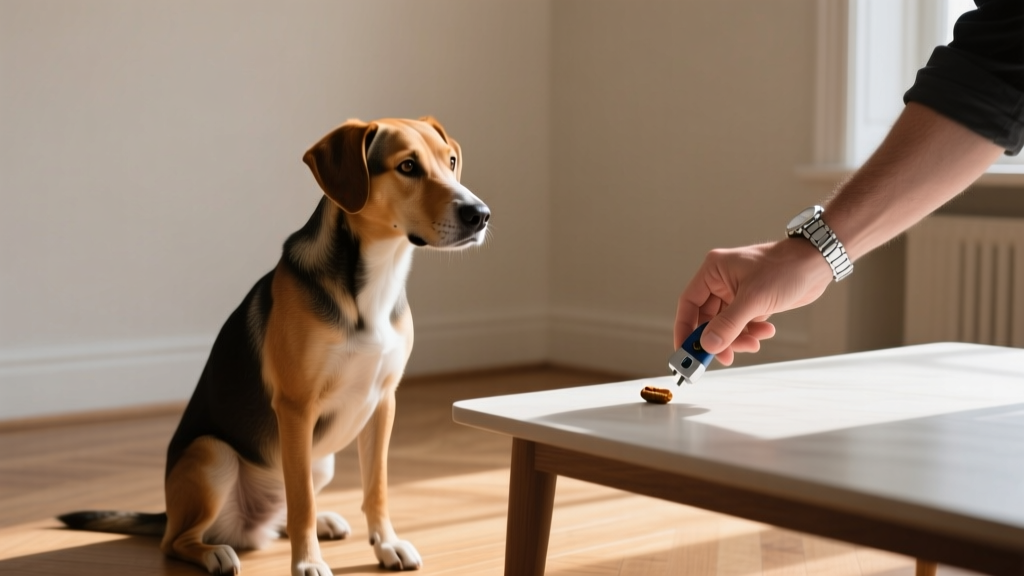
- Lure: Hold a treat between your thumb and index finger, 1-2 inches from your dog's nose. Slowly move the treat upward and slightly backward over their head, following the line from nose to tail. As their head tilts up to follow the treat, their hindquarters will naturally lower.
- Mark: The instant their bottom touches the ground, say "yes!" in a clear, upbeat tone (or click a clicker if you use one).
- Reward: Deliver the treat within 1 second of the mark. Timing matters — a 2-second delay can reduce learning speed by up to 50% in early training, according to research on canine operant conditioning.
- Release: Say "okay" or "free" and toss a treat a few feet away so your dog has to stand up to get it. This resets the position for the next repetition.
- Repeat: Do 5 repetitions per mini-session, with 2-3 mini-sessions per day (total 10-15 repetitions daily).
Phase 2: Add the Verbal Cue (Sessions 6-10)
Goal: Dog begins to associate the word "sit" with the behavior.
- Say "sit" clearly one time, then pause for 1 second.
- Then present the lure as in Phase 1.
- Mark, reward, and release as before.
- The 1-second pause is critical: it gives the verbal cue predictive value. Without the pause, the dog learns to follow the hand motion and ignores the word entirely.
- Gradually reduce the pause to 0.5 seconds as your dog starts to respond to the word before the lure appears.
Phase 3: Fade the Lure (Sessions 11-20)
Goal: Dog sits on verbal cue alone, without a food lure.
- Replace the food lure with an empty-hand gesture — the same upward motion, but without a treat in your fingers.
- Mark and reward from your pouch/pocket after the dog sits.
- If your dog doesn't respond to the empty-hand gesture after 5 seconds, don't repeat the cue. Instead, wait 10 seconds, then try again with a smaller hand motion.
- Alternate: lure trial (with treat in hand) → empty-hand trial → lure trial. Gradually increase the ratio of empty-hand trials.
Phase 4: Proofing and Generalization (Sessions 20+)
Goal: Dog sits reliably across environments and distraction levels.
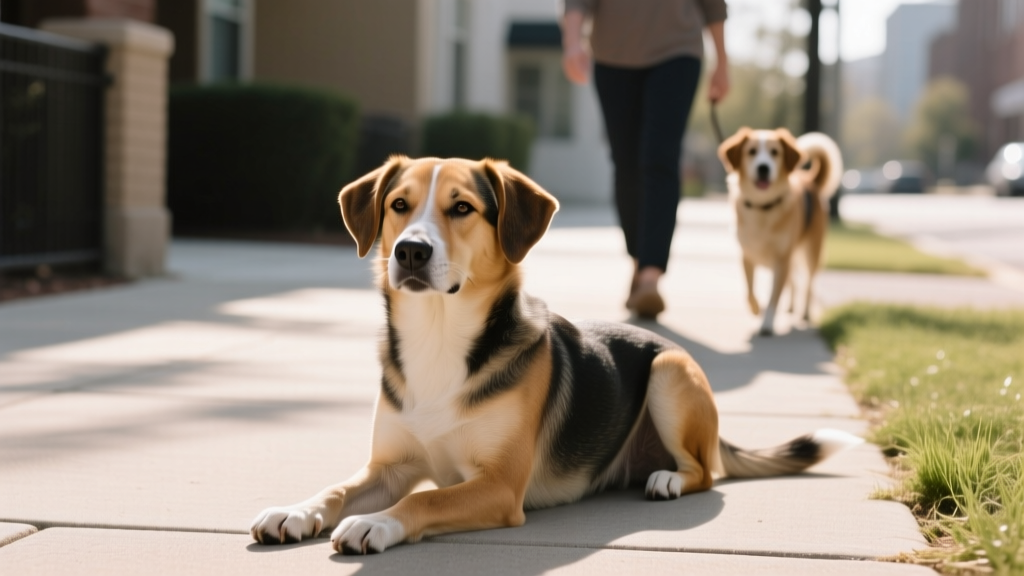
- Practice in 5 different locations: kitchen, living room, backyard, front yard, and on a walk.
- Introduce distractions gradually: first a family member walking by, then the TV on, then a toy on the ground, then another dog at a distance.
- Increase distance: ask for a sit from 3 feet away, then 6 feet, then 10 feet.
- Increase duration: ask for a sit, then delay the reward by 2 seconds, then 5, then 10.
- If your dog fails at a new difficulty level, drop back to the last level where they succeeded. This is called "splitting" — breaking the criterion into smaller steps.
Tools That Help vs. Tools to Avoid
The right equipment makes training smoother. The wrong equipment can create fear, confusion, or physical harm.
Recommended vs. Avoid
| Category | Recommended Tools | Details & Pricing | Tools to Avoid | Why to Avoid |
|---|---|---|---|---|
| Treats | Freeze-dried liver, boiled chicken, Zuke's Mini Naturals | Pea-sized pieces; $8-$15/bag; high palatability for motivation | Large biscuit-style treats | Too slow to eat; dog loses focus during chewing |
| Markers | i-Click clicker (Karen Pryor brand), verbal "yes!" | $3-$8 per clicker; precise timing for marking behavior | Whistles for indoor training | Startling; imprecise for close-range work |
| Treat Delivery | Kong Treat Pouch, Ruffwear Treat Trader | $15-$30; keeps hands free; quick access | Plastic bags that crinkle | Noise distracts; hard to access quickly |
| Collars/Harnesses | Flat buckle collar, front-clip harness (Rabbitgoo, 2 Hounds Design Freedom) | $15-$40; comfortable; no pressure on trachea | Shock collars, prong collars, choke chains | Aversive; create fear associations; suppress behavior without teaching alternatives |
| Training Surfaces | Yoga mat, low-pile carpet, rubber-backed rug | Provides traction for confident sits | Slippery hardwood or tile without a mat | Dog may struggle to stabilize; associates sit with physical discomfort |
| Mental Enrichment | Kong Classic, Outward Hound Nina Ottosson puzzle toys | $12-$30; reduces boredom that undermines training motivation | None in this category | N/A |
A note on punishment: never use physical corrections, alpha rolls, or intimidation to force a sit. These methods may produce a sit in the short term, but they create fear-based compliance — the dog sits to avoid punishment, not because they understand the cue. Research published in the Journal of Veterinary Behavior has consistently shown that dogs trained with aversive methods display more stress behaviors (lip licking, yawning, lowered body posture) and are more likely to develop aggression toward their handlers. Force-free methods produce more reliable long-term results.
Realistic Progress Timeline
Every dog learns at their own pace, but here's what typical progress looks like for a dog with no prior sit training and no medical issues:
| Timeframe | Milestone | Success Rate Expected | Notes |
|---|---|---|---|
| Days 1-3 | Dog follows lure into sit position | 60-80% of lured attempts | Some dogs offer the behavior on first try; others need 10+ reps |
| Days 4-7 | Dog anticipates sit when lure moves upward | 80-90% of lured attempts | Begin adding verbal cue during this phase |
| Week 2 | Dog responds to verbal cue + hand signal together | 70-85% in low-distraction environments | Start fading the lure to an empty-hand gesture |
| Weeks 3-4 | Dog sits on verbal cue alone in quiet settings | 80-90% at home | Begin proofing in new locations |
| Weeks 5-8 | Dog sits in moderate-distraction environments | 60-80% in yard, on quiet walks | Expect setbacks in new environments — this is normal |
| Weeks 9-12 | Reliable sit across most everyday situations | 85-95% across environments | Maintenance: practice 2-3 times per week to prevent extinction |
Important: These timelines assume 2-3 short training sessions per day (5 minutes each). Dogs trained once a week will take significantly longer. Puppies under 16 weeks may learn faster due to their developmental plasticity but have shorter attention spans — keep sessions to 2-3 minutes.
Troubleshooting Common Problems
"My dog jumps for the treat instead of sitting"
You're likely holding the lure too high or moving it too fast. Keep the treat 1-2 inches from the nose and move it slowly upward and slightly back. If your dog jumps, lower the treat to nose level, wait for all four paws to be on the ground, then try again.
"My dog backs up instead of sitting"
Train with your dog's hindquarters near a wall or corner (not trapping them — just limiting backward movement). Alternatively, try luring while your dog is on a slightly elevated surface like a low platform or mat, which reduces backward drift.
"My dog sits but immediately pops back up"
You're rewarding too late. The mark ("yes!" or click) must happen the instant the bottom touches the ground. If you're even 2 seconds late, you're accidentally reinforcing the stand-up. Practice your timing by marking a bouncing ball hitting the floor — if you can consistently mark the contact point, your dog training timing will improve.
"My dog sits at home but not on walks"
This is a generalization failure, not disobedience. Your dog has learned "sit = kitchen" but not "sit = everywhere." Return to Phase 4 proofing: practice in the front yard, then the sidewalk, then near a quiet park. Increase distraction level one step at a time. Use higher-value treats (real meat vs. kibble) in more distracting environments.
When to Hire a Professional
Trainer vs. Behaviorist: Which Do You Need?
For basic sit training, a certified professional dog trainer is usually sufficient. Look for these credentials:
- CPDT-KA (Certified Professional Dog Trainer — Knowledge Assessed): Requires 300+ hours of training experience and passing a standardized exam. Typical session cost: $60-$120/hour.
- KPA-CTP (Karen Pryor Academy Certified Training Partner): Specializes in clicker training and positive reinforcement. Typical session cost: $70-$130/hour.
- IAABC-certified (International Association of Animal Behavior Consultants): Appropriate if the sit refusal is linked to fear, anxiety, or aggression. Typical session cost: $100-$200/hour.
Hire a veterinary behaviorist (DACVB) if your dog shows signs of pain-related avoidance, severe fear, or if training has stalled despite 4+ weeks of consistent work with a qualified trainer. A veterinary behaviorist can prescribe anti-anxiety medication if needed and will coordinate with your primary vet. Expect $200-$400 for an initial consultation.
Prevention: Building a Strong Sit from Day One
For Puppies (8-16 weeks)
- Start training the day you bring your puppy home. Puppies as young as 8 weeks can learn a lured sit.
- Keep sessions to 2-3 minutes, 3-4 times per day. Puppies have short attention spans but high learning plasticity.
- Use your puppy's meal kibble as training treats — this prevents overfeeding and makes training part of their daily routine.
- Socialization pairs well with sit training: ask for a sit before greeting new people (once the puppy knows the behavior). This builds impulse control early.
For Adopted Adult Dogs
- Allow a 3-7 day decompression period before starting formal training. Newly adopted dogs are often stressed and won't perform at their best.
- Assume the dog doesn't know the word "sit" even if the shelter says they do. Start from Phase 1 and assess where they actually are.
- Some adopted dogs have been punished for sitting (e.g., in a previous home where "sit" was paired with a collar jerk). If your dog shows fear when you say "sit," switch to a new cue word like "park" or "down-bottom" and rebuild the association positively.
- According to the ASPCA, approximately 3.3 million dogs enter shelters annually. Many have had inconsistent or negative training histories — patience and positive methods are essential.
Frequently Asked Questions
Why does my dog refuse to sit?
The most common reasons are unclear communication (the dog doesn't understand what you want), distraction overload (too much happening to focus), physical pain (hip dysplasia, arthritis, IVDD), fear/anxiety, or low motivation (the reward isn't worth the effort). Work through the diagnostic table above to identify which factor applies, and address it before pushing harder on training.
How do I stop my dog from ignoring the sit command?
Stop repeating the cue. Every time you say "sit" and your dog doesn't comply, you're teaching them the word is meaningless. Instead: say "sit" once, wait 5 seconds, and if nothing happens, use a lure to help them succeed. Mark and reward. Over time, fade the lure so the verbal cue becomes sufficient.
Is it normal for a dog to take weeks to learn sit?
Yes. While some dogs pick up a lured sit in a single session, reliable stimulus control — sitting on verbal cue across multiple environments — typically takes 6-12 weeks of consistent practice. Breeds with high food motivation (Labradors, Beagles, Golden Retrievers) often learn faster, while independent breeds (Shiba Inus, Afghan Hounds, Basenjis) may require more creative motivation strategies.
How long will it take to train a reliable sit?
For a dog with no prior training and no medical issues, expect 8-12 weeks of daily short sessions (10-15 minutes total per day) to achieve a reliable sit across environments. Dogs with prior positive training experience may learn in 1-2 weeks. Dogs with fear-based avoidance or pain issues will take longer, depending on resolution of the underlying cause.
Should I use punishment to correct sit refusal?
No. Physical punishment (pushing the dog's rear down, alpha rolls, leash jerks, shock collars) suppresses behavior without teaching the dog what you actually want. It also creates negative associations with the cue, the training context, and potentially with you. Force-free, positive reinforcement methods are more effective long-term and carry no risk of fallout. The American Veterinary Society of Animal Behavior recommends against the use of aversive training methods.
When do I need a professional behaviorist?
Consult a certified behaviorist or veterinary behaviorist if: your dog shows signs of pain when sitting (yelping, trembling, avoidance); your dog displays fear or aggression during training sessions; you've followed a structured protocol for 4+ weeks with no measurable progress; or your dog's sit refusal is part of a broader pattern of behavioral issues (resource guarding, leash reactivity, separation anxiety).
Can I train sit without treats?
Yes, but treats are the fastest way to establish a new behavior. Once the sit is reliable, you can transition to life rewards — asking for a sit before opening the door, before putting down the food bowl, or before throwing a toy. This is called "Nothing in Life Is Free" (NILIF) or "Say Please" protocol. However, during the initial learning phase, food rewards provide the clearest communication and highest motivation for most dogs.
My dog only sits when I have food visible. How do I fix this?
This means you haven't fully faded the lure. Practice with an empty hand gesture, then reward from a pouch or pocket (out of sight). Alternate between visible-treat trials and hidden-treat trials, gradually increasing the ratio of hidden-treat trials. Your dog will learn that the hand signal or verbal cue predicts a reward, even when they can't see or smell it.
Training a dog to sit is one of the most rewarding experiences in dog ownership. It's often the first moment your dog truly communicates back to you — a deliberate action performed in response to your request. Keep sessions short, keep your criteria clear, and celebrate every small success. If you hit a wall, revisit the root causes above, and don't hesitate to bring in a certified professional. The investment in proper training pays dividends for the entire life you share with your dog.
Jonas Cole
All our authors care for dogs every day — read more of their work on the authors page.