Training Tips for Small Dogs: A Complete Guide to Raising a Well-Behaved Companion
Discover proven training tips for small dogs including housebreaking, leash walking, socialization & behavior solutions. Build confidence and obedience today.
Training Tips for Small Dogs: A Complete Guide to Raising a Well-Behaved Companion
Small dogs pack enormous personalities into tiny frames, and anyone who has shared their life with a Chihuahua, Pomeranian, Dachshund, or Toy Poodle knows exactly what that means. These pint-sized companions are intelligent, spirited, and fiercely loyal — but they can also be stubborn, easily frightened, and surprisingly difficult to train if you approach them the same way you would a larger breed.
The truth is that small dogs face unique challenges when it comes to training. Their tiny bladders make housebreaking a marathon rather than a sprint. Their low vantage point makes the world seem far more intimidating. And let's be honest — because they are small and adorable, many owners unintentionally reinforce bad behaviors that they would never tolerate in a larger dog. The result? A phenomenon sometimes called "small dog syndrome," where tiny pups become bossy, anxious, or reactive because they have never been given the structure and guidance they need.
The good news is that with the right approach, patience, and consistency, small dogs can be just as well-trained and obedient as any large breed. In this comprehensive guide, we will walk you through proven dog training techniques specifically tailored for small breeds, covering everything from basic commands to solving common behavioral issues.
Understanding Your Small Dog: Why Size Matters in Training
Before diving into specific training techniques, it is essential to understand why small dogs require a different approach. Recognizing these differences will help you become a more effective and empathetic trainer.
Physical Considerations
Small dogs typically weigh under 22 pounds, and many toy breeds fall well below 10 pounds. This size difference affects training in several important ways:
- Smaller bladders and digestive systems mean more frequent bathroom breaks are necessary, especially during housebreaking.
- Lower stamina means training sessions should be shorter to prevent fatigue and loss of focus.
- Fragile bodies require gentler handling and equipment specifically sized for small frames.
- Higher metabolic rates can affect energy levels and motivation during training.
Psychological Considerations
Being small in a big world shapes how your dog perceives everyday situations. A looming human, an approaching large dog, or even a loud appliance can feel genuinely threatening to a tiny pup. This heightened sense of vulnerability often manifests as:
- Excessive barking or growling at strangers and other animals
- Skittishness or hiding behavior in new environments
- Defensive aggression when feeling cornered or threatened
- Separation anxiety and clingy behavior
Understanding these tendencies is not about making excuses for bad behavior — it is about approaching training with compassion and strategy. For more insights into breed-specific traits, explore our comprehensive breed guides to learn about your dog's natural instincts and temperament.
The "Small Dog Syndrome" Trap
One of the biggest obstacles to training small dogs is not the dogs themselves — it is their owners. When a 70-pound Labrador jumps on guests, everyone notices and addresses it immediately. When a 7-pound Yorkie does the same thing, people often laugh and say, "Oh, it's okay, they're just little." This inconsistent standard creates dogs who believe they are in charge, leading to a host of behavioral problems.
Small dog syndrome is entirely preventable. The key is holding your small dog to the same behavioral standards you would expect from any dog, while adapting your training methods to accommodate their physical and emotional needs.
Essential Training Foundations for Small Dogs
Every well-trained dog starts with a solid foundation. These core principles are especially important when working with small breeds, as they set the tone for every training session that follows.
Step 1: Choose the Right Equipment
Using properly sized equipment is not just a matter of comfort — it is a matter of safety. Here is what you need:
- A well-fitted harness — Small dogs are prone to tracheal collapse, and attaching a leash to a collar puts dangerous pressure on their delicate necks. A front-clip or back-clip harness distributes pressure safely across the chest.
- A lightweight leash — Heavy leashes can feel overwhelming to tiny dogs and may discourage them from walking freely. Choose a thin, lightweight leash that will not weigh your pup down.
- Small, soft treats — Training treats should be pea-sized or smaller. Large treats take too long to eat and can add unnecessary calories to a small dog's diet.
- A clicker or marker word — Positive reinforcement training relies on marking the exact moment your dog performs the desired behavior. A clicker works beautifully, or you can choose a consistent marker word like "yes!"
Step 2: Establish a Consistent Routine
Small dogs thrive on predictability. Create a daily schedule that includes:
- Set meal times (typically two to three small meals per day)
- Regular potty breaks (every 2-3 hours, plus immediately after meals, naps, and play)
- Short training sessions (5-10 minutes, two to three times daily)
- Structured playtime and exercise
- A consistent bedtime routine
Routines reduce anxiety and help your dog understand what is expected of them throughout the day. This predictability is especially valuable during housebreaking, where consistency is the single most important factor in success.
Step 3: Master Positive Reinforcement
Positive reinforcement is the gold standard for training any dog, but it is particularly effective with small breeds. Small dogs tend to be sensitive and do not respond well to harsh corrections or punishment-based methods. Instead, focus on rewarding the behaviors you want to see.
The formula is simple:
- Ask your dog to perform a behavior (e.g., "sit")
- Mark the correct response immediately (click or "yes!")
- Deliver a reward (treat, praise, or a favorite toy)
- Repeat consistently
Over time, your dog will associate the behavior with positive outcomes and will offer it willingly. Gradually reduce the frequency of treats while maintaining verbal praise and affection to keep the behavior strong.
Step 4: Start With the Core Commands
Focus on teaching these five essential commands before moving on to more advanced training:
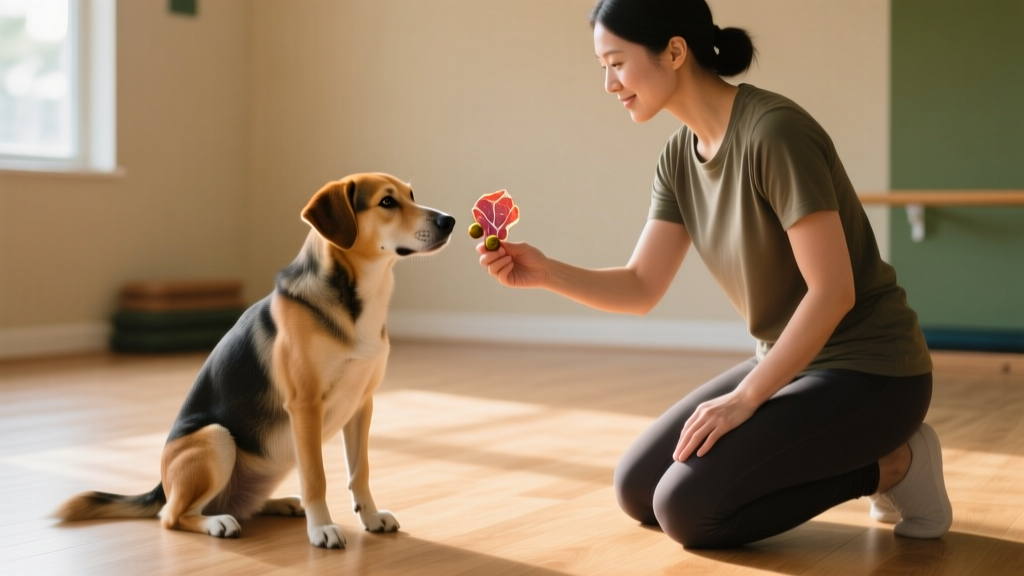
- Sit — The foundation of all obedience training. Hold a treat above your dog's nose and slowly move it backward over their head. As their nose follows the treat, their bottom will naturally lower. The moment they sit, mark and reward.
- Stay — Ask your dog to sit, then hold your palm out and say "stay." Take one small step back. If they remain in place, immediately mark and reward. Gradually increase distance and duration over multiple sessions.
- Come — A reliable recall is critical for safety. Start indoors with minimal distractions. Call your dog's name followed by "come" in an enthusiastic tone. Reward generously when they reach you.
- Down — From a sitting position, hold a treat at your dog's nose and slowly lower it to the floor between their front paws, then drag it forward slightly. Their body should follow into a lying position.
- Leave it — Place a treat in your closed fist and present it to your dog. They will sniff, lick, and paw at your hand. Wait for the moment they pull away or stop trying, then mark and reward with a different treat from your other hand.
For a deeper dive into teaching these commands and more, check out our guide on basic obedience commands for dogs of all sizes.
Housebreaking Your Small Dog: Patience and Strategy
Housebreaking is often the most frustrating aspect of owning a small dog, and for good reason. Toy breeds have notoriously small bladders, and some can physically hold their waste for only a couple of hours. This biological reality means you need a more intensive and patient approach than you would with a larger breed.
Step-by-Step Housebreaking Plan
- Designate a potty area — Choose one specific outdoor spot (or an indoor potty pad area if you live in a high-rise apartment) and always take your dog to the same location. The familiar scent will trigger their instinct to go.
- Set a strict schedule — Take your dog out first thing in the morning, after every meal, after naps, after play sessions, and right before bed. During the early stages, plan additional trips every 1-2 hours.
- Use a cue word — Say a consistent phrase like "go potty" while your dog is eliminating. Over time, they will associate the phrase with the action, which is incredibly useful during cold weather or when you are in a hurry.
- Supervise constantly — When your dog is not in their crate or a confined safe area, they should be within your sight at all times. Watch for signs like sniffing the floor, circling, or suddenly becoming still and focused.
- Reward immediately — The moment your dog finishes eliminating in the correct spot, praise enthusiastically and give a high-value treat. Timing is critical — if you wait until you are back inside, you are rewarding coming indoors, not going potty.
- Handle accidents calmly — Never punish your dog for accidents. If you catch them in the act, interrupt gently with a neutral sound and carry them to the potty area. Clean indoor accidents thoroughly with an enzymatic cleaner to eliminate lingering odors.
Crate Training for Small Dogs
A crate is one of the most valuable tools in your housebreaking arsenal. Dogs naturally avoid soiling their sleeping area, so a properly sized crate encourages them to hold it between potty breaks.
Key guidelines for crate training small breeds:
- Choose a crate that allows your dog to stand up, turn around, and lie down comfortably — but no larger. Excess space gives them room to eliminate in one corner and sleep in another.
- Make the crate inviting with a soft bed, a safe chew toy, and occasional treats placed inside.
- Start with very short periods (5-10 minutes) and gradually increase duration as your dog becomes comfortable.
- Never use the crate as punishment. It should always be associated with safety and comfort.
- Follow the general rule: a puppy can hold their bladder for approximately one hour per month of age, plus one. A three-month-old puppy can manage roughly four hours maximum.
For more detailed crate training strategies, visit our complete crate training guide.
Common Housebreaking Mistakes
- Inconsistency — Allowing your dog to go on pads sometimes but expecting them to go outside other times creates confusion. Pick a method and stick with it.
- Free feeding — Leaving food out all day makes it impossible to predict when your dog will need to eliminate. Scheduled meals lead to predictable potty schedules.
- Punishing accidents — Yelling or rubbing your dog's nose in an accident does not teach them anything useful. It only teaches them to be afraid of you and to hide when they need to go.
- Expecting too much too soon — Some small breeds take six months or longer to fully housebreak. Celebrate progress and stay patient.
Socialization and Confidence Building for Small Breeds
Socialization is arguably the most critical component of training for small dogs. Because they are naturally more vulnerable, small breeds that are not properly socialized are at high risk of developing fear-based behaviors including excessive barking, growling, snapping, and general anxiety.
Step-by-Step Socialization Plan
- Start early, but go at your dog's pace — The prime socialization window for puppies is between 3 and 14 weeks of age. However, if you have adopted an adult small dog who is undersocialized, you can still make significant progress — it simply takes more time and patience.
- Expose gradually to new experiences — Introduce your dog to new people, surfaces, sounds, environments, and other animals in small, manageable doses. Each new experience should be paired with treats and praise to create positive associations.
- Let your dog approach on their terms — Never force a small dog into someone's arms or push them toward something that frightens them. Allow them to observe from a distance and approach when they feel ready.
- Arrange controlled playdates — Seek out calm, well-mannered dogs of similar size for supervised play sessions. Avoid dog parks where your small dog could be overwhelmed or injured by larger, more boisterous dogs.
- Practice handling exercises — Gently touch your dog's paws, ears, mouth, and tail while rewarding them with treats. This desensitizes them to being handled, which makes grooming, vet visits, and everyday interactions much less stressful.
- Enroll in a puppy class — A well-run puppy socialization class provides a safe, structured environment for your small dog to interact with other puppies and people. Look for classes that separate small and large breeds.
Building Confidence at Home
Confidence building does not only happen during outings. You can incorporate these exercises into your daily routine:
- Teach new tricks regularly — Learning activates your dog's brain and builds their confidence in their ability to solve problems. Simple tricks like "spin," "shake," and "crawl" are fun and rewarding.
- Use puzzle toys and snuffle mats — These enrichment tools encourage independent problem-solving and build confidence as your dog figures out how to access hidden treats.
- Practice on different surfaces — Encourage your dog to walk on grass, gravel, sand, and various floor textures. Each new surface conquered builds their confidence.
- Create an obstacle course — Use household items like cushions, broomsticks, and cardboard boxes to create a mini agility course. Guide your dog through with treats and praise.
Socialization Mistakes to Avoid
- Flooding — Throwing your dog into an overwhelming situation (like a crowded event or a chaotic dog park) in hopes they will "get used to it" often backfires, deepening fear rather than resolving it.
- Coddling fearful behavior — While you should never force your dog into scary situations, excessively comforting them when they are afraid can inadvertently reinforce the fear response. Instead, remain calm, neutral, and redirect their attention to something positive.
- Neglecting ongoing socialization — Socialization is not a one-time event. Continue exposing your dog to new experiences throughout their life to maintain their confidence and adaptability.
Learn more about raising a well-adjusted companion in our guide to socializing your dog at any age.
Leash Training and Outdoor Manners for Small Dogs
Many small dog owners struggle with leash manners. Some tiny dogs plant their feet and refuse to move. Others pull like they are attached to a sled team. And some become reactive — barking and lunging at every dog, person, or leaf that passes by. Proper leash training transforms walks from stressful ordeals into enjoyable bonding experiences.
Step-by-Step Leash Training
- Introduce the harness and leash indoors — Let your dog wear the harness around the house for short periods, paired with treats and play. Attach the leash and let them drag it (under supervision) so they get used to the feeling of something trailing behind them.
- Start in a low-distraction environment — Begin your first real leash walks in your backyard or a quiet hallway. High-distraction environments will overwhelm your dog before they have learned the basics.
- Reward the position you want — Hold treats at your side at your dog's level and reward them frequently for walking near you with a loose leash. The goal is to teach them that staying close to you is the most rewarding place to be.
- Stop when the leash goes tight — The moment your dog pulls and the leash becomes taut, stop walking completely. Stand still and wait. When your dog looks back at you or takes a step toward you to create slack, mark and reward, then resume walking.
- Change direction frequently — If your dog consistently pulls in one direction, turn and walk the other way. This teaches them that pulling does not get them where they want to go — staying close to you does.
- Gradually increase distractions — Once your dog walks well in quiet areas, practice in slightly busier environments. Move to a quiet street, then a park, then busier areas as your dog's skills improve.
Managing Leash Reactivity
Leash reactivity is extremely common in small dogs. Because they feel vulnerable, they often resort to "the best defense is a good offense" strategy — barking and lunging to make threats go away. Here is how to address it:
- Identify your dog's threshold — This is the distance at which your dog notices a trigger (another dog, a person) but can still respond to you and accept treats. Work at this distance and gradually decrease it over time.
- Use the "look at that" game — When your dog notices a trigger at threshold distance, say "yes!" and give a treat. Your dog looks at the trigger, gets a reward, looks at you for more, gets another reward. Over time, seeing a trigger becomes a cue to look at you expectantly.
- Create distance when needed — If your dog goes over threshold (barking, lunging, unable to focus), calmly increase the distance from the trigger. Cross the street, step behind a car, or turn around. This is not a failure — it is management.
- Never punish reactivity — Yelling, jerking the leash, or using aversive tools will increase your dog's anxiety and make reactivity worse. The goal is to change how your dog feels about the trigger, not to suppress the outward behavior.
Leash Training Mistakes to Avoid
- Using retractable leashes — These teach your dog that pulling extends the leash, which is the exact opposite of what you want. They also offer little control and can cause injury if the thin cord wraps around fingers or paws.
- Allowing pulling to "work" — Every time your dog pulls and you follow them, you are reinforcing pulling. Consistency is essential — never let pulling achieve the desired result.
- Skipping warm-up time — Let your dog sniff and explore for a few minutes on a long line before beginning structured leash walking. A dog who has had some mental stimulation is more focused and less frustrated.
For additional walking tips and solutions for specific leash problems, read our article on leash training fundamentals.
Addressing Common Behavioral Issues in Small Dogs
Even with excellent foundational training, small dogs are prone to certain behavioral issues. Understanding why these behaviors occur and how to address them will help you maintain a harmonious household.
Excessive Barking
Small dogs are often vocal, and some barking is perfectly normal. However, excessive barking at doorbells, passersby, other dogs, or seemingly nothing at all can become a serious problem.
Solutions:
- Teach a "quiet" command by saying "quiet" the moment your dog pauses between barks, then rewarding the silence.
- Manage the environment — close curtains if your dog barks at people walking by, or use white noise to mask outside sounds.
- Provide adequate mental stimulation. Bored dogs bark more. Puzzle toys, training sessions, and sniffy walks can significantly reduce nuisance barking.
- Never yell at your dog to stop barking. To your dog, it sounds like you are barking along with them, which only reinforces the behavior.
Jumping on People
Small dogs who jump on people are often dismissed because they are "cute" or "not a threat." But jumping is jumping, and it can scratch legs, soil clothing, and frighten children or elderly visitors.
Solutions:
- Teach an incompatible behavior — a dog who is sitting cannot be jumping. Ask for a "sit" before anyone greets your dog.
- Instruct guests to ignore your dog completely (no eye contact, no talking, no touching) until all four paws are on the floor.
- Reward your dog for calm greetings with attention and treats.
Resource Guarding
Some small dogs become possessive over food, toys, beds, or even their favorite person. They may growl, snap, or stiffen when someone approaches their valued resource.
Solutions:
- Practice trading — offer your dog something even better than what they have in exchange for the guarded item. This teaches them that giving things up leads to good things.
- Hand-feed meals periodically to build positive associations with human hands near food.
- Never forcibly take items from your dog, as this can escalate guarding behavior and lead to bites.
- Consult a professional trainer or behaviorist if resource guarding involves biting or is worsening over time.
Separation Anxiety
Small dogs are often deeply bonded to their owners and can struggle when left alone. Signs include destructive behavior, excessive vocalization, house soiling, pacing, and attempts to escape.
Solutions:
- Practice short departures and gradually increase the time you are away. Start with just stepping outside the door for 30 seconds and build up slowly.
- Provide a special long-lasting treat (like a stuffed Kong or a chew) that your dog only receives when you leave.
- Avoid dramatic departures and arrivals. Keep comings and goings low-key to reduce emotional intensity.
- Consider calming aids such as pheromone diffusers or calming music designed for dogs.
If behavioral issues persist despite consistent training, do not hesitate to seek help from a certified professional dog trainer or veterinary behaviorist. For more guidance, explore our behavioral problem-solving resources.
Frequently Asked Questions About Training Small Dogs
Are small dogs harder to train than large dogs?
Small dogs are not inherently harder to train, but they do present unique challenges. Their small bladders make housebreaking take longer. Their sensitivity means they do not respond well to harsh methods. And the tendency of owners to excuse bad behavior in small dogs can undermine training progress. With the right approach — positive reinforcement, consistency, and patience — small dogs are just as capable of learning as any large breed. In fact, many small breeds such as Poodles, Papillons, and Shetland Sheepdogs rank among the most intelligent and trainable dogs in the world.
How long should training sessions be for small dogs?
Keep training sessions short and sweet — typically 5 to 10 minutes for most small dogs. Their attention spans and physical stamina are limited, and pushing beyond their focus threshold leads to frustration for both of you. It is far more effective to do three 5-minute sessions spread throughout the day than one long 30-minute session. Always end on a positive note with a success, even if it means asking for a simple behavior your dog already knows well.
What are the best treats for training small dogs?
The best training treats for small dogs are tiny, soft, and highly motivating. Think pea-sized pieces of boiled chicken, freeze-dried liver, small bits of cheese, or commercially available training treats designed for small mouths. Avoid hard, crunchy treats during training sessions because they take too long to chew and can break your dog's focus. Remember to account for training treats in your dog's daily calorie intake — obesity is a serious health concern for small breeds. For a list of recommended options, check out our guide to the best treats for small dogs.
My small dog is afraid of everything. How can I help?
Fearful small dogs need time, patience, and a structured desensitization plan. Start by identifying specific triggers and your dog's threshold distance for each one. Work at or below threshold, pairing the presence of the trigger with high-value treats and calm praise. Never force your dog to confront something terrifying — this will deepen the fear. Build confidence through trick training, puzzle games, and controlled positive experiences. If your dog's fear is severe or worsening, consult a veterinary behaviorist who can assess whether anti-anxiety medication combined with a behavior modification plan would be beneficial. You can also explore our guide to helping fearful dogs for additional strategies.
Is it too late to train an older small dog?
It is absolutely never too late to train a dog. While puppies may learn certain things more quickly due to their developmental stage, adult and senior dogs are fully capable of learning new commands, tricks, and behaviors. In fact, older dogs often have better focus and impulse control than puppies, which can make training sessions more productive. The key is adjusting your expectations and methods to your dog's physical capabilities and past experiences. An older dog who has practiced an unwanted behavior for years will need more time and consistency to change, but change is always possible. Start with the basics, be patient, and celebrate every small victory along the way.
Final Thoughts on Training Small Dogs
Training a small dog is a rewarding journey that strengthens the bond between you and your companion. The key principles — positive reinforcement, consistency, patience, and understanding your dog's unique perspective as a tiny creature in a big world — will carry you through every challenge.
Remember that every dog is an individual. What works brilliantly for one Chihuahua may not resonate with a Miniature Dachshund. Pay attention to your dog's personality, adjust your approach as needed, and never hesitate to seek professional guidance when you feel stuck.
Your small dog is counting on you to provide the structure, guidance, and love they need to become the best version of themselves. With the tips and strategies in this guide, you are well-equipped to raise a confident, well-mannered, and happy little companion who is a joy to be around — both at home and out in the world.
Ready to continue your training journey? Explore our full collection of dog training guides and breed-specific resources for more expert tips tailored to your furry friend.
Aaron Whyte
All our authors care for dogs every day — read more of their work on the authors page.