Puppy Training Guide Dogs for the Blind: A Comprehensive Step-by-Step Guide
Learn how to train a puppy to become a guide dog for the blind. Discover essential techniques, milestones, tips, and common mistakes in this detailed guide.
Guide dogs are among the most remarkable working animals on the planet. These devoted companions grant independence, confidence, and mobility to people who are blind or visually impaired, navigating complex environments with a calm precision that seems almost superhuman. But behind every polished, professional guide dog is a carefully structured puppy training program that begins in the earliest weeks of life and continues for well over a year.
If you are a puppy raiser, an aspiring guide dog trainer, or simply someone fascinated by the process of turning a playful pup into a life-changing partner, this comprehensive guide will walk you through every critical stage of puppy training for guide dogs for the blind. From early socialization to advanced harness work, you will discover the methods, milestones, and mindset required to set a future guide dog on the path to success.
Before diving into the specifics, it is worth noting that guide dog training is a collaborative effort. Volunteer puppy raisers, professional trainers, veterinarians, and orientation-and-mobility specialists all play vital roles. Whether you are considering puppy socialization at home or exploring a career in service dog training, understanding the full journey will deepen your appreciation for these extraordinary dogs and the people who raise them.
Understanding the Guide Dog Training Pipeline
Training a guide dog is not a single event but a multi-phase pipeline that typically spans 18 to 24 months. Each phase builds upon the last, and every stage has specific goals that must be met before the dog advances. Here is an overview of the standard pipeline:
- Breeding and Early Neonatal Care (Weeks 0–8): Reputable guide dog organizations maintain carefully managed breeding programs. Puppies are born in controlled environments where they receive Early Neurological Stimulation (ENS) and Early Scent Introduction (ESI) protocols during their first two weeks of life. These exercises, developed by the U.S. military, gently stress the puppies' developing nervous systems and have been shown to produce dogs with greater stress resilience, stronger heart rates, and improved disease resistance.
- Puppy Raising (Weeks 8–14 months): Volunteer puppy raisers take puppies into their homes and communities. The primary focus during this phase is socialization, basic obedience, and character development. This is the longest and arguably most influential phase, and it is where the bulk of this guide will concentrate.
- Formal Guide Dog Training (Months 14–18+): Dogs that pass their puppy-raising evaluations return to the organization's training facility. Professional instructors spend four to six months teaching advanced guiding skills such as intelligent disobedience, obstacle avoidance, traffic checks, and harness work.
- Team Training and Matching (Months 18–24): Once a dog has mastered guiding skills, the organization matches it with a blind or visually impaired handler. The pair trains together intensively for two to four weeks before graduating as a working team.
Understanding this pipeline is crucial because puppy raisers are not expected to teach guiding skills. Their job is to produce a well-socialized, obedient, confident, and emotionally stable young dog that is ready to learn those advanced skills. If you are raising a guide dog puppy, your mission is to build the foundation upon which professional trainers will construct the finished guide dog.
For more on how different breeds approach service work, explore our guide to Labrador Retrievers and Golden Retrievers, the two most commonly used breeds in guide dog programs worldwide.
Phase 1: Early Socialization and Environmental Exposure (8 Weeks to 6 Months)
The socialization window — roughly 3 to 16 weeks of age — is the single most critical period in a guide dog puppy's development. During this window, a puppy's brain is extraordinarily receptive to new experiences, and positive exposures now will shape the dog's temperament for life. A guide dog must be comfortable in airports, on buses, in restaurants, on escalators, and in crowded city streets. That comfort is built during puppyhood.
Step-by-Step Socialization Plan
Step 1: Create a Socialization Checklist
Guide dog organizations typically provide puppy raisers with a detailed socialization checklist. If you are working independently or simply want to ensure thoroughness, create your own list covering surfaces (gravel, tile, metal grates, grass, wet pavement), sounds (traffic, sirens, thunder, construction noise, applause), objects (umbrellas, wheelchairs, crutches, shopping carts), people (children, elderly individuals, people wearing hats or sunglasses, people of diverse appearances), and environments (stores, offices, parks, public transit). Our puppy socialization checklist can serve as an excellent starting template.
Step 2: Introduce Experiences Gradually and Positively
Never force a puppy into a frightening situation. Instead, allow the puppy to approach new stimuli at its own pace while pairing each experience with high-value treats and calm praise. If a puppy shows fear of a loud noise, for example, increase distance from the source, offer treats, and gradually decrease distance over multiple sessions. The goal is to build positive associations, not to flood the puppy with overwhelming stimuli.
Step 3: Practice Handling Exercises Daily
Future guide dogs must tolerate extensive physical handling. Practice touching the puppy's ears, paws, tail, mouth, and belly every day. Gently lift the puppy onto examination tables, simulate veterinary exams, and practice nail trimming with a dull file or dummy clippers. Reward calm acceptance generously.
Step 4: Expose the Puppy to Diverse Environments
Take the puppy on regular outings to pet-friendly stores, outdoor markets, parks, and quiet office buildings. As the puppy matures and gains confidence, increase the complexity of the environments. A 10-week-old puppy might visit a quiet pet store; a 5-month-old puppy should be comfortable in a busier shopping center. For tips on managing outings, see our leash training guide.
Step 5: Arrange Controlled Dog-to-Dog Interactions
Guide dogs must be neutral around other dogs. Arrange playdates with known, calm, vaccinated dogs rather than visiting chaotic dog parks. The goal is not to create a dog that wants to play with every dog it sees, but rather one that can ignore other dogs and remain focused on its handler.
Tips for Successful Early Socialization
- Carry high-value treats (small pieces of chicken, cheese, or commercial training treats) on every outing.
- Keep sessions short — 10 to 15 minutes of focused socialization is more effective than an hour of overwhelming exposure.
- Record notes about each outing so you can track progress and identify gaps in exposure.
- Introduce the puppy to wearing a vest or bandana early, as guide dogs in training often wear identifying gear.
- Expose the puppy to different flooring surfaces in your own home by placing tarps, bubble wrap, or metal sheets on the floor for short periods.
Common Mistakes During Early Socialization
- Overexposure: Flooding a puppy with too many stimuli at once can create fear rather than confidence. Always watch for stress signals such as lip licking, yawning, tucked tail, or attempts to flee.
- Inconsistency: Socialization must be an ongoing effort, not a one-time event. A single visit to a shopping mall does not make a puppy comfortable in malls.
- Neglecting Sound Exposure: Many puppy raisers focus on visual stimuli but forget about sounds. Use recordings of thunderstorms, fireworks, and city noise at low volumes during meal times to build positive associations with loud sounds.
- Allowing Uncontrolled Greetings: Letting strangers pet the puppy without asking for a sit first teaches the puppy that jumping on people earns attention. Always require calm behavior before permitting greetings.
Phase 2: Foundational Obedience Training (3 to 10 Months)
While socialization builds confidence, obedience training builds reliability. A guide dog must respond to commands promptly and consistently, even in highly distracting environments. Foundational obedience is typically taught using positive reinforcement methods — treats, praise, and play — with an emphasis on building willingness rather than compulsion.
Essential Commands for Guide Dog Puppies
Sit and Sit-Stay:
Teach the puppy to sit on a single verbal cue and remain seated until released. Begin in a low-distraction environment and gradually add distance, duration, and distraction. A reliable sit-stay is essential for waiting at crosswalks, sitting under tables in restaurants, and remaining calm in public spaces.
Down and Down-Stay:
The down position is the most stable and least obtrusive position for a working dog in public. Train the puppy to lie down on cue and remain in place for extended periods. Practice in increasingly challenging locations — under your desk at work, beneath a restaurant table, on a park bench.
Loose-Leash Walking:
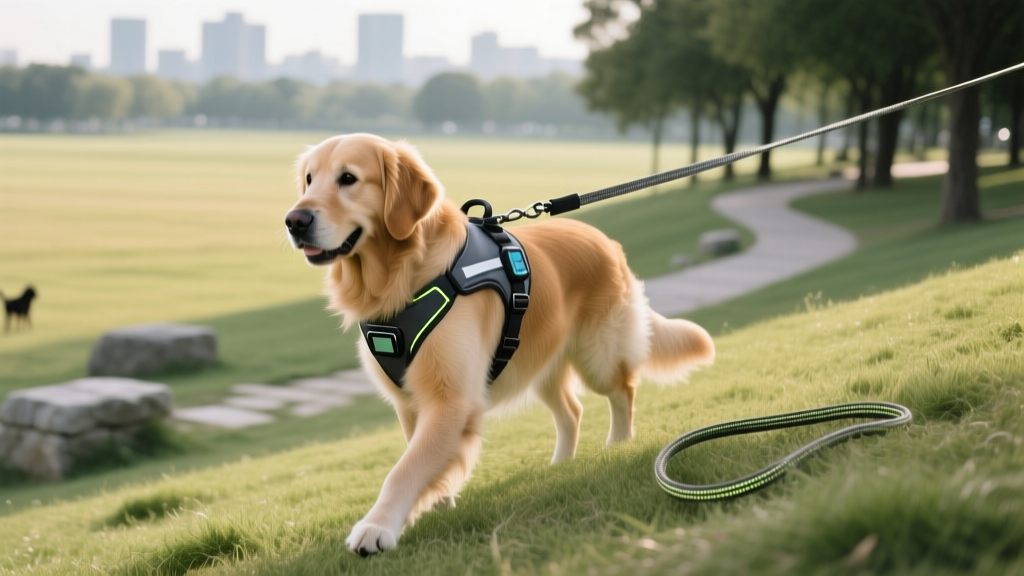
A guide dog must walk on a loose leash without pulling, lagging, or sniffing. This skill is foundational for harness work later. Begin by rewarding the puppy for walking at your left side with a loose leash. Stop walking the instant tension appears on the leash and resume only when the leash is slack. For a detailed walkthrough, visit our guide to stopping leash pulling.
Come (Recall):
While guide dogs are rarely off-leash in their working lives, a strong recall is a vital safety net. Train recall using high-value rewards and never punish a dog for coming to you, even if it took several calls. Practice in fenced areas with increasing distractions.
Leave It:
Guide dogs must ignore food on the ground, other animals, and tempting distractions. Teach "leave it" by presenting a treat in a closed fist, waiting for the puppy to stop investigating, and then rewarding from your other hand with a different, higher-value treat. Progress to leaving treats on the floor, then to real-world scenarios such as passing a bakery or a picnic area.
Settle and Mat Training:
Teach the puppy to go to a designated mat or bed and remain there calmly. This skill translates directly to lying quietly under a desk, in a meeting room, or at a handler's feet during a meal. Use a portable mat so the puppy learns to generalize the behavior to any location.
Training Schedule and Structure
Puppy raisers should aim for multiple short training sessions throughout the day rather than one long session. A typical daily structure might look like this:
- Morning: 10-minute obedience session before breakfast (sit, down, stay, come).
- Mid-morning: 15-minute socialization outing (visit a new location or practice in a familiar one with new distractions).
- Afternoon: 10-minute focused skill work (leave it, loose-leash walking, mat training).
- Evening: Handling exercises and calm settling practice.
Consistency is more important than duration. Five minutes of focused, positive training every day will produce better results than an hour-long session once a week.
Tips for Effective Obedience Training
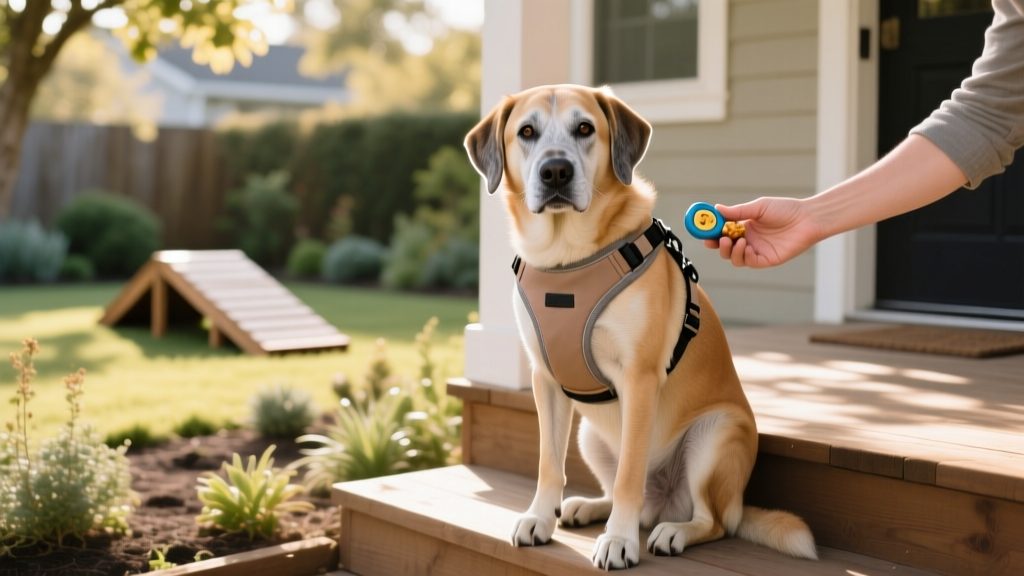
- Use a marker word (such as "yes") or a clicker to pinpoint the exact moment the puppy performs the desired behavior, then follow with a reward.
- Gradually fade food rewards and replace them with life rewards — for example, asking for a sit before opening the door to go outside.
- Train in different locations to ensure the puppy generalizes commands rather than associating them with a single environment.
- Keep a training journal to document successes, challenges, and areas that need more work.
- Enroll in a positive-reinforcement puppy class to practice obedience around other dogs and people. Many guide dog organizations recommend or require group classes.
Common Mistakes in Obedience Training
- Repeating Commands: Saying "sit, sit, sit" teaches the puppy that it does not need to respond the first time. Give the command once, wait two to three seconds, and then use a lure or gentle physical prompt if needed.
- Training When Frustrated: Puppies are sensitive to human emotions. If you feel frustrated, end the session on a positive note with an easy command and take a break.
- Skip-proofing Distractions: Adding distractions too quickly is the most common reason obedience breaks down in public. Increase distractions incrementally — if the puppy cannot sit in your backyard, it will not sit in a busy park.
- Neglecting Duration: Many handlers train behaviors with speed but forget to train duration. A guide dog may need to hold a down-stay for 30 minutes or more. Build duration in small increments, adding seconds before adding minutes.
Phase 3: Public Access Manners and Real-World Proofing (6 to 14 Months)
As the puppy matures into adolescence, the focus shifts from learning new skills to proofing existing skills in real-world environments. Public access manners are what separate a well-trained pet from a dog that is ready for formal guide dog training. During this phase, the puppy must demonstrate that it can behave appropriately in virtually any public setting.
Step-by-Step Public Access Training
Step 1: Master Restaurant Etiquette
Take the puppy to pet-friendly restaurants and practice the "settle under the table" behavior. The puppy should lie down on its mat beneath the table, remain quiet, and not beg for food. Begin at off-peak hours and gradually progress to busier times. Reward the puppy intermittently for calm behavior.
Step 2: Practice Public Transit Behavior
Ride buses, trains, or subways with the puppy. The puppy should board calmly, find a spot on the floor, and remain settled for the duration of the ride. Start with short rides during quiet hours and work up to longer rides during busier periods. Expose the puppy to the sounds, vibrations, and movements unique to each type of transit.
Step 3: Navigate Retail Environments
Visit stores of all types — grocery stores, clothing shops, hardware stores, and pharmacies. The puppy must walk calmly through narrow aisles, ignore merchandise, resist the urge to sniff or lick products, and remain focused on the handler. Practice automatic sits at checkout counters and when the handler stops to speak with employees.
Step 4: Handle Elevators, Escalators, and Stairs
Guide dogs must be comfortable with all forms of vertical movement. Practice riding elevators (standing calmly as doors open and close), riding escalators (if permitted by the organization), and navigating various types of staircases — open-backed stairs, spiral stairs, and wide concrete stairs. Always reward calm behavior and never force the puppy onto a surface that causes visible distress.
Step 5: Proof Against Food and Animal Distractions
Walk the puppy past outdoor cafés, food trucks, and picnic areas. The puppy must ignore food on the ground and resist the temptation to approach people who are eating. Similarly, practice walking past other dogs, cats, squirrels, and birds without reacting. Use the "leave it" command and reward heavily for compliance. Our leave it training guide offers additional strategies for this challenging skill.
Evaluating Readiness for Formal Training
Most guide dog organizations conduct a formal evaluation when the puppy is between 12 and 16 months old. The evaluation typically includes:
- A veterinary examination to confirm the dog is physically sound, with particular attention to hip and elbow scores, eye health, and cardiac function.
- A temperament assessment evaluating confidence, sociability, stress recovery, and sound sensitivity.
- An obedience test covering sit-stay, down-stay, recall, loose-leash walking, and leave it in a distracting environment.
- A public access walk through a shopping center or downtown area to observe manners and focus.
Dogs that pass these evaluations enter formal guide dog training. Those that do not may be given additional time to mature, retested, or career-changed into other roles such as therapy dogs, detection dogs, or beloved family pets. Career change is not a failure — it simply means the dog is better suited to a different path.
Tips for the Public Access Phase
- Always carry cleanup supplies, treats, and a portable water bowl on outings.
- Dress the puppy in its identifying vest or jacket to signal to the public that it is a dog in training.
- Educate the public politely but firmly: the puppy should not be petted, spoken to, or fed without your permission.
- Build a network of businesses that welcome your puppy in training for practice visits.
- Schedule regular check-ins with your guide dog organization's puppy raising supervisor to receive feedback and guidance.
Common Mistakes During Public Access Training
- Skipping Foundations: Attempting public access training before the puppy has solid obedience at home is setting the puppy up for failure. Ensure basics are reliable before adding the complexity of real-world environments.
- Allowing Greetings with Strangers: Every time a stranger pets the puppy without permission, the puppy learns that people are a source of attention. This undermines the neutrality that guide dogs require.
- Ignoring Stress Signals: Pushing a puppy too far too fast in public can create lasting negative associations. If the puppy shows persistent stress signals, reduce the difficulty of the environment and rebuild confidence gradually.
- Overlooking House Manners: Public access manners are important, but so are manners at home. A guide dog puppy should not jump on furniture, steal food from counters, or bark excessively. Consistent rules at home reinforce discipline in public.
Phase 4: Health, Nutrition, and Grooming for Future Guide Dogs
A guide dog must be in peak physical condition to perform its duties safely and comfortably. Puppy raisers play a critical role in maintaining the dog's health throughout the raising period.
Nutrition and Weight Management
Guide dog organizations typically specify a particular brand and formula of dog food. Follow these guidelines carefully. Overfeeding is a common problem among well-meaning puppy raisers, and excess weight places dangerous stress on developing joints — particularly in large breeds like Labrador Retrievers and Golden Retrievers, which are already predisposed to hip and elbow dysplasia.
Use a body condition scoring system to evaluate the puppy's weight regularly. You should be able to feel the puppy's ribs easily without pressing hard, and the puppy should have a visible waist when viewed from above. Consult your veterinarian or the organization's veterinary team if you are unsure.
Exercise Guidelines
While exercise is essential, excessive forced exercise (such as long-distance running or repetitive jumping) can damage growing bones and joints. Follow these general guidelines:
- 8 to 12 weeks: Short, free-play sessions in a safe, enclosed area. Avoid slippery floors.
- 3 to 6 months: Moderate walks (15–20 minutes) and plenty of free play. Avoid forced running on hard surfaces.
- 6 to 12 months: Longer walks (30–45 minutes), hiking on soft terrain, and swimming (an excellent low-impact exercise). Avoid repetitive jumping or high-impact agility until growth plates have closed.
- 12 to 18 months: Gradually introduce more strenuous exercise as the dog reaches physical maturity. Follow veterinary guidance regarding growth plate closure.
Grooming and Hygiene
Regular grooming is essential for a guide dog's comfort and public presentation. Establish a grooming routine early so the puppy accepts handling:
- Brushing: Brush the puppy's coat at least two to three times per week to remove loose hair, prevent matting, and distribute natural oils. Daily brushing is ideal during shedding seasons.
- Bathing: Bathe the puppy as needed, typically every four to six weeks, using a gentle, dog-specific shampoo. Over-bathing can strip natural oils and cause skin irritation.
- Nail Trimming: Trim nails every two to three weeks. Overgrown nails alter a dog's gait and can cause joint pain over time. For guidance, see our puppy grooming basics article.
- Dental Care: Brush the puppy's teeth several times per week using a dog-safe toothpaste. Dental disease is one of the most common health problems in dogs and can lead to systemic infections.
- Ear Cleaning: Check and clean the ears weekly, especially in floppy-eared breeds like Labs and Goldens, which are prone to ear infections.
Veterinary Care
Follow the vaccination schedule provided by the guide dog organization or your veterinarian. Keep detailed records of all veterinary visits, vaccinations, deworming treatments, and flea-and-tick prevention. Guide dog organizations require comprehensive medical histories when the dog returns for formal training.
Phase 5: Emotional Development and Building the Human-Dog Bond
Technical skills are only half of the equation. A successful guide dog must also possess emotional stability, resilience, and a deep bond with its handler. Puppy raisers are responsible for nurturing these qualities throughout the raising period.
Building Confidence
Confidence is the cornerstone of a guide dog's temperament. A confident dog recovers quickly from startling events, approaches novel situations with curiosity rather than fear, and works reliably in unpredictable environments. Build confidence through:
- Problem-solving games: Set up simple puzzles such as hiding treats under cups, creating obstacle courses with household items, or teaching the puppy to navigate a wobble board.
- Shaping exercises: Use a clicker or marker word to shape complex behaviors step by step. Shaping encourages the puppy to think independently and try new things without fear of making mistakes.
- Controlled challenges: Introduce mildly challenging situations — a strange object in the living room, a new walking route, a different type of flooring — and allow the puppy to investigate and overcome them at its own pace.
Preventing Separation Anxiety
Guide dogs must be comfortable spending time alone and must not develop separation anxiety. Begin practicing short departures from the time the puppy arrives in your home. Leave the puppy in a safe, puppy-proofed area with a food-stuffed toy or chew and return before the puppy becomes distressed. Gradually increase the duration of absences. Never make departures or arrivals dramatic — keep them calm and low-key.
Fostering the Working Bond
While puppy raisers are not the dog's eventual handler, the bond formed during the raising period teaches the puppy that working with a human is rewarding and enjoyable. Practice cooperative behaviors such as targeting (touching a hand or object with the nose), following hand signals, and checking in with the handler during walks. These behaviors lay the groundwork for the partnership the dog will eventually form with its blind handler.
For additional guidance on strengthening your relationship with your puppy, explore our article on building trust with your puppy.
Tips for Emotional Development
- Provide plenty of quiet downtime. Puppies need 18 to 20 hours of sleep per day, and overtired puppies become hyperactive and unable to learn.
- Avoid punishing fear responses. If the puppy is frightened, comfort it calmly and create a positive association with the trigger over time.
- Rotate toys to maintain novelty and mental stimulation.
- Practice handling by multiple people so the puppy does not become overly attached to a single individual.
Common Mistakes in Emotional Development
- Over-coddling: While comfort is appropriate when a puppy is genuinely frightened, excessive coddling in non-threatening situations can reinforce timid behavior. Encourage the puppy to investigate and overcome mild challenges independently.
- Under-socializing During Adolescence: Many puppy raisers relax their socialization efforts once the puppy passes the critical socialization window at 16 weeks. However, adolescence (6 to 18 months) brings a secondary fear period during which previously confident puppies may suddenly become wary. Continue socialization throughout this period.
- Neglecting Mental Stimulation: Physical exercise alone is not enough. A mentally under-stimulated puppy is more likely to develop destructive behaviors and poor impulse control. Incorporate puzzle toys, training sessions, and scent games into daily routines.
Frequently Asked Questions
What breeds are most commonly used as guide dogs for the blind?
The most commonly used breeds in guide dog programs are Labrador Retrievers and Golden Retrievers, as well as Labrador-Golden Retriever crosses. These breeds are favored for their intelligence, trainability, stable temperaments, appropriate size, and strong desire to work cooperatively with humans. Some organizations also use German Shepherds and Standard Poodles, though these are less common. Mixed-breed dogs from guide dog breeding programs — often called "crossbreeds" — are increasingly popular because they can combine the best traits of both parent breeds while reducing the risk of inherited health conditions.
How long does it take to train a guide dog from puppy to graduation?
The entire process typically takes 18 to 24 months from the time the puppy is born to the time it graduates as a working guide dog team. The puppy-raising phase lasts approximately 12 to 14 months, during which the puppy lives with a volunteer family and learns socialization, obedience, and public access manners. After returning to the training facility, the dog undergoes four to six months of formal guide training with a professional instructor. Finally, the dog and its matched handler train together for two to four weeks before graduation. Some dogs may require additional time if they need extra maturity or remedial training in specific areas.
Can I raise a guide dog puppy if I already have other pets at home?
Yes, many guide dog organizations allow puppy raisers to have other pets in the home, provided the existing pets are well-behaved, up to date on vaccinations, and do not display aggression toward the puppy. In fact, living with another well-mannered dog can benefit the guide dog puppy by providing a role model for appropriate behavior. However, the puppy raiser must be able to manage introductions carefully, provide separate feeding areas, and ensure that the puppy receives adequate individual training time. Cats and other small pets are generally acceptable as long as the puppy can be taught to ignore them. Check with your specific guide dog organization for their policies, as requirements vary.
What happens if a puppy does not pass the guide dog evaluation?
Dogs that do not pass the evaluation for guide dog work are not considered failures. Guide dog organizations have rigorous standards because the safety of a blind handler depends on the dog's performance. Dogs that are not suited for guide work may be offered additional training time, retested after a period of maturation, or "career changed" into other working roles such as therapy dogs, detection dogs, search-and-rescue dogs, or autism support dogs. If none of these alternatives are a good fit, the dog is typically placed as a beloved family pet — often with the puppy raiser's family or another screened adoptive home. Career-changed dogs go on to live happy, fulfilling lives, and their puppy raisers should feel proud of the socialization and training foundation they provided.
How can I become a puppy raiser for a guide dog organization?
Becoming a puppy raiser is a rewarding commitment that typically involves several steps. First, research guide dog organizations in your area — major organizations include Guide Dogs for the Blind, The Seeing Eye, Guide Dogs of America, and Freedom Dogs, among many others. Most organizations require applicants to attend an orientation session, complete an application, and participate in a home visit. Puppy raisers are usually required to attend regular training classes with their puppies, submit progress reports, and follow the organization's guidelines regarding feeding, veterinary care, and socialization. The commitment typically lasts 12 to 16 months, and while it can be emotionally challenging to return the dog for formal training, puppy raisers universally describe the experience as one of the most meaningful things they have ever done. Visit our getting started with puppy training page for more resources on beginning your journey.
Final Thoughts
Training a puppy to become a guide dog for the blind is one of the most demanding and rewarding endeavors in the world of dog training. It requires patience, consistency, dedication, and a deep understanding of canine behavior and development. Every socialization outing, every obedience session, and every quiet moment of bonding contributes to building a dog that will one day guide a blind person safely through a busy intersection, navigate a crowded airport, and provide the independence that transforms a life.
Whether you are a volunteer puppy raiser, an aspiring professional trainer, or a dog lover seeking to understand this remarkable process, the principles outlined in this guide provide a comprehensive roadmap. Remember that the journey is a marathon, not a sprint. Celebrate small victories, learn from setbacks, and trust the process. The puppy you socialize, train, and love today may one day become the eyes that light up someone's world.
For more training resources, explore our complete library of dog training guides, learn about different dog breeds suited for service work, and discover how early socialization shapes a dog's entire future. Every step you take brings a future guide dog one step closer to changing a life.
Beth Carrasco
All our authors care for dogs every day — read more of their work on the authors page.