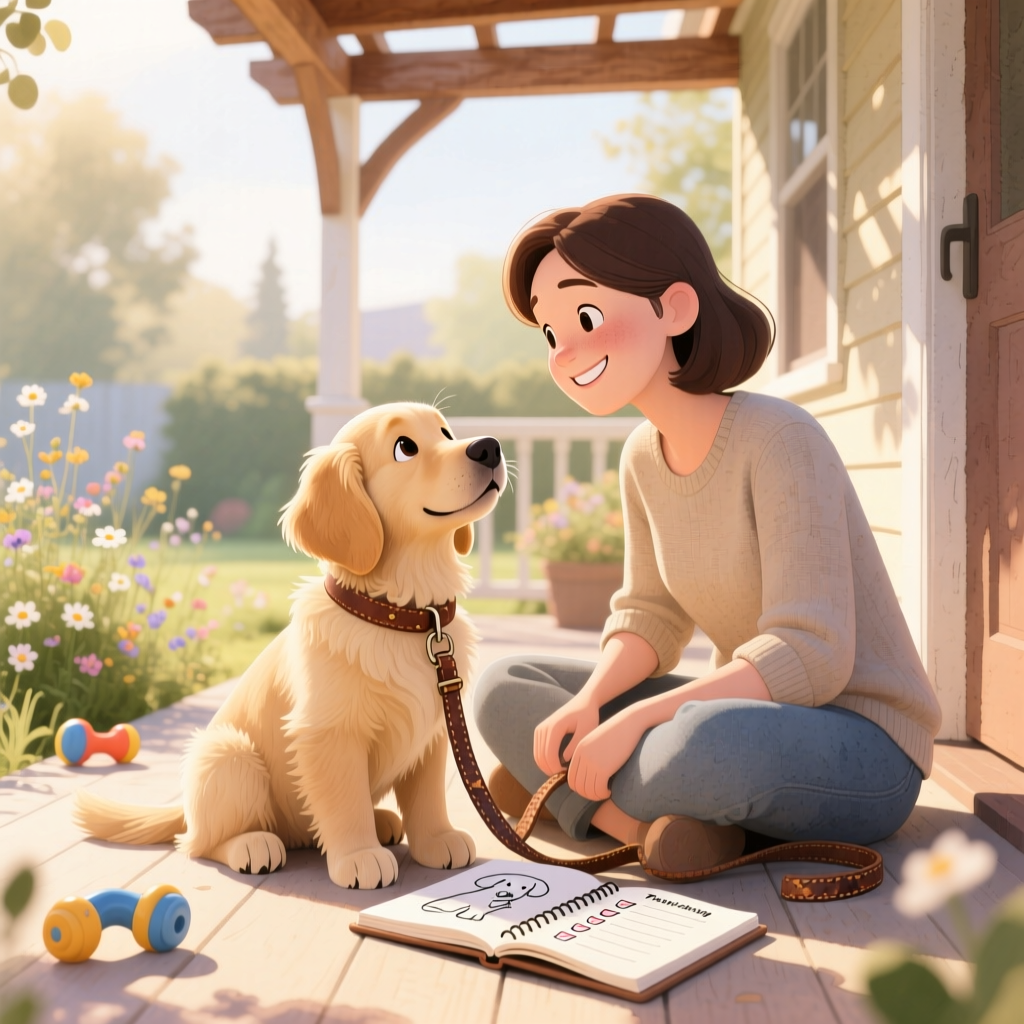
Dog Training Tips for Free: The Complete Guide to Training Your Dog at Home
Discover effective dog training tips for free. Learn proven techniques, step-by-step methods, and expert advice to train your dog at home without spending a dime.
Dog Training Tips for Free: The Complete Guide to Training Your Dog at Home
Bringing a dog into your life is one of the most rewarding experiences you can have. But let's be honest — an untrained dog can turn that joy into frustration pretty quickly. Whether you're dealing with a bouncy puppy who won't stop chewing your shoes or an adult rescue who needs to learn the rules of your household, training is essential. The good news? You don't need to spend hundreds of dollars on professional trainers or fancy programs to raise a well-behaved companion. With the right knowledge, patience, and consistency, you can train your dog effectively using methods that cost absolutely nothing.
This comprehensive guide walks you through proven, free dog training techniques that work for dogs of all ages, sizes, and breeds. From basic obedience commands to solving common behavioral problems, you'll find everything you need to build a strong foundation of trust and communication with your four-legged friend. If you're looking for breed-specific guidance, check out our complete breed guides to understand your dog's natural tendencies before diving into training.
Getting Started: The Foundations of Free Dog Training
Before you teach your dog a single command, it's crucial to understand the principles that make training work. Many people jump straight into teaching tricks without establishing the right mindset and environment, which leads to frustration for both human and dog. The foundation of all successful training — whether you're working with a professional or doing it yourself at home — rests on a few core principles that cost nothing to implement.
Understanding How Dogs Learn
Dogs learn primarily through association and consequence. When a behavior results in something pleasant, they're more likely to repeat it. When a behavior results in nothing rewarding (or something mildly unpleasant), they're less likely to repeat it. This simple concept, known as operant conditioning, is the backbone of all modern dog training. You don't need expensive equipment to leverage this — you just need to understand timing, consistency, and motivation.
Your dog is constantly learning from every interaction, whether you're actively "training" or not. That means the way you respond when your dog jumps on you, barks at the doorbell, or pulls on the leash is all part of their education. Being mindful of these everyday moments is one of the most powerful free training tools you have.
Setting Up for Success
Every great training session starts with preparation. Choose a quiet area with minimal distractions for initial training. Have your rewards ready — this doesn't have to be expensive treats. Small pieces of your dog's regular kibble, tiny bits of cheese, or even a favorite toy can serve as powerful motivators. Keep sessions short, ideally five to fifteen minutes, especially for puppies and dogs new to training.
Here's your free training starter checklist:
- A quiet, distraction-free space in your home or yard
- Small, soft rewards your dog loves (cut regular treats into pea-sized pieces)
- A calm, patient mindset — dogs sense frustration immediately
- A consistent schedule — same times each day work best
- A simple marker word like "Yes!" or a homemade clicker sound
Remember that every dog learns at their own pace. Some breeds are naturally more eager to please and pick up commands quickly, while independent breeds may require more patience and creativity. Understanding your dog's personality and drive is half the battle.
Essential Commands Every Dog Should Know (Step-by-Step)
These five foundational commands form the backbone of good manners and safety. They're the same commands taught in professional obedience classes, and you can teach them all at home for free. Master these before moving on to more advanced skills, and you'll have a dog that's a pleasure to live with and take out in public.
Teaching "Sit" — The Gateway Command
Sit is often the easiest command to teach because it uses a natural movement. It's also the most useful — a sitting dog can't jump on guests, bolt out the door, or lunge at other dogs.
Step 1: Stand in front of your dog with a small reward in your hand. Hold it close to their nose so they can smell it.
Step 2: Slowly move the reward upward and slightly backward over their head. As their nose follows the treat up, their bottom will naturally lower to the ground.
Step 3: The instant their bottom touches the floor, say "Yes!" and give them the reward. Timing is everything here — you want to mark the exact moment the behavior happens.
Step 4: Repeat this 5-10 times in a session. Once your dog is reliably following the lure, add the word "Sit" just before you move your hand.
Step 5: Gradually fade out the hand lure by using an empty hand gesture, then rewarding from your other hand or a treat pouch.
Pro Tip: Practice sit in different locations around your home. A dog that sits perfectly in the kitchen may be confused when asked to sit in the park. Generalization is key, and it costs nothing to practice in new environments.
Teaching "Stay" — Building Impulse Control
Stay teaches your dog self-control, which is arguably the most valuable skill they can learn. This command prevents countless problems, from door-darting to stealing food off the counter.
Step 1: Ask your dog to sit. Hold your palm out toward them like a stop sign and say "Stay" in a calm, clear voice.
Step 2: Wait just one or two seconds. If they don't move, say "Yes!" and reward them while they're still sitting.
Step 3: Gradually increase the duration before rewarding — two seconds, then five, then ten. Go at your dog's pace and don't rush this step.
Step 4: Once your dog can stay for about ten seconds, start adding distance. Take one small step back, then immediately return and reward. Slowly increase the distance over multiple sessions.
Step 5: Add a release word like "Okay!" or "Free!" so your dog knows when the stay is over. This prevents them from breaking the stay randomly.
Common Mistake: Don't call your dog to come to you from a stay during early training. This teaches them that stay means "wait and then come." Instead, always return to your dog to reward them while they're still in position.
Teaching "Come" — The Most Important Safety Command
A reliable recall can literally save your dog's life. This is the one command that must be rock-solid before you ever let your dog off-leash in an unfenced area. For more detailed guidance, read our complete recall training guide.
Step 1: Start indoors with your dog just a few feet away. Say their name followed by "Come!" in an excited, happy tone. Crouch down and open your arms to look inviting.
Step 2: When they come to you, celebrate! Give them a high-value reward and lots of praise. Make coming to you the best thing that happens all day.
Step 3: Practice in increasingly distracting environments — different rooms, then your yard, then a quiet park on a long line.
Step 4: Never punish your dog for coming to you, even if they took their time or were doing something wrong. If coming to you results in punishment, they'll stop coming.
Step 5: Practice "catch and release" — call your dog, reward them, then let them go back to playing. This teaches them that coming doesn't always mean the fun ends.
Teaching "Leave It" — Preventing Dangerous Behavior
Leave it teaches your dog to ignore or move away from something they want. This command can prevent them from eating something toxic, picking up trash on walks, or harassing other animals.
Step 1: Place a low-value item (like a piece of kibble) in your closed fist. Let your dog sniff, lick, and paw at your hand. Say nothing.
Step 2: The moment they stop trying and pull their nose away even slightly, say "Yes!" and reward them with a different, better treat from your other hand.
Step 3: Once they reliably pull away from your closed fist, add the cue "Leave it" just before you present your fist.
Step 4: Progress to an open palm with the treat visible. If they go for it, close your hand. Reward from the other hand when they back off.
Step 5: Move to items on the floor, starting with low-value items and working up to more tempting ones. Always reward with something better than what they're leaving.
Teaching "Down" — The Calming Command
Down is more than just a trick — it's a settling position that helps dogs relax. A dog lying down is calmer, less reactive, and less likely to engage in unwanted behaviors.
Step 1: Start with your dog in a sit. Hold a treat at their nose and slowly lure it straight down to the floor between their front paws.
Step 2: As their nose follows the treat down, their body should naturally lower. The moment their elbows touch the ground, say "Yes!" and reward.
Step 3: If your dog stands up instead of lying down, try luring under your leg while you're sitting on the floor. The physical barrier encourages them to lower their body.
Step 4: Once they're reliably following the lure into a down, add the verbal cue and gradually fade the hand motion.
Step 5: Practice in various locations and on different surfaces. Some dogs are reluctant to lie down on cold tile or wet grass, so be patient and rewarding.
Free Training Techniques for Common Behavior Problems
Even well-trained dogs develop behavior problems from time to time. The good news is that most common issues can be addressed with free, positive reinforcement techniques that you can implement immediately. Here are solutions to the problems that drive most dog owners to seek professional help.
Stopping Excessive Barking
Barking is natural dog behavior, but when it becomes excessive, it can strain your relationship with your dog and your neighbors. The key is to address the root cause rather than just suppressing the symptom.
For alert barking (barking at sounds, passersby, or the doorbell), teach your dog an alternative behavior. When they bark, acknowledge what they're alerting you to by saying "Thank you!" then redirect them to their bed or a mat. Reward them for going to their spot and being quiet. Over time, they'll learn that alerting means going to their spot, not barking endlessly.
For attention barking, the solution is simple but requires discipline: completely ignore the barking. No eye contact, no talking, no touching. The moment they're quiet for even two seconds, give them attention and a reward. This teaches them that silence, not noise, gets your attention.
For boredom barking, increase your dog's physical exercise and mental stimulation. A tired dog is a quiet dog. Try scattering their kibble around the yard for them to find, or freeze their food in a block of ice for a long-lasting challenge. Explore our mental stimulation guide for more free enrichment ideas.
Preventing Jumping on People
Jumping is one of the most common complaints from dog owners, and it's almost always an attention-seeking behavior. Dogs jump because it works — even negative attention like pushing them away or saying "No!" is still attention.
The free fix is straightforward: teach your dog that four paws on the floor is the only way to get attention. When your dog jumps, turn your back completely and fold your arms. Be a boring, unresponsive tree. The instant all four paws are on the ground, turn around and give calm praise and petting. If they jump again, immediately turn away.
Practice this with family members first, then with cooperative friends. Ask visitors to follow the same protocol — no attention until all paws are on the floor. Consistency from every person your dog interacts with is critical for this to work quickly.
For extra reliability, teach your dog to sit when greeting people. A sitting dog can't jump. Practice having your dog sit before you pet them, before you put their food bowl down, and before you open the door for a walk. This builds a default "sit to get what you want" behavior that generalizes to greeting visitors.
Stopping Leash Pulling Without Expensive Equipment
You don't need a $50 no-pull harness to teach your dog to walk nicely on a leash. While proper equipment can help, the real solution is training, and the most effective technique is completely free.
The "be a tree" method is simple: every time your dog pulls the leash tight, stop walking. Stand completely still. Don't yank the leash, don't say anything — just stop. Wait until your dog looks back at you or takes a step back toward you, creating slack in the leash. The instant the leash is loose, start walking again.
This teaches your dog a clear lesson: pulling makes forward movement stop, and a loose leash makes forward movement continue. It requires enormous patience in the beginning — your first few walks might take an hour to go around the block — but dogs catch on surprisingly fast when the consequence is consistent every single time.
Supplement this by rewarding your dog with treats when they walk beside you with a loose leash. Hold a treat at your hip level on the side you want them to walk. This gives them a target position and reinforces the behavior you want. Check out our leash training guide for a complete step-by-step walking program.
Handling Destructive Chewing
Dogs chew for many reasons — teething, boredom, anxiety, or simply because it feels good. Rather than trying to stop chewing entirely (which is a natural and healthy behavior), redirect it to appropriate items.
Manage the environment first: put shoes in closets, keep remote controls out of reach, and use baby gates to limit access to tempting rooms. This isn't giving up — it's setting your dog up for success while they learn what's appropriate to chew.
Provide plenty of appropriate chew options. You don't need expensive toys — a frozen wet washcloth twisted into a rope makes an excellent teething aid for puppies, and cardboard boxes (with tape and staples removed) can provide hours of satisfying destruction for dogs who love to shred.
When you catch your dog chewing something inappropriate, calmly interrupt them with a neutral sound like "Oops!" and immediately offer an appropriate chew item. When they chew the right thing, praise them enthusiastically. Over time, they'll learn which items are theirs to chew and which are off-limits.
Advanced Free Training Tips & Common Mistakes to Avoid
Once you've mastered the basics, these advanced tips will take your training to the next level. Equally important, knowing the common mistakes that sabotage training progress will help you avoid the pitfalls that cause most people to give up or resort to expensive professional help.
Advanced Tips That Cost Nothing
Capture good behavior: Keep treats in your pocket throughout the day and randomly reward your dog for making good choices on their own. Catching them lying calmly on their bed, sitting patiently at a door, or playing gently with a toy and rewarding those moments reinforces good behavior without formal training sessions.
Use life rewards: Not every reward has to be food. Use things your dog already wants — going outside, getting petted, playing with a toy, sniffing a bush on a walk — as rewards for good behavior. Ask your dog to sit before opening the door, and the open door becomes the reward. This is called the "Nothing in Life is Free" protocol, and it builds polite manners effortlessly.
Practice in the "3 D's": Duration, Distance, and Distraction. Once your dog knows a command at home, gradually increase each of these factors one at a time. Practice sit-stay for longer durations, then practice at greater distances, then practice with more distractions around. Never increase more than one D at a time — this is the secret to reliable real-world obedience.
End on a high note: Always finish training sessions with something your dog can do successfully. If they're struggling with a new skill, go back to something easy, reward generously, and end the session. This keeps training fun and builds confidence rather than frustration.
Train before meals: A slightly hungry dog is a more motivated dog. Schedule training sessions right before breakfast or dinner when your dog's food drive is highest. Use their regular meal kibble as training rewards — this means training doesn't add extra calories and costs nothing extra.
Common Mistakes That Sabotage Free Training
Inconsistency between family members: If Mom lets the dog on the couch but Dad scolds them for it, the dog will be confused and anxious. Hold a family meeting to agree on rules and commands before you start training. Everyone should use the same cue words and enforce the same boundaries. Post a cheat sheet on the fridge if it helps.
Repeating commands: Saying "Sit, sit, sit, SIT!" teaches your dog that they don't have to respond the first time. Say the command once, wait a few seconds, and if they don't respond, gently lure them into position. This teaches them to listen the first time.
Training when frustrated: If you're feeling impatient or angry, end the session immediately. Dogs are remarkably sensitive to human emotions, and training while frustrated can damage your relationship and create fear around training. Take a break and come back when you're calm.
Moving too fast: One of the most common reasons training fails is that owners expect too much too soon. If your dog can hold a stay for five seconds, don't suddenly expect thirty seconds. Build up gradually, adding just a second or two at a time. Set your dog up to succeed at every step.
Punishing after the fact: Dogs don't connect punishment with something they did minutes or even seconds ago. If you come home to a destroyed cushion and yell at your dog, they'll think you're yelling because you walked through the door — not because of what happened an hour ago. Focus on prevention and redirecting in the moment instead.
Skipping socialization: Training isn't just about commands — it's about raising a confident, well-adjusted dog. Expose your dog to different people, environments, sounds, and surfaces regularly. A well-socialized dog is easier to train because they're less fearful and distracted in new situations. Read our puppy socialization guide for a free checklist of experiences to provide.
Building a Free Daily Training Routine
The most successful dog trainers aren't the ones who do hour-long sessions once a week — they're the ones who weave training into everyday life. Here's how to build a free daily training routine that produces results without feeling like a chore.
Morning Routine
Start the day by asking your dog to sit before you put their food bowl down. Practice a brief stay before releasing them to eat. This takes ten seconds and reinforces two commands before you've even had your coffee. If you walk your dog in the morning, use the walk as a training opportunity — practice loose leash walking, ask for sits at intersections, and reward check-ins when your dog looks at you voluntarily.
Throughout the Day
Use natural transitions as training moments. Ask for a sit before opening the back door. Practice a down-stay while you eat your lunch. Ask for a "leave it" when you drop something on the floor. These micro-sessions add up to dozens of practice repetitions throughout the day without requiring any dedicated training time.
If you work from home, set a timer for every hour and do a quick two-minute training session. Practice a new skill, play a quick game of tug as a reward, and get back to work. Your dog gets mental stimulation, and you get a well-trained companion without rearranging your schedule.
Evening Wind-Down
Evenings are perfect for calmer training activities. Practice long stays while you watch TV. Do some gentle handling exercises — touching your dog's paws, ears, and mouth while rewarding them — which prepares them for grooming and vet visits. End the night with a short, fun training game like hide-and-seek, where you hide in different rooms and call your dog to find you. It reinforces recall, provides mental exercise, and strengthens your bond.
Weekend Adventures
Use weekends to practice training in new environments. Visit a park, a pet-friendly store, or a friend's house and practice commands in these more distracting settings. This is where real reliability is built. You can also use weekends for longer enrichment activities like setting up a backyard obstacle course using household items — chairs to walk around, broomsticks to step over, and cardboard boxes to walk through. These activities build confidence and burn energy for free.
Frequently Asked Questions About Free Dog Training
Can I really train my dog effectively without spending any money?
Absolutely. The core principles of dog training — positive reinforcement, consistency, timing, and patience — are completely free. Professional trainers and classes are wonderful resources, but the techniques they use are the same ones described in this guide. Dogs don't care about expensive equipment or fancy facilities. They care about clear communication, fair rewards, and a trusting relationship with their human. Many of the world's best-trained dogs, including working dogs and competition champions, were primarily trained by dedicated owners at home using positive reinforcement techniques that cost nothing.
That said, if you're dealing with serious behavioral issues like aggression, severe anxiety, or fear-based reactivity, consulting a professional is strongly recommended. These situations can be dangerous if handled incorrectly, and the investment in professional guidance is worth it for everyone's safety.
How long does it take to see results from free dog training at home?
Most dogs begin to understand basic commands like sit and down within a few days to a week of consistent daily practice. However, true reliability — where your dog responds consistently in distracting, real-world situations — typically takes several weeks to a few months of regular practice.
Puppies tend to learn quickly but have short attention spans and poor impulse control, so progress can feel uneven. Adult dogs may take slightly longer to learn new behaviors, especially if they have established habits to unlearn, but they often have longer attention spans and can make rapid progress once they understand what you're asking.
The biggest factor in how quickly you see results isn't your dog's intelligence or breed — it's your consistency. Five minutes of focused training every single day will produce faster results than an hour-long session once a week. Make training a daily habit, and you'll be amazed at how quickly your dog transforms.
What can I use as training rewards if I don't want to buy special treats?
You have far more reward options than you might think. Small pieces of your dog's regular kibble work perfectly for easy behaviors and low-distraction environments. For more challenging training, try tiny pieces of cheese, small bits of cooked chicken, or even pieces of fruits and vegetables that are safe for dogs like carrots or apple slices.
Food isn't the only effective reward. Many dogs are highly motivated by toys, play, praise, petting, or access to something they want (like going outside or sniffing an interesting spot). The key is to figure out what your individual dog values most and use that as your primary reward for difficult behaviors. Some dogs will work harder for a game of tug than for any food in the world.
Keep a mental list of your dog's favorite things and rotate rewards to keep training exciting. A dog who never knows whether they'll get a treat, a toy, or a belly rub after a correct response stays engaged and motivated. Learn more about your dog's preferences by exploring our breed profiles, which include information about typical motivation styles for different breeds.
Is it too late to train an older dog for free?
The old saying "you can't teach an old dog new tricks" is completely false. Dogs of any age can learn new behaviors, commands, and manners. In fact, adult and senior dogs often have advantages over puppies when it comes to training — they typically have longer attention spans, more impulse control, and are less easily distracted.
Training an older dog may require some adjustments. If your dog has spent years practicing an unwanted behavior like jumping or pulling, it will take more time and consistency to change that habit. Be patient and understand that you're not just teaching something new — you're also undoing an old pattern. The process is the same: reward the behavior you want, manage the environment to prevent the behavior you don't want, and stay consistent.
Older dogs may also have physical limitations that affect training. A dog with arthritis may be uncomfortable sitting on hard floors or holding positions for long periods. Always consider your dog's physical health and consult your veterinarian if you're unsure about what activities are appropriate. Adjust your training to work within their comfort zone, and you'll find that senior dogs can be wonderful, eager students.
What should I do if my dog isn't responding to free training methods?
If your dog isn't responding, the issue is usually one of three things: motivation, clarity, or environment. First, make sure your rewards are valuable enough. If your dog isn't interested in what you're offering, they have no reason to work. Try higher-value rewards or switch to a non-food motivator like a favorite toy.
Second, evaluate whether you're being clear enough. Are you using the same cue word every time? Are you accidentally giving conflicting body language? Are you rewarding the right behavior at the right moment? Sometimes filming a training session on your phone and watching it back reveals clarity issues you didn't notice in the moment.
Third, consider the environment. If your dog responds perfectly in your living room but falls apart in the park, you've moved to a more distracting environment too quickly. Go back to basics in the new location and rebuild the behavior from scratch, using higher-value rewards to compete with the distractions.
If you've addressed all three of these factors and still aren't making progress after several weeks of consistent effort, consider seeking guidance from a qualified positive reinforcement trainer. Sometimes a fresh set of eyes can identify issues that are invisible to the person doing the training. Many trainers offer free or low-cost consultations, and even a single session can get you back on track.
Final Thoughts on Training Your Dog for Free
Training your dog doesn't require a big budget — it requires knowledge, patience, and commitment. The techniques in this guide are the same ones used by professional trainers worldwide, and they work because they're based on how dogs naturally learn. By investing a few minutes each day in positive, consistent training, you'll build a bond with your dog that's based on mutual trust and clear communication.
Remember that every interaction with your dog is a training opportunity. The way you greet them when you come home, the way you feed them, the way you respond to their barking — all of these moments shape their behavior. Be mindful, be consistent, and be generous with your rewards, and you'll have a well-mannered companion who's a joy to live with.
Start today with just one command. Pick the skill that would make the biggest difference in your daily life — whether that's sit, come, or loose leash walking — and practice for five minutes. Tomorrow, practice again. Within a week, you'll see progress. Within a month, you'll have a different dog. And it won't have cost you a single penny.
For more training resources, explore our complete training library or learn more about your dog's specific needs through our breed guides. Every dog deserves a patient, knowledgeable handler, and with these free techniques, you have everything you need to be exactly that.
Tom Renshaw
All our authors care for dogs every day — read more of their work on the authors page.