Agility Training at Home: The Complete Guide to Backyard Dog Agility
Learn how to set up and run effective agility training at home. Step-by-step exercises, DIY equipment ideas, and expert tips for dogs of all levels.
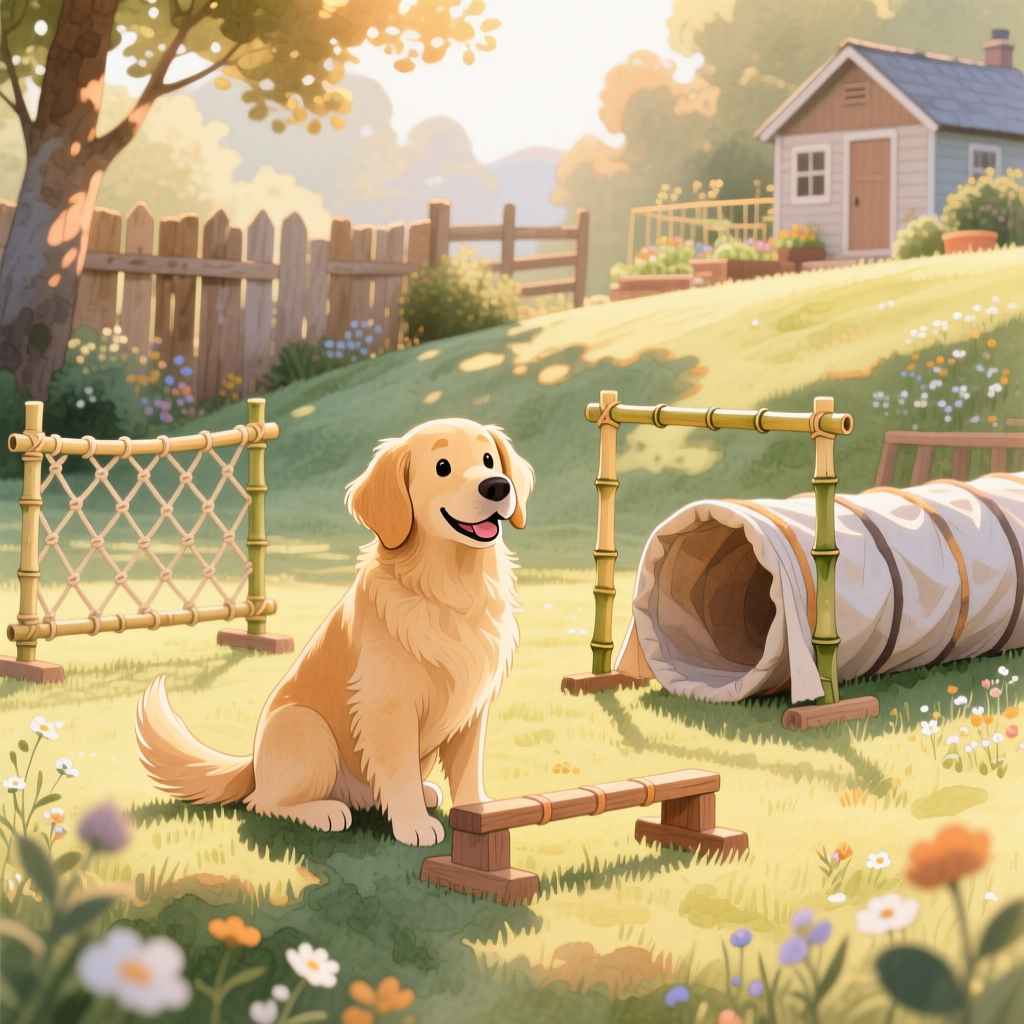
Agility training is one of the most rewarding activities you can share with your dog. It builds confidence, strengthens your bond, provides incredible physical exercise, and sharpens your dog's focus and obedience. While many people associate dog agility with large competition arenas and expensive equipment, the truth is that some of the most effective agility training happens right in your own backyard, living room, or garage.
Whether you're preparing for competition, looking for a fun way to burn off your dog's energy, or simply want to teach your furry friend something exciting and new, home agility training offers tremendous benefits. You control the pace, the environment, and the difficulty level — all without the pressure or cost of a formal training facility.
In this comprehensive guide, we'll walk you through everything you need to know about setting up and running a successful agility training program at home, from building foundational skills to creating your own obstacles and troubleshooting common challenges.
Getting Started with Home Agility Training
Before you start jumping over broomsticks and weaving through cones, it's essential to lay a solid foundation. Agility training at home works best when your dog already has a grasp of basic obedience commands. If your dog hasn't yet mastered basic obedience training, spend a few weeks building those skills first. Reliable recall, sit, stay, and a solid "come" command will make your agility sessions far more productive and enjoyable.
Assessing Your Dog's Readiness
Not every dog should start agility training at the same age or fitness level. Puppies under 12 to 18 months (depending on breed size) should avoid high-impact jumping and intense physical maneuvers because their growth plates are still developing. For young dogs, focus on flatwork — ground-level exercises that teach body awareness, handling cues, and obstacle familiarity without strain on developing joints.
Consider your dog's breed characteristics and physical build. Border Collies, Australian Shepherds, and Shetland Sheepdogs are natural agility athletes, but any healthy dog can enjoy modified agility work. Even smaller breeds like Jack Russell Terriers and Papillons excel in agility when training is tailored to their size and abilities.
Choosing Your Training Space
You don't need a massive yard to practice agility at home. A flat, non-slip area of about 20 by 30 feet is enough for most beginner exercises. Indoors, a garage, basement, or large room works well for flatwork and small obstacle practice. Here's what to look for in your training space:
- Flat, even ground — Avoid slopes, holes, or uneven surfaces that could cause tripping or injury.
- Non-slip surface — Grass, rubber mats, or carpet are ideal. Avoid concrete, tile, or hardwood floors where your dog could slip.
- Few distractions — Especially in the beginning, choose a quiet area away from heavy foot traffic, other animals, or loud noises.
- Adequate lighting — Good visibility helps your dog see obstacles clearly and respond to your body language.
- Secure boundaries — A fenced yard or enclosed room prevents your dog from wandering off mid-session.
Gathering Essential Supplies
Home agility training doesn't require a big investment. Start with these basics:
- High-value treats — Small, soft treats your dog loves. Cut them into pea-sized pieces for quick consumption during training.
- A clicker or marker word — Consistent marking of correct behavior accelerates learning.
- A motivated, hungry dog — Train before meals when your dog's food drive is highest.
- Cones, buckets, or poles — Household items can serve as makeshift obstacles.
- A sturdy table or plank — For pause tables and low balance exercises.
- Patience and enthusiasm — Your energy sets the tone for every session.
Building Foundational Skills Before Hitting the Obstacles
The biggest mistake new agility handlers make is rushing straight to the obstacles. The dogs that excel in agility — whether at home or in competition — are the ones with rock-solid foundational skills. Think of flatwork as the grammar of agility: it may not be as flashy as a flying tunnel exit, but it makes everything else possible.
Body Awareness Exercises
Body awareness is your dog's understanding of where each paw is at any given moment. This is critical for navigating agility equipment safely and efficiently. Try these exercises at home:
- Perch work: Teach your dog to place their front paws on a small platform, book, or disc. Reward for holding the position. Gradually increase duration and add distractions.
- Backing up: Stand facing your dog and gently walk toward them, rewarding any step backward. Shape this into a fluid reverse movement. This teaches rear-end awareness.
- Pivot work: With your dog's front paws on a perch, lure them to pivot their hindquarters around the platform in both directions. This builds incredible rear-end control.
- Ladder walks: Lay a flat ladder on the ground and encourage your dog to walk through the rungs, placing each paw carefully. This is a classic canine conditioning exercise.
Focus and Engagement Training
Agility requires your dog to maintain focus on you despite environmental distractions. Practice these engagement drills regularly:
- Name game: Say your dog's name and reward immediately when they make eye contact. Gradually increase distance and distractions.
- Recall games: Call your dog from increasing distances, rewarding enthusiastically. A reliable recall is essential for navigating agility courses.
- Toy drive building: If your dog is toy-motivated, use tug and fetch as rewards during training. This builds speed and excitement on course.
- Impulse control: Practice "wait" and "leave it" exercises. A dog that can control their impulses will perform obstacles more safely and accurately.
Introduction to Handling Cues
In agility, your body language is your primary communication tool. Your dog reads your shoulders, hips, arm signals, and footwork to determine where to go next. Start teaching basic handling cues on the flat:
- Front cross: Change sides in front of your dog by turning and switching your lead arm. Practice this while walking beside your dog in a straight line.
- Rear cross: Change sides behind your dog by crossing behind them as they move forward. This is useful for directing dogs through course changes.
- Lateral distance: Gradually increase the distance between you and your dog while they perform simple tasks. Agility often requires you to handle from several feet away.
For a deeper dive into handling techniques and communication, check out our positive reinforcement training guide, which covers the reward-based methods that work beautifully in agility.
DIY Agility Equipment: Building Obstacles at Home
One of the greatest advantages of home agility training is the ability to create effective obstacles from inexpensive, everyday materials. You don't need competition-grade equipment to build skills. Here are practical, safe DIY versions of the most common agility obstacles.
Jump Bars
Jumps are the most fundamental agility obstacle, and they're easy to replicate at home.
- PVC jump: Build a simple jump using PVC pipe and fittings. Create two uprights with a base and use a lightweight PVC bar as the jump pole. The bar should fall easily if your dog hits it — this prevents injury.
- Broomstick jump: Rest a broomstick across two stable supports such as buckets, bricks, or stacked books. Keep the bar low for beginners — just a few inches off the ground.
- Safety tip: Never use fixed bars or heavy poles that won't dislodge if your dog makes contact. A falling bar teaches your dog to jump cleanly without risking injury.
Tunnels
Tunnels are often a dog's favorite obstacle, and they're surprisingly easy to source for home use.
- Children's play tunnels: Inexpensive pop-up tunnels from toy stores work well for small to medium dogs.
- Agility-specific tunnels: Affordable fabric tunnels with metal or plastic rings are available online in various lengths. Start with a short, straight tunnel (4 to 6 feet) and gradually increase length and add curves.
- DIY tunnel: For a budget option, use a large cardboard box with both ends open, or drape a blanket over a row of chairs to create a tunnel-like passage.
Weave Poles
Weave poles are the most technically challenging agility obstacle, and they require patience to train. At home, you can create effective weave pole setups:
- Garden stakes: Push tall garden stakes or fiberglass rods into the ground at 24-inch intervals. Start with just two or four poles and gradually add more.
- PVC weave poles: Insert PVC pipes into a base made from PVC fittings and a long horizontal pipe. This creates a portable, adjustable set.
- Offset method: For beginners, arrange poles in two parallel rows slightly offset from each other, creating a channel your dog can run through. Gradually bring the rows closer together until they form a single line.
Pause Table
The pause table requires your dog to jump onto a raised platform and hold a sit or down position for a set duration.
- Sturdy low table: A coffee table, sturdy ottoman, or plywood platform on short legs works well. Ensure the surface is non-slip — add a yoga mat or rubber shelf liner on top.
- Height guidelines: For beginners, start just a few inches off the ground. Increase height gradually as your dog gains confidence.
Additional Practice Obstacles
Beyond the standard obstacles, these supplementary exercises enhance your home agility training:
- Wobble board: Place a plank on a fulcrum (like a rolled towel or pool noodle) and teach your dog to walk across it. This builds confidence on moving surfaces.
- Target mats: Use small mats or towels as targets. Teach your dog to run to the mat and sit. This translates to contact behavior on larger equipment.
- Tire jump substitute: Hang a hula hoop from a sturdy frame or between two uprights. Encourage your dog to jump through the center.
Step-by-Step Agility Training Exercises for Home
Now that you have your space, equipment, and foundational skills, it's time to start training. Follow these progressive exercises to build your dog's agility abilities step by step. Remember, every dog learns at their own pace — celebrate small victories and keep sessions short and fun.
Exercise 1: Introduction to Jumps
- Set the jump bar on the ground. Walk your dog over it on leash, rewarding as they step over.
- Raise the bar just one or two inches. Stand beside the jump and use a treat or toy to lure your dog over. Mark and reward the moment they clear the bar.
- Add a verbal cue such as "over" or "jump" just before your dog takes off.
- Gradually increase the height in small increments, never exceeding what's comfortable for your dog's size and age.
- Practice sending your dog over the jump from increasing distances using your arm signal and verbal cue.
- Introduce sequences of two or three jumps in a row, rewarding after the final jump.
Exercise 2: Tunnel Training
- Start with a very short tunnel — just two to three feet long. If using a longer tunnel, scrunch it up to shorten it initially.
- Have a helper hold your dog at one end while you crouch at the other end, calling enthusiastically and showing a treat or toy.
- Release your dog and reward lavishly when they come through.
- Gradually lengthen the tunnel as your dog gains confidence.
- Introduce curves by bending flexible tunnels into gentle arcs.
- Add the verbal cue "tunnel" as your dog enters the opening.
- Practice sending your dog into the tunnel from different angles and distances.
Exercise 3: Teaching Weave Poles
Weave poles require the most patience of any agility obstacle. Expect this training to take weeks or even months. Use one of these proven methods:
- Channel method: Set poles in two parallel rows with a wide channel between them. Run your dog through the channel, rewarding at the end. Gradually narrow the channel over multiple sessions until the poles are in a single line.
- Guiding method: With just two or four poles, use a treat to guide your dog's nose through each gap in a weaving motion. Reward after the last pole.
- 2x2 method: Train pairs of poles independently. Reward your dog for correctly entering and passing through each pair. Gradually link pairs together.
- Whichever method you choose, keep sessions short (three to five repetitions) and always end on a success.
Exercise 4: Pause Table Training
- Introduce the table on the ground. Reward your dog for stepping onto it with all four paws.
- Ask for a sit or down on the table. Reward for holding the position for one second, then gradually increase to five seconds.
- Raise the table slightly and repeat the process.
- Add the verbal cue "table" as you direct your dog onto it.
- Practice approaching the table from different angles and at a light jog.
- Build duration up to five seconds, which is the standard competition requirement.
Exercise 5: Putting It All Together — Mini Sequences
Once your dog is comfortable with individual obstacles, start linking them into short sequences:
- Begin with just two obstacles — for example, a jump followed by a tunnel.
- Run the sequence with your dog on leash if necessary, guiding them from one obstacle to the next.
- Reward enthusiastically at the end of the sequence.
- Gradually add more obstacles, building up to sequences of four to six elements.
- Practice different orders and approaches to build your dog's flexibility and responsiveness.
- Introduce simple handling moves like front crosses between obstacles.
If your dog seems confused or frustrated during sequence work, go back to practicing individual obstacles. Confidence on each element is the key to smooth sequences. For more on building reliable behaviors, our leash training guide covers techniques for guiding dogs through new experiences with clarity and patience.
Tips for Success and Common Mistakes to Avoid
Home agility training is enormously rewarding, but it's easy to develop habits that slow progress or put your dog at risk. Keep these tips and warnings in mind throughout your training journey.
Essential Tips for Effective Home Agility Training
- Keep sessions short: Aim for 10 to 15 minutes per session, two to three times per week. Short, frequent sessions are far more effective than long, exhausting ones. Dogs learn best when they're fresh and motivated.
- Always warm up: Spend five minutes before each session doing light exercise — a short walk, some easy tricks, or gentle stretching. This prepares your dog's muscles and joints for physical activity.
- End on a positive note: Always finish with something your dog does well, even if it means going back to a simpler exercise. You want your dog to look forward to the next session.
- Use a training journal: Record what you practiced, how your dog responded, and what you want to work on next. This helps you track progress and identify patterns.
- Cross-train: Supplement agility with other activities like trick training, hiking, swimming, or canine fitness exercises. This prevents burnout and builds well-rounded athleticism.
- Film your sessions: Set up your phone to record training. Reviewing footage helps you spot handling errors, timing issues, and areas for improvement that you might miss in the moment.
- Train both sides: Dogs naturally prefer turning in one direction. Practice handling on both your left and right sides to develop a balanced, versatile agility dog.
- Celebrate effort, not just success: If your dog tries hard but makes a mistake, reward the effort. This builds confidence and willingness to attempt challenging tasks.
Common Mistakes and How to Avoid Them
Mistake 1: Moving too fast. Rushing through training stages creates gaps in understanding. If your dog is struggling, go back a step. There's no deadline — building solid skills takes time.
Mistake 2: Inconsistent cues. Using different words, gestures, or body language for the same command confuses your dog. Decide on your cues before you start training and stick to them. Write them down if necessary.
Mistake 3: Over-facing your dog. Introducing obstacles that are too high, too complex, or too scary can damage your dog's confidence permanently. Always err on the side of making things too easy rather than too hard.
Mistake 4: Training on unsafe surfaces. Running agility on concrete, wet grass, or slippery floors invites injury. Invest in rubber matting for indoor spaces and choose dry, level grass for outdoor training.
Mistake 5: Neglecting cool-down. After each session, walk your dog calmly for a few minutes to allow their heart rate to return to normal. Offer water and check their paws for any signs of wear or injury.
Mistake 6: Comparing your dog to others. Every dog progresses differently. A dog that takes six months to learn weave poles might go on to be an incredible agility partner. Focus on your own team's growth.
Mistake 7: Skipping foundational skills. It's tempting to jump straight to exciting obstacles, but dogs without solid flatwork, body awareness, and engagement skills will struggle as courses become more complex. Invest time in the basics — it pays dividends.
Safety Considerations
Your dog's safety must always come first in agility training. Keep these critical safety guidelines in mind:
- Never train a dog that is ill, injured, or recovering from surgery without veterinary clearance.
- Avoid agility in extreme heat or cold. Dogs can overheat quickly during intense exercise.
- Provide fresh water before, during, and after every session.
- Inspect homemade equipment before each use for loose parts, sharp edges, or instability.
- Know your dog's physical limits. Brachycephalic breeds (like French Bulldogs and Pugs), senior dogs, and dogs with joint issues need modified, low-impact agility work.
- If your dog shows any sign of pain, lameness, or reluctance, stop immediately and consult your veterinarian.
Frequently Asked Questions About Home Agility Training
What age can my dog start agility training at home?
You can begin foundational agility exercises — such as body awareness work, tunnel introductions, and flatwork — with puppies as young as 8 to 10 weeks old. However, high-impact activities like jumping and tight turns should be avoided until your dog's growth plates have closed, which typically occurs between 12 and 18 months of age depending on breed size. Small breeds mature faster than large breeds, so consult your veterinarian for breed-specific guidance. During the puppy phase, focus on building confidence, teaching handling cues, and introducing obstacles at ground level. This early groundwork creates a strong, enthusiastic agility partner without risking developmental injuries.
How long does it take to train a dog in agility at home?
The timeline varies enormously depending on your dog's age, breed, temperament, previous training, and how consistently you practice. Most dogs can learn basic obstacle performance within 4 to 8 weeks of regular training. Building reliable, fluent performance on all obstacles typically takes 6 to 12 months. Weave poles alone often require 3 to 6 months of dedicated practice. Training for competition-level proficiency may take 1 to 2 years of consistent work. Remember that agility training is an ongoing process — even experienced dogs and handlers continue learning and refining their skills. Focus on progress rather than perfection, and enjoy the journey with your dog.
Can I do agility training at home if I have a small yard or no yard at all?
Absolutely. Many effective agility exercises require very little space. Indoor flatwork, body awareness drills, and target training can be done in a room as small as 10 by 10 feet. You can practice jump technique with a single low jump bar in a hallway or garage. Short tunnels can be set up in a living room. Weave poles can be practiced with just two to four poles in a narrow space. If you have no yard at all, consider visiting a local park or open field for longer sequence practice once or twice a week while doing your technical training indoors. The key is consistency and creativity — limited space doesn't have to limit your dog's agility education.
Is home agility training enough, or should I also join a class?
Home training is an excellent foundation and can take you quite far, especially if your goals are recreational. Many dogs and handlers train primarily at home and enjoy agility as a wonderful bonding activity. However, joining a class or club offers several advantages you can't replicate at home: access to full-size regulation equipment (especially contact obstacles like A-frames, dog walks, and seesaws), professional feedback on your handling technique, a controlled environment with distractions that prepare your dog for real-world situations, and the camaraderie of fellow agility enthusiasts. A great approach is to combine both — do the majority of your skill-building at home and supplement with periodic classes, workshops, or fun matches to test your skills and gain new insights.
What are the best treats to use during home agility training?
The best training treats are small, soft, smelly, and quickly consumed. You want your dog to eat the treat in one or two bites so you can move immediately to the next repetition. Excellent options include tiny pieces of boiled chicken, cheese, hot dogs, freeze-dried liver, or commercial soft training treats. Cut everything into pea-sized pieces — your dog is motivated by the frequency of rewards, not the size. For toy-motivated dogs, a quick game of tug or a toss of a favorite ball can be even more rewarding than food. Vary your rewards to keep your dog guessing and engaged. Keep treats in a bait bag or pocket that's easy to access without fumbling. And remember: as your dog's skills improve, you can gradually reduce the frequency of treats while maintaining enthusiasm through verbal praise, play, and occasional jackpot rewards for exceptional performances.
Home agility training is a journey of discovery for both you and your dog. It teaches you to communicate more clearly, observe more carefully, and celebrate more enthusiastically. Whether your goal is to compete, to tire out an energetic dog, or simply to have fun together, the skills you build through backyard agility will enrich your relationship with your dog for years to come. Start small, stay consistent, prioritize safety, and above all — enjoy every moment of the process. Your dog certainly will.
Ready to expand your training repertoire? Explore our complete collection of dog training guides for more tips, techniques, and step-by-step instructions for every skill level.
Tom Renshaw
All our authors care for dogs every day — read more of their work on the authors page.