How Much Do Yorkie Puppies Cost? 2026 First-Year Budget &
How much do Yorkie puppies cost in 2026? Full breakdown of purchase price, first-year vet bills, food, supplies, plus breed-specific puppy milestones and care.

If you've been searching for how much do Yorkie puppies cost, you've likely noticed prices range from a few hundred dollars to well over $3,000. The Yorkshire Terrier consistently ranks among the American Kennel Club's top 15 most popular breeds, and that demand drives a wide pricing spectrum depending on lineage, breeder reputation, and location.
But the purchase price is only the beginning. As someone who has guided dozens of Yorkie puppy owners through those fragile first months, I can tell you that the real financial picture includes veterinary care, premium small-breed nutrition, grooming, and the supplies that keep a 4-to-7-pound dog safe and healthy. This guide breaks down every dollar you'll spend in year one — and pairs that with the breed-specific puppy care timeline you need to raise a confident, well-adjusted Yorkie.
Yorkie Puppy Purchase Price: What Drives the Cost
Not all Yorkie puppies are priced equally. Here's what creates the spread you'll see when researching breeders:
| Source | Price Range | What's Included | Red Flags |
|---|---|---|---|
| AKC Responsible Breeder | $1,800–$3,500 | Health testing (OFA patella, cardiac), first vaccines, deworming, microchip, health guarantee, take-back clause | None if breeder provides documentation |
| Backyard Breeder / Online Listing | $400–$1,200 | Rarely includes health testing, minimal vet care, no guarantee | No health testing, multiple litters available, won't let you visit premises |
| Puppy Mill / Pet Store | $800–$2,000 | Basic vaccines, USDA paperwork (if applicable) | No parent access, shipping-only, "teacup" marketing |
| Breed Rescue / Shelter | $200–$600 | Spay/neuter, vaccines, microchip, behavioral assessment | Rarely puppies; mostly adults and seniors |
A note on "teacup Yorkies": This is a marketing term, not a recognized breed variety. The AKC breed standard specifies Yorkshire Terriers should weigh no more than 7 pounds (3.2 kg). Breeders advertising "teacup" puppies are often selecting for dangerously small size, which increases risks of hypoglycemia, fragile bones, and cardiac defects. Reputable breeders do not breed for extreme miniaturization.
First-Year Cost Breakdown: Where Every Dollar Goes
Here's a realistic line-item budget for your Yorkie's first year. These figures reflect 2026 pricing from national averages and major veterinary cost databases.
| Category | Low Estimate | High Estimate | Notes |
|---|---|---|---|
| Puppy Purchase | $1,800 | $3,500 | From responsible AKC breeder |
| Veterinary Care (Routine) | $500 | $800 | 4 puppy visits, vaccines, fecal tests, heartworm prevention |
| Spay/Neuter | $300 | $600 | Typically at 6–9 months for toy breeds |
| Food (Small-Breed Puppy Formula) | $240 | $400 | Premium kibble like Royal Canin Yorkshire Terrier Puppy or Hill's Science Diet Small Paws |
| Grooming | $360 | $720 | Professional groom every 6–8 weeks ($45–$75 per session) |
| Supplies (Initial Setup) | $200 | $400 | Crate, bed, harness, bowls, toys, puppy pads, grooming tools |
| Training | $0 | $350 | Group puppy class or private sessions; positive reinforcement only |
| Pet Insurance (Optional) | $360 | $600 | $30–$50/month for accident + illness plan |
| TOTAL (without insurance) | $3,400 | $6,770 |
Emergency fund recommendation: Set aside an additional $500–$1,000 for unexpected issues. Yorkie puppies are particularly prone to hypoglycemia episodes and patellar luxation injuries, either of which can mean an emergency vet visit costing $200–$1,500 depending on severity.
Yorkie Puppy Milestones: Week-by-Week Development Guide
Yorkshire Terriers mature differently than larger breeds. Their tiny size means developmental windows shift slightly, and their vulnerability during early weeks demands extra attention. Here's what to expect at each stage.
Weeks 4–8: Still With the Breeder
Your Yorkie puppy should remain with their mother and littermates during this period. Critical developments include:
- Social play: Learning bite inhibition from siblings
- Weaning: Transition from mother's milk to softened puppy kibble (3–4 meals/day of moistened small-breed puppy food)
- Sensory development: Full hearing and vision, beginning to explore environment
- First deworming: Typically at 2, 4, 6, and 8 weeks (pyrantel pamoate)
- Weight milestone: Should reach 1–2 lb (0.45–0.9 kg) by 8 weeks
When should you bring your puppy home? No earlier than 10–12 weeks for Yorkshire Terriers. Unlike larger breeds that can transition at 8 weeks, toy breeds benefit from extra time with the breeder to ensure stable blood sugar regulation and confident social development. Many responsible Yorkie breeders will not release puppies before 12 weeks.
Weeks 8–12: Homecoming and Bonding
Whether you bring your Yorkie home at 10 or 12 weeks, expect a 3–5 day adjustment period with increased whining, decreased appetite, and clingy behavior.
- Sleep: 18–20 hours per day is normal — puppies this age need extensive rest
- Feeding: 3 meals per day of dry small-breed puppy kibble (see feeding table below)
- Weight milestone: 1.5–2.5 lb (0.7–1.1 kg)
- First vet visit: Within 48 hours of bringing puppy home for wellness exam and vaccine continuation
- Crate introduction: Begin with 15–30 minute sessions, never exceeding 1 hour at this age
Weeks 12–16: The Confidence Window
- Socialization peak: This is the most critical period for exposure (see checklist below)
- Feeding: Continue 3 meals/day; puppy should be eating dry kibble without moistening
- Weight milestone: 2–3.5 lb (0.9–1.6 kg)
- Training: Can learn sit, down, come, and name recognition using treat-based positive reinforcement
- Crate time: Can tolerate 1–2 hours during the day, overnight sleeping in crate
- Potty progress: Beginning to signal (circling, sniffing) but accidents still frequent — expect 2–4 accidents per week
Weeks 16–24: Adolescence Begins
- Teething starts: Baby teeth begin loosening around 12–16 weeks; adult teeth fully in by 6 months
- Feeding transition: At 4–5 months, reduce to 2 meals per day
- Weight milestone: 3–5 lb (1.4–2.3 kg) by 6 months
- Testing boundaries: May "forget" learned commands temporarily — this is normal adolescent regression
- Grooming desensitization: Begin handling ears, paws, and mouth daily to prepare for professional grooming
- Spay/neuter timing: Your veterinarian will typically recommend between 6–9 months for toy breeds
Months 6–12: Approaching Adulthood
- Adult size: Most Yorkies reach their full weight of 4–7 lb (1.8–3.2 kg) by 10–12 months
- Food transition: Switch from puppy to adult small-breed formula at 10–12 months (gradual 7-day transition)
- Coat change: Puppy coat transitions to adult silky texture; color may shift from black-and-tan to steel-blue-and-tan
- Feeding: 2 meals/day of adult formula, approximately ¼–½ cup total daily depending on activity
- Potty training: Should be reliable by 6–8 months with consistent schedule (see potty section)
- Exercise: 20–30 minutes of structured walks plus indoor play daily
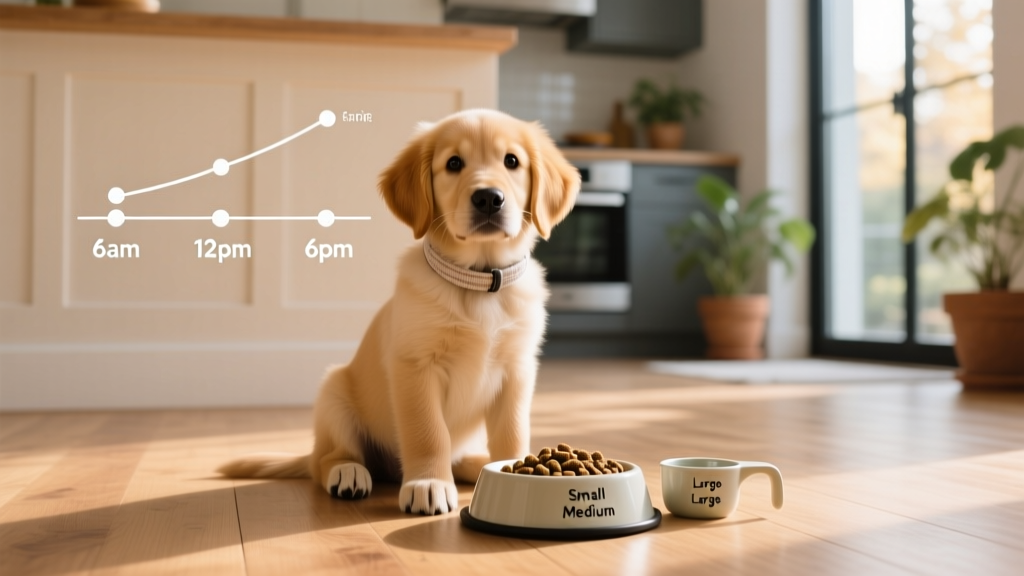
Yorkie Puppy Feeding Schedule: Portions by Age and Weight
Yorkshire Terriers are prone to hypoglycemia (dangerously low blood sugar) during the first 4 months of life. This makes consistent feeding schedules non-negotiable. According to the Merck Veterinary Manual, toy breed puppies can develop hypoglycemic episodes if they go more than 4–6 hours without eating.
| Age | Meals Per Day | Daily Amount (Small-Breed Puppy Kibble) | Max Hours Between Meals | Notes |
|---|---|---|---|---|
| 8–12 weeks | 3–4 | ¼–⅓ cup (moistened if needed) | 4 hours (set overnight alarm if needed) | Keep Nutri-Cal or Karo syrup on hand for hypoglycemia emergencies |
| 12–16 weeks | 3 | ⅓–½ cup | 5 hours | Transition to fully dry kibble if not already |
| 4–6 months | 2–3 | ⅓–½ cup | 6–8 hours | Can drop overnight feeding |
| 6–10 months | 2 | ¼–½ cup | 8–10 hours | Monitor body condition score — adjust portions if ribs not palpable |
| 10–12 months | 2 | ¼–½ cup (adult formula) | 10–12 hours | Gradual 7-day transition to adult food |
How often should I feed my Yorkie puppy at each age? The short answer: 3–4 meals daily from 8–12 weeks, 3 meals from 12–16 weeks, and 2 meals from 6 months onward. Always use a kibble specifically formulated for small or toy breed puppies — these have smaller kibble size and higher caloric density per cup. Recommended brands include Royal Canin Yorkshire Terrier Puppy, Hill's Science Diet Small Paws Puppy, and Purina Pro Plan Toy Breed Puppy.
Vaccination Schedule and When Your Yorkie Can Go Outside
Your Yorkie puppy arrives with maternal antibodies that gradually wane, which is why vaccines are given in a series. The American Veterinary Medical Association recommends the following core vaccination timeline for puppies:
| Age | Vaccines | What It Protects Against | Estimated Cost |
|---|---|---|---|
| 6–8 weeks | DHPP (Distemper, Hepatitis, Parainfluenza, Parvovirus) — 1st dose | Canine distemper, adenovirus-2, parainfluenza, parvovirus | $20–$40 |
| 10–12 weeks | DHPP — 2nd dose; Bordetella (optional, recommended if attending puppy class) | Boosters core immunity; Bordetella protects against kennel cough | $30–$60 |
| 14–16 weeks | DHPP — 3rd (final) dose; Rabies (required by law) | Completes core series; rabies protection | $40–$75 |
| 12–16 months | DHPP booster; Rabies booster (1-year or 3-year depending on local law) | Long-term immunity maintenance | $40–$80 |
What vaccines does my puppy need and when? The core DHPP series at 6–8, 10–12, and 14–16 weeks, plus a rabies vaccine at 14–16 weeks. Your veterinarian may also recommend Leptospirosis vaccination (common in urban areas with rodent exposure) and Lyme disease vaccination depending on your region.
When can my Yorkie puppy go outside and meet other dogs? This is one of the most common questions new owners ask, and the answer balances disease risk against socialization needs:
- Before 16 weeks (incomplete vaccines): You can carry your puppy in public spaces, use a stroller or sling, and visit friends' homes with fully vaccinated dogs. Avoid dog parks, pet store floors, and areas where unknown dogs have eliminated.
- 7 days after final DHPP (typically 15–17 weeks): Your puppy can safely walk on public ground, attend puppy classes, and interact with other vaccinated dogs.
- Immediately: Your own yard (if no unknown dogs access it) is safe from day one for potty training.
Socialization Window: The 3–14 Week Critical Period
The American Veterinary Society of Animal Behavior emphasizes that the primary socialization period for puppies occurs between 3 and 14 weeks of age. For Yorkies — a breed that can develop fear-based reactivity and excessive barking without proper socialization — this window is absolutely critical.
Here's your breed-specific socialization checklist. Aim for positive, treat-paired exposure to each item before 14 weeks:
Yorkie Puppy Socialization Checklist (Weeks 3–14)
People (aim for 10+ different people):
- ☐ Children (supervised, calm interactions)
- ☐ Men with facial hair
- ☐ People wearing hats, sunglasses, or hoodies
- ☐ People using wheelchairs, crutches, or walkers
- ☐ Delivery workers in uniform
Environments:
- ☐ Car rides (start with 5-minute trips, build to 20 minutes)
- ☐ Different floor surfaces: tile, hardwood, gravel, grass, metal grates
- ☐ Elevator or automatic doors
- ☐ Busy sidewalk (carried or in stroller)
- ☐ Grooming table with handling of paws, ears, and mouth
Sounds (pair each with treats):
- ☐ Vacuum cleaner (start in another room, gradually closer)
- ☐ Doorbell / knocking
- ☐ Thunderstorm recordings at low volume
- ☐ Traffic and car horns
- ☐ Hair dryer and clippers (essential for grooming prep)
Other Animals:
- ☐ Fully vaccinated adult dogs (calm, known temperament)
- ☐ Cats (supervised, controlled introduction)
- ☐ Puppy kindergarten class (after 2nd DHPP at minimum)
Handling Exercises (daily):
- ☐ Touch and hold each paw for 5 seconds
- ☐ Open mouth and touch gums/teeth
- ☐ Gently examine inside ears
- ☐ Brush coat for 2–3 minutes
- ☐ Practice nail trim with just handling (no cutting yet)
Potty Training Your Yorkie: Realistic Timeline and Troubleshooting
Yorkshire Terriers have a reputation for being difficult to house-train, and there's a physiological reason: their bladders are tiny. A 3-pound puppy may only hold 1–2 tablespoons of urine at a time. This means more frequent trips outside and a longer training timeline than larger breeds.
When will my Yorkie puppy be fully potty trained? Realistically, expect 4–8 months for reliable house training. Some Yorkies are not fully consistent until 10–12 months. This is normal for the breed — not a sign of failure on your part.
Potty Training Schedule Template
| Time | Action | Success Marker |
|---|---|---|
| 6:30 AM | Carry outside immediately upon waking | ☐ Urinated ☐ Defecated |
| After each meal | Outside within 10–15 minutes of eating | ☐ Urinated ☐ Defecated |
| After naps | Carry outside upon waking | ☐ Urinated ☐ Defecated |
| After play sessions | Outside after 15 minutes of active play | ☐ Urinated ☐ Defecated |
| Every 1–2 hours | Scheduled outing (8–12 weeks); every 2–3 hours (12–16 weeks) | ☐ Urinated ☐ Defecated |
| 10:00 PM | Last outing before crate/bedtime | ☐ Urinated ☐ Defecated |
Troubleshooting common Yorkie potty problems:
- Substrate preference: If your Yorkie insists on using puppy pads instead of going outside, gradually move the pad closer to the door each day, then outside, then remove it. Yorkies easily form substrate preferences that are hard to break.
- Rain refusal: Many Yorkies refuse to go outside in wet weather. Use a covered area, a small umbrella, or a rain jacket designed for toy breeds. Consistency matters more than comfort.
- Marking behavior: Intact males may begin leg-lifting as early as 5 months. Spaying/neutering reduces but doesn't always eliminate this behavior. Interrupt marking with a neutral "oops" and redirect outside, then reward.
- Overnight accidents: If your 12-week-old Yorkie can't hold it through the night, set one alarm at 2–3 AM for a quick potty break. Gradually push this later as bladder capacity increases.
Crate Training Progression and Teething Relief
Crate training a Yorkie requires sensitivity to their size and temperament. A crate that's too large undermines house training (they'll eliminate in one corner and sleep in another), while one that's too small causes distress.
Recommended crate size: An 18×12×14 inch crate (such as the MidWest iCrate 18-inch or Frisco Double Door 18-inch) is ideal for most adult Yorkies. For puppies, use the included divider panel to adjust the space as they grow.
| Age | Max Daytime Crate Duration | Overnight | Notes |
|---|---|---|---|
| 8–10 weeks | 30–60 minutes | Crate beside your bed; expect 1–2 overnight wake-ups | Cover crate with light blanket for den feel |
| 10–12 weeks | 1 hour | 4–5 hours with one potty break | Feed meals in crate to build positive association |
| 3–4 months | 1–2 hours | 5–6 hours | Can begin leaving crate in another room for short periods |
| 5–6 months | 2–3 hours | 7–8 hours | Should settle quickly; if not, reduce duration and rebuild |
| 6+ months | 3–4 hours max | 8 hours | Never crate any dog longer than 4 hours during the day |
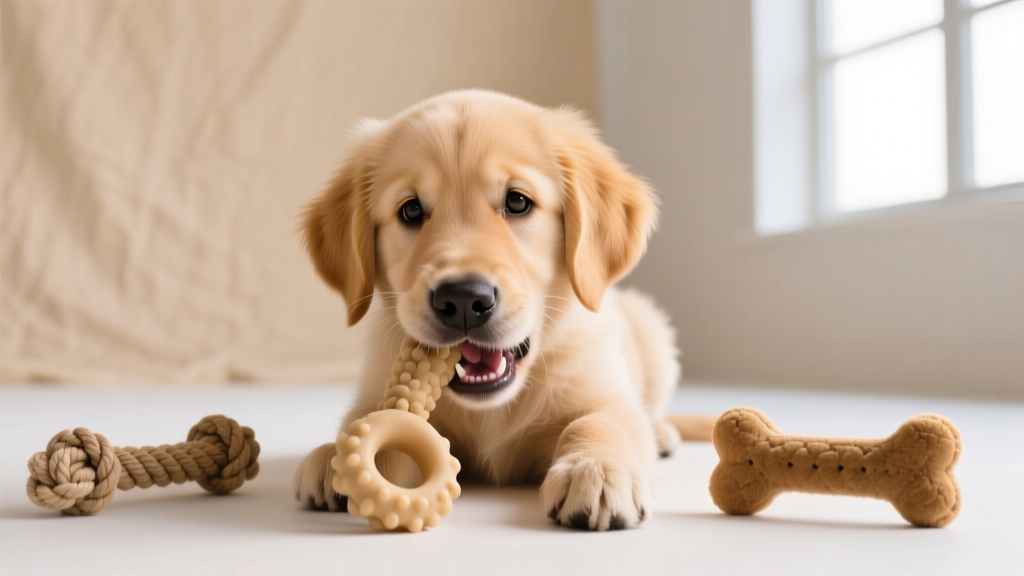
Teething Timeline and Relief Strategies (3–6 Months)
Your Yorkie will begin losing baby teeth around 12–16 weeks, with the process typically complete by 6–7 months. Toy breeds are especially prone to retained deciduous teeth — where baby teeth don't fall out as adult teeth erupt — which can cause crowding, misalignment, and dental disease. Your veterinarian should check for retained teeth at every visit during this window and extract any that haven't fallen out by the time the adult tooth is fully visible.
Safe teething relief options:
- Frozen washcloth: Wet a clean washcloth, twist into a rope, freeze for 2 hours, and let puppy chew under supervision
- KONG Puppy (XS size): Fill with softened kibble and freeze — the rubber is gentle on developing gums
- Nylabone Puppy Chew (X-Small): Designed for dogs under 15 lb; softer than adult versions
- Chilled carrot sticks: A safe, edible option that provides cold relief
Avoid: Rawhide (choking and intestinal blockage risk for small dogs), hard nylon bones meant for large breeds, ice cubes (can fracture tiny teeth), and any chew toy small enough to swallow whole.
Common Yorkie Puppy Problems and Solutions
Every breed has its puppy-stage challenges. Here are the three most common issues Yorkie owners face, with force-free solutions:
Problem 1: Puppy Biting and Nipping
How do I stop my Yorkie puppy from biting? Yorkie puppies explore the world with their mouths, and their needle-sharp baby teeth make this particularly painful. The solution is consistent redirection, not punishment:
- When puppy bites skin, say "ouch" in a calm, medium-pitched voice and immediately stop all interaction for 10–15 seconds (stand up, turn away).
- Redirect to an appropriate chew toy and praise enthusiastically when they bite the toy instead.
- If biting continues during play, end the play session. Puppies learn that teeth-on-skin = fun stops.
- Ensure puppy is getting adequate sleep — overtired puppies bite more. A 10-week-old Yorkie needs 18–20 hours of sleep daily.
Never hold a puppy's mouth shut, alpha roll, or use physical punishment. These methods increase fear and can lead to defensive aggression — the opposite of what you want from a companion dog.
Problem 2: Excessive Whining and Crying
Yorkies are vocal dogs by nature, and puppies often whine when crated, left alone, or denied attention. The key is distinguishing need-based whining (potty, hunger, pain) from attention-seeking whining:
- Need-based: Respond immediately. Take outside for potty, check for physical issues.
- Attention-seeking: Wait for a 3-second pause in whining, then reward the silence with attention or release from crate. This teaches that quiet = good things happen.
- Separation distress: Practice gradual alone-time building. Start with 5 minutes in another room, return before puppy panics, and slowly increase duration. Pair alone time with a food-stuffed KONG to create positive associations.
Problem 3: Destructive Chewing
During the teething window (3–6 months), your Yorkie will chew on everything within reach. Management is more effective than correction:
- Puppy-proof one room completely and confine puppy to that space when unsupervised
- Provide 4–5 appropriate chew toys of varying textures and rotate them every 2–3 days
- Use bitter apple spray on furniture legs and electrical cords as a deterrent
- Never leave a Yorkie puppy unsupervised with access to shoes, remotes, or children's toys — their small jaws can break pieces off that become choking hazards
Frequently Asked Questions
Are Yorkie puppies expensive to maintain long-term?
After the first year, expect annual costs of $1,500–$2,800 for routine veterinary care, premium food, grooming, flea/tick/heartworm prevention, and pet insurance. Yorkies are generally healthy dogs with a lifespan of 11–15 years, so lifetime ownership costs typically range from $18,000–$40,000. Dental care is a significant ongoing expense — Yorkies are prone to early periodontal disease and often need professional cleanings starting at age 2–3 ($300–$700 per cleaning under anesthesia).
Should I get pet insurance for my Yorkie puppy?
Enrolling at 8–12 weeks, before any pre-existing conditions develop, gives you the most comprehensive coverage. Plans from providers like Trupanion, Healthy Paws, or ASPCA Pet Health Insurance typically cost $30–$50/month for Yorkies and cover hereditary conditions like patellar luxation, portosystemic shunt, and Legg-Calvé-Perthes disease — all of which are more common in Yorkshire Terriers. The cost of treating a single serious condition ($2,000–$8,000 for a luxating patella surgery, for example) far outweighs years of premiums.
Is it better to adopt or buy a Yorkie puppy?
Both are valid paths. If you specifically want a puppy with known health history and temperament predictability, a responsible AKC breeder who performs OFA health testing on parent dogs is the right choice. If you're open to an adult Yorkie, breed-specific rescues like Yorkshire Terrier Rescue or local small-breed rescues often have dogs aged 1–8 years for $200–$600 adoption fees. These dogs are typically already spayed/neutered, vaccinated, and temperament-evaluated. The key is avoiding puppy mills and backyard breeders regardless of which path you choose.
What health tests should a responsible Yorkie breeder perform?
According to the Orthopedic Foundation for Animals, recommended health screenings for Yorkshire Terriers include: patellar luxation evaluation, cardiac exam, and ophthalmologist evaluation. Breeders should provide OFA certificates for both parent dogs. Additionally, ask about testing for portosystemic shunt (a liver condition more prevalent in Yorkies) and whether the breeder screens for tracheal collapse predisposition in their breeding lines.
Tom Renshaw
All our authors care for dogs every day — read more of their work on the authors page.