Why Does My Puppy Have Diarrhea? A Complete Puppy Care and Health Guide
Worried why your puppy has diarrhea? This comprehensive guide covers puppy GI health, age-specific milestones, feeding, vaccines, potty training, and when to call the vet.

Why Does My Puppy Have Diarrhea? Understanding the Most Common Puppy GI Issue
If you've brought a new puppy home and are now frantically Googling at 2 a.m. because of the mess by the crate, you're not alone. Diarrhea is the single most common gastrointestinal complaint in puppies under six months of age. According to the Merck Veterinary Manual, up to 30% of puppies will experience at least one episode of diarrhea during their first year, and the majority of those episodes occur before 16 weeks of age.
The reasons range from benign (dietary indiscretion, stress of a new home) to serious (parasites, viral infections like parvovirus). Understanding which is which — and how to build a puppy care routine that prevents most GI issues — is what this guide is built around.
Call your veterinarian immediately or visit an emergency clinic if your puppy has:
- Bloody diarrhea (bright red or dark, tarry stools)
- Diarrhea accompanied by vomiting
- Lethargy or refusal to eat for more than 12 hours
- Signs of dehydration (tacky gums, skin that doesn't snap back when gently pinched)
- Fever above 103.5°F (39.7°C)
- Diarrhea lasting more than 48 hours in puppies under 12 weeks
If you suspect toxin ingestion, call ASPCA Animal Poison Control: (888) 426-4435 (24/7, consultation fee applies).
The Most Common Causes of Puppy Diarrhea by Age
Not all puppy diarrhea has the same trigger. The cause often correlates strongly with your puppy's developmental stage. Here's a framework for narrowing it down:
| Age Range | Most Common Causes | Typical Duration | Vet Visit Needed? |
|---|---|---|---|
| 4–8 weeks | Weaning stress, dietary change, parasites (roundworms, coccidia) | 2–5 days | Yes — fecal test recommended |
| 8–12 weeks | New-home stress, food transition, parasites, early viral exposure | 1–7 days | Yes — especially if not eating |
| 12–16 weeks | Dietary indiscretion, vaccine reactions, giardia, bacterial overgrowth | 1–3 days | If persists beyond 48 hours |
| 16–24 weeks | Foreign body ingestion, food sensitivities, stress colitis | 1–5 days | If accompanied by vomiting or lethargy |
| 6–12 months | Dietary indiscretion, food allergies, stress, parasites | 1–3 days | If recurring or chronic (3+ episodes/month) |
Stress colitis deserves special attention. When you bring a puppy home (typically at 8 weeks), the sudden change in environment, separation from littermates, new sounds, and different food can trigger inflammation of the colon. This produces soft, mucousy stools — sometimes with streaks of fresh blood. It's alarming to see but usually resolves within 3–5 days with a bland diet (boiled chicken breast and white rice in a 1:2 ratio) and probiotics. Always consult your veterinarian before starting any home treatment protocol.
Age-Specific Puppy Milestones: What to Expect Week by Week
Understanding your puppy's developmental timeline helps you distinguish normal puppy behavior from genuine health concerns like persistent diarrhea.
Weeks 4–8: The Weaning and Socialization Window Opens
During this period, puppies transition from mother's milk to solid food. Their immune systems are still developing, and maternal antibodies are waning. This is the most vulnerable window for GI upset. A responsible breeder will have started the weaning process gradually over 1–2 weeks, introducing gruel (puppy kibble soaked in warm water or puppy milk replacer) before moving to dry food. Puppies who are weaned too quickly often develop loose stools.
Key milestones: Eyes and ears fully functional, baby teeth emerging (28 deciduous teeth), beginning to play with littermates, start of the primary socialization period (week 3).
Weeks 8–12: The Critical Adjustment Period
This is when most puppies go to their new homes. Expect some GI disruption during the first 5–7 days — this is normal stress-related adjustment. Your puppy should be eating 3–4 meals per day, sleeping 18–20 hours daily, and having 3–5 bowel movements per day (formed, brown, and easy to pick up).
Key milestones: First DHPP vaccine (if not already given by breeder), beginning house training, learning name recognition, start of bite inhibition training.
Weeks 12–16: Confidence Building and Vaccine Boosters
By now, your puppy should be settled. Diarrhea at this stage is less likely to be stress-related and more likely to be dietary or parasitic. Puppies are more active, more curious, and more likely to eat things they shouldn't during walks or yard time.
Key milestones: Second DHPP booster, increased bladder control (can hold for 3–4 hours during the day), beginning leash walking skills, fear period (weeks 8–11 and again at 6–14 months).
Weeks 16–24: Adolescence Begins
Your puppy's adult teeth start coming in, exercise needs increase, and you may see a regression in training. GI issues at this stage often relate to dietary indiscretion — eating grass, sticks, or garbage on walks.
Key milestones: Rabies vaccine (typically 16 weeks), adult teeth replacing baby teeth, spay/neuter surgery window (your vet will advise on timing), increased independence and testing boundaries.
Months 6–12: The Teenage Phase
Large breeds may continue growing until 18–24 months, but most puppies are approaching adult size. Diarrhea episodes should become less frequent. If they don't, food allergies or inflammatory bowel conditions should be investigated.
Key milestones: Second fear period (6–14 months), sexual maturity in intact dogs, transition to adult food (timing varies by breed size), settling into adult sleep patterns (12–14 hours).
Feeding Schedule: Exact Portions to Prevent GI Upset
Overfeeding is one of the most common — and most overlooked — causes of puppy diarrhea. A puppy's digestive system is small and immature. Too much food at once overwhelms it. Here are evidence-based feeding guidelines based on projected adult weight:
| Puppy Age | Meals Per Day | Small Breed (10–25 lb adult) | Medium Breed (25–50 lb adult) | Large Breed (50–90 lb adult) |
|---|---|---|---|---|
| 8–12 weeks | 4 | ¼ – ½ cup per meal | ½ – ¾ cup per meal | ¾ – 1¼ cups per meal |
| 12–16 weeks | 3 | ⅓ – ⅔ cup per meal | ¾ – 1 cup per meal | 1 – 1¾ cups per meal |
| 16–24 weeks | 3 | ½ – ¾ cup per meal | 1 – 1½ cups per meal | 1½ – 2½ cups per meal |
| 6–9 months | 2 | ¾ – 1 cup per meal | 1½ – 2 cups per meal | 2 – 3½ cups per meal |
| 9–12 months | 2 | ¾ – 1 cup per meal | 1½ – 2 cups per meal | 2½ – 4 cups per meal |
Critical feeding rules to prevent diarrhea:
- Any food transition must happen over 7–10 days. Mix 25% new food with 75% old food for days 1–3, then 50/50 for days 4–6, then 75% new for days 7–9, and 100% new on day 10.
- Look for the AAFCO statement on your food bag confirming it meets nutritional standards for growth. Foods labeled "all life stages" also qualify.
- Large-breed puppies (projected adult weight over 50 lb / 23 kg) need food specifically formulated for large-breed growth, with controlled calcium (1.0–1.5% dry matter basis) and phosphorus to prevent skeletal disorders.
- Avoid feeding table scraps during the first 3 months. A puppy's gut microbiome is still establishing, and rich human foods disrupt it.
- Always measure food with a standard measuring cup or kitchen scale. "Eyeballing" portions leads to overfeeding.
Vaccination Schedule: Protecting Your Puppy from Diarrhea-Causing Diseases
Several of the most dangerous causes of puppy diarrhea — parvovirus, distemper, and coronavirus — are preventable through vaccination. Parvovirus alone causes severe, often bloody diarrhea with a mortality rate of 5–10% in treated puppies and up to 91% in untreated cases, according to the American Kennel Club.
| Age | Vaccine | What It Protects Against | Notes |
|---|---|---|---|
| 6–8 weeks | DHPP (1st dose) | Distemper, Hepatitis (Adenovirus), Parainfluenza, Parvovirus | Often given by breeder; verify records |
| 10–12 weeks | DHPP (2nd dose) | Same as above — booster | Maternal antibodies may still interfere; booster is critical |
| 10–12 weeks | Bordetella (optional) | Kennel cough | Recommended if attending puppy classes or boarding |
| 14–16 weeks | DHPP (3rd dose) | Same — final puppy booster | This dose is most likely to "take" as maternal antibodies wane |
| 14–16 weeks | Rabies | Rabies virus | Required by law in most US states; typically given at 16 weeks |
| 12 months | DHPP booster + Rabies booster | All core diseases | After this, DHPP is typically every 3 years; rabies per local law |
Post-vaccine diarrhea: Mild, self-limiting diarrhea can occur within 24–48 hours of vaccination. This is an immune response and typically resolves without treatment. If it persists beyond 48 hours or is accompanied by facial swelling, hives, or difficulty breathing, contact your vet immediately — these are signs of an allergic reaction.
The Socialization Window (Weeks 3–14): Building a Confident Dog
The primary socialization period closes around 14 weeks. This is a narrow, biologically driven window during which puppies form lasting impressions about what is safe and normal. Puppies who miss adequate socialization during this window are significantly more likely to develop fear-based behaviors, anxiety, and stress-related health issues — including stress colitis and diarrhea — later in life.
The challenge: your puppy isn't fully vaccinated until 16 weeks. The AVMA recommends balancing disease risk with socialization needs. Carry your puppy in public spaces, avoid high-dog-traffic areas (dog parks, pet store floors) until fully vaccinated, and arrange controlled playdates with known, fully vaccinated adult dogs.
Socialization Exposure Checklist (Weeks 8–14)
- Surfaces: Grass, gravel, sand, tile, carpet, wet pavement, metal grates
- Sounds: Vacuum cleaner, thunderstorm audio (low volume), doorbell, traffic, children screaming, clapping
- People: Men with beards, people wearing hats/sunglasses, children (supervised), people in wheelchairs, delivery workers
- Handling: Paw touching, ear inspection, mouth opening, nail clipping practice, being held on back
- Objects: Umbrellas opening, plastic bags rustling, brooms, bicycles, strollers
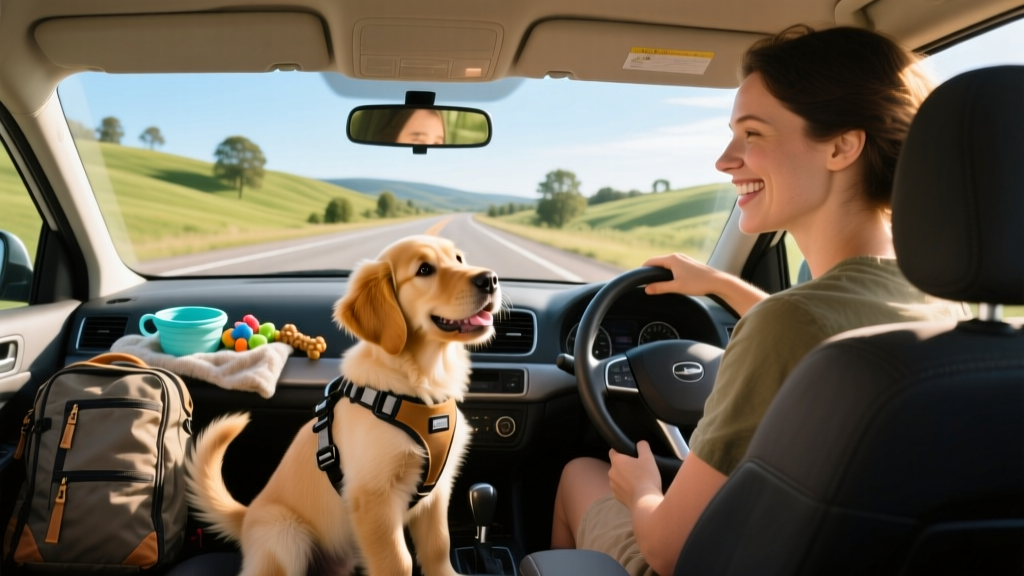
- Environments: Car rides, vet clinic (happy visits only), outdoor café patios, friend's houses
- Other animals: Fully vaccinated, temperament-tested adult dogs; cats (supervised); livestock at a distance
Aim for 3–5 new positive experiences per day. Keep sessions short (5–10 minutes) and always pair new experiences with high-value treats (small pieces of boiled chicken, commercial training treats under 3 calories each). If your puppy shows fear, increase distance or reduce intensity — never force exposure.
Potty Training Timeline and Diarrhea Troubleshooting
Loose stools make potty training significantly harder because your puppy has less physical control and less warning before needing to go. Here's a realistic timeline:
| Age | Bladder Capacity | Expected Accidents Per Week | Outing Frequency |
|---|---|---|---|
| 8–10 weeks | 30–45 minutes | 3–5 per day (normal) | Every 30–45 min while awake; after every meal, nap, and play session |
| 10–12 weeks | 1–1.5 hours | 1–3 per day | Every 60–90 min while awake |
| 12–16 weeks | 2–3 hours | 0–2 per day | Every 2–3 hours; overnight stretch of 4–5 hours possible |
| 4–6 months | 4–5 hours | 0–1 per week | Every 3–4 hours; 6–8 hour overnight stretch |
| 6–12 months | 6–8 hours | Rare (illness/stress only) | Every 4–6 hours; 8+ hour overnight stretch |
When diarrhea derails potty training: Go back to the 8-week schedule. Take your puppy out every 30 minutes, use high-value treats for outdoor elimination, and thoroughly clean indoor accidents with an enzymatic cleaner (products like Nature's Miracle or Rocco & Roxie break down organic proteins that attract repeat soiling). Do not punish accidents — puppies with diarrhea physically cannot control their bowels, and punishment creates fear-based avoidance of eliminating in front of you.
Most puppies are reliably house-trained by 5–6 months, though small breeds may take until 8–9 months due to smaller bladder capacity. If your puppy is still having frequent accidents past 6 months with normal stools, consult a certified positive-reinforcement trainer or your veterinarian to rule out medical causes like urinary tract infections.
Teething, Chewing, and Crate Training: Managing the 3–6 Month Storm
Teething Timeline
Your puppy's 28 deciduous (baby) teeth begin erupting at 3–4 weeks and are fully in by 6–8 weeks. Starting around 12–16 weeks, adult teeth push the baby teeth out. By 6–7 months, all 42 adult teeth should be in place.
During the teething window (roughly 3–6 months), puppies chew relentlessly to relieve gum pressure. This is also when dietary indiscretion — and the diarrhea that follows — peaks. Puppies eat mulch, rocks, fabric, and anything else they can find.
Safe chew options by age:
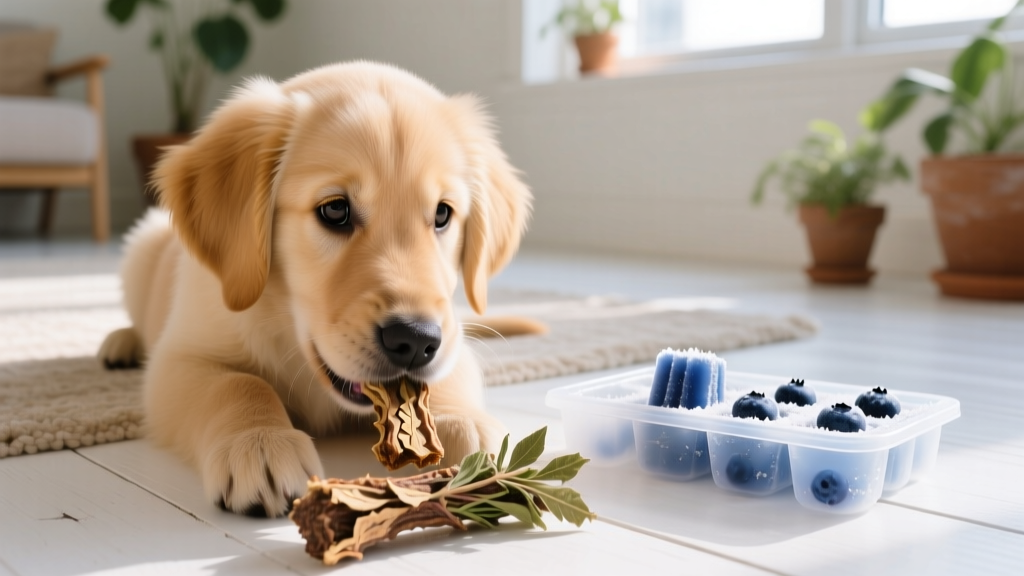
- 8–12 weeks: Soft rubber toys (Kong Classic, size-appropriate), frozen wet washcloths (knot one end, soak in water, freeze)
- 12–20 weeks: Medium-density rubber toys (Benebone Wishbone puppy size), carrot sticks, frozen Kong stuffed with plain yogurt
- 5–7 months: Bully sticks (supervised, remove when small enough to swallow), yak cheese chews, Nylabone Power Chew (textured, size-appropriate)
Avoid: Rawhide (choking and intestinal blockage risk), cooked bones (splinter hazard), tennis balls (abrasive surface wears down teeth), and any chew smaller than your puppy's muzzle width.
Crate Training Progression
A crate is a powerful potty training tool because dogs instinctively avoid soiling their sleeping area. But time limits are critical — a puppy left in a crate too long will have no choice but to eliminate inside, which undermines training and, if the puppy has diarrhea, creates a distressing and unsanitary situation.
| Puppy Age | Maximum Crate Time (Daytime) | Maximum Crate Time (Overnight) |
|---|---|---|
| 8–10 weeks | 30–45 minutes | 2–3 hours (set an alarm) |
| 10–12 weeks | 1–1.5 hours | 3–4 hours |
| 12–16 weeks | 2–3 hours | 4–5 hours |
| 4–6 months | 3–4 hours | 6–8 hours |
| 6+ months | 4–5 hours | 8 hours |
Make the crate a positive space: feed meals inside it with the door open, provide a stuffed Kong when crating, and never use the crate as punishment. A wire crate (MidWest iCrate or similar) with a divider panel lets you adjust the space as your puppy grows — the crate should be just large enough for your puppy to stand, turn around, and lie down. Too much space invites elimination in one corner and sleeping in another.
Common Puppy Problems: Biting, Whining, and Chewing Solutions
Puppy Biting and Nipping
Puppies explore the world with their mouths, and sharp deciduous teeth make even gentle mouthing painful. Bite inhibition — learning to control jaw pressure — is normally taught by littermates between weeks 4 and 8. Your job is to continue this education.
Protocol:
- When teeth touch skin, say "ouch" in a calm, slightly surprised tone (not a yell).
- Withdraw attention for 10–15 seconds — stand up, turn away, or step behind a baby gate.
- Return and redirect to an appropriate chew toy.
- Reward with praise and treats when the puppy chews the toy instead of hands.
This is a positive-reinforcement, force-free method. Never hold a puppy's mouth shut, alpha-roll, or use physical punishment — these methods increase fear and can escalate to defensive biting. Most puppies show significant bite inhibition improvement by 16 weeks with consistent practice. Full inhibition typically matures by 5–6 months as adult teeth come in and impulse control develops.
Whining and Crying (Especially at Night)
Nighttime whining in the first 1–2 weeks home is normal. Your puppy is alone for the first time, in an unfamiliar place, with unfamiliar sounds. Strategies that work:
- Place the crate in your bedroom for the first 2–3 weeks so your puppy can hear and smell you.
- Use a Snuggle Puppy (a plush toy with a heartbeat simulator and heat pack) — approximately $35–45 and widely effective.
- Take your puppy out for a final potty break right before bed, then ignore whining if you're confident they don't need to eliminate.
- Set a quiet alarm for one overnight potty break (around 2–3 a.m.) for puppies under 12 weeks.
Destructive Chewing
Between 3 and 8 months, puppies chew to relieve teething pain and explore their environment. Management is more effective than correction:
- Puppy-proof your home: use bitter apple spray on baseboards and furniture legs, keep shoes in closets, use baby gates to limit access.
- Provide 5–7 appropriate chew toys of varying textures, rotated weekly to maintain novelty.
- Supervise all free-roaming time until your puppy has earned trust (typically 9–12 months).
- Exercise before alone time — a tired puppy chews less. Aim for 5 minutes of structured exercise per month of age, twice daily (e.g., a 4-month-old gets 20-minute sessions).
First-Year Cost Breakdown: Budgeting for Your Puppy
New puppy owners consistently underestimate first-year costs. Here's a realistic 2026 breakdown based on current US veterinary pricing and product costs:
| Category | Low Estimate | Mid Estimate | High Estimate |
|---|---|---|---|
| Puppy purchase/adoption | $150 (rescue) | $1,500 (responsible breeder) | $3,500+ (specialty breeds) |
| Veterinary care (vaccines, spay/neuter, fecal tests, wellness exams) | $600 | $1,200 | $2,500 |
| Food (quality puppy food, 12 months) | $300 | $600 | $1,000 |
| Supplies (crate, bed, bowls, leash, collar, gates, toys, enzymatic cleaner) | $200 | $450 | $800 |
| Training (group puppy class + basic obedience) | $150 | $400 | $1,200 (private sessions) |
| Preventive medications (flea/tick, heartworm, 12 months) | $200 | $400 | $600 |
| Pet insurance (annual premium) | $360 | $600 | $960 |
| Emergency fund (recommended buffer) | $500 | $1,000 | $2,000 |
| Total First Year | $2,460 | $6,150 | $12,560 |
Pet insurance is worth serious consideration. A single parvovirus hospitalization can cost $3,000–$7,000. Policies from providers like Trupanion, Healthy Paws, or Lemonade typically cost $30–$80/month for a puppy and cover 70–90% of veterinary bills after the deductible. Enroll before your puppy has any health issues — pre-existing conditions are universally excluded.
When Can My Puppy Go Outside and Meet Other Dogs?
This is one of the most common questions new puppy owners ask, and the answer balances disease risk against socialization needs.
Safe from birth: Your own backyard (if no unvaccinated dogs have access), being carried in your arms in public, sitting on a blanket at outdoor cafés, car rides, and visits to friends' homes with known, vaccinated dogs.
After second DHPP vaccine (typically 10–12 weeks): Supervised playdates with fully vaccinated, healthy dogs in private yards. Puppy kindergarten classes that require proof of at least one DHPP dose (many follow the AVMA and AVSAB recommendation that socialization classes can begin 7 days after the first vaccine).
After final DHPP booster (14–16 weeks) + 1 week: Public parks, dog-friendly stores, group walks, and supervised dog park visits (though many trainers recommend avoiding dog parks entirely due to unpredictable dog behavior and disease exposure).
Never safe without vaccination: Dog parks, pet store floors, boarding facilities, or grooming salons where unvaccinated dogs may have been present.
Frequently Asked Questions
When should I bring my puppy home?
The optimal age is 8–10 weeks. Puppies separated from their mother and littermates before 8 weeks miss critical bite inhibition and social development lessons. Some breeders of larger breeds keep puppies until 10–12 weeks for additional socialization, which can also produce well-adjusted puppies if the breeder actively works on exposure and training during that extended period.
How often should I feed my puppy?
Feed 4 meals per day from 8–12 weeks, 3 meals per day from 12 weeks to 6 months, and 2 meals per day from 6 months onward. Exact portions depend on your puppy's projected adult weight and the calorie density of your chosen food. Check the feeding chart on your food bag and adjust based on your puppy's body condition score — you should be able to feel ribs without pressing hard, and see a visible waist when viewed from above.
When will my puppy be fully potty trained?
Most puppies are reliably house-trained by 5–6 months, meaning fewer than one accident per month. Small breeds (under 15 lb / 7 kg) may take until 8–9 months due to smaller bladder capacity. Consistency is the single biggest factor — puppies with a regular feeding schedule, frequent outings, and positive reinforcement for outdoor elimination learn fastest.
What vaccines does my puppy need and when?
Core vaccines include DHPP (Distemper, Hepatitis, Parainfluenza, Parvovirus) given at 6–8, 10–12, and 14–16 weeks, plus Rabies at 14–16 weeks. Non-core vaccines like Bordetella (kennel cough) and Leptospirosis depend on your puppy's lifestyle and geographic area. Your veterinarian will tailor the schedule to your puppy's specific risk profile.
How do I stop puppy biting and nipping?
Use the "ouch and redirect" method: when teeth touch skin, say "ouch" calmly, withdraw attention for 10–15 seconds, then return and offer an appropriate chew toy. Reward chewing on the toy with praise. This mimics how littermates teach bite inhibition. Consistency from every family member is essential. Never use physical punishment, which can escalate to fear-based aggression. Most puppies show major improvement by 16 weeks with daily practice.
Why does my puppy have diarrhea after switching food?
Rapid food transitions are one of the top causes of puppy diarrhea. A puppy's gut microbiome needs 7–10 days to adapt to a new protein source, carbohydrate profile, and fat content. If you switched food overnight or over just 2–3 days, the diarrhea is likely dietary disruption. Return to the old food for 48 hours until stools firm up, then restart the transition using the 10-day gradual mixing protocol described in the feeding section above. If diarrhea persists beyond 5 days even with a slow transition, consult your veterinarian to rule out food allergies or other underlying conditions.
Aaron Whyte
All our authors care for dogs every day — read more of their work on the authors page.