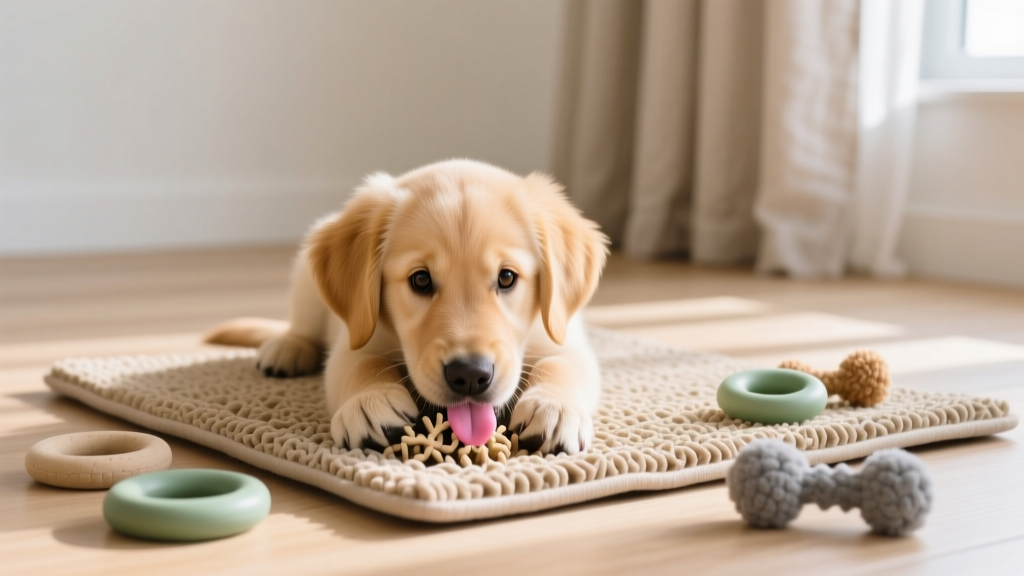
Vizsla Puppy Care Guide: Milestones, Feeding & Training Timeline
Complete Vizsla puppy guide covering week-by-week milestones, feeding schedules, potty training, vaccinations, and first-year costs for new owners.

The Vizsla is a sleek, athletic Hungarian pointing breed known for its rust-gold coat and velcro-dog devotion. But bringing home a Vizsla puppy means signing up for a high-energy, highly intelligent companion who needs structured guidance from day one. This breed matures slowly — both physically and mentally — and their puppy stage demands more intentional planning than many first-time owners expect.
Whether you're picking up your pup from a responsible breeder or welcoming a Vizsla mix through rescue, this guide walks you through every developmental stage with breed-specific expectations, exact feeding amounts, vaccination timing, and real cost figures so you can plan ahead.
When Should You Bring Your Vizsla Puppy Home?
The American Kennel Club and most veterinary behaviorists recommend bringing a puppy home between 8 and 10 weeks of age. For Vizslas specifically, many experienced breeders prefer to hold puppies until 9 to 10 weeks because the breed tends to be emotionally sensitive, and the extra time with littermates builds bite inhibition and social confidence.
Before 8 weeks, puppies are still learning critical canine communication from their mother and siblings. Removing a Vizsla puppy too early often results in harder biting, increased separation anxiety, and difficulty reading other dogs' body language later in life.
If your breeder offers a "puppy curriculum" — early neurological stimulation (ENS), surface exposure, sound desensitization — this typically runs from days 3 through 16 and continues through week 7. Puppies who complete structured early programs tend to transition more smoothly into new homes.
Vizsla Puppy Development Milestones: Week by Week
Vizslas are a medium-large sporting breed. They grow rapidly in the first six months but often don't reach full emotional maturity until 18 to 24 months. Here's what to expect at each stage.
Weeks 4–8: Litter Life (Breeder's Care)
- Teeth begin erupting; puppies start transitioning from mother's milk to softened puppy kibble
- First deworming typically at 2, 4, and 6 weeks
- Social play with littermates peaks — this is where bite inhibition foundations form
- Startle recovery and sound sensitivity can be shaped during this window
- Vizsla-specific note: puppies begin showing early pointing instincts and strong prey drive around week 6
Weeks 8–12: Home Transition & Bonding
- Fear imprint period (weeks 8–11): negative experiences can create lasting phobias — keep vet visits, grooming introductions, and car rides positive
- Expect 18–20 hours of sleep per day in short bursts
- Potty training begins immediately; take puppy out every 30–60 minutes while awake
- Crate training starts with 15–30 minute sessions with meals inside
- Vizsla puppies at this age are mouthy — redirect to appropriate chews constantly
Weeks 12–16: Growing Confidence
- Second fear period may emerge around week 12 — previously confident puppies may suddenly spook at familiar objects
- Attention span lengthens to 3–5 minutes for training sessions
- Teething discomfort begins as adult teeth start loosening baby teeth
- Vizslas at this age begin testing boundaries; consistent rules prevent "velcro" behavior from becoming separation anxiety
- Can begin short, structured walks: 5 minutes per month of age (so 15–20 minutes max)
Weeks 16–24: Adolescence Begins
- Energy levels surge — Vizslas need structured physical and mental outlets or they become destructive
- Sexual maturity begins; discuss spay/neuter timing with your vet (many sporting breed vets recommend waiting until 12–18 months for large-bone development)
- Recall training becomes harder as independence grows — use long-line (15–30 ft) for safe off-leash practice
- Adult teeth fully in by 6 months; chewing intensity may peak before declining
Months 6–12: The Teenage Phase
- Physical growth slows; most Vizslas reach near-adult height by 10–12 months but continue filling out until 18 months
- Training regression is normal — previously reliable commands may be ignored; maintain consistency
- Introduce structured activities: intro to field work, nose work, agility foundations (low jumps only until growth plates close)
- Vizsla-specific: strong prey drive may intensify; never trust off-leash in unsecured areas regardless of training level
Feeding Schedule: Exact Portions by Age and Weight
Vizsla puppies grow to an adult weight of 45–60 lb (20–27 kg) for males and 40–55 lb (18–25 kg) for females. Overfeeding during growth can stress developing joints, so precise portions matter more than free-feeding.
Choose a food that meets AAFCO standards for growth or all life stages. For a sporting breed like the Vizsla, look for a formula with 22–28% protein and 12–18% fat on a dry matter basis. Large-breed puppy formulas are recommended to control calcium-phosphorus ratios for healthy bone development.
| Age | Meals Per Day | Approximate Daily Amount | Estimated Puppy Weight |
|---|---|---|---|
| 8–12 weeks | 3–4 meals | 1.5–2 cups/day (split across meals) | 10–18 lb (4.5–8 kg) |
| 3–4 months | 3 meals | 2–2.5 cups/day | 18–28 lb (8–13 kg) |
| 4–6 months | 2–3 meals | 2.5–3.5 cups/day | 28–40 lb (13–18 kg) |
| 6–12 months | 2 meals | 3–4 cups/day | 40–55 lb (18–25 kg) |
| 12+ months (adult) | 2 meals | 2.5–3.5 cups/day (active adult) | 40–60 lb (18–27 kg) |
Important: These are starting estimates. Adjust based on your puppy's body condition score (BCS). You should be able to feel ribs without pressing hard, and see a visible waist when viewed from above. A Vizsla puppy should look lean and athletic, never chunky. Consult your veterinarian if you're unsure about portions.
Vaccination Schedule for Your Vizsla Puppy
Vizslas receive the same core vaccination protocol as other breeds. However, the breed has a documented sensitivity to certain vaccines — specifically, some Vizslas experience vaccine reactions (facial swelling, hives, lethargy). The Vizsla Club of America recommends discussing split vaccine protocols with your veterinarian, where multiple vaccines are given 2–3 weeks apart rather than simultaneously.
| Age | Vaccines | Notes |
|---|---|---|
| 6–8 weeks | DHPP (Distemper, Hepatitis/Adenovirus, Parainfluenza, Parvovirus) — 1st dose | Often given by breeder before pickup |
| 10–12 weeks | DHPP — 2nd dose; Bordetella (optional, recommended for socialization classes) | Consider splitting Bordetella to a separate visit to reduce reaction risk |
| 14–16 weeks | DHPP — 3rd dose; Rabies (given at 12–16 weeks per state law) | Final puppy DHPP must be given at or after 16 weeks for full immunity |
| 12–16 months | DHPP booster; Rabies booster (1-year or 3-year depending on vaccine type) | Discuss titers testing as alternative to future boosters |
Non-core vaccines to discuss with your vet: Leptospirosis (especially if you live near standing water or wildlife areas), Lyme disease (tick-endemic regions), and Canine Influenza (if boarding or attending group training). Your veterinarian will tailor recommendations based on your local risk factors.
Socialization Window: Weeks 3–14
The American Veterinary Society of Animal Behavior (AVSAB) identifies the primary socialization period as weeks 3 through approximately 14. For Vizslas — a breed prone to shyness and noise sensitivity if under-socialized — this window is critical. The AVSAB's position statement recommends that puppies begin socialization before they are fully vaccinated, as the risk of behavioral problems from under-socialization outweighs the disease risk in controlled environments.
Vizsla Puppy Socialization Checklist
Aim for positive, brief exposures (30–90 seconds each) to the following by 14 weeks:
| Category | Exposure Targets | Goal Count by 14 Weeks |
|---|---|---|
| People | Men, women, children (supervised), people wearing hats/sunglasses/masks, people using mobility aids, tall people, people with deep voices | 50+ different people |
| Surfaces | Gravel, metal grates, wet grass, slippery floors, wobble boards, tarps, stairs (carpeted and wood) | 10+ surface types |
| Sounds | Thunder recordings, fireworks, vacuum cleaner, doorbell, traffic, construction noise, gunshots (distant, for hunting breed prep) | 15+ sound types |
| Animals | Vaccinated adult dogs (calm, known temperament), cats (if applicable), livestock at a distance | 5–10 safe dog interactions |
| Handling | Paw touching, ear inspection, mouth opening, nail clipping practice, gentle restraint, wearing a harness, being lifted onto a table | Daily 2–3 minute sessions |
| Environments | Car rides, parking lots, outdoor café patios, pet-friendly stores, vet clinic (happy visits only), fields/wooded areas | 8+ locations |
Key rule: Every new experience should end on a positive note. Pair novel stimuli with high-value treats (boiled chicken, cheese, commercial training treats). If your Vizsla puppy shows fear, increase distance and reduce intensity — never force exposure.
Potty Training Timeline & Realistic Expectations
Most Vizsla puppies achieve reliable house training between 4 and 6 months of age, with some individuals taking up to 8 months. The breed's intelligence works in your favor — they learn routines quickly — but their high energy and distractibility can slow the process if outdoor trips become play sessions instead of potty breaks.
Potty Training Log Template
Track these data points for the first 4–6 weeks to identify your puppy's natural schedule:
- Time of outing (e.g., 7:15 AM)
- Result: pee / poop / both / nothing
- Duration outside before success
- Trigger: woke up / after meal / after play / whining at door
- Accidents: time, location, what happened before
After 2 weeks of logging, you'll see patterns: most Vizsla puppies need to eliminate within 10–15 minutes of waking, 15–30 minutes after eating, and every 1–2 hours during active play.
Frequency guide:
- 8–12 weeks: Every 30–60 minutes while awake, plus immediately after waking, eating, and playing
- 3–4 months: Every 1–2 hours; overnight holding improves to 4–5 hours
- 4–6 months: Every 2–3 hours; overnight holding of 6–8 hours becomes possible
- 6+ months: Every 3–4 hours; most can hold overnight for 8 hours
Troubleshooting: If your Vizsla puppy has frequent accidents despite consistent scheduling, rule out urinary tract infection (common in puppies) with a vet visit. Also check whether you're cleaning accident spots with enzymatic cleaner — standard household cleaners leave residual odor that draws puppies back to the same spot.
Crate Training Progression & Time Limits
Vizslas are social dogs who bond intensely with their people. Crate training provides a safe den, aids potty training, and prevents separation-related destruction. However, crating a Vizsla puppy for too long triggers anxiety and can create lasting negative associations with the crate.
| Age | Max Continuous Crate Time (Daytime) | Overnight |
|---|---|---|
| 8–10 weeks | 30–60 minutes | 2–3 hours (then potty break) |
| 11–14 weeks | 1–2 hours | 3–4 hours |
| 15–16 weeks | 2–3 hours | 5–6 hours |
| 4–6 months | 3–4 hours | 6–8 hours |
| 6+ months | 4–5 hours | 8 hours |
Crate training steps for Vizslas:
- Place crate in a high-traffic area (living room, not isolated basement). Vizslas need to feel connected to the family.
- Feed all meals inside the crate with door open for the first week.
- Introduce a cue word ("crate" or "kennel") paired with tossing a treat inside. Practice 5–10 repetitions, 2–3 times daily.
- Close door for 10 seconds while puppy eats, then open. Gradually extend to 1 minute, 5 minutes, 15 minutes over 1–2 weeks.
- Begin leaving the room briefly. Return before puppy vocalizes. If whining occurs, wait for 3 seconds of silence before opening — you don't want to reinforce crying, but you also shouldn't leave a panicking puppy.
- For overnight: place crate beside your bed initially. The proximity reduces anxiety. Gradually move to a permanent location over 2–3 weeks.
Choose a 36-inch or 42-inch wire crate for an adult Vizsla. During puppyhood, use the included divider panel to reduce the available space to just enough for standing, turning, and lying down. Too much space invites potty accidents inside the crate.
Teething Timeline & Relief Strategies
Vizsla puppies follow a standard teething progression:
- 3–4 weeks: Deciduous (baby) incisors erupt
- 4–6 weeks: Baby canines and premolars emerge
- 12–16 weeks: Baby teeth begin loosening as adult teeth push through
- 4–5 months: Peak chewing intensity as adult canines and premolars erupt
- 6–7 months: All 42 adult teeth should be in place
Safe chew recommendations for Vizsla puppies:
- Kong Classic (puppy rubber, pink/blue): Fill with soaked kibble and freeze for 2–4 hours. The cold soothes inflamed gums.
- Benebone Puppy Wishbone: Nylon chew with bacon flavor; appropriate for moderate chewers. Replace when worn down significantly.
- Frozen washcloth: Wet a clean washcloth, twist into a rope, freeze for 2 hours. Supervise use and remove if threads start coming loose.
- West Paw Toppl: Interlocking treat toy that can be frozen; harder to destroy than standard puzzle toys.
- Bully sticks (supervised only): Choose 6-inch size for puppies; remove when piece becomes small enough to swallow. Limit to 1–2 per week due to calorie density.
Common Vizsla Puppy Problems & Solutions
Every breed has its puppy-stage quirks. Vizslas, as a sporting breed with high drive and sensitivity, tend to present these specific challenges:
Puppy Biting and Nipping
Vizsla puppies are notoriously mouthy. Their pointing-breed heritage means they explore the world through their mouths more than many breeds. Expect persistent nipping from 8 weeks through 5–6 months.
Solution: Use the "redirect and reward" method. When teeth touch skin, say "ouch" in a calm, flat tone (not a yelp — yelping can excite some Vizslas more). Immediately offer an appropriate chew toy. When the puppy takes the toy, praise calmly. If nipping continues after 2–3 redirects, end the interaction by stepping over a baby gate for 30 seconds. This teaches that biting ends play. Consistency from every household member is essential — mixed messages prolong the phase.
Whining and Vocalization
Vizslas are vocal dogs. Puppies whine in the crate, when separated from owners, and when frustrated. This is normal breed behavior, not a sign of a "bad" puppy.
Solution: Ensure physical and mental exercise needs are met before crating. A tired Vizsla puppy is a quiet Vizsla puppy. Provide a food-stuffed frozen Kong in the crate. For attention-seeking whining outside the crate, teach an incompatible behavior: "go to your mat" with a treat reward. Ignore whining when needs (potty, hunger, exercise) are met — rewarding vocalization creates a lifelong habit.
Destructive Chewing
Under-exercised Vizsla puppies will chew baseboards, shoes, furniture, and anything accessible. This breed's intelligence means they get bored faster than many breeds.
Solution: Provide a minimum of 20–30 minutes of structured mental exercise daily (sniffing games, training sessions, food puzzles) in addition to physical walks. Rotate chew toys every 2–3 days to maintain novelty. Puppy-proof your home using baby gates and pen confinement when unsupervised. A long-term confinement area (exercise pen) with safe chews prevents rehearsal of destructive habits.
Leash Reactivity and Pulling
Vizsla puppies often pull on leash because their natural pace is a trot, not a walk, and their prey drive triggers at movement (squirrels, birds, joggers).
Solution: Start leash training indoors with zero distractions. Reward position at your left knee with treats every 2–3 steps. Gradually add distractions. Use a front-clip harness (such as the Ruffwear Front Range or 2 Hounds Design Freedom Harness) to reduce pulling leverage. For prey-driven lunging, practice "look at that" counter-conditioning: mark and reward your puppy for noticing a trigger and then looking back at you.
When Can Your Vizsla Puppy Go Outside and Meet Other Dogs?
This is one of the most common questions new Vizsla owners ask, and the answer requires balancing disease risk against behavioral development.
Controlled outdoor exposure can begin immediately — carry your puppy to new environments, sit on a blanket in your yard, and visit low-traffic areas. The key restriction is avoiding areas with unknown dog traffic (dog parks, pet store floors, public sidewalks with heavy dog use) until 7 days after the final DHPP vaccine at 14–16 weeks.
Safe socialization before full vaccination:
- Playdates with known, fully vaccinated adult dogs in private yards
- Puppy kindergarten classes that require proof of at least one DHPP dose and Bordetella (many facilities sanitize between classes)
- Carrying your puppy through stores, outdoor markets, and public spaces for visual and auditory exposure without ground contact
- Home visits from friends and family with healthy, vaccinated dogs
Full outdoor freedom (dog parks, hiking trails, beaches) is generally safe 7–10 days after the 16-week DHPP booster. However, for Vizslas, dog parks are not recommended as a primary socialization tool — the breed's strong prey drive and tendency to chase smaller dogs can create conflicts. Structured playdates with compatible dogs are a safer alternative throughout life.
First-Year Cost Breakdown for a Vizsla Puppy
Budgeting realistically prevents financial stress and ensures your Vizsla puppy gets proper care. Costs below reflect 2026 US averages and may vary by region.
| Category | Items | Estimated Cost Range |
|---|---|---|
| Purchase/Adoption | Breeder price (health-tested parents, AKC registered) or rescue adoption fee | $1,800–$3,000 (breeder) / $300–$600 (rescue) |
| Veterinary Care | Initial exam, 3 DHPP rounds, rabies, Bordetella, fecal tests, deworming, heartworm prevention, spay/neuter (if done in year 1) | $600–$1,200 |
| Food | Large-breed puppy food transitioning to adult formula (approx. 10–14 bags of 25–30 lb size) | $400–$700 |
| Supplies | Crate (36–42"), exercise pen, harness, leash, collar, ID tags, bowls, chew toys, enzymatic cleaner, baby gates, grooming tools | $300–$600 |
| Training | Puppy kindergarten (6–8 week course), optional private sessions for specific issues | $150–$500 |
| Preventive Medications | Monthly heartworm/intestinal parasite preventive, flea/tick prevention | $200–$400/year |
| Pet Insurance | Accident + illness plan (enrolled as puppy, no pre-existing conditions) | $35–$65/month ($420–$780/year) |
Total estimated first-year cost: $4,170–$7,780 (including breeder purchase price). Excluding the puppy purchase price, plan for $2,370–$4,780 in care and supplies.
Vizslas are generally healthy dogs, but the breed has predispositions to hip dysplasia, epilepsy, and certain cancers. Pet insurance enrolled during puppyhood — before any conditions are documented — provides the best coverage. Look for plans with no upper payout limits and that cover hereditary conditions.
Frequently Asked Questions
How often should I feed my Vizsla puppy at 10 weeks old?
At 10 weeks, feed 3 to 4 meals per day. Divide the daily total (approximately 1.5–2 cups of large-breed puppy kibble) evenly across meals. Consistent meal timing also helps predict potty schedules — most puppies need to eliminate within 15–30 minutes after eating.
When will my Vizsla puppy be fully potty trained?
Most Vizslas achieve reliable house training between 4 and 6 months of age, with occasional accidents possible until 8 months. Males may take slightly longer than females. Consistency in schedule, supervision, and positive reinforcement for outdoor elimination are the strongest predictors of faster training.
How do I stop my Vizsla puppy from biting my hands and ankles?
Redirect every bite to an appropriate chew toy. If biting persists after 2–3 redirects, end the interaction by stepping behind a baby gate for 30 seconds. Teach "leave it" and reward calm behavior. Ensure your puppy gets adequate physical exercise and mental stimulation — understimulated Vizsla puppies bite more. This phase typically resolves by 5–6 months as adult teeth come in, but consistent management prevents it from becoming a lasting habit.
Are Vizslas good with children?
Well-socialized Vizslas are typically excellent with children, especially when raised together. However, Vizsla puppies are energetic and mouthy, which can overwhelm toddlers. Always supervise interactions and teach children to respect the puppy's crate and sleep time. The breed's sensitivity means harsh treatment from children can create lasting fear responses.
Do Vizsla puppies need a lot of exercise?
Yes, but exercise must be structured and age-appropriate. Follow the "5 minutes of structured walk per month of age" rule (so 10 minutes at 2 months, 20 minutes at 4 months). Mental exercise — training sessions, sniffing games, food puzzles — tires a Vizsla puppy more effectively than physical exercise alone and protects developing joints from overuse.
Should I get pet insurance for my Vizsla puppy?
Enrolling in pet insurance during puppyhood is strongly recommended. Vizslas have breed predispositions to hip dysplasia (estimated 7–10% prevalence per OFA data), epilepsy, hypothyroidism, and certain cancers (lymphoma, hemangiosarcoma). Insurance purchased before any symptoms appear ensures these hereditary conditions are covered. Compare providers on annual payout limits, deductible options, and hereditary condition coverage.
Dr. Hannah Wickes
All our authors care for dogs every day — read more of their work on the authors page.