Vaccines for Puppies: Complete Schedule, Costs & First-Year Guide
Complete guide to vaccines for puppies: age-specific schedules, costs, feeding, potty training, socialization windows, and first-year budget breakdown.

When to Bring Your Puppy Home and What to Expect
Most puppies are ready to leave their litter between 8 and 10 weeks of age. Responsible breeders keep puppies until at least 8 weeks because this period is critical for bite inhibition learning and social development with littermates. If you're picking up a puppy earlier than 8 weeks — say, from a rescue situation — expect extra behavioral work ahead, particularly around mouthing and separation anxiety.
The first 48 hours at home should be low-stimulation. Set up a confined area (exercise pen or small room) with a crate, water bowl, potty pads if applicable, and a few chew toys. Skip the house tour and the parade of visitors. Your puppy's immune system is still developing, and stress suppresses immune function — making this a poor time for overwhelming experiences.
Puppy Vaccination Schedule: What Vaccines Your Puppy Needs and When
Vaccines for puppies follow a specific timeline because maternal antibodies (passed through colostrum) gradually decline between 6 and 16 weeks. These antibodies can neutralize vaccines if given too early, which is why boosters are spaced every 2-4 weeks until maternal immunity wanes. The World Small Animal Veterinary Association (WSAVA) and the American Animal Hospital Association (AAHA) publish vaccination guidelines that most US veterinarians follow.
| Age | Vaccine | Type | Typical Cost (per visit) |
|---|---|---|---|
| 6-8 weeks | DHPP (Distemper, Hepatitis, Parainfluenza, Parvovirus) — 1st dose | Core | $75-$100 |
| 8-9 weeks | Bordetella (Kennel Cough) — if boarding/grooming planned | Non-Core | $25-$40 |
| 10-12 weeks | DHPP — 2nd dose | Core | $75-$100 |
| 10-12 weeks | Leptospirosis — 1st dose (risk-dependent) | Non-Core | $30-$50 |
| 12-14 weeks | Lyme disease — 1st dose (tick-endemic areas) | Non-Core | $30-$45 |
| 14-16 weeks | DHPP — 3rd (final) dose | Core | $75-$100 |
| 14-16 weeks | Rabies — single dose (legally required) | Core | $20-$35 |
| 16-24 weeks | Leptospirosis — 2nd dose (booster, 2-4 weeks after 1st) | Non-Core | $30-$50 |
Key points about vaccines for puppies:
- DHPP is the backbone. This combination vaccine protects against four potentially fatal diseases. Parvovirus alone has a mortality rate of 16-35% even with aggressive treatment, according to the Merck Veterinary Manual.
- The final DHPP must be given at or after 14 weeks to ensure maternal antibodies no longer interfere. Some vets add a 4th dose at 18-20 weeks for high-risk breeds (Rottweilers, Dobermans, and American Pit Bull Terriers show documented weaker immune responses to parvovirus vaccines).
- Rabies timing is regulated by state law. Most states require the first rabies vaccine between 12-16 weeks, with a booster at 1 year, then every 1-3 years depending on local regulations.
- Titers testing (checking antibody levels via blood test, $60-$120) can replace some boosters after the initial puppy series is complete. Discuss with your veterinarian whether this is appropriate for your dog.
Feeding Schedule: Exact Portions by Age and Weight
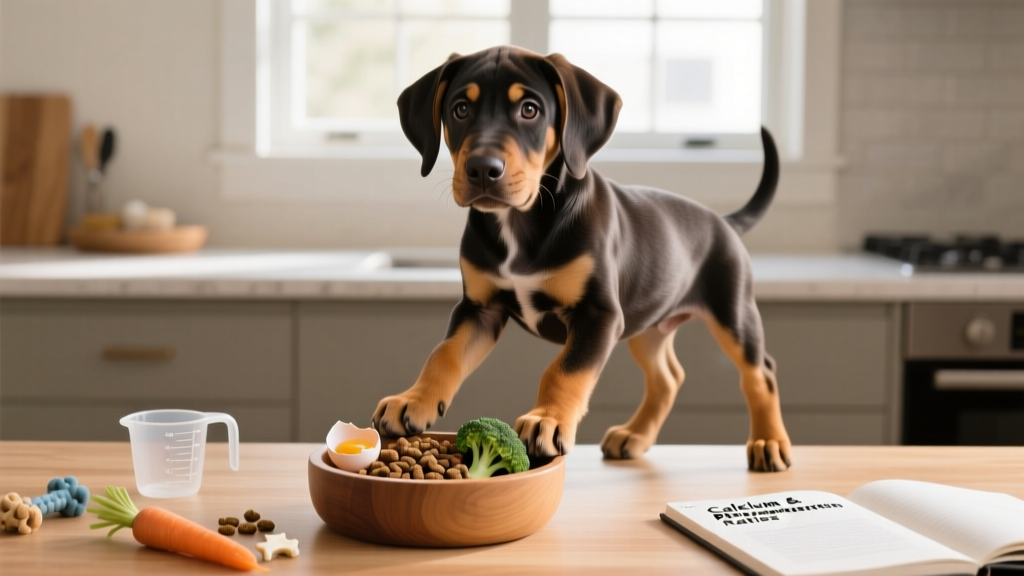
Puppies need more calories per pound than adult dogs because they're building bone, muscle, and organ tissue simultaneously. The AAFCO growth nutrient profile requires puppy foods to contain minimum 22% crude protein and 8.5% crude fat on a dry matter basis — but many quality puppy formulas exceed these minimums significantly.
| Age | Meals/Day | Small Breed (under 20 lb adult) | Medium Breed (20-60 lb adult) | Large Breed (60+ lb adult) |
|---|---|---|---|---|
| 6-8 weeks | 4 (moistened kibble) | 1/4 - 1/2 cup total | 1/2 - 3/4 cup total | 3/4 - 1 cup total |
| 8-12 weeks | 4 | 1/3 - 2/3 cup total | 3/4 - 1.25 cups total | 1 - 1.75 cups total |
| 12-16 weeks | 3 | 1/2 - 3/4 cup total | 1 - 1.75 cups total | 1.5 - 2.5 cups total |
| 4-6 months | 3 | 1/2 - 1 cup total | 1.5 - 2.5 cups total | 2 - 4 cups total |
| 6-12 months | 2 | 3/4 - 1.25 cups total | 2 - 3 cups total | 3 - 5 cups total |
How to calculate more precisely: Check your kibble's feeding guide (every AAFCO-compliant food includes one), then adjust based on your puppy's body condition score (BCS). You should be able to feel ribs without pressing hard, and see a visible waist when viewed from above. A BCS of 4-5 out of 9 is ideal for growing puppies.
Large breed puppies need special attention. Choose a food labeled for "large breed growth" — these formulas restrict calcium (max 1.5% dry matter) and caloric density to prevent rapid bone growth that leads to developmental orthopedic diseases like hip dysplasia and osteochondritis dissecans (OCD). Never add calcium supplements to a large breed puppy's diet without veterinary guidance.
Potty Training Timeline: Realistic Expectations and Troubleshooting
Here's the honest truth most guides skip: most puppies are not reliably house-trained until 4-6 months of age. Some small breeds take until 8-10 months because their bladders are physically tiny and their metabolism processes food faster. A puppy's bladder capacity follows a rough rule — they can hold it approximately one hour per month of age, plus one. So a 3-month-old puppy has about 4 hours of capacity maximum, and that's during rest, not play.
| Age | Outdoor Trips/Day | Expected Accidents/Week | Milestone |
|---|---|---|---|
| 8-10 weeks | 12-15 (every 1-2 hours) | Daily (normal) | Learning the concept of "outside = potty" |
| 10-14 weeks | 8-12 | 3-5 | Starting to go to the door or whine before going |
| 14-20 weeks | 6-8 | 1-3 | More reliable signaling; longer hold times |
| 5-6 months | 5-6 | 0-2 | Near-reliable with supervision |
| 7-12 months | 4-5 | 0-1 | Fully reliable (barring marking, illness, or regression) |
Common potty training problems and solutions:
- Submissive urination (peeing when greeted or scolded): This is not a housetraining failure — it's an involuntary stress response common in puppies under 6 months. Solution: greet your puppy calmly at their level, avoid looming over them, and ignore them for the first 2 minutes after arriving home.
- Regression at 6-8 months: Hormonal changes and increasing independence can cause setbacks. Return to more frequent trips outside and higher-value treats (freeze-dried liver, boiled chicken) for outdoor elimination.
- Crate soiling overnight: If your puppy is consistently soiling the crate, the crate may be too large (they need just enough room to stand, turn, and lie down), or you're exceeding their bladder capacity. A 10-week-old puppy may need a 2 AM potty break — set an alarm.
Use an enzymatic cleaner like Nature's Miracle or Rocco & Roxie ($12-$18 per bottle) for accidents. Standard household cleaners don't break down uric acid crystals, and residual scent will draw your puppy back to the same spot.
The Socialization Window: Weeks 3-14
This is arguably the most time-sensitive aspect of puppy raising. The primary socialization period closes around 12-14 weeks of age, and the experiences your puppy has (or doesn't have) during this window shape their behavior for life. The American Veterinary Medical Association (AVMA) emphasizes that the risk of under-socialization — leading to fear, aggression, and relinquishment — exceeds the disease risk of controlled socialization before the vaccine series is complete.
This does NOT mean taking your puppy to dog parks or pet stores. It means carefully managed exposure to novel stimuli in controlled environments.
- Surfaces: Gravel, grass, metal grates, wet pavement, carpet, tile, wood floors, wobbly surfaces (balance disc, cushion)
- People: Children (supervised), elderly individuals, people in hats/sunglasses/masks, people carrying bags/umbrellas, people of different ethnicities and heights
- Sounds: Vacuum cleaner, thunderstorm recordings (start at low volume), doorbell, traffic, construction noise, clapping, dropping pots
- Objects: Bicycles, skateboards, strollers, garbage trucks, flags, balloons, automatic doors
- Handling: Paw touching, ear examination, mouth opening, nail clipping practice, being held on their side, gentle restraint
- Dogs: Only fully vaccinated, known-temperament adult dogs in private yards — not dog parks or group puppy classes until 2nd DHPP is given (typically after 10 weeks)
When can your puppy go outside and meet other dogs? Your puppy can explore your private yard immediately. Public spaces (sidewalks, parks) should wait until at least 7 days after the second DHPP dose (around 12-13 weeks). Dog parks are risky until the full series is complete at 16 weeks — parvovirus survives in soil for months to years and is resistant to most disinfectants. Structured puppy classes that require proof of first vaccination and sanitize floors are generally safe starting at 10-12 weeks, per the AKC's socialization guidelines.
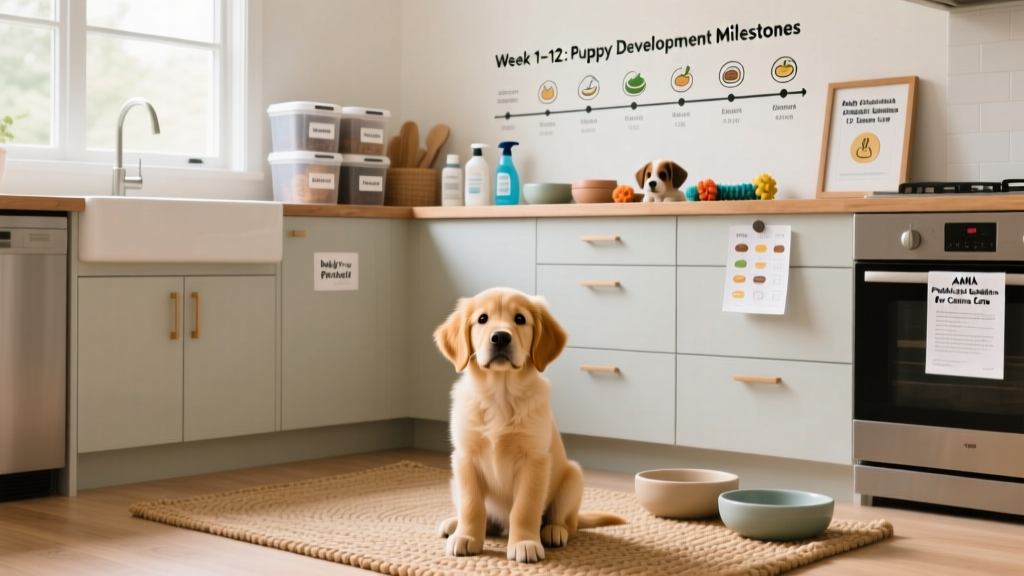
Age-Specific Milestones: Week by Week
Weeks 4-8 (Still With Breeder or Foster)
Puppies develop rapidly during this period. Eyes and ears are fully functional. Baby teeth (28 deciduous teeth) are in. They learn bite inhibition from littermates — a puppy that bites too hard gets yelped at and ignored, which is the foundation for a soft mouth later. They begin eating solid food (gruel transition) around week 4 and are typically fully weaned by week 7. This is also when breeders begin early neurological stimulation (ENS) and introduce novel textures and sounds.
Weeks 8-12 (Coming Home)
This is the fear impact period — negative experiences can create lasting phobias. Keep vet visits positive (bring high-value treats, practice handling at home). Your puppy should receive their first DHPP if not already done, plus a wellness exam. Crate training begins in earnest. Sleep needs are enormous: 18-20 hours per day is normal. Enforce naps — an overtired puppy is a biting, whining, chaotic puppy.
Weeks 12-16 (Building Foundations)
Second and third DHPP boosters. Basic training cues (sit, down, come, name recognition) using positive reinforcement with food rewards. Leash introduction — let them drag a lightweight leash indoors before attempting walks. Chewing intensifies as adult teeth begin loosening baby teeth. Rotate safe chew options: Kong Classic (puppy size, $10-$14), Nylabone Puppy Chew ($6-$9), frozen carrot sticks, and bully sticks (supervised, 6-inch size for small breeds, 12-inch for large).
Weeks 16-24 (Teenage Phase Begins)
Final vaccines complete — your puppy can now safely explore the world. Spay/neuter is typically scheduled between 5-6 months for most breeds (large breeds may wait until 12-18 months per current veterinary recommendations to allow growth plate closure). Independence increases; recall reliability often decreases. Continue training with higher-value rewards and variable reinforcement schedules.
Months 6-12 (Adolescence)
Sexual maturity arrives (intact males begin marking, females enter first estrus around 6-9 months for small breeds, 12-24 months for giant breeds). Energy levels peak. This is when many owners surrender dogs to shelters because the "cute puppy" phase ends and behavioral challenges intensify. Consistent training, adequate exercise (minimum 30-60 minutes of structured activity daily for most breeds), and mental enrichment (food puzzles, scent work, training sessions) are essential.
Crate Training Progression: Time Limits by Age
A crate is not a punishment space — it's a den. When introduced properly, most dogs seek out their crate voluntarily by adulthood. The key is never exceeding your puppy's physical or emotional capacity for confinement.
| Age | Max Daytime Crate Time | Max Overnight Time | Notes |
|---|---|---|---|
| 8-10 weeks | 1-2 hours | 3-4 hours (with alarm) | Needs mid-night potty break |
| 11-14 weeks | 2-3 hours | 5-6 hours | May sleep through the night |
| 15-16 weeks | 3-4 hours | 6-7 hours | Bladder control improving |
| 4-6 months | 4-5 hours | 7-8 hours | Can handle a workday with midday break |
| 6+ months | 5-6 hours | 8 hours | Should not exceed 6 hours daytime regularly |
Crate training steps:
- Leave the crate open with a soft bed and treats inside. Let your puppy explore voluntarily for 3-5 days.
- Feed all meals inside the crate with the door open, then closed for the duration of the meal, then opened immediately after.
- Practice closing the door while you're in the room for 5-10 minutes, gradually increasing duration over a week.
- Step out of the room for 1 minute, return before your puppy shows distress. Build to 5, 10, 20, then 30 minutes.
- Leave the house for short periods (5-15 minutes), returning before anxiety builds.
Recommended crates: MidWest iCrate (single-door, $35-$55 depending on size) or Frisco heavy-duty crate for powerful chewers. Always buy the adult-size crate and use the included divider panel to adjust space as your puppy grows.
Teething Timeline and Common Puppy Problems
Teething: Months 3-6
Your puppy's 28 baby teeth begin falling out around 12-16 weeks, replaced by 42 adult teeth. The process typically completes by 6-7 months. During this time, expect increased chewing, drooling, mild gum bleeding (you may find tiny teeth in toys or on the floor), and reluctance to eat hard kibble.
Safe relief strategies:
- Frozen Kong stuffed with puppy-safe peanut butter (xylitol-free — always check labels) or plain yogurt
- Chilled (not frozen-solid) wet washcloth twisted into a rope
- Greenies Teenie Dental Chews (for puppies over 5 lb, $15-$22 for 27-count)
- Raw carrot sticks or frozen blueberries as low-calorie alternatives
Avoid: Hard nylon bones (risk of tooth fracture), cooked bones (splintering), rawhide from unverified sources (contamination risk), and any chew small enough to swallow whole.
Puppy Biting and Nipping
Mouthing is normal canine behavior — puppies explore the world with their mouths and don't inherently know human skin is off-limits. Here's how to stop puppy biting using positive reinforcement methods:
- Redirect: When teeth touch skin, say "oops" calmly, withdraw your hand, and immediately offer a chew toy. Reward chewing the toy with praise.
- Reverse time-out: If redirecting doesn't work, stand up and leave the interaction for 10-15 seconds. This teaches that biting ends play. Return and resume.
- Manage arousal: Puppies bite most when overtired or overstimulated. If your puppy is in a biting frenzy, they likely need a nap, not more training. Put them in their crate with a chew for an enforced rest.
- Never: Hold the mouth shut, tap the nose, alpha-roll, or yell. These methods damage trust and can escalate to defensive biting.
Whining and Crying
Puppies whine to communicate needs: hunger, potty, discomfort, loneliness, or overstimulation. Before assuming it's "just attention-seeking," run through a checklist: Has it been more than 2 hours since the last potty break? More than 4 hours since eating? Is the room too hot/cold? Are they due for a nap? Address the need first. For attention-seeking whining that persists after needs are met, practice ignoring (no eye contact, no talking, no touching) and reward the moment they're quiet.
Destructive Chewing
Between 4-10 months, chewing peaks as adult teeth settle and adolescent energy surges. Puppy-proof your home: use bitter apple spray ($8-$12) on baseboards and furniture legs, provide a rotation of 5-7 appropriate chew toys (novelty maintains interest), and never leave a puppy unsupervised in an un-puppy-proofed room. A Kong Wobbler ($14-$17) filled with kibble provides 15-30 minutes of independent enrichment.
First-Year Cost Breakdown
Budgeting realistically prevents sticker shock and ensures you can provide consistent care. These ranges reflect 2026 pricing across US markets (urban areas trend toward the higher end).
| Category | Low Estimate | Mid Estimate | High Estimate |
|---|---|---|---|
| Puppy purchase/adoption fee | $200 (rescue) | $1,500 (responsible breeder) | $3,500+ (specialty breed) |
| Vaccines & vet visits (wellness) | $400 | $650 | $900 |
| Spay/neuter | $200 (low-cost clinic) | $500 | $800 (large breed, specialty) |
| Heartworm/flea/tick prevention (12 months) | $120 | $240 | $360 |
| Food (quality puppy formula) | $250 | $450 | $700 |
| Supplies (crate, bed, bowls, leash, harness, toys) | $150 | $300 | $500 |
| Training (group classes or private sessions) | $150 (group) | $400 | $800+ (private) |
| Pet insurance (optional but recommended) | $360/year | $600/year | $900/year |
| TOTAL (excluding purchase price) | $1,630 | $3,140 | $4,960+ |
Emergency fund recommendation: Keep $500-$1,000 accessible for unexpected vet visits. Common puppy emergencies include foreign body ingestion ($1,500-$4,000 for surgical removal), parvovirus treatment ($2,000-$5,000 for hospitalization), and fracture repair ($1,500-$3,500). Pet insurance purchased while your puppy is young and healthy locks in lower premiums and covers these scenarios — companies like Trupanion, Healthy Paws, and Fetch offer puppy-specific plans starting around $30-$75/month.
Frequently Asked Questions
When should I bring my puppy home?
Between 8 and 10 weeks of age. Puppies removed before 8 weeks miss critical littermate socialization that teaches bite inhibition and canine communication. Some toy breeds benefit from staying until 10-12 weeks due to fragility and slower developmental timelines.
How often should I feed my puppy at 10 weeks old?
Four meals per day, spaced roughly 4 hours apart during waking hours (e.g., 7 AM, 11 AM, 3 PM, 7 PM). Consistent meal timing also helps regulate potty schedules — most puppies need to eliminate within 15-30 minutes of eating.
When will my puppy be fully potty trained?
Most puppies achieve reliable housetraining between 4-6 months, though small breeds and some individuals take until 8-10 months. Consistency, supervision, and positive reinforcement for outdoor elimination are the three factors that most influence speed. Punishing accidents after the fact does not work — dogs cannot connect a past action to a present scolding.
What vaccines does my puppy need and when?
The core series is DHPP at 6-8, 10-12, and 14-16 weeks, plus rabies at 14-16 weeks. Non-core vaccines (Bordetella, Leptospirosis, Lyme) depend on your geographic area and lifestyle. Consult your veterinarian for a personalized protocol based on local disease prevalence.
How do I stop puppy biting and nipping?
Redirect to appropriate chew toys, use reverse time-outs (you leave when teeth touch skin), manage arousal levels with enforced naps, and reward gentle mouth behavior. The behavior typically diminishes significantly by 5-6 months as adult teeth come in and bite inhibition improves — but consistent management during the teething phase is essential.
When can my puppy go outside and meet other dogs?
Your private yard is safe immediately. Public spaces should wait until 7 days after the second DHPP (around 12-13 weeks). Dog parks and high-traffic areas should wait until the full series is complete at 16+ weeks. Structured puppy classes with vaccinated peers can start after the first DHPP dose, typically around 8-10 weeks — the socialization benefit outweighs the minimal disease risk in a controlled, sanitized environment.
Tom Renshaw
All our authors care for dogs every day — read more of their work on the authors page.