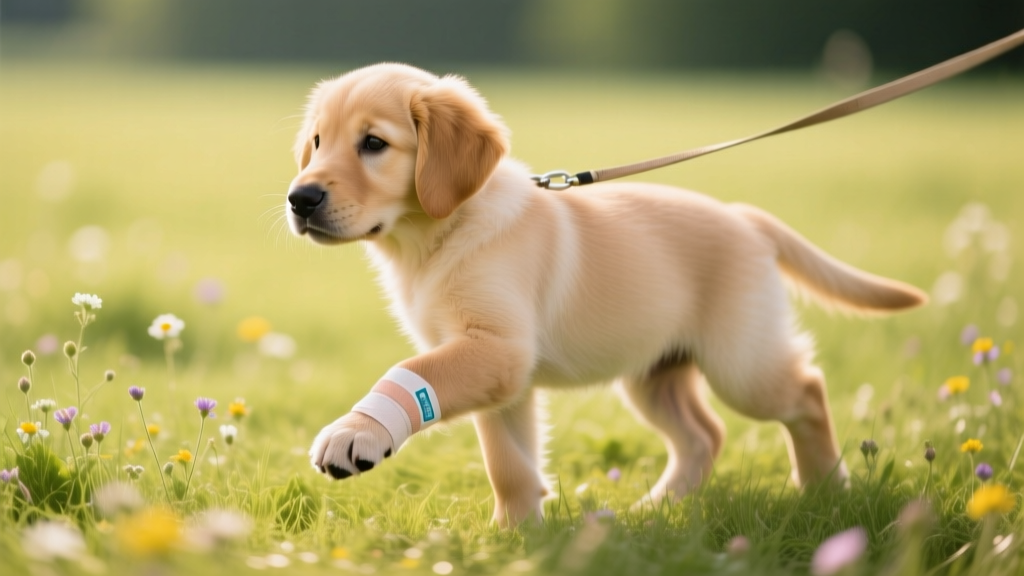
English Springer Puppy: Complete Week-by-Week Care Guide
Your complete English Springer puppy guide covering milestones, feeding, potty training, vaccinations, and costs from 8 weeks through the first year.

Bringing home an English Springer Spaniel puppy means welcoming one of the most energetic, intelligent, and people-oriented sporting breeds into your life. But Springers are not Labradors in a smaller package — they mature differently, carry breed-specific health risks, and demand a socialization strategy tailored to their sensitive, high-drive temperament. This guide walks you through every critical week of your English Springer puppy's first year with concrete timelines, portions, and expectations.
When Should You Bring Your English Springer Puppy Home?
The optimal window for bringing an English Springer Spaniel puppy home is 8 to 10 weeks of age. While some breeders may release puppies at 8 weeks, many reputable Springer breeders prefer to hold puppies until 10 weeks. This extra two weeks allows the breeder to complete critical litter-mate socialization and begin early temperament assessment — especially important for Springers, which can develop fear-based reactivity if removed from their litter too early.
According to the American Kennel Club's puppy development guidelines, the 8-to-12-week window is when puppies form primary human attachments. A Springer puppy arriving at 8 weeks will bond intensely with your family during this imprinting period. However, if you work long hours, a 10-week-old puppy will have slightly better bladder control and emotional resilience.
English Springer Puppy Milestones: Week by Week
English Springer Spaniels follow a developmental trajectory that differs from many breeds. They tend to remain "puppy-like" well into their second year, but they hit early physical milestones on a fairly predictable schedule. Here is what to expect at each stage.
Weeks 4–8: The Litter Period (Breeder's Domain)
- Eyes fully open and vision sharpening; puppies begin tracking movement
- Deciduous teeth erupt — puppies start experimenting with soft, moistened kibble around week 4
- Play behavior emerges — littermates wrestle, practice bite inhibition, and establish early social hierarchies
- Startle reflex develops — sudden loud noises may cause fear responses; responsible breeders introduce controlled noise exposure during this window
- Weight range: 3–6 lb (1.4–2.7 kg) by week 8
Weeks 8–12: The Bonding and Fear-Impact Period
- Primary human attachment forms — your Springer will follow you room to room and show distress when left alone
- Fear-impact period peaks around weeks 8–11 — traumatic experiences during this window can create lasting phobias. Avoid forced interactions, harsh corrections, or overwhelming environments
- Bladder capacity: roughly 1 hour per month of age, so expect 2-hour maximum hold time
- Sleep needs: 18–20 hours per day; overtired puppies become mouthy and hyperactive
- Weight range: 6–12 lb (2.7–5.4 kg) by week 12
Weeks 12–16: The Learning Window Opens
- Attention span increases to 5–10 minutes — ideal for short, positive-reinforcement training sessions
- Prey drive surfaces — your Springer may begin chasing squirrels, leaves, or anything that moves quickly. This is normal breed behavior, not disobedience
- Bladder hold time extends to 3–4 hours during the day
- First signs of independence — puppy may begin wandering slightly farther from you on walks
- Weight range: 12–20 lb (5.4–9.1 kg) by week 16
Weeks 16–24: The Adolescent Transition
- Second fear period may emerge between 16–20 weeks — previously confident puppies may suddenly fear familiar objects or people
- Teething intensifies — adult teeth begin pushing out deciduous teeth, causing increased chewing and occasional appetite drops
- Energy surges — expect 45–60 minutes of structured exercise plus multiple play sessions daily
- Testing boundaries — your Springer may "forget" previously learned commands. Maintain consistent expectations without punishment
- Weight range: 20–35 lb (9.1–15.9 kg) by 6 months
Months 6–12: Adolescence and Maturation
- Sexual maturity: females may experience first estrus (heat cycle) between 6–10 months; males begin marking behavior. Discuss spay/neuter timing with your veterinarian — current evidence suggests waiting until 12–18 months for medium-large breeds to allow growth plate closure
- Adult coat begins replacing puppy coat — feathering on ears, legs, and chest becomes more pronounced
- Energy remains high — Springers typically do not "calm down" until 2–3 years of age
- Advanced training readiness — this is the ideal window for introducing retrieve games, agility foundations, and scent work
- Weight range: 35–50 lb (15.9–22.7 kg); females generally 35–45 lb, males 40–50 lb
Feeding Schedule: Exact Portions for Your English Springer Puppy
English Springer Spaniels are prone to both obesity and ear infections linked to food sensitivities. Feeding the right amount at the right frequency prevents growth-related orthopedic problems and helps you identify dietary sensitivities early. Always choose a food that meets AAFCO nutritional standards for growth or all life stages.
| Age | Meals Per Day | Total Daily Amount (Dry Kibble) | Estimated Weight | Notes |
|---|---|---|---|---|
| 8–12 weeks | 4 meals | 1 to 1.5 cups/day | 6–12 lb (2.7–5.4 kg) | Moisten kibble with warm water for first 2 weeks; transition to dry gradually |
| 3–4 months | 3 meals | 1.5 to 2 cups/day | 12–20 lb (5.4–9.1 kg) | Switch to dry kibble; monitor stool consistency during transition |
| 4–6 months | 3 meals | 2 to 2.5 cups/day | 20–30 lb (9.1–13.6 kg) | Appetite may fluctuate during teething; offer food at consistent times and remove after 15 minutes |
| 6–9 months | 2 meals | 2.5 to 3 cups/day | 30–45 lb (13.6–20.4 kg) | Transition to 2 meals at 6 months; begin evaluating body condition score |
| 9–12 months | 2 meals | 2.5 to 3.5 cups/day | 40–50 lb (18.1–22.7 kg) | Consider transitioning to adult formula around 12 months; consult your vet |
These are starting points. Adjust portions based on your puppy's body condition score (BCS): you should be able to feel ribs without pressing hard, and your puppy should have a visible waist when viewed from above. An active field-line Springer may need 10–15% more than a show-line puppy with lower exercise output.
Vaccination Schedule for Your English Springer Puppy
English Springer Spaniels are susceptible to the same core infectious diseases as all breeds, but their sporting heritage means they will encounter more outdoor environments — and therefore more pathogen exposure — than many companion breeds. Staying on schedule with vaccinations is non-negotiable.
| Age | Vaccines Administered | Notes |
|---|---|---|
| 6–8 weeks | DHPP (Distemper, Hepatitis, Parainfluenza, Parvovirus) — 1st dose | Often administered by the breeder; confirm documentation |
| 10–12 weeks | DHPP — 2nd dose; Bordetella (optional based on lifestyle) | Recommended if attending puppy classes or boarding facilities |
| 14–16 weeks | DHPP — 3rd (final puppy) dose; Rabies (required by law in most states) | Full immunity develops approximately 2 weeks after the final DHPP dose |
| 12–16 months | DHPP booster; Rabies booster (1-year or 3-year depending on local law) | Discuss Lyme and Leptospirosis vaccines with your vet based on your area and outdoor exposure |
According to the AVMA vaccination guidelines, the DHPP series must be completed through the 14–16 week dose to overcome maternal antibody interference. Skipping or delaying any dose in this series leaves your Springer puppy vulnerable to parvovirus, which has a mortality rate of up to 91% in untreated puppies.
Socialization Window: Weeks 3–14 Checklist
The primary socialization period for puppies closes between 12 and 14 weeks of age. For English Springer Spaniels — a breed that can develop noise sensitivity and stranger-directed shyness if under-socialized — this window is especially critical. The goal is not to overwhelm your puppy, but to provide positive, controlled exposure to a wide variety of stimuli.
Below is a breed-specific socialization checklist. Aim to check off at least 3–5 new items per week during the 8–14 week window. Every exposure should be paired with high-value treats (small pieces of boiled chicken, cheese, or commercial training treats like Zuke's Mini Naturals).
People and Handling
- Men with beards, hats, sunglasses
- Children of various ages (supervised, calm interactions only)
- People in uniforms (delivery workers, medical scrubs)
- Being handled: ears touched, paws held, mouth opened, tail gently lifted
- Nail trimming practice (touch paws, reward — no actual trimming needed yet)
Surfaces and Environments
- Walking on gravel, metal grates, wet grass, slippery floors
- Car rides (start with 5-minute trips, build to 15 minutes)
- Elevator or automatic doors (if accessible)
- Stairs — both up and down (assist if needed; Springer puppies are eager but clumsy)
Sounds
- Vacuum cleaner (start at a distance, pair with treats)
- Thunderstorm recordings at low volume, gradually increasing
- Doorbell, knocking, clapping
- Gunshots or fireworks recordings at very low volume — critical for a breed with hunting heritage to prevent noise phobia
Other Animals
- Fully vaccinated, friendly adult dogs (1–2 at a time)
- Cats (if safely possible — controlled, leashed introduction)
- Birds or small animals at a distance (manage prey drive early)
Experiences
- Visiting the veterinary clinic for a "happy visit" (no procedures, just treats and praise)
- Being crated in a different room for 10–15 minutes
- Wearing a harness and leash indoors before outdoor walks
Potty Training Timeline and Realistic Expectations
English Springer Spaniels are generally eager to please and learn potty routines faster than many breeds, but "fully trained" does not mean accident-free in three days. Here is a realistic progression based on breed averages and bladder physiology.
The Schedule That Works
- 8–12 weeks: Take puppy outside every 1.5–2 hours during the day, immediately after waking, eating, playing, and before crating. Expect 1–2 overnight trips (set an alarm for 2–3 AM).
- 12–16 weeks: Extend to every 2–3 hours. Begin using a consistent cue word ("go potty" or "outside") said while the puppy is eliminating. Overnight hold time may stretch to 4–5 hours.
- 4–6 months: Every 3–4 hours during the day. Most puppies can sleep 7–8 hours overnight without a potty break by 5 months.
- 6+ months: Every 4–6 hours. If accidents resume, rule out urinary tract infection with your veterinarian before assuming behavioral regression.
Troubleshooting Common Problems
Submissive urination: English Springer puppies are prone to this. If your puppy squats and leaks when greeted, avoid direct eye contact, crouch sideways, and greet calmly outside. Most outgrow this by 6–8 months.
Excitement urination: Similar to submissive urination but triggered by high arousal. Keep arrivals low-key. Take puppy outside immediately upon entering the door.
Crate accidents: If your puppy is soiling the crate, the crate may be too large (use a divider to limit space to standing room plus lying-down room), or you are exceeding the age-appropriate hold time.
Crate Training Progression and Time Limits
Crate training is essential for English Springer puppies. This breed is prone to separation anxiety and destructive chewing when unsupervised, and a properly introduced crate becomes a safe retreat. Springers generally accept crates well if introduced gradually with positive associations.
| Age | Maximum Crate Time (Day) | Overnight | Training Notes |
|---|---|---|---|
| 8–10 weeks | 30–60 minutes | 3–4 hours (with overnight potty break) | Feed meals in crate; cover with light blanket to reduce stimulation |
| 10–12 weeks | 1–2 hours | 4–5 hours | Begin short departures from the house (5–10 minutes) |
| 3–4 months | 2–3 hours | 5–6 hours | Introduce a stuffed Kong or safe chew toy for longer crated periods |
| 4–6 months | 3–4 hours | 7–8 hours | Puppy should enter crate willingly; if resistance develops, revisit positive association training |
| 6–12 months | 4–5 hours maximum | 8 hours | Never exceed 5 hours during the day; arrange midday breaks via dog walker or coming home |
Recommended crate size: A 36-inch intermediate crate (such as the MidWest iCrate or Frisco Double Door) with an adjustable divider panel works well for Springers. The puppy should be able to stand, turn around, and lie down comfortably — but no more. Adult Springers typically need a 42-inch crate.
Teething Timeline and Relief Strategies
English Springer puppies begin losing their 28 deciduous (baby) teeth around 12–16 weeks, with the process completing by approximately 6–7 months when all 42 adult teeth are in place. During peak teething (3–6 months), expect increased chewing, drooling, occasional appetite drops, and minor gum bleeding.
Safe Chew Recommendations
- Frozen Kong Classic (puppy size): Stuff with plain yogurt and banana, freeze for 4 hours. The cold numbs gums and the rubber texture satisfies chewing urges.
- Benebone Puppy Wishbone: Designed for puppies under 30 lb; the nylon is softer than adult versions and won't damage developing teeth.
- Frozen carrot sticks: Large, thick carrots frozen overnight provide a low-calorie, edible chew option. Supervise to prevent choking on broken pieces.
- Wet washcloth twist: Soak a clean washcloth in water, twist into a rope, freeze. Supervise use and discard if threads begin to unravel.
Retained Deciduous Teeth
English Springer Spaniels are among the breeds predisposed to retained baby teeth, where the adult tooth erupts alongside the baby tooth rather than pushing it out. If you notice "double teeth" (two teeth occupying the same position) after 6 months, your veterinarian should extract the retained baby tooth to prevent misalignment and periodontal disease.
Common English Springer Puppy Problems and Solutions
Mouthing and Biting
Springer puppies are mouthy — this is a retrieving breed that was selected to carry game in their mouths. Biting peaks between 8–16 weeks and gradually decreases with consistent management.
Solution: When teeth touch skin, say "ouch" in a calm tone and immediately redirect to an appropriate chew toy. If biting continues after two redirections, calmly end the interaction by leaving the room for 30 seconds (time-out). Never hold the mouth shut, yank the puppy, or use physical punishment — these methods increase fear-based biting. Teach children to freeze like a tree when mouthed rather than pulling away, which triggers chase instinct.
Whining and Crying in the Crate
Expect 3–7 nights of crate protest when first bringing your puppy home. Springers are social dogs that dislike isolation.
Solution: Place the crate in your bedroom for the first 2–3 weeks so your puppy can hear and smell you. Use a snuggle puppy toy with a heartbeat simulator (such as the SmartPetLove Snuggle Puppy, approximately $30–40). Only let the puppy out when quiet — releasing during whining teaches that crying opens the door. If whining persists past 2 weeks, consult a certified positive-reinforcement trainer to rule out separation anxiety.
Destructive Chewing
Adolescent Springers (4–10 months) will chew furniture, shoes, and baseboards if left unsupervised. This is amplified by boredom and insufficient exercise.
Solution: Provide at least 45 minutes of structured exercise (leash walks, fetch, training games) before leaving the puppy alone. Rotate chew toys every 2–3 days to maintain novelty. Use a pet-safe bitter spray (such as Grannick's Bitter Apple, approximately $8–12) on furniture legs and baseboards. Puppy-proof rooms by removing accessible items rather than relying on deterrents alone.
Jumping on People
Springers greet with their whole body, and jumping is their default way to reach human faces for attention.
Solution: Teach "four on the floor" by rewarding all four paws on the ground with treats and attention. Ask visitors to ignore the puppy until calm. Train an incompatible behavior — "sit" — and reward sitting greetings consistently. Management tools like a front-clip harness (such as the Ruffwear Front Range, approximately $40) give you physical control without suppressing the greeting behavior.
First-Year Cost Breakdown for an English Springer Puppy
Budgeting accurately prevents financial stress and ensures your puppy receives proper care. Below are realistic 2026 cost ranges for an English Springer Spaniel's first year in the United States.
| Category | Low Estimate | High Estimate | Details |
|---|---|---|---|
| Puppy purchase/adoption | $500 | $2,500 | Responsible AKC breeder: $1,500–$2,500; breed rescue: $300–$600 |
| Veterinary care (routine) | $600 | $1,200 | Wellness exams (3–4 visits), full vaccine series, deworming, flea/tick/heartworm preventives, spay/neuter |
| Food | $400 | $800 | High-quality puppy kibble (Purina Pro Plan, Royal Canin, or similar at $50–$70/bag); more for fresh/premium diets |
| Supplies and gear | $300 | $600 | Crate, bed, harness, leash, bowls, grooming tools (slicker brush, ear cleaner), toys, baby gates |
| Training | $150 | $500 | Puppy kindergarten group class: $150–$250; private sessions if needed: $75–$125/session |
| Pet insurance (optional) | $360 | $720 | $30–$60/month for accident/illness coverage; recommended for breeds prone to hip dysplasia and ear infections |
| Grooming | $0 | $600 | Home grooming (brushing, nail trims, ear cleaning): minimal cost; professional grooming every 6–8 weeks: $50–$75/session |
Total estimated first-year cost: $2,310–$6,920, depending on puppy source, veterinary needs, and whether you use professional grooming and insurance. Budget toward the higher end if you live in a high-cost metro area or if your puppy requires treatment for common Springer puppy issues like ear infections ($100–$250 per visit) or gastrointestinal upset.
Frequently Asked Questions
How often should I feed my 10-week-old English Springer puppy?
At 10 weeks, feed 4 meals per day, spaced roughly 4 hours apart during waking hours (for example: 7 AM, 11 AM, 3 PM, 7 PM). Total daily amount should be approximately 1 to 1.5 cups of high-quality puppy kibble, divided evenly across the four meals. Adjust based on your puppy's body condition and your veterinarian's recommendations.
How do I stop my English Springer puppy from biting my children?
Redirect biting to appropriate chew toys every single time. Teach children to stand still and fold their arms ("be a tree") when mouthed, which removes the movement that excites the puppy. Supervise all interactions between puppies and children under 10. If biting is intense and persistent, provide the puppy with a 30-second calm-down period in a pen or crate — not as punishment, but to help them reset from overstimulation. Enroll in a positive-reinforcement puppy class by 12 weeks.
When can my English Springer puppy go to the dog park?
Wait until at least 2 weeks after the final DHPP vaccination, typically around 16–18 weeks of age. Even then, dog parks carry risks of injury from larger dogs, disease exposure, and overwhelming social experiences. A better alternative for a young Springer is structured playdates with 1–2 known, vaccinated, well-mannered dogs in a controlled environment. Introduce dog parks gradually during off-peak hours when fewer dogs are present.
Should I get pet insurance for my English Springer puppy?
Yes, it is strongly recommended. English Springer Spaniels are predisposed to hip dysplasia (estimated 12–15% prevalence per the Orthopedic Foundation for Animals), ear infections (especially in floppy-eared field lines), and certain eye conditions like progressive retinal atrophy. Enrolling before any conditions are diagnosed ensures coverage. Policies from providers like Trupanion, Healthy Paws, or Lemonade typically cost $30–$60/month for a Springer puppy.
How much exercise does my English Springer puppy need?
A common guideline is 5 minutes of structured exercise per month of age, twice daily. So a 4-month-old Springer gets roughly 20 minutes of leash walking or structured play, twice per day. Beyond that, allow free play in a fenced yard. Avoid repetitive high-impact activities (long runs, agility jumps, frisbee) until growth plates close around 12–18 months. Mental stimulation — training sessions, puzzle toys, scent games — tires a Springer puppy more effectively than physical exercise alone.
Beth Carrasco
All our authors care for dogs every day — read more of their work on the authors page.