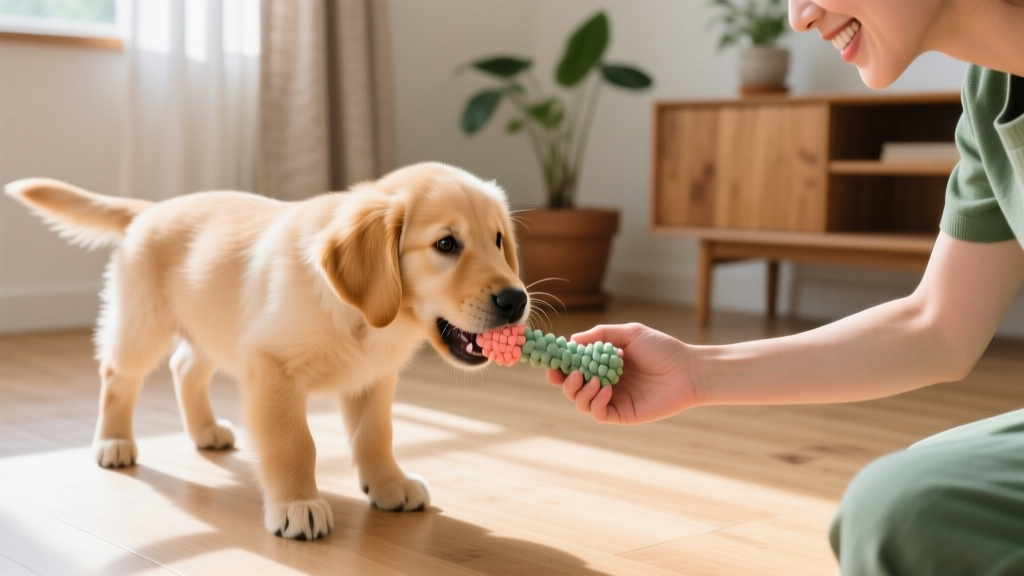
How Do I Train a Puppy to Stop Biting? A Golden Retriever Owner's Guide
Learn how to train a Golden Retriever puppy to stop biting with age-specific milestones, socialization tips, teething relief, and positive reinforcement methods.

Golden Retrievers are famously gentle adults, but as puppies, they are mouthy, energetic, and equipped with needle-sharp teeth that can make even experienced owners flinch. If you've found yourself googling how do I train a puppy to stop biting at 2 a.m. with a chewed-up slipper in hand, you're not alone — and the good news is that this behavior is both normal and fixable.
This guide walks you through every developmental stage of a Golden Retriever puppy's first year, with specific strategies for managing biting, chewing, and nipping using force-free, positive reinforcement methods. You'll find exact feeding portions, vaccination timelines, crate training limits, and a realistic cost breakdown so you can plan ahead.
When Should I Bring My Golden Retriever Puppy Home?
The American Kennel Club recommends that puppies stay with their littermates and dam until at least 8 weeks of age. For Golden Retrievers, many responsible breeders prefer to keep puppies until 8–10 weeks to allow critical bite-inhibition learning from siblings.
During weeks 4–8, puppies learn that biting too hard ends playtime — their littermates yelp and walk away. Removing a puppy before this window closes means you become the teacher of bite inhibition, which is harder but absolutely doable with the techniques below.
Golden Retriever Puppy Milestones: Weeks 4 Through 12 Months
Understanding what's developmentally normal at each stage removes the guesswork from puppy raising. Here's what to expect from your Golden Retriever at every critical phase:
Age-Specific Milestone Timeline
Weeks 4–8 (Littermate Stage): Puppies develop deciduous (baby) teeth, begin eating gruel-to-solid food transitions, and learn bite inhibition from siblings. Expect mouthing during all interactions. Weight range: 5–15 lb (2.3–6.8 kg).
Weeks 8–12 (Home Transition): Peak fear imprint period begins around week 8. Puppy explores with mouth constantly. Attention span is 2–5 minutes. Sleep needs: 18–20 hours/day. Biting intensity increases as puppy tests boundaries with new humans.
Weeks 12–16 (Confidence Building): Second fear period may occur around week 12. Puppy begins recognizing name reliably. Bite inhibition training shows first results — softer mouthing, fewer hard bites. Bladder control improves to roughly 1 hour per month of age.
Weeks 16–24 (Teenage Phase): Adult teeth begin erupting around 16 weeks. Chewing intensity surges. Puppy may regress in previously learned behaviors. Socialization window closes around 14–16 weeks — exposures before this deadline are critical. Weight: 30–50 lb (13.6–22.7 kg).
Months 6–12 (Adolescence): Sexual maturity (spay/neuter typically done 6–9 months). Adult teeth fully in by 7 months. Biting should be fully resolved by this stage if training was consistent. Energy peaks — 60–90 minutes of structured exercise daily. Adult weight approaching: males 65–75 lb (29.5–34 kg), females 55–65 lb (25–29.5 kg).
How Do I Train a Golden Retriever Puppy to Stop Biting?
Golden Retrievers are a retriever breed — their mouths are genetically wired to carry things. Biting and mouthing aren't aggression; they're breed-typical exploration. The goal isn't to eliminate mouthing entirely but to teach bite inhibition (soft mouth) and then redirect to appropriate objects.
The Redirect-and-Reward Protocol
- Anticipate the bite. Puppies bite most during excited greetings, play sessions, and when overtired. Keep a chew toy within arm's reach during these triggers.
- Offer the alternative before skin contact. When puppy's mouth opens toward your hand, present a Kong Classic (size Small for 8–12 weeks, Medium for 12–24 weeks) stuffed with frozen peanut butter.
- Mark and reward soft-mouth choices. The instant puppy licks instead of bites, say "yes" in a calm voice and offer a small training treat (Zuke's Mini Naturals, under 2 calories each).
- Implement a 30-second timeout for hard bites. If teeth make contact with skin, say "ouch" in a neutral tone (not a dramatic yelp, which can excite some Goldens), stand up, fold your arms, and disengage for 30 seconds. Resume interaction calmly.
- End sessions before frustration builds. Keep training to 3–5 minute sessions, 4–6 times per day for puppies under 16 weeks.
Why Golden Retrievers Bite More at Certain Times
Track your puppy's biting patterns and you'll notice spikes at predictable times:
- The "witching hour" (typically 6–9 p.m.): Overtired puppies lose impulse control. Solution: enforced nap in the crate with a snuffle mat or frozen Kong.
- Post-walk overstimulation: Golden puppies process excitement through their mouths. Solution: 5 minutes of calm settling on a mat with scattered treats before removing the leash.
- Teething discomfort (3–6 months): Sore gums drive intense chewing. See the teething section below for relief strategies.
- Attention-seeking: Puppy learns that biting gets a reaction (even negative attention is attention). Solution: reward calm behavior proactively — give attention and treats when puppy is resting quietly.
Feeding Schedule: Exact Portions by Age and Weight
Golden Retrievers are prone to rapid growth-related orthopedic diseases, including hip dysplasia and elbow dysplasia. Research published in the Journal of the American Veterinary Medical Association shows that keeping Golden puppies lean (body condition score 4–5 out of 9) reduces hip dysplasia incidence by up to 25%. Feed measured meals — never free-feed.
| Age | Meals/Day | Daily Amount (Large-Breed Puppy Formula) | Expected Weight |
|---|---|---|---|
| 8–12 weeks | 3–4 | 1.5–2 cups/day | 10–22 lb (4.5–10 kg) |
| 3–6 months | 3 | 2–3 cups/day | 22–50 lb (10–22.7 kg) |
| 6–12 months | 2 | 3–4 cups/day | 50–75 lb (22.7–34 kg) |
| 12+ months | 2 | 3–4 cups/day (adult formula) | 55–75 lb (25–34 kg) |
Choose an AAFCO-approved large-breed puppy formula (calcium content 1.0–1.8% on a dry matter basis) to support controlled bone growth. Brands like Purina Pro Plan Large Breed Puppy, Royal Canin Golden Retriever Puppy, or Hill's Science Diet Large Breed Puppy are formulated to these standards. Transition foods gradually over 7–10 days to avoid gastrointestinal upset.
Vaccination Schedule for Golden Retriever Puppies
Golden Retrievers receive the same core and non-core vaccines as other breeds, but their higher cancer risk means you'll want to discuss titer testing (checking antibody levels) with your vet at the 1-year mark to potentially reduce lifetime vaccine frequency.
| Age | Vaccines | Type | Estimated Cost |
|---|---|---|---|
| 6–8 weeks | DHPP (Distemper, Hepatitis, Parainfluenza, Parvovirus) | Core | $25–$50 |
| 10–12 weeks | DHPP booster + Bordetella + Leptospirosis | Core + Non-core | $40–$75 |
| 14–16 weeks | DHPP final booster + Rabies + Lyme (if endemic area) | Core + Non-core | $50–$90 |
| 12–16 months | DHPP booster + Rabies booster + Bordetella | Core + Non-core | $60–$100 |
The AVMA recommends that core vaccines (DHPP and Rabies) be administered according to this schedule, with boosters at 1 year and then every 3 years. Non-core vaccines like Bordetella, Leptospirosis, and Lyme depend on your puppy's exposure risk — discuss your lifestyle with your veterinarian.
The Socialization Window: Weeks 3–14
The primary socialization period for puppies closes between 12–14 weeks of age. According to the American Veterinary Society of Animal Behavior, the risk of under-socialization (leading to fear-based behavior problems) outweighs the disease risk of careful early exposure before all vaccines are complete.
Golden Retriever Socialization Checklist
Aim for 3–5 novel positive exposures per day during the socialization window. Pair every new experience with high-value treats (boiled chicken, cheese, commercial training treats).
- Surfaces: Gravel, grass, tile, metal grates, wet pavement, sand, carpet, wood chips
- People: Children under 10, people wearing hats/sunglasses, people in wheelchairs, tall people, people with deep voices, delivery workers, people carrying umbrellas
- Sounds: Vacuum cleaner (start at distance), doorbell, thunderstorms (play recordings at low volume), traffic, construction noise, children shouting
- Objects: Bicycles, skateboards, strollers, plastic bags blowing, trash cans, automatic doors
- Animals: Fully vaccinated adult dogs (known health status), cats (supervised), livestock if rural
- Handling: Paw touching, ear examination, mouth opening, nail trimming practice, grooming brush, being lifted onto a table
- Environments: Car rides, parking lots, outdoor café patios, pet-friendly stores (carry puppy until fully vaccinated), friend's houses
Potty Training Timeline and Troubleshooting
Golden Retrievers are generally quick to house-train thanks to their eagerness to please, but "quick" still means 4–6 months for reliable bladder control, not 3 days.
Realistic Potty Training Expectations
- 8–12 weeks: Accidents every day are normal. Puppy needs to eliminate after waking, eating, drinking, and playing. Take outside every 30–60 minutes during active hours.
- 3–4 months: Accidents drop to 1–3 per week with a consistent schedule. Puppy begins going to the door independently.
- 5–6 months: Mostly reliable with occasional accidents during schedule disruptions or excitement.
- 6–12 months: Fully reliable if no medical issues exist. Marking behavior may appear in intact males — spay/neuter typically reduces this.
Potty Training Log Template
Track patterns for the first 4 weeks to predict your puppy's schedule:
| Time | Activity | Went Outside? (Y/N) | Result | Notes |
|---|---|---|---|---|
| 7:00 a.m. | Wake up | Y | Pee + poop | Treat reward, praise |
| 7:30 a.m. | After breakfast | Y | Pee | Needed 5 min to go |
| 8:15 a.m. | After play | N | Accident in kitchen | Missed the cue — watch for circling |
Troubleshooting tips: If accidents increase suddenly, rule out a urinary tract infection with your vet (common in puppies, typically $30–$50 for a urinalysis). Never punish accidents — puppies don't connect delayed scolding with the act. Clean accidents with an enzymatic cleaner (Nature's Miracle or Rocco & Roxie) to eliminate odor markers that invite repeat offenses.
Crate Training Progression and Time Limits
A crate is your puppy's safe den and your management tool for preventing unsupervised chewing and biting. The general rule for maximum crate time during the day is the puppy's age in months plus one (e.g., a 3-month-old can hold it for roughly 4 hours, but 2–3 hours is more humane).
- 8–10 weeks: 30–60 minutes max while you're home. Crate near your bed at night. Expect 1–2 overnight potty breaks.
- 10–14 weeks: 1–2 hours max during the day. Begin feeding meals in the crate with the door open. Overnight: 3–4 hours between breaks.
- 4–6 months: 3–4 hours max during the day. Overnight: 6–8 hours is achievable for most Goldens.
- 6–12 months: 4–5 hours max during the day. Never exceed 6 hours crated during waking hours — Goldens need movement and mental stimulation.
Make the crate positive: stuff a Kong with frozen yogurt and blueberries, use a Snuggle Puppy heartbeat toy for the first 2 weeks, and never use the crate as punishment. If your puppy whines after eliminating needs are met, wait for 10 seconds of silence before releasing — rewarding quiet teaches that calmness opens the door.
Teething Timeline: Relief Strategies for Months 3–6
Golden Retriever puppies begin losing baby teeth around 12–16 weeks, with all 42 adult teeth typically erupted by 6–7 months. This is when biting and chewing peak — your puppy isn't being naughty; their gums genuinely hurt.
Safe Teething Relief Options
- Frozen Kong Classic (rubber, not plastic): Stuff with a blend of plain yogurt, banana, and a tablespoon of xylitol-free peanut butter. Freeze for 4+ hours.
- Benebone Wishbone (puppy formula, softer nylon): Size Medium for puppies 15–40 lb. Replace when worn down to 75% of original size.
- Frozen wet washcloth: Soak a clean washcloth in low-sodium chicken broth, twist into a rope, freeze. Supervise to prevent swallowing fabric pieces.
- Nylabone Puppy Chew (lamb & apple flavor): Designed for deciduous teeth, softer than adult versions.
- Chilled carrot sticks: Large whole carrots (not baby carrots, which are a choking risk). Supervise and discard small pieces.
Common Golden Retriever Puppy Problems and Solutions
Problem: Excessive Biting and Nipping
Solution: Follow the Redirect-and-Reward Protocol above. Additionally, ensure your puppy gets 2–3 structured play sessions daily with appropriate outlets: flirt pole sessions (5 minutes, keep toy low to protect joints), tug-of-war with rules ("drop it" on cue), and puzzle feeders like the Outward Hound Nina Ottosson Dog Brick.
Problem: Nighttime Whining in the Crate
Solution: Set an alarm for one overnight potty break (around 2–3 a.m. for 8–12-week-olds). Place the crate next to your bed so puppy can smell and hear you. Use a heartbeat toy and a blanket that smells like the breeder's home. Gradually move the crate to its permanent location over 2 weeks.
Problem: Destructive Chewing of Furniture and Shoes
Solution: Management first — puppy-proof by removing accessible items and using baby gates. Provide 5–7 approved chew options rotated weekly to maintain novelty. Apply bitter apple spray (Grannick's Bitter Apple, ~$8 for 8 oz) to furniture legs as a deterrent. Supervise or confine at all times until 12 months.
Problem: Jumping on People
Solution: Teach "four on the floor" — reward with treats and attention only when all paws are on the ground. Ask visitors to ignore the puppy (no eye contact, no touching) until puppy sits. Golden puppies jump because they're greeting-face-oriented — redirect to a sit-for-greeting behavior early.
First-Year Cost Breakdown for a Golden Retriever
Budgeting realistically prevents financial surprises. Here's what Golden Retriever owners typically spend in year one:
| Category | Low Estimate | High Estimate | Notes |
|---|---|---|---|
| Puppy Purchase (responsible breeder) | $1,500 | $3,500 | OFA/CHIC health-tested parents, AKC registration |
| Veterinary (vaccines, exams, spay/neuter) | $800 | $1,500 | Includes heartworm prevention, fecal tests |
| Food (large-breed puppy formula) | $400 | $700 | Premium kibble, ~$50–$65/bag |
| Supplies (crate, bed, toys, leash, gates) | $300 | $600 | 42-inch wire crate for adult size with divider |
| Training (group classes + private sessions) | $200 | $600 | Puppy kindergarten + basic obedience |
| Pet Insurance (annual premium) | $400 | $800 | Golden cancer risk makes insurance worthwhile |
| Grooming (brushes, shampoo, professional) | $100 | $400 | Home grooming vs. professional every 6–8 weeks |
| TOTAL FIRST YEAR | $3,700 | $8,100 |
Golden Retrievers have a higher-than-average cancer rate (approximately 60% of Goldens develop cancer, per the Golden Retriever Lifetime Study by the Morris Animal Foundation), making pet insurance a particularly sound investment for this breed.
Frequently Asked Questions
How often should I feed my Golden Retriever puppy at 10 weeks old?
At 10 weeks, feed 3–4 meals per day. Divide the daily portion (approximately 1.5–2 cups of large-breed puppy kibble) evenly across meals. Space meals 4–5 hours apart during waking hours, with the last meal at least 3 hours before bedtime to reduce overnight potty needs.
When will my Golden Retriever be fully potty trained?
Most Golden Retrievers achieve reliable house training between 5–7 months of age with a consistent schedule. "Fully trained" means fewer than one accident per month. Some individuals take up to 9 months, particularly intact males who may begin marking. If accidents persist past 8 months, consult your vet to rule out medical causes.
What vaccines does my Golden Retriever puppy need and when?
Core vaccines: DHPP at 6–8 weeks, booster at 10–12 weeks, final booster at 14–16 weeks; Rabies at 14–16 weeks. Non-core (discuss with your vet based on lifestyle): Bordetella, Leptospirosis, Lyme disease, and Canine Influenza. See the vaccination table above for details and costs.
My puppy bites harder when I yelp — what should I do?
This is common in Golden Retrievers, who can interpret high-pitched sounds as an invitation to play harder. Switch from yelping to a calm, low-toned "ouch" followed by immediate disengagement (stand up, fold arms, ignore for 30 seconds). If the puppy escalates when you disengage, they're likely overtired — redirect to a crate nap with a frozen Kong instead.
When can my Golden Retriever puppy go to the dog park?
Wait until at least 7 days after the final DHPP booster (typically 17 weeks of age) and until your veterinarian confirms full immunity. Even then, start with one-on-one playdates with known, vaccinated, temperament-tested dogs before introducing the unpredictable dog park environment. Many behaviorists recommend skipping dog parks entirely for Goldens under 6 months, as negative experiences during adolescence can create lasting fear reactivity.
How do I know if my puppy's biting is normal or aggressive?
Normal puppy biting: open mouth, relaxed body, wiggly movement, stops when you disengage, happens during play. Concerning biting: stiff body, growling over resources (food, toys, space), snapping when approached while resting, hard biting with intent to injure that doesn't respond to timeouts. If you see the latter pattern, consult a certified professional dog trainer (CPDT-KA or IAABC certified) or a veterinary behaviorist immediately — early intervention is critical.
Jonas Cole
All our authors care for dogs every day — read more of their work on the authors page.