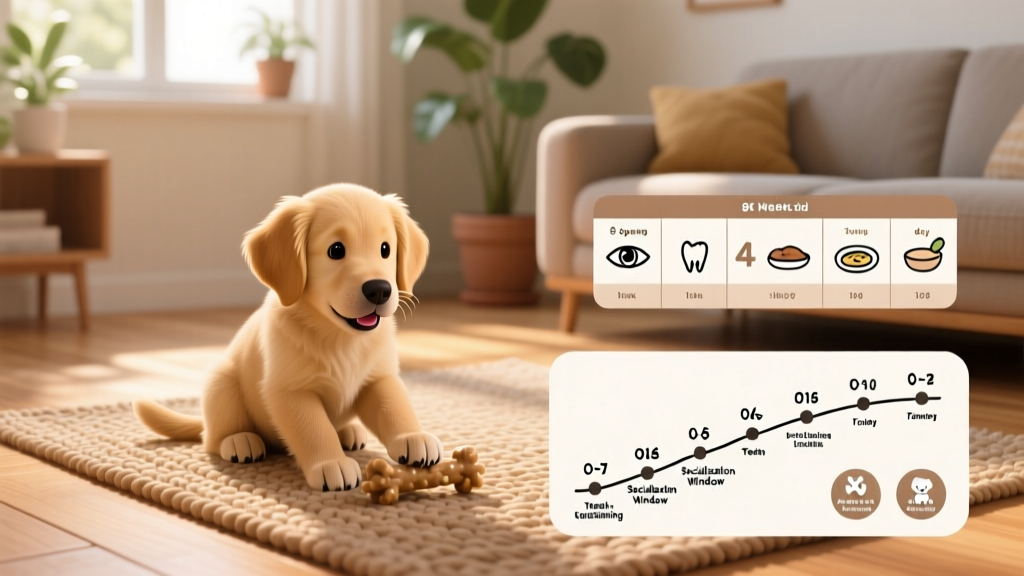
Walking Your Puppy with a Harness: A Complete First-Year Training Guide
Learn how to introduce your puppy with a harness at every developmental stage. Includes milestones, feeding, potty training, vaccines, and cost breakdown.

Getting a puppy with a harness ready for the world is one of the most rewarding — and overwhelming — parts of early dog ownership. Unlike collars, which can put dangerous pressure on a young puppy's trachea, a properly fitted harness distributes force across the chest and shoulders, making it the safest choice for leash training from day one. But the gear is only half the equation. You need a roadmap that covers every developmental stage, from the moment you bring your puppy home through their first birthday.
This guide walks you through each critical window with exact timelines, portions, vaccine names, and real cost figures so you can plan with confidence rather than guesswork.
When Should You Bring Your Puppy Home?
The consensus among veterinary behaviorists and the American Kennel Club is clear: puppies should stay with their littermates and dam until at least 8 weeks of age. For toy and small breeds (Chihuahuas, Yorkshire Terriers, Pomeranians), many responsible breeders hold puppies until 10–12 weeks because these breeds mature more slowly and are more vulnerable to hypoglycemia and stress-related illness during the transition.
Bringing a puppy home before 8 weeks increases the risk of:
- Incomplete bite inhibition learning (littermates teach this between weeks 5–8)
- Heightened separation anxiety and fear responses later in life
- Poorer social signaling — puppies learn canine body language from siblings
- Weaker immune readiness (maternal antibodies are still declining)
Mark your calendar for pickup day between week 8 and week 10 for most breeds, and have your harness, crate, and veterinary appointment already lined up.
Developmental Milestones: What to Expect at Every Stage
Weeks 4–8: The Litter Phase (Before You)
During this period, your puppy is still with the breeder or rescue. Key developments include:
- Sensory maturity: Eyes and ears fully functional; startle responses to loud sounds emerge
- Social play: Wrestling, mock-fighting, and chase games teach bite inhibition
- Weaning: Transition from mother's milk to gruel, then to softened kibble by week 6
- First deworming: Typically at weeks 2, 4, 6, and 8 (pyrantel pamoate or fenbendazole)
- First vaccine: DHPP (distemper, hepatitis, parainfluenza, parvovirus) at 6–8 weeks
Your action: Visit the litter at least once before pickup. Handle your puppy gently for 5–10 minutes daily if possible. Introduce a lightweight, soft-mesh harness for 30-second sessions so the puppy associates it with positive touch.
Weeks 8–12: The Home Transition
This is the peak socialization window and the most impressionable period of your puppy's life. Expect:
- Sleep: 18–20 hours per day — puppies this age need enforced naps in the crate
- Attention span: 2–5 minutes per training session, max
- Potty frequency: Every 30–60 minutes while awake, always after eating, drinking, playing, or waking
- Biting/nipping: Normal exploratory behavior; peaks around week 10
- Fear periods: First fear imprint window occurs around weeks 8–11 — avoid traumatic experiences
Harness milestone: Your puppy should be wearing a harness for 5–10 minute indoor sessions daily by week 10. Attach a lightweight 4-foot leash and let them drag it under supervision. Reward with high-value treats (boiled chicken, cut into pea-sized pieces) every time they walk toward you with the leash on.
Weeks 12–16: Building Foundations
Your puppy is gaining coordination and confidence. Key changes:
- Bladder control: Can hold for approximately 1 hour per month of age (so ~3 hours at 12 weeks, ~4 hours at 16 weeks)
- Training capacity: Can learn sit, down, come, and loose-leash walking basics
- Energy bursts: "Zoomies" become more frequent; provide structured play to channel energy
- Second fear period: May occur around weeks 14–16 — your puppy might suddenly seem wary of previously familiar things
Harness milestone: Begin structured outdoor walks in low-traffic areas (your yard, quiet cul-de-sacs). Keep walks to 5 minutes per month of age — so 15 minutes at 12 weeks, 20 minutes at 16 weeks. Use treats to reward your puppy for staying near your left side. Switch to a front-clip harness if pulling begins.
Weeks 16–24: Adolescence Begins
This is where many owners feel like their puppy has "forgotten" everything. In reality, adolescent brain development is rewiring impulse control:
- Teething: Adult teeth erupt between 3–6 months; chewing intensity peaks
- Independence: Recall reliability drops; your puppy may ignore previously learned cues
- Physical growth: Rapid bone growth — avoid forced running or jumping to protect developing joints
- Sexual maturity: Intact males may begin marking; females may enter first estrus as early as 6 months in small breeds
Harness milestone: Transition to longer walks (25–30 minutes) on a front-clip or dual-clip harness. Practice "stop and sit" at every curb and crosswalk. Introduce environmental distractions gradually — first a quiet park, then a park with distant dogs, then closer proximity.
Months 6–12: The Teenage Phase
Your puppy looks more grown up but still has significant neurological maturation ahead (dogs don't reach full behavioral maturity until 18–36 months depending on breed size).
- Exercise capacity: 30–45 minutes of structured walking twice daily; avoid high-impact activities like agility jumps until growth plates close (typically 12–18 months)
- Training: Can handle 10–15 minute sessions; introduce duration and distance on cues
- Social needs: Continued positive dog-to-dog interactions are critical to prevent reactivity
- Harness fit: Re-measure monthly; many puppies outgrow their first harness between months 4–7
Feeding Schedule: Exact Portions by Age and Weight
Feeding is one of the most common anxiety points for new puppy owners. The right amount depends on your puppy's projected adult weight, current age, and the caloric density of your chosen food. Always select a food that carries the AAFCO statement "formulated for growth" or "all life stages."
| Puppy Age | Meals Per Day | Small Breed (10–25 lb adult) | Medium Breed (25–50 lb adult) | Large Breed (50–90 lb adult) |
|---|---|---|---|---|
| 8–12 weeks | 4 | ¼ – ⅓ cup/meal | ½ – ¾ cup/meal | ¾ – 1 cup/meal |
| 12–16 weeks | 3 | ⅓ – ½ cup/meal | ¾ – 1 cup/meal | 1 – 1½ cups/meal |
| 4–6 months | 3 | ½ – ¾ cup/meal | 1 – 1¼ cups/meal | 1½ – 2 cups/meal |
| 6–12 months | 2 | ¾ – 1 cup/meal | 1¼ – 2 cups/meal | 2 – 3 cups/meal |
Important: Large and giant breed puppies (projected adult weight over 70 lb) should eat a large-breed puppy formula with controlled calcium and phosphorus ratios (calcium ≤ 1.5% on a dry matter basis) to reduce the risk of developmental orthopedic diseases like hip dysplasia and osteochondritis dissecans. The Merck Veterinary Manual provides detailed guidance on these conditions.
Transition tip: When switching foods, mix 25% new food with 75% old food for 2 days, then 50/50 for 2 days, then 75/25 for 2 days before going fully to the new food. This reduces gastrointestinal upset.
Potty Training Timeline and Troubleshooting
Let's set realistic expectations: most puppies are not reliably house-trained until 4–6 months of age, and some small breeds take up to 8–10 months because of their smaller bladders and higher metabolisms. Anyone promising "potty trained in 3 days" is selling you frustration.
Sample Potty Log Structure
Track these four data points for the first 4 weeks home:
- Time puppy went outside (e.g., 7:05 AM)
- Result (urinated / defecated / both / neither)
- Time of any indoor accident (e.g., 7:38 AM)
- What happened before the accident (woke up / ate / played / drank water)
After 2 weeks of logging, you'll see clear patterns. Most puppies need to eliminate within 15–30 minutes of eating or drinking and within 5 minutes of waking up.
Potty Training Milestones by Age
- 8–10 weeks: Take out every 30–45 minutes while awake. Expect 1–3 accidents per day.
- 10–14 weeks: Extend to every 60 minutes. Accidents should drop to 0–1 per day with consistent routine.
- 14–20 weeks: Puppy begins going to the door or whining to signal. Can hold 3–4 hours during the day.
- 4–6 months: Reliable with a consistent schedule. Can hold 4–5 hours. Nighttime bladder control usually arrives before daytime reliability.
- 6–12 months: Fully reliable if routine has been maintained. Marking behavior in intact males may require neutering discussion with your vet.
Common Potty Training Problems
Submissive urination: Your puppy pees when greeting you. This is involuntary. Solution: ignore the puppy for 2–3 minutes on arrival, then greet calmly outside. Never punish — it worsens the behavior.
Excitement urination: Similar to submissive but triggered by high arousal. Solution: keep greetings low-key, practice calm sits before leash attachment with the harness.
Regression: Common at 4–5 months and again at 8–10 months. Usually related to developmental brain changes. Solution: return to more frequent potty breaks for 1–2 weeks.
Vaccination Schedule: Exact Weeks and Vaccine Names
Vaccination is non-negotiable for puppy survival. Parvovirus alone has a mortality rate of up to 91% in untreated puppies, according to the American Veterinary Medical Association. Here is the standard schedule recommended by most veterinarians:
| Age | Vaccine | What It Protects Against | Typical Cost |
|---|---|---|---|
| 6–8 weeks | DHPP (1st) | Distemper, Hepatitis (Adenovirus-2), Parainfluenza, Parvovirus | $20–$40 |
| 8–10 weeks | Bordetella (optional, recommended for social puppies) | Kennel cough (Bordetella bronchiseptica) | $20–$35 |
| 10–12 weeks | DHPP (2nd) | Same as above — booster for adequate antibody levels | $20–$40 |
| 12–14 weeks | Leptospirosis (1st, risk-based) | Leptospira bacteria (kidney/liver disease, zoonotic) | $25–$40 |
| 14–16 weeks | DHPP (3rd) + Rabies | Final DHPP booster + rabies (legally required in most US states) | $35–$60 combined |
| 14–16 weeks | Leptospirosis (2nd) | Booster for full immunity | $25–$40 |
Critical note on outdoor access: Your puppy should NOT walk in public areas (dog parks, pet stores, sidewalks with heavy dog traffic) until at least 7 days after their final DHPP at 14–16 weeks. However, socialization during the 3–14 week window is equally critical. The solution: carry your puppy in a sling or stroller for exposure to sights and sounds, arrange playdates with known, fully-vaccinated adult dogs in private yards, and attend puppy classes that require proof of at least the first DHPP vaccine.
The Socialization Window: Weeks 3–14
The AKC's position on puppy socialization aligns with veterinary behaviorists: the critical socialization period closes around 14 weeks of age. After this window, unfamiliar stimuli are more likely to trigger fear rather than curiosity. This means your most impactful socialization work happens in the first 6 weeks your puppy is home.
Rule of thumb: Every new experience should end with your puppy feeling successful. If your puppy shows fear (tucked tail, flattened ears, refusal to take treats), increase distance from the stimulus and lower intensity. Never force exposure — flooding creates lasting phobias.
Crate Training Progression and Time Limits
A crate is not a punishment tool — it's a den substitute that helps with potty training, prevents destructive chewing, and gives your puppy a safe retreat. The key is progressive duration with positive associations.
Crate Time Limits by Age
- 8–10 weeks: Maximum 30–60 minutes during the day; every 2–3 hours overnight for potty breaks
- 10–14 weeks: Maximum 1–2 hours during the day; 3–4 hour overnight stretches possible
- 3–4 months: Maximum 2–3 hours during the day; 5–6 hours overnight
- 4–6 months: Maximum 3–4 hours during the day; 6–8 hours overnight
- 6+ months: Maximum 4–5 hours during the day (dogs should not be crated longer than this regularly)
Crate training steps:
- Leave the crate door open. Toss treats inside. Let puppy enter and exit freely for 2–3 days.
- Feed all meals inside the crate with the door open, then closed briefly, then open.
- Close the door while puppy is eating. Sit nearby. Open before puppy finishes and asks out.
- Give a stuffed Kong or chew when crating. Leave the room for 1 minute, then 5, then 15.
- Build to 30 minutes out of sight. Then 1 hour. Always return before puppy panics.
Whining protocol: If your puppy whines, wait for 3–5 seconds of silence before opening the crate. If you open during whining, you've taught them that whining opens the door. Exception: if it's been 2+ hours since last potty break, take them out first, then re-crate.
Teething Timeline and Relief Strategies
Puppy teething occurs in two phases:
- Deciduous (baby) teeth erupt: Weeks 3–6 — usually complete before you bring puppy home
- Deciduous teeth fall out, permanent teeth erupt: Months 3–6 — this is the destructive chewing phase
By 6–7 months, all 42 adult teeth should be in place. Small breeds are prone to retained deciduous teeth (baby teeth that don't fall out when the adult tooth emerges), which can cause crowding and dental disease. Ask your vet to check at the spay/neuter appointment.
Safe Chew Recommendations for Teething Puppies
- Frozen Kong Classic (puppy size): Stuff with plain yogurt and mashed banana, freeze overnight. The cold numbs sore gums.
- Benebone Puppy Wishbone: Nylon chew designed for puppies under 6 months; softer than adult versions.
- Frozen wet washcloth: Twist a clean washcloth, soak in water (or low-sodium chicken broth), freeze. Supervise to prevent ingestion of fabric.
- Nylabone Puppy Chew Keys: Textured surfaces massage gums; replace when worn down to the core.
- Carrots (frozen or raw): Natural, low-calorie, and edible. Supervise to prevent choking on large pieces.
What to avoid: Rawhide (choking and blockage risk), antlers and weight-bearing bones (tooth fractures), ice cubes for very small puppies (tooth damage risk), and any chew small enough to swallow whole.
Stopping Puppy Biting and Nipping
Puppy biting is normal — puppies explore the world with their mouths, and littermates teach them how hard is too hard. Your job is to continue that education. Expect biting to peak between weeks 8–12 and gradually decline with consistent feedback.
The Bite Inhibition Protocol
- When teeth touch skin: Say "ouch" in a calm, slightly surprised tone (not a yell — that excites some puppies).
- Withdraw attention: Stand up, fold your arms, look away for 10–15 seconds. This mimics how littermates stop playing when bitten too hard.
- Redirect: Offer an appropriate chew toy. When puppy bites the toy, praise and continue play.
- If biting continues after 3 redirects: Your puppy is likely overtired. Put them in the crate with a chew for a nap. Most persistent biting in puppies under 16 weeks is caused by fatigue, not aggression.
What NOT to do: Never hold your puppy's mouth shut, pinch their lips against their teeth, or use any physical punishment. These methods increase fear and can escalate biting rather than reduce it. The American Veterinary Society of Animal Behavior has published position statements against aversive training methods due to their documented side effects.
Introducing Your Puppy to a Harness: Step-by-Step
Many puppies find the sensation of something going over their head or around their body startling. A gradual introduction prevents harness aversion that can set back your walking progress by weeks.
Harness Introduction Protocol (Start at Week 8)
- Day 1–3: Place the harness on the floor near your puppy's food bowl. Let them sniff it. Drop treats on and around it.
- Day 4–5: Hold the harness open and feed treats through the neck opening. Don't put it on yet.
- Day 6–7: Slip the harness over your puppy's head for 2 seconds, treat, remove. Repeat 5 times.
- Week 2: Fasten the harness fully for 30 seconds while feeding treats. Remove before puppy fusses.
- Week 3: Leave harness on for 5–10 minutes during play sessions indoors. Attach a lightweight leash and let puppy drag it.
- Week 4: Pick up the leash. Apply gentle pressure. Reward puppy for moving toward you (not away from the pressure).
Harness type recommendations by stage:
- 8–16 weeks: Soft mesh vest-style harness (e.g., Puppia Soft Dog Harness, ~$18–$25). Lightweight, easy to put on, minimal restriction.
- 4–8 months: Front-clip harness (e.g., Rabbitgoo No Pull Dog Harness, ~$20–$30 or 2 Hounds Design Freedom Harness, ~$35–$45). Front clip discourages pulling by gently redirecting the puppy's chest toward you.
- 8–12 months: Dual-clip harness (front and back attachment points) for versatility. Back clip for relaxed walks, front clip for training in distracting environments.
Fitting check: You should be able to slide two fingers between the harness and your puppy's body at every strap. Check fit weekly — puppies grow fast, and a tight harness can cause chafing, restricted breathing, and skin infections in the armpit area.
First-Year Cost Breakdown
Budgeting realistically prevents surrender — the number one reason dogs end up in shelters is financial strain. Here's what to expect for a medium-breed puppy (25–50 lb adult weight) in 2026:
| Category | Items | Estimated Cost |
|---|---|---|
| Acquisition | Adoption fee OR breeder price | $300–$500 (adoption) / $1,500–$3,500 (breeder) |
| Veterinary – Preventive | Vaccines (3 DHPP rounds, rabies, bordetella, leptospirosis), deworming, heartworm test, fecal exams | $250–$450 |
| Veterinary – Spay/Neuter | Surgical sterilization at 5–6 months | $200–$600 (varies by clinic and dog size) |
| Food | Puppy formula kibble, ~$50–$80/bag (25 lb), 3–4 bags per year | $200–$350 |
| Supplies | Crate ($40–$80), harness ($20–$45), leash ($15–$30), bowls, bed, toys, grooming tools | $200–$400 |
| Training | Group puppy class (6–8 weeks), optional private sessions | $150–$300 (group) / $400–$800 (private) |
| Preventive Medications | Monthly heartworm + flea/tick prevention | $150–$300/year |
| Pet Insurance | Accident + illness plan (recommended) | $300–$600/year |
| Emergency Fund | Unexpected vet visit (ear infection, GI upset, foreign body) | $200–$1,500 (set aside) |
Total estimated first-year cost: $1,750–$3,100 (adoption path) or $3,000–$6,700 (breeder path), excluding emergency care.
Frequently Asked Questions
When should I bring my puppy home?
Between 8 and 10 weeks for most breeds. Toy breeds may benefit from staying with the breeder until 10–12 weeks. Never take a puppy before 8 weeks unless there is a medical or welfare emergency requiring hand-rearing.
How often should I feed my puppy at 10 weeks old?
Four meals per day, spaced roughly 4 hours apart during waking hours. For a medium-breed puppy, that's approximately ½ to ¾ cup of puppy kibble per meal. Adjust based on your puppy's body condition score — you should be able to feel ribs without pressing but not see them prominently.
When will my puppy be fully potty trained?
Most puppies achieve reliable house training between 4 and 6 months of age, though small breeds may take 8–10 months. Consistency in schedule, supervision, and positive reinforcement for outdoor elimination are the three factors that most predict success. If your puppy is having more than one accident per day after 16 weeks, consult a certified trainer or your veterinarian to rule out urinary tract infection.
What vaccines does my puppy need and when?
Core vaccines include DHPP (distemper, hepatitis, parainfluenza, parvovirus) given at 6–8, 10–12, and 14–16 weeks, plus rabies at 14–16 weeks. Non-core vaccines like bordetella (kennel cough) and leptospirosis may be recommended based on your puppy's lifestyle and local disease prevalence. Always consult your veterinarian to create a vaccination plan tailored to your puppy's risk profile.
How do I stop my puppy from biting and nipping?
Use the redirect-and-withdraw method: say "ouch" calmly when teeth touch skin, withdraw attention for 10–15 seconds, then offer an appropriate chew toy. If biting persists after three redirects, your puppy is likely overtired — put them in the crate for a nap. This phase typically peaks at 8–12 weeks and improves steadily through month 4 with consistent feedback.
When can my puppy go outside and meet other dogs?
Your puppy can explore your own yard immediately (assuming no unvaccinated dogs have been there recently). For public areas and dog-to-dog introductions, wait until at least 7 days after the final DHPP vaccine at 14–16 weeks. However, during the critical socialization window (8–14 weeks), carry your puppy in public spaces, arrange playdates with known vaccinated dogs in private settings, and enroll in puppy classes that require proof of at least one DHPP dose.
How do I know if my puppy's harness fits correctly?
Apply the two-finger test: you should be able to slide two flat fingers between every strap and your puppy's body — no tighter, no looser. Check that the harness doesn't rub in the armpits after a walk (look for redness or hair loss). Re-measure your puppy's girth (widest part of the ribcage, just behind the front legs) every 2 weeks during growth spurts and adjust or replace the harness as needed.
Disclaimer: This guide provides general educational information. Always consult your veterinarian for personalized health, vaccination, and nutrition advice for your puppy. Individual needs vary by breed, size, and health status.
Aaron Whyte
All our authors care for dogs every day — read more of their work on the authors page.