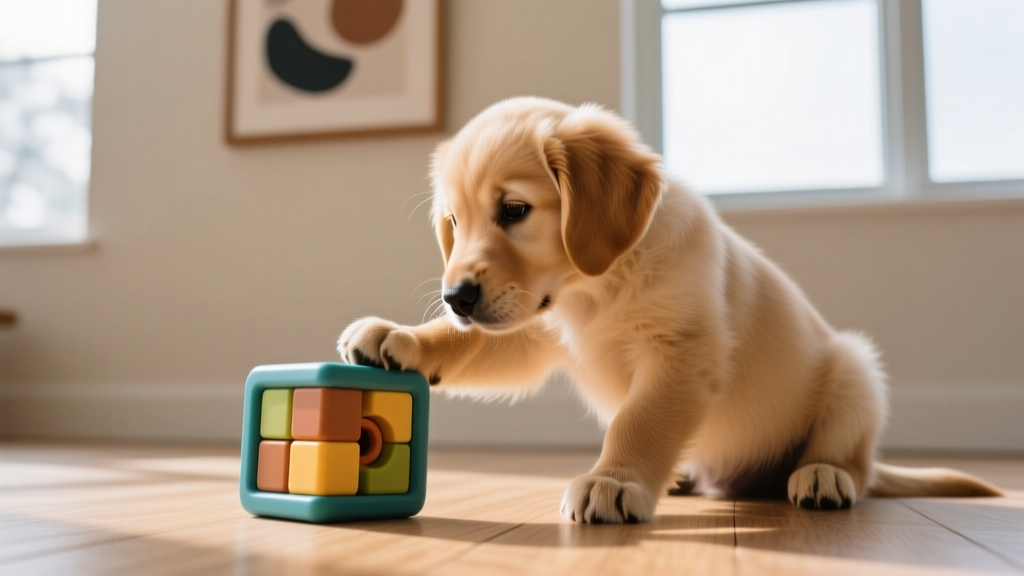
How to Stop Puppy Nipping: A Complete Guide for Puppy Owners
Learn how to stop puppy nipping with age-specific training strategies, teething timelines, and positive reinforcement techniques that actually work.

Understanding Why Puppies Nip and When It Starts
Puppy nipping is completely normal developmental behavior — not aggression. Puppies explore the world with their mouths the same way human babies use their hands. Between weeks 3 and 6, littermates teach each other bite inhibition through yelping and withdrawing from play. When you bring a puppy home, that education falls to you.
The behavior typically peaks between 8 and 16 weeks, coinciding with two factors: the socialization window closing (around 14 weeks according to the AVMA's socialization guidelines) and the early stages of teething discomfort. Understanding the developmental timeline behind nipping is essential because your response strategy must shift as your puppy matures.
Age-Specific Nipping Milestones: What to Expect and When
Each developmental stage brings different nipping patterns and requires different interventions. Here's what experienced trainers and veterinary behaviorists see in practice:
| Age Range | Nipping Behavior | What's Happening Developmentally | Your Response Strategy |
|---|---|---|---|
| Weeks 4-8 | Exploratory mouthing, littermate play-biting | Learning bite inhibition from siblings; deciduous teeth fully erupted | Puppy should ideally remain with litter; if orphaned, redirect to appropriate chew toys immediately |
| Weeks 8-12 | Frequent nipping during play, attention-seeking bites, land-shark phase begins | Adjusting to new home; testing boundaries; peak socialization sensitivity | Consistent redirection, time-outs (30-60 seconds), reward gentle play with treats and praise |
| Weeks 12-16 | Nipping may intensify before improving; frustration biting emerges | Baby teeth loosening; fear periods possible; increased independence | Introduce frozen chew toys; practice "leave it" command; increase structured play sessions |
| Weeks 16-24 | Nipping decreases significantly; occasional teething-related chewing | Adult teeth erupting (3-6 months); teething discomfort peaks around 4-5 months | Provide textured chew options; maintain consistency; redirect any remaining nipping firmly |
| 6-12 months | Nipping should be minimal to absent; mouthing during excitement possible | Adolescent testing; hormonal changes if intact; approaching social maturity | Reinforce established rules; increase physical and mental exercise; consult trainer if nipping persists |
Proven Techniques to Stop Puppy Nipping
The most effective nipping interventions combine management, redirection, and teaching incompatible behaviors. Force-free methods recommended by the ASPCA and certified professional dog trainers consistently outperform punishment-based approaches, which can increase anxiety and worsen the behavior.
The Redirection Method (Most Effective for 8-16 Weeks)
- Keep appropriate chew toys within arm's reach at all times. Kong Puppy toys (the blue/pink rubber formula), Nylabone Puppy chews, and frozen washcloth twists work best for this age.
- When teeth touch skin, immediately stop moving. Freeze for 1-2 seconds. Movement excites puppies and reinforces the nipping as play.
- Say a calm, consistent marker word — "oops" or "too bad" work well. Avoid yelling, which many puppies interpret as playful barking.
- Present the chew toy and praise enthusiastically when the puppy mouths the toy instead of your hand.
- If nipping continues after 2-3 redirections, implement a brief time-out: calmly place the puppy in a playpen or safe area for 30-60 seconds, then resume interaction.
Teaching "Gentle" or "Soft Mouth" (Best for 12+ Weeks)
This technique teaches the puppy that human skin is completely off-limits while allowing gentle mouthing of hands during training:
- Offer a low-value treat (kibble piece) in a closed fist.
- Allow the puppy to nose, lick, and paw at your hand. Do not open your fist.
- The moment the puppy pulls back or stops pushing, open your hand and let them take the treat.
- Repeat 10-15 times per session, 2-3 sessions daily.
- Once consistent, progress to holding a treat between your thumb and fingers. If teeth touch skin, close your hand and wait for the puppy to back off before re-offering.
The Reverse Time-Out (For Attention-Seeking Nipping)
If your puppy nips primarily when you're busy or not engaging with them, the behavior is attention-seeking. The solution is to remove yourself rather than the puppy:
- When nipping starts, stand up calmly and walk behind a baby gate or into another room for 15-20 seconds.
- Return and re-engage only when the puppy is calm (all four paws on the floor, no barking).
- Consistently reward calm, non-nipping behavior with attention, treats, or play.
Teething Timeline and Safe Relief Strategies
Teething is a major driver of nipping and destructive chewing between 3 and 6 months. Understanding the eruption schedule helps you anticipate and manage the behavior:
| Age | What's Happening | Recommended Chew Options | What to Avoid |
|---|---|---|---|
| 3-4 months | Incisors loosen and fall out first | Soft rubber puppy toys, frozen carrot sticks, chilled (not frozen solid) Kong stuffed with puppy-safe peanut butter | Hard nylon bones, ice cubes (can fracture baby teeth), rawhide |
| 4-5 months | Canines and premolars shed; peak discomfort | Benebone Puppy (softer formula), frozen wet washcloth twisted into rope, Bullymake puppy subscription boxes | Antlers, hooves, cooked bones of any kind, hard plastic toys |
| 5-6 months | Molars erupt; adult teeth settling into position | Medium-firm rubber toys, dental chews (VOHC-approved), frozen blueberries as training treats | Tennis balls (abrasive to new enamel), sticks from outside (splinter risk) |
| 6-7 months | All 42 adult teeth should be present | Transition to adult-appropriate chews; introduce dental care routine | Any toy harder than a fingernail (the "thumbnail test") |
If you notice retained baby teeth (adult tooth visible alongside baby tooth) beyond 6 months, consult your veterinarian. Retained deciduous teeth can cause misalignment and periodontal disease and may require extraction during spay/neuter surgery.
Feeding Schedule and How It Affects Nipping Behavior
Hunger and blood sugar fluctuations directly impact puppy behavior. An underfed or irregularly fed puppy will nip more, have less impulse control, and struggle with training sessions. Here's a feeding framework based on the Merck Veterinary Manual's puppy nutrition guidelines:
| Age | Meals Per Day | Portion Guide (per 10 lb of expected adult weight) | Notes |
|---|---|---|---|
| 8-12 weeks | 3-4 meals daily | Approximately ½ to ¾ cup of high-quality puppy kibble per meal | Space meals 4-5 hours apart; last meal 3 hours before bedtime |
| 3-6 months | 3 meals daily | Approximately ¾ to 1 cup per meal | Use puppy-specific formula (22-32% protein, 8-20% fat per AAFCO guidelines) |
| 6-12 months | 2 meals daily | Approximately 1 to 1½ cups per meal | Transition to adult food between 9-12 months (small breeds) or 12-18 months (large breeds) |
Look for an AAFCO statement on your puppy food label that reads "formulated for growth" or "formulated for all life stages." Brands consistently meeting nutritional adequacy standards include Purina Pro Plan Puppy, Royal Canin Puppy, and Hill's Science Diet Puppy — all of which employ veterinary nutritionists and conduct feeding trials.
Training Treats for Nipping Sessions
Use small, soft, high-value treats for redirecting nipping behavior. Ideal options include:
- Zuke's Mini Naturals (under 3 calories each)
- Freeze-dried chicken liver pieces (break into pea-sized bits)
- Small pieces of boiled chicken breast (no seasoning)
- Commercial puppy training treats with < 5 calories per piece
Keep training sessions to 3-5 minutes for puppies under 12 weeks, extending to 10 minutes by 4-5 months. Longer sessions cause fatigue, and tired puppies nip more.
Socialization Window and Nipping Prevention
The critical socialization period (approximately weeks 3 through 14) is when puppies form lasting impressions about the world. Puppies who are well-socialized during this window develop better bite inhibition, lower anxiety, and more appropriate play behavior. Missing this window doesn't mean you can't address nipping later — it just makes the process longer and more challenging.
Here's a practical exposure checklist to complete before 14 weeks:
Socialization Exposure Checklist
People (aim for 50-100 positive encounters):
- ☐ Children of various ages (supervised, calm interactions)
- ☐ People wearing hats, sunglasses, hoodies, uniforms
- ☐ People of different heights, body types, skin tones
- ☐ People using mobility aids (wheelchair, crutches, cane)
- ☐ Delivery workers, mail carriers (seen from a distance)
Surfaces and environments:
- ☐ Grass, gravel, sand, wet surfaces, metal grates
- ☐ Elevators, automatic doors, revolving doors
- ☐ Car rides (short, positive trips ending in fun activities)
- ☐ Various floor types in different buildings
Sounds (pair with treats to create positive associations):
- ☐ Vacuum cleaner, blender, doorbell, thunderstorm recordings
- ☐ Traffic sounds, construction noise, fireworks (low volume)
- ☐ Other dogs barking (at a distance where puppy stays relaxed)
Handling (critical for reducing nipping during grooming/vet visits):
- ☐ Paw handling (all four feet, individually, with treats)
- ☐ Ear inspection and gentle cleaning
- ☐ Mouth opening and tooth inspection
- ☐ Collar grabs (pair with high-value treats to prevent collar sensitivity)
- ☐ Nail trimming practice (touch nail clipper to nail, treat, repeat)
For every new experience, let the puppy approach at their own pace. Never force interaction. If the puppy shows fear (cowering, tail tucking, freezing), increase distance from the stimulus and offer treats. The goal is creating positive associations, not "flooding" the puppy with overwhelming experiences.
Vaccination Schedule and Safe Socialization Timing
A common and dangerous mistake is keeping puppies completely isolated until all vaccinations are complete (around 16-18 weeks). This causes them to miss the socialization window entirely. The AVMA and the American Animal Hospital Association (AAHA) recommend controlled socialization beginning 7 days after the first DHPP vaccine.
| Age | Vaccines | What It Protects Against | Safe Socialization Level |
|---|---|---|---|
| 6-8 weeks | DHPP (Distemper, Hepatitis, Parainfluenza, Parvovirus) — first dose | Core viral diseases; parvovirus is the primary concern in young puppies | Home environment only; carry puppy for outdoor exposure; no dog parks |
| 10-12 weeks | DHPP — second dose; Bordetella (optional, recommended if attending puppy classes) | Boosters immunity; Bordetella protects against kennel cough | Puppy classes with vaccinated peers; playdates with known healthy adult dogs; controlled outdoor walks on leash (avoid high-dog-traffic areas) |
| 14-16 weeks | DHPP — third/final puppy dose; Rabies (required by law in most US states, typically given at 12-16 weeks) | Completes core puppy series; Rabies is legally required | Expand socialization; still avoid dog parks until 1 week after final DHPP (around 17 weeks) |
| 12-16 months | DHPP booster; Rabies booster (1-year or 3-year depending on local law) | Maintains immunity; transitions to adult vaccine schedule | Full access to all environments including dog parks (though supervised, small-group play remains safer) |
Crate Training Progression and Nipping Management
A properly crate-trained puppy has a safe space to decompress, which directly reduces overstimulation-related nipping. Puppies who are overtired nip more — and most puppies under 6 months need 16-20 hours of sleep per day. The crate enforces necessary rest.
Follow this progressive timeline:
- Weeks 8-10: Crate door open during the day; feed meals inside; 30-60 minute maximum confinement when you must leave. Sleep in the same room as the crate at night.
- Weeks 10-12: Close the door for short periods (15-30 minutes) while you're home; practice leaving the room briefly. Maximum 2 hours confinement. Nighttime: expect 1-2 potty breaks.
- Weeks 12-16: Extend to 2-3 hours during the day; practice leaving the house briefly. Nighttime: most puppies can sleep 5-6 hours without a break by 14-16 weeks.
- 4-6 months: Maximum 4 hours during the day. Provide a stuffed Kong or safe chew toy for enrichment. Never use the crate as punishment.
- 6+ months: Gradually transition to longer periods if the puppy is calm. Many dogs can handle 6-8 hours by 8-10 months, but this varies significantly by individual.
The general rule for maximum crate time during the day is the puppy's age in months plus one (a 3-month-old can hold it for approximately 4 hours). However, this applies to bladder capacity, not emotional comfort. Younger puppies should always be crated for less than their physical limit to prevent distress.
Potty Training Timeline and Its Connection to Nipping
Frustration-related nipping often spikes when puppies need to eliminate. A puppy who is pacing, circling, sniffing intensely, or suddenly nipping after a play session likely needs to go outside. Recognizing these signals prevents nipping episodes and accelerates potty training.
Realistic potty training expectations by age:
| Age | Bladder Control | Expected Accidents Per Week | Take-Out Frequency |
|---|---|---|---|
| 8-10 weeks | 30-60 minutes | Multiple daily (normal) | Every 30-60 minutes; immediately after eating, sleeping, playing |
| 10-14 weeks | 1-2 hours | 2-4 per week if consistent | Every 1-2 hours during the day |
| 4-6 months | 3-4 hours | 0-2 per week | Every 2-3 hours; consistent schedule |
| 6-12 months | 4-6+ hours | Rare (occasional regression possible during adolescence) | Every 3-4 hours; morning, midday, evening routine |
Most puppies are reliably house-trained between 4 and 6 months with consistent management. Some breeds (particularly toy breeds and hounds) may take longer. If accidents increase suddenly at any age, rule out a urinary tract infection with your veterinarian before assuming it's a training issue.
Potty Training Troubleshooting
- Puppy eliminates in crate: The crate may be too large (use a divider), the puppy may have been crated too long, or there may be a medical issue. Never punish — clean with enzymatic cleaner (Nature's Miracle or Rocco & Roxford) and adjust your schedule.
- Puppy sneaks away to eliminate: Increase supervision; tether the puppy to you with a leash indoors during training phases.
- Puppy won't eliminate outside: Take the puppy to the same spot each time; wait up to 10 minutes; use a consistent verbal cue ("go potty"); reward immediately with a high-value treat the moment they finish.
First-Year Cost Breakdown: Budgeting for Your Puppy
Understanding the financial commitment helps you plan for proper care, including professional training if nipping persists beyond the expected timeline. Here's a realistic first-year cost range based on 2026 veterinary pricing data:
| Category | Low Estimate | Average Estimate | High Estimate | Notes |
|---|---|---|---|---|
| Veterinary care (vaccines, wellness exams, spay/neuter, preventives) | $500 | $900 | $1,800 | Varies significantly by region; spay/neuter costs range $200-$800 depending on size and clinic |
| Food (quality puppy food, treats, supplements) | $300 | $550 | $900 | Large/giant breeds cost more; raw diets increase costs significantly |
| Supplies (crate, bed, toys, leash, collar, gates, chew items) | $200 | $400 | $700 | Chew toys need frequent replacement during teething months |
| Training (puppy classes, private sessions if needed) | $150 | $350 | $800 | Group puppy classes: $150-$300 for 6-8 weeks; private sessions: $80-$150/hour |
| Pet insurance (optional but recommended) | $360 | $540 | $840 | $30-$70/month; enroll before any conditions develop |
| TOTAL FIRST YEAR | $1,510 | $2,740 | $5,040 | Excludes initial puppy purchase/adoption fee |
Frequently Asked Questions About Puppy Nipping
When should I bring my puppy home?
The ideal age is 8 to 10 weeks. Puppies removed before 8 weeks miss critical bite-inhibition learning from littermates and often show more intense, harder-to-manage nipping. Some breeders of toy breeds keep puppies until 10-12 weeks due to their fragility and slower development. Avoid breeders who release puppies at 6 weeks — this is a red flag for irresponsible practices.
How often should I feed my puppy?
Feed 3-4 meals daily from 8-12 weeks, 3 meals daily from 3-6 months, and transition to 2 meals daily from 6-12 months. Consistent meal timing helps regulate energy levels, reduces hunger-driven nipping, and makes potty training more predictable. Free-feeding (leaving food out all day) is not recommended for puppies, as it makes potty schedules unpredictable and can lead to overeating.
When will my puppy be fully potty trained?
Most puppies achieve reliable house training between 4 and 6 months with consistent management. "Reliable" means fewer than one accident per month. Some breeds (Dachshunds, Basset Hounds, toy breeds) may take 8-12 months. Regression around 6-8 months is common during adolescence — stay consistent and it will pass.
What vaccines does my puppy need and when?
The core puppy vaccine series includes DHPP at 6-8, 10-12, and 14-16 weeks, plus Rabies at 12-16 weeks. Non-core vaccines (Bordetella, Leptospirosis, Lyme, Canine Influenza) depend on your geographic area and lifestyle. Your veterinarian will recommend based on local disease prevalence and your puppy's exposure risk.
How do I stop puppy nipping?
The most effective approach combines: (1) immediate redirection to appropriate chew toys, (2) consistent time-outs when teeth touch skin, (3) teaching a "gentle" cue using treat-based exercises, (4) ensuring adequate sleep (16-20 hours daily for young puppies), and (5) providing teething relief during the 3-6 month window. Avoid physical punishment, muzzle holding, or yelping loudly (which can excite some puppies rather than deter them). If nipping causes injury or persists beyond 6 months, consult a certified professional dog trainer (CPDT-KA) or veterinary behaviorist.
When can my puppy go outside and meet other dogs?
Controlled outdoor exposure can begin immediately — carry your puppy or use a stroller to expose them to sights and sounds. Ground-level walks in low-risk areas can start 7 days after the first DHPP vaccine (around 9-10 weeks). Puppy classes with vaccinated peers are safe after the second DHPP (around 12 weeks). Dog parks should be avoided until 1 week after the final puppy DHPP (around 17 weeks) due to parvovirus risk. Always supervise dog-to-dog interactions and intervene if play becomes too rough or one-sided.
Disclaimer: This guide provides general puppy care information. Always consult your veterinarian for personalized advice regarding your puppy's health, vaccination schedule, and behavioral concerns. If nipping behavior is severe, causes injury, or does not improve with consistent positive reinforcement training, seek guidance from a certified professional dog trainer or veterinary behaviorist.
Aaron Whyte
All our authors care for dogs every day — read more of their work on the authors page.