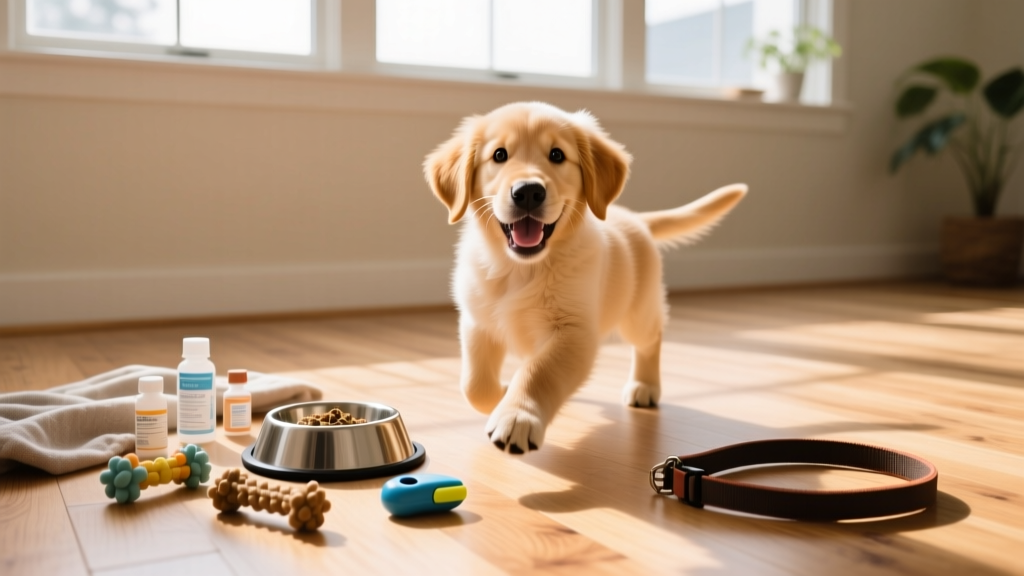
Staffordshire Bull Terrier Dog Puppy: Complete Week-by-Week Care Guide
Raise your Staffordshire Bull Terrier dog puppy with confidence. Age-specific milestones, feeding schedules, potty training timelines, vaccination plans

Bringing home a Staffordshire Bull Terrier dog puppy is an experience unlike any other. These compact, muscular dogs pack enormous personality into a 24-to-38-pound frame, and the work you put in during the first twelve months shapes the loyal, confident companion they become. Staffies are not a breed you can autopilot through puppyhood — their intelligence, physical strength, and deep need for human connection demand an engaged, informed owner from day one.
This guide gives you concrete, week-by-week expectations for your Staffordshire Bull Terrier dog puppy — not generic puppy advice recycled across breeds. Staffies have specific socialization needs, particular health vulnerabilities, and a jaw strength that makes early bite inhibition training non-negotiable. Let's get into the details.
When Should You Bring Your Staffordshire Bull Terrier Puppy Home?
The American Kennel Club recommends that puppies remain with their littermates and dam until at least 8 weeks of age. For Staffordshire Bull Terriers, many responsible breeders prefer to hold puppies until 10 to 12 weeks. Here's why: Staffies are a powerful breed that benefits from every extra week of bite inhibition practice with siblings. Those weeks between 8 and 12 are when littermates teach each other that hard bites end play — a lesson far harder for a human to replicate.
Before pickup day, have your crate (a 30-inch wire crate will last into adulthood), puppy-safe playpen, and veterinary appointment already scheduled. Your first vet visit should happen within 48 hours of bringing your puppy home.
Staffordshire Bull Terrier Puppy Milestones: Week by Week
Staffies develop on a predictable timeline, but their combination of physical power and emotional sensitivity means some milestones carry extra weight for this breed.
Weeks 4–8 (At the Breeder)
- Weight: 2–5 lb / 0.9–2.3 kg
- Key developments: Deciduous teeth erupt, social play with littermates peaks, weaning completes by week 7
- What the breeder handles: First deworming (typically pyrantel pamoate at 2, 4, and 6 weeks), introduction to solid food, early neurological stimulation (ENS) protocols, initial exposure to household sounds
- Your role: If visiting before pickup, handle the puppy daily for short sessions. Observe which puppy you're selecting — a Staffie that approaches confidently with a relaxed body is typically a sounder choice than one that hangs back or one that shows hyperactive, nonstop mouthing
Weeks 8–12 (First Month Home)
- Weight: 5–10 lb / 2.3–4.5 kg
- Key developments: Critical socialization window is wide open, fear periods may emerge around week 8–10, bladder capacity is roughly 1 hour per month of age (so ~2 hours max)
- Behavioral note: Staffie puppies at this age mouth everything. Their developing jaws can already exert significant pressure. Bite inhibition training starts immediately — not next week, not when they're older
- Sleep: Expect 18–20 hours of sleep per 24-hour period. An overtired Staffie puppy becomes a land shark — enforce naps in the crate
Weeks 12–16
- Weight: 10–16 lb / 4.5–7.3 kg
- Key developments: Second fear period may appear around 12–14 weeks, coordination improves dramatically, puppy begins testing boundaries
- Training milestone: Your Staffie can reliably learn sit, down, and name recognition by week 16. Keep sessions under 5 minutes — their attention span is still short
- Physical note: Growth plates are wide open. Avoid forced exercise like long runs or repetitive jumping from heights. Free play on grass is ideal
Weeks 16–24
- Weight: 16–25 lb / 7.3–11.3 kg
- Key developments: Teething begins around 16 weeks, adult teeth push in by 24 weeks, sexual maturity approaches (discuss spay/neuter timing with your vet)
- Behavioral shift: Independence emerges. Your previously clingy Staffie puppy may start ignoring recalls. This is normal — increase treat value and practice in low-distraction environments
- Exercise: Structured walks of 15–20 minutes, twice daily, are appropriate. Let the puppy set the pace and sniff freely
Months 6–12
- Weight: 25–38 lb / 11.3–17.2 kg (females typically 24–34 lb; males 28–38 lb per AKC breed standard)
- Key developments: Adolescent testing peaks between 7–10 months, energy levels surge, social maturity begins around 12 months but isn't complete until 2–3 years
- Training milestone: This is prime time for structured obedience classes. Staffies thrive on the mental stimulation and excel in rally, agility foundations, and nose work
- Important: Dog-to-dog social skills need continued practice. Staffies can develop dog selectiveness or same-sex aggression as they mature — keep positive interactions going with known, stable dogs
Feeding Your Staffordshire Bull Terrier Puppy: Schedule and Portions
Staffies are muscular, active dogs that need a diet supporting lean growth — not rapid weight gain. Overfeeding a Staffie puppy stresses developing joints and increases the risk of conditions like hip dysplasia later in life. Look for a food meeting AAFCO standards for "growth" or "all life stages" with a named animal protein as the first ingredient.
| Age | Meals Per Day | Daily Portion (Dry Kibble) | Estimated Puppy Weight | Notes |
|---|---|---|---|---|
| 8–12 weeks | 3–4 | ¾ – 1 cup total | 5–10 lb / 2.3–4.5 kg | Soak kibble in warm water for first 2 weeks if transitioning |
| 12–16 weeks | 3 | 1 – 1¼ cups total | 10–16 lb / 4.5–7.3 kg | Reduce to 3 meals; monitor body condition score (BCS) |
| 4–6 months | 2–3 | 1¼ – 1¾ cups total | 16–25 lb / 7.3–11.3 kg | Transition to 2 meals by month 6 |
| 6–12 months | 2 | 1½ – 2¼ cups total | 25–38 lb / 11.3–17.2 kg | Switch to adult formula around 10–12 months |
Recommended brands for Staffie puppies (2026): Purina Pro Plan Puppy Sport, Royal Canin Medium Puppy, or Hill's Science Diet Puppy. Budget approximately $40–$65 per month on food during the first year, increasing as the puppy grows.
Vaccination Schedule for Your Staffie Puppy
Your veterinarian will tailor a vaccination plan to your puppy's risk factors and local disease prevalence. The schedule below reflects AVMA-recommended core vaccination guidelines for puppies.
| Age | Vaccine(s) | Type | Notes |
|---|---|---|---|
| 6–8 weeks | DHPP (1st dose) | Core — Distemper, Hepatitis (Adenovirus), Parainfluenza, Parvovirus | Often given by breeder; confirm records |
| 10–12 weeks | DHPP (2nd dose), Bordetella, Leptospirosis | Core + Non-core (based on risk) | Bordetella recommended if attending puppy classes |
| 14–16 weeks | DHPP (3rd dose), Rabies | Core | Rabies required by law in most US states |
| 12 months | DHPP booster, Rabies booster | Core | After this, boosters typically every 3 years |
Cost expectation: Initial puppy vaccine series runs $75–$150 at a general practice vet, or $25–$50 at a low-cost vaccine clinic. The rabies vaccine alone typically costs $15–$30.
Socialization Window: Weeks 3–14
The primary socialization period for puppies closes around 14 weeks. For Staffordshire Bull Terriers, this window is arguably the most important developmental phase you'll ever manage. Staffies that are under-socialized during this period are at higher risk for fear-based reactivity, dog aggression, and anxiety — traits that are far more dangerous in a powerful breed than in a toy dog.
Your socialization checklist (aim for 5–10 new positive experiences per week):
- People: Men with beards, children (supervised, calm interactions), people wearing hats/sunglasses, people using wheelchairs or crutches, delivery workers
- Surfaces: Gravel, metal grates, wet grass, slippery tile, carpet, elevated grooming table
- Sounds: Vacuum cleaner (start at distance), thunderstorm recordings at low volume, doorbells, car horns, fireworks recordings
- Handling: Paw touching, ear inspection, mouth opening, nail clipping practice, gentle restraint (simulate vet exam)
- Other animals: Vaccinated adult dogs with calm temperaments, cats (if household has them), livestock if rural
- Environments: Outdoor café patios, parking lots, school pickup areas, quiet hiking trails, friend's houses
Critical rule: Every new experience must be paired with high-value treats (boiled chicken, cheese, commercial training treats like Zuke's Mini Naturals). If your Staffie puppy shows fear — cowering, tail tuck, refusal to take treats — increase distance from the stimulus and let the puppy observe without pressure. Forcing a frightened puppy into a situation creates a negative association, not confidence.
Potty Training Your Staffie Puppy: Realistic Timeline
Staffordshire Bull Terriers are intelligent and generally eager to please, which works in your favor for house training. However, their small puppy bladders and high excitement levels mean accidents will happen. Here's what realistic progress looks like:
- 8–12 weeks: Accidents every 1–3 days. Take puppy out every 1–2 hours, immediately after meals, after naps, and after play sessions.
- 12–16 weeks: Accidents reduce to 1–2 per week if you maintain a consistent schedule.
- 4–6 months: Most Staffies are reliably signaling (going to the door, whining, sitting by the leash) by this age. Occasional accidents during excitement or schedule disruptions.
- 6–8 months: Considered fully house trained for most puppies. Males may begin lifting legs and marking — interrupt and redirect to outdoor elimination.
Method: Use a consistent verbal cue ("go potty" or "do your business") while the puppy eliminates outdoors, then reward immediately with a treat and enthusiastic praise. Never punish accidents — Staffies are sensitive and punishment creates fear of eliminating in front of you, leading to hiding behind furniture.
Crate training supports potty training because dogs instinctively avoid soiling their sleeping space. Use these crate time limits:
- 8–10 weeks: Maximum 1–2 hours during the day
- 11–14 weeks: Maximum 2–3 hours during the day
- 15–16 weeks: Maximum 3–4 hours during the day
- 4–6 months: Maximum 4–5 hours during the day
- Overnight (any age): One middle-of-night potty break until 14 weeks, then typically sleeping 6–8 hours straight
Teething Timeline and Relief Strategies
Staffie puppies begin losing deciduous teeth around 12–16 weeks, and the process continues through approximately 6 months. During peak teething (14–20 weeks), your puppy will chew relentlessly. This is not misbehavior — it's physiological discomfort driving an irresistible urge.
Safe chew options ranked by teething stage:
- 12–16 weeks (early loosening): Frozen wet washcloths (twist, wet, freeze), KONG Puppy teething rubber toys, soft bully sticks (supervised)
- 16–20 weeks (peak discomfort): Frozen KONG stuffed with plain yogurt or pumpkin, Benebone Puppy chew toys, Whimzees Puppy chews
- 20–24 weeks (adult teeth settling): Transition to adult-weight chew toys, introduce Nylabone Power Chew (Durachew line), raw carrot sticks
Common Staffordshire Bull Terrier Puppy Problems and Solutions
Every breed has puppy-stage challenges. Staffies have a specific profile of behaviors that catch new owners off guard — mostly because they involve a strong, determined dog in a small package.
Problem 1: Excessive Biting and Nipping
Why Staffies do it: They are a terrier breed originally developed for bull-baiting and later rat-catching. Mouth use is hardwired. Combined with puppy teething, a Staffie puppy's nipping can be intense.
Solution: Implement the "bite inhibition protocol." When teeth touch skin, say "ouch" in a calm voice, stand up, and turn away for 10–15 seconds (removing attention). Return and offer a chew toy. Repeat consistently. Every family member must use the same response. Never hold the puppy's mouth shut, flick the nose, or use physical punishment — these damage trust and can escalate biting in a breed with Staffie-level jaw strength.
Timeline: Significant improvement within 3–4 weeks of consistent practice. Full bite inhibition (soft mouth, no skin contact) typically achieved by 5–6 months.
Problem 2: Crate Whining and Separation Distress
Why Staffies do it: This breed bonds intensely with people. Staffies are sometimes called "velcro dogs" because they physically lean on their owners. Isolation is genuinely distressing for them.
Solution: Build positive crate associations gradually. Feed all meals in the crate. Provide a stuffed KONG or lick mat (frozen with peanut butter — xylitol-free only) when crating. Practice short absences (30 seconds, 2 minutes, 5 minutes) while home before attempting to leave the house. Never use the crate as punishment.
Timeline: Most Staffies settle within 2–4 weeks of consistent crate training. If whining escalates to panic (bloody paws, bent crate bars, continuous vocalization for 30+ minutes), consult a certified behaviorist — this may be separation anxiety requiring professional intervention.
Problem 3: Destructive Chewing
Why Staffies do it: Powerful jaws plus boredom equals destroyed furniture legs, shoes, and remote controls. Staffies can chew through items that smaller breeds cannot.
Solution: Management first — puppy-proof every room before giving unsupervised access. Provide 4–5 approved chew toys rotated weekly to maintain novelty. Ensure adequate physical exercise (age-appropriate) and mental stimulation (snuffle mats, puzzle feeders, 5-minute training sessions). When you catch chewing on a forbidden item, calmly redirect to an approved chew and praise enthusiastically.
First-Year Cost Breakdown: Staffordshire Bull Terrier Puppy
Budgeting realistically prevents surrender. Here's what your first year with a Staffie puppy actually costs in 2026:
| Category | Low Estimate | High Estimate | Details |
|---|---|---|---|
| Puppy purchase/adoption | $300 | $2,500 | Rescue: $300–$600; Responsible breeder: $1,500–$2,500 |
| Veterinary (vaccines, spay/neuter, wellness) | $500 | $1,200 | Includes vaccine series, deworming, microchip, spay/neuter |
| Food (12 months) | $480 | $780 | $40–$65/month; premium brands cost more |
| Supplies (crate, bed, leash, bowls, toys) | $200 | $450 | One-time purchases; Staffies destroy beds — budget for replacements |
| Training (puppy class + basic obedience) | $150 | $500 | Group classes: $150–$250; Private sessions: $300–$500 |
| Pet insurance (annual premium) | $420 | $720 | $35–$60/month; enroll before first illness for pre-existing condition coverage |
| Emergency fund reserve | $300 | $1,500 | Set aside for unexpected vet visits — swallowed objects, injuries |
| Total First Year | $2,350 | $7,650 | Varies by breeder vs. rescue, insurance choice, and emergencies |
Breed-specific health note: Staffordshire Bull Terriers are predisposed to hereditary conditions including L-2-hydroxyglutaric aciduria (L2HGA), hereditary cataracts (HC), and persistent hyperplastic primary vitreous (PHPV). Responsible breeders screen for these via DNA tests and ophthalmologist exams. Ask for documentation before purchasing. The Merck Veterinary Manual provides detailed breed-specific health information for owner reference.
Frequently Asked Questions
When can my Staffordshire Bull Terrier puppy go outside and meet other dogs?
Your puppy can go outside in your own yard immediately. For public spaces and interactions with unknown dogs, wait until 7 days after the final DHPP vaccine at 14–16 weeks — typically around 17 weeks of age. Controlled playdates with fully vaccinated, healthy adult dogs in private yards are acceptable before this milestone and beneficial for socialization.
How do I stop my Staffie puppy from biting my children?
Supervise every interaction. Teach children to freeze ("be a tree") when the puppy mouths them, rather than pulling away or squealing, which triggers the puppy's prey drive. Redirect the puppy to a chew toy after every freeze. Children under 10 should not be left alone with any puppy. Enroll in a family-inclusive puppy class where trainers coach both kids and adults on safe interaction.
Should I get pet insurance for my Staffie puppy?
Yes, ideally before your first vet visit beyond the initial wellness exam. Pet insurance does not cover pre-existing conditions, so enrolling while your puppy is healthy maximizes lifetime coverage. Staffies can be prone to skin allergies, cruciate ligament injuries, and the hereditary conditions mentioned above — all of which can generate $2,000–$8,000 in veterinary bills. Companies like Trupanion, Healthy Paws, and Fetch offer comprehensive plans in the $35–$60/month range for puppies.
How much exercise does my Staffie puppy need daily?
Use the "5 minutes per month of age, twice daily" guideline as a starting framework. An 8-week-old puppy gets roughly 5–10 minutes of structured activity per session. A 6-month-old gets 25–30 minutes. These are structured walk/training minutes — free play in a yard doesn't count toward this limit and should be encouraged. Avoid high-impact activities (agility equipment, long-distance running, repetitive fetch on hard surfaces) until growth plates close around 12–14 months.
When will my Staffordshire Bull Terrier puppy be fully potty trained?
Most Staffie puppies achieve reliable house training between 4 and 6 months with consistent scheduling and positive reinforcement. "Fully" trained means the puppy signals to go out, holds it for 4–6 hours during the day, and has fewer than one accident per month. Males may have a regression around 7–9 months when hormonal changes trigger marking behavior — neutering and consistent management resolve this in most cases.
Robin Maitland
All our authors care for dogs every day — read more of their work on the authors page.