Ringworm in Puppies: Complete Care, Prevention & Recovery Guide
Learn to identify, treat, and prevent ringworm in puppies. Includes symptom checklists, vet treatment costs, decontamination steps, and recovery timelines.
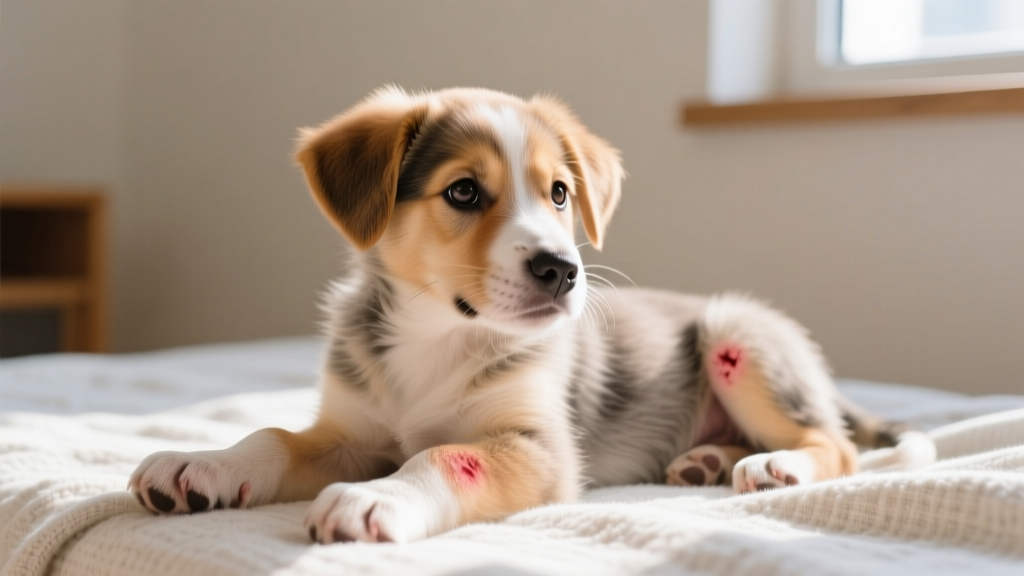
Ringworm in Puppies: What Every Puppy Owner Needs to Know
Ringworm in puppies isn't actually caused by a worm at all. It's a fungal skin infection — technically called dermatophytosis — caused most commonly by Microsporum canis. Puppies under one year old are especially vulnerable because their immune systems are still developing, and their skin barrier is thinner than that of adult dogs. If you've noticed circular, scaly, hairless patches on your puppy's face, ears, paws, or belly, ringworm is a leading suspect.
The good news: ringworm is highly treatable. The challenging news: it's also highly contagious — to other pets and to you. According to the Merck Veterinary Manual, dermatophytosis accounts for a significant percentage of puppy skin presentations in veterinary clinics, and multi-pet households face the highest reinfection risk.
This guide covers how to spot ringworm early, what treatment your veterinarian will recommend, how to decontaminate your home, and how to protect your puppy (and your family) through recovery.
Recognizing Ringworm Symptoms in Puppies
Ringworm doesn't always look like a textbook "ring." Puppy presentations vary based on the fungal species involved, the infection's stage, and whether secondary bacterial infections have set in. Here's what to look for:
| Severity Level | Symptoms | Action Required |
|---|---|---|
| Mild (Early Stage) | 1–3 small circular patches (0.5–2 cm) of hair loss; slight scaling or flaking; typically on face, ear tips, or front paws; puppy seems otherwise comfortable | Schedule vet appointment within 48 hours |
| Moderate | 5+ lesions spreading across body; redness and inflammation at lesion edges; crusting or scabbing; mild itching; broken hairs around patches | Vet visit within 24 hours; begin home quarantine of puppy |
| Severe / Widespread | Large coalescing bald areas; pustules or oozing (secondary bacterial infection); significant redness and swelling; puppy scratching/biting at lesions; lethargy or reduced appetite | Same-day vet appointment; secondary infection may need antibiotics |
| Asymptomatic Carrier | No visible lesions, but fungal spores present on coat; common in multi-pet households or shelter-sourced puppies | Fungal culture screening if other pets/humans are infected |
Key distinction: Ringworm lesions are typically not intensely itchy in dogs (unlike sarcoptic mange or flea allergy dermatitis). If your puppy is frantically scratching, your vet will want to rule out mites, allergies, and bacterial pyoderma as well.
How Your Veterinarian Diagnoses Ringworm
Visual identification alone isn't reliable. Several skin conditions mimic ringworm — including demodectic mange, bacterial folliculitis, and even certain allergic reactions. Your vet will use one or more of these diagnostic methods:
1. Wood's Lamp Examination ($15–$30)
A UV light that causes some Microsporum canis colonies to fluoresce apple-green. However, only about 50% of M. canis strains fluoresce, and other species don't glow at all. A negative Wood's lamp result does not rule out ringworm.
2. Fungal Culture (DTM — Dermatophyte Test Medium) ($35–$65)
The gold standard. Hairs from the lesion edge are plucked and placed on a culture medium. Results take 10–21 days. This confirms the specific fungal species, which guides treatment selection.
3. Microscopic Examination (Trichogram) ($20–$40)
Hairs are examined under magnification for fungal spores (arthrospores) coating the hair shaft. Can provide a preliminary diagnosis within minutes, but sensitivity is moderate.
4. PCR Testing ($60–$120)
Newer DNA-based testing can identify dermatophyte species within 1–3 days. More expensive but significantly faster than culture. Availability varies by veterinary lab.
Treatment Options for Ringworm in Puppies
Effective ringworm treatment in puppies almost always requires a combination approach: topical therapy to kill surface spores, systemic (oral) medication for deeper infection, and environmental decontamination to prevent reinfection. Treatment typically lasts 6–8 weeks minimum, and you should continue treatment until two consecutive negative fungal cultures are obtained, taken 2 weeks apart.
Topical Treatments
Topical therapy reduces environmental spore shedding — this is critical because a single infected hair shaft can carry thousands of spores into your carpet and furniture.
- Lime sulfur dips (2% solution): Applied twice weekly. Safe for puppies 4+ weeks old. Effective but has a strong rotten-egg odor and can stain jewelry and fabrics. Cost: $15–$25 per bottle (multiple treatments needed).
- Miconazole/chlorhexidine shampoo: Used twice weekly as a bath. Miconazole is antifungal; chlorhexidine addresses secondary bacterial overgrowth. Look for veterinary-formulated products with 2% miconazole + 2–4% chlorhexidine. Cost: $18–$35 per bottle.
- Enilconazole spray or rinse (0.2%): Applied to lesions and surrounding coat. Highly effective against dermatophytes. Must be prescribed by your veterinarian. Cost: $25–$45.
Systemic (Oral) Antifungal Medications
Your veterinarian will determine the appropriate medication and dosage based on your puppy's weight, age, and infection severity. Common options include:
| Medication | Typical Dose | Frequency | Notes |
|---|---|---|---|
| Itraconazole | 5–10 mg/kg | Once daily (pulse therapy: 1 week on, 1 week off) | Often preferred for puppies; fewer side effects than griseofulvin; give with food (fatty meal improves absorption) |
| Terbinafine | 20–30 mg/kg | Once daily | Effective alternative; monitor for GI upset |
| Griseofulvin | 25–50 mg/kg | Divided twice daily | Older medication; more side effects (GI, bone marrow suppression); not used in pregnant dogs; declining use |
Important: Never use human OTC antifungal creams (like clotrimazole or terbinafine cream) as sole treatment for puppies. Puppies groom themselves and will ingest topical products. Systemic treatment requires veterinary prescription and monitoring. Always consult your veterinarian before starting any antifungal medication.
Environmental Decontamination — The Step Most Owners Skip
Fungal spores can survive in your home environment for 12–18 months. If you treat your puppy but ignore your home, reinfection is nearly guaranteed. Here's the protocol:
- Confine the puppy to one easily sanitized room (tile or hardwood floors preferred — no carpet).
- Vacuum daily — discard the vacuum bag or empty the canister outside immediately. Spores collect in vacuum filters.
- Wash all bedding, blankets, and soft toys in hot water (minimum 130°F / 54°C) with bleach-safe detergent twice weekly.
- Disinfect hard surfaces with a diluted bleach solution (1 part bleach to 10 parts water). Contact time: 10 minutes before rinsing. Alternatively, use accelerated hydrogen peroxide (Rescue™ disinfectant, widely used in veterinary clinics).
- Replace HVAC filters monthly during treatment. Spores circulate through forced-air systems.
- Steam clean carpets and upholstery — steam above 130°F kills dermatophyte spores.
- Discard any grooming tools, brushes, or fabric toys that can't be effectively sanitized.
Ringworm Recovery Timeline: What to Expect Week by Week
Understanding the recovery arc helps you stay the course. Many owners stop treatment too early when lesions "look better." Fungal cultures are the only reliable indicator of cure.
Weeks 1–2: Lesions may appear to worsen slightly as treatment begins (inflammatory response). Hair loss may expand before stabilizing. Crusting begins to reduce with topical therapy. Spore shedding starts to decrease.
Weeks 3–4: New hair growth visible at lesion edges (fine, soft fuzz). Redness and scaling diminish significantly. First follow-up vet visit — Wood's lamp recheck and possibly a repeat trichogram.
Weeks 5–6: Most lesions show substantial hair regrowth. Puppy's coat appearance improving noticeably. First fungal culture taken at vet visit. Continue all treatment — do not stop yet.
Weeks 7–8: If first culture is negative, a second culture is taken 2 weeks later. If both are negative, your vet may approve discontinuing treatment. If positive, treatment continues for another 2–4 weeks.
Weeks 8–12: Most uncomplicated cases resolve in this window. Severe or multi-pet household cases may extend to 12–16 weeks.
Preventing Ringworm in Puppies and Multi-Pet Homes
Prevention is especially important if you have other pets, young children, or immunocompromised household members. Ringworm spores are everywhere in the environment — the goal is reducing exposure load and supporting your puppy's immune defenses.
Practical Prevention Steps
- Quarantine new puppies for 10–14 days before introducing them to other pets. Watch for skin changes and schedule a vet wellness exam within the first week home.
- Screen shelter-sourced puppies — request that the rescue organization perform a Wood's lamp exam and fungal culture before adoption. Shelters are high-risk environments for dermatophytes.
- Maintain good nutrition — puppies on AAFCO-complete diets with adequate protein (minimum 22% for growth) and omega fatty acids develop stronger skin barriers.
- Avoid over-bathing — bathing more than once weekly with harsh shampoos strips protective skin oils. Use veterinary-formulated puppy shampoos with a pH balanced for canine skin (6.2–7.4).
- Keep puppy's environment dry — dermatophytes thrive in warm, humid conditions. Use dehumidifiers in damp areas and ensure bedding is fully dry after washing.
- Treat all pets simultaneously if one is diagnosed. Asymptomatic carriers can reinfect treated animals. Your vet may recommend fungal culture screening for all household pets.
Protecting Yourself and Your Family
Human ringworm presents as ring-shaped, raised, itchy patches — often on arms, hands, or torso where you've held the puppy. According to the CDC, ringworm spreads through direct contact with infected animals or contaminated surfaces.
- Wear disposable gloves when applying topical treatments.
- Wash hands and forearms with soap and water after every interaction.
- Keep the puppy off beds and upholstered furniture during treatment.
- Monitor children closely — discourage face-licking and hand-to-mouth contact after petting.
- If anyone develops suspicious skin lesions, consult a physician. Human treatment typically involves OTC topical antifungals (clotrimazole 1%) applied twice daily for 2–4 weeks.
Cost Breakdown: Treating Ringworm in Puppies
Ringworm treatment costs add up because of the extended treatment duration and environmental decontamination requirements. Here's a realistic budget for a typical case:
| Item | Cost Range | Frequency |
|---|---|---|
| Initial vet exam + Wood's lamp + trichogram | $80–$150 | One time |
| Fungal culture (DTM) | $35–$65 | 2–3 times during treatment |
| Oral antifungal (itraconazole, 6–8 weeks) | $60–$180 | Depends on puppy weight |
| Lime sulfur dips or medicated shampoo | $30–$70 | 2–3 bottles over treatment |
| Environmental disinfectants (bleach, Rescue™) | $15–$40 | Ongoing |
| Follow-up vet visits (2–3 rechecks) | $100–$225 | Every 2–3 weeks |
| Steam cleaning (carpets/upholstery) | $100–$250 | 1–2 times |
| TOTAL ESTIMATED COST | $420–$980 | Full treatment course |
Multi-pet households where several animals need simultaneous treatment and screening can see costs reach $1,500–$2,500. Pet insurance with illness coverage may reimburse a portion — check your policy's dermatological condition terms.
Ringworm vs. Other Puppy Skin Conditions: Quick Comparison
Because several puppy skin diseases look similar, here's a rapid-reference comparison to discuss with your vet:
| Condition | Appearance | Itch Level | Contagious? | Diagnosis |
|---|---|---|---|---|
| Ringworm | Circular hairless patches, scaling, crusting | Mild to none | Yes (zoonotic) | Fungal culture, Wood's lamp |
| Demodectic Mange | Patchy hair loss, often around eyes/muzzle; "moth-eaten" look | Mild (unless secondary infection) | No (normal mite overgrowth) | Deep skin scrape |
| Sarcoptic Mange | Intense redness, crusting on ear margins, elbows, belly | Extreme | Yes (zoonotic) | Skin scrape, response to treatment |
| Bacterial Pyoderma | Pustules, papules, "bullseye" lesions, spreading redness | Moderate | Rarely | Cytology, bacterial culture |
| Allergic Dermatitis | Generalized redness, paw licking, ear infections, hot spots | Moderate to severe | No | Exclusion diet trial, allergy testing |
Frequently Asked Questions About Ringworm in Puppies
Can my puppy get ringworm from other dogs at the park?
Yes. Ringworm spreads through direct contact with infected animals or contaminated environments (grooming tables, shared bedding, kennel surfaces). Dog parks, boarding facilities, grooming salons, and puppy classes are all potential exposure points. However, a healthy puppy with a mature immune system (typically over 12 months) is less likely to develop clinical infection from brief exposure. Until your puppy completes their vaccination series and has a fully developed immune system, avoid high-traffic shared spaces.
How long is a puppy with ringworm contagious?
A puppy remains contagious from the moment infection takes hold until treatment has eliminated viable spores from the coat — typically 3–4 weeks into consistent treatment. However, environmental spores shed during that period persist for months. This is why environmental decontamination is non-negotiable. Your vet will use fungal cultures (not visual appearance) to determine when your puppy is no longer shedding infectious spores.
Is ringworm in puppies ever fatal?
No. Ringworm is not life-threatening in otherwise healthy puppies. However, severe untreated cases can lead to extensive secondary bacterial infections, significant discomfort, and in rare cases, systemic fungal involvement in severely immunocompromised animals. The primary risks are zoonotic transmission to humans and prolonged environmental contamination.
Can I use apple cider vinegar or tea tree oil to treat my puppy's ringworm?
No. Tea tree oil (melaleuca) is toxic to dogs — even diluted, it can cause skin irritation, liver damage, and neurological symptoms if ingested through grooming. Apple cider vinegar has no proven antifungal efficacy against dermatophytes at concentrations safe for puppy skin. Stick to veterinary-prescribed treatments. If you suspect your puppy has ingested tea tree oil, contact the ASPCA Animal Poison Control Center at (888) 426-4435 (24/7, consultation fee applies).
When can my puppy return to group classes or daycare after ringworm?
Only after your veterinarian confirms two consecutive negative fungal cultures, taken at least 2 weeks apart. This typically means 8–12 weeks after treatment begins. Most boarding facilities and daycare centers will require a veterinary clearance letter before accepting a puppy back. Inform the facility immediately upon diagnosis so they can inspect and disinfect any areas your puppy accessed.
My puppy was just diagnosed — should I treat my other pets preventively?
According to the AVMA, all in-contact animals should be screened via fungal culture, even if they show no lesions. Your vet may recommend preventive topical therapy (such as weekly lime sulfur dips or miconazole shampoo baths) for all household pets while the infected puppy is undergoing treatment. Treating all animals simultaneously is the most effective way to break the reinfection cycle.
Will ringworm leave permanent scars on my puppy?
In most cases, no. Once the fungal infection clears, hair regrows fully within 4–8 weeks. However, if secondary bacterial infections caused deep follicular damage (deep pyoderma), some scarring or permanent hair loss in affected patches is possible. Early treatment significantly reduces this risk.
Aaron Whyte
All our authors care for dogs every day — read more of their work on the authors page.


