Redbone Coonhound Puppies: The Complete Growth & Care Guide
Everything you need to raise Redbone Coonhound puppies — milestones, feeding, potty training, vaccines, socialization, and first-year costs explained.

If you've just committed to a Redbone Coonhound puppy — or you're seriously considering one — you're signing up for one of the most vocal, scent-driven, and tenacious companions in the hound world. Redbones are spectacular hunting dogs with a rich Southern heritage, but raising one from an 8-week-old bundle of floppy ears into a well-mannered adult requires breed-specific preparation that generic puppy guides simply don't cover.
This guide walks you through every developmental stage with concrete timelines, exact feeding portions, and real-world troubleshooting drawn from veterinary science and hands-on hound experience. We'll cover what makes Redbone Coonhound puppies unique at each phase so you can anticipate challenges rather than react to them.
Veterinary Disclaimer: This guide provides educational information based on breed standards and veterinary references. Always consult your veterinarian for personalized advice regarding your puppy's health, vaccination schedule, and nutrition.
When Should You Bring Your Redbone Coonhound Puppy Home?
The American Kennel Club recommends bringing puppies home between 8 and 10 weeks of age. For Redbone Coonhound puppies specifically, 8 weeks is the sweet spot — early enough to bond during the critical socialization window (which closes around 14 weeks) but late enough that the breeder has completed early neurological stimulation and initial deworming.
Resist the temptation to take a puppy earlier than 8 weeks. Redbones are a pack-oriented breed, and those final weeks with littermates teach bite inhibition and canine social cues that no human can replicate. Puppies removed before 7 weeks show significantly higher rates of fear-based reactivity and resource guarding later in life.
- Puppy-proof one room (baby gates, cord covers, toxic plant removal)
- Set up a 36-inch wire crate with a divider panel — Redbones grow to 45–70 lb (20–32 kg)
- Stock enzymatic cleaner (Nature's Miracle or Rocco & Roxie brand)
- Prepare 4–6 frozen KONG Classic toys (large size, not puppy size — they outgrow it in weeks)
- Have your vet appointment scheduled within 48 hours of arrival
Redbone Coonhound Puppy Milestones: Week by Week
Understanding developmental stages prevents the "is this normal?" panic that hits most first-time hound owners. Here's what to expect at each phase, with breed-specific notes for Redbones.
Weeks 4–8 (Breeder's Care)
Your puppy is still with the breeder during this window, but knowing what's happening helps you evaluate their practices. At 4 weeks, Redbone puppies begin weaning onto gruel (puppy kibble soaked in warm water or goat's milk replacer). By 6 weeks, they should be eating solid kibble and showing early scent-tracking behavior — sniffing and following trails even in a whelping box. Responsible breeders introduce varied surfaces (grass, gravel, tarps) and novel sounds during this period. The AKC's Puppy Development Guide outlines these early enrichment benchmarks.
Weeks 8–12 (Home Adjustment)
Expect 2–3 nights of crate whining (Redbones are vocal — this breed will bay, not just whimper). Sleep needs are enormous: 18–20 hours per day. Your puppy's bladder capacity is roughly 1 hour per month of age, so a 9-week-old puppy needs potty breaks every 2 hours maximum, including overnight. Start name recognition with high-value treats (boiled chicken, cut into pea-sized pieces). Keep training sessions to 3–5 minutes; Redbone puppies lose focus fast when a scent distracts them.
Weeks 12–16 (Confidence Building)
Energy surges and the "fear period" (approximately 8–11 weeks) begins resolving. Your Redbone puppy should show increasing boldness with new environments. This is the prime window for leash introduction — start indoors with a lightweight 4-foot leash and a flat buckle collar. Expect pulling: hounds are hardwired to follow their nose, so practice "let's go" direction changes in low-distraction areas before attempting outdoor walks.
Weeks 16–24 (Adolescent Shift)
Teething peaks. Permanent teeth erupt, and your Redbone will chew everything within reach if you don't provide appropriate outlets. Energy levels climb sharply. This is when recall training becomes critical and frustrating — a 5-month-old Redbone who has scented something will ignore you completely. Use a 15–30 foot long line for outdoor training; never trust off-leash reliability in an unfenced area with this breed at any age.
6–12 Months (Teenage Hound)
Sexual maturity arrives (spay/neuter timing should be discussed with your vet — many hound specialists recommend waiting until 12–18 months for large-breed joint development). Redbones hit 75–80% of adult size by 8 months. Energy is at its lifetime peak. Mental stimulation (scent work games, puzzle feeders) becomes as important as physical exercise to prevent destructive behavior.
Feeding Schedule: Exact Portions for Redbone Coonhound Puppies
Redbone Coonhounds are a medium-to-large breed, reaching 45–70 lb (20–32 kg) at maturity according to AKC breed standards. They need a large-breed puppy formula to support controlled bone growth and reduce hip dysplasia risk. Look for an AAFCO statement confirming "growth" or "all life stages" with calcium levels between 1.0–1.5% on a dry matter basis.
| Age | Estimated Weight | Meals/Day | Daily Amount (Large-Breed Puppy Kibble) | Notes |
|---|---|---|---|---|
| 8–12 weeks | 10–18 lb (4.5–8 kg) | 3–4 | 1.5–2.5 cups | Soak kibble in warm water if transitioning from breeder's gruel |
| 3–4 months | 18–28 lb (8–13 kg) | 3 | 2.5–3.5 cups | Reduce to 3 meals; stop soaking kibble |
| 4–6 months | 28–42 lb (13–19 kg) | 2–3 | 3–4.5 cups | Transition to 2 meals at 6 months |
| 6–9 months | 42–55 lb (19–25 kg) | 2 | 3.5–4.5 cups | Monitor body condition score (ribs palpable, waist visible) |
| 9–12 months | 50–65 lb (23–29 kg) | 2 | 3.5–5 cups | Can begin transitioning to adult large-breed formula at 12 months |
Important: These are starting points. Individual metabolism varies widely. Use a body condition score (BCS) system — your puppy should have a visible waist from above and ribs you can feel but not see. Adjust portions up or down by 10–15% based on BCS, not the bag's recommendation alone. Redbones prone to bloat should never be exercised vigorously within 1 hour before or after meals.
Potty Training Timeline: Realistic Expectations for a Hound Puppy
Here's the truth most guides won't tell you: Redbone Coonhound puppies are not the easiest breed to housebreak. Hounds are independent thinkers who prioritize scent over pleasing their handler. Expect 4–6 months of consistent effort before reliable house training, and occasional accidents through 9–12 months. That's normal, not a failure.
Potty Training Schedule by Age
| Age | Max Bladder Hold Time | Outing Frequency | Overnight Breaks Needed |
|---|---|---|---|
| 8–10 weeks | 1.5–2 hours | Every 1–1.5 hours while awake | 1–2 (set alarm for 2 AM and 5 AM) |
| 10–14 weeks | 2–3 hours | Every 2 hours while awake | 1 (set alarm for 3–4 AM) |
| 14–20 weeks | 3–4 hours | Every 2.5–3 hours | 0–1 (most can hold 5–6 hours overnight) |
| 5–6 months | 4–5 hours | Every 3–4 hours | 0 (typically sleeps 7–8 hours through) |
| 7–12 months | 6–8 hours | Every 4–6 hours | 0 |
Redbone-specific troubleshooting: If your puppy sniffs obsessively in one yard spot and won't potty, they're tracking a scent rather than focusing on elimination. Move to a different area. Use a consistent verbal cue ("go potty") paired with the behavior, and reward immediately — within 2 seconds — with a high-value treat. Hounds respond to food motivation far better than praise alone.
Socialization Window: The Critical Weeks 3–14 Period
The American Veterinary Medical Association identifies weeks 3–14 as the primary socialization period for puppies. For Redbone Coonhounds — a breed that can develop wariness of strangers and high prey drive if undersocialized — this window is non-negotiable. After your puppy's second set of vaccines (around 12 weeks), controlled exposure to the world becomes urgent.
Redbone Coonhound Socialization Checklist
- Surfaces: Grass, gravel, metal grates, wet pavement, sand, mulch, carpet, tile
- People: Children (supervised), elderly individuals, people wearing hats/sunglasses/hoodies, delivery workers, people of diverse appearances
- Animals: Fully vaccinated adult dogs (playdates, not dog parks), cats (if household has them), livestock (Redbones were bred to work around farm animals)
- Sounds: Thunderstorms (play recordings at low volume with treats), vacuum cleaners, doorbells, car horns, fireworks recordings, clapping
- Scent environments: Wooded trails, parking lots, farm areas, suburban sidewalks — let your Redbone puppy sniff and process without rushing
- Handling: Ear inspection (critical for floppy-eared breeds prone to infection), paw handling, mouth opening, nail touching, belly rubbing
- Novel objects: Umbrellas opening, plastic bags rustling, bicycles passing, skateboards, strollers
When can your puppy go outside and meet other dogs? After the first DHPP vaccine at 6–8 weeks, controlled outdoor exposure in low-risk environments (your yard, a friend's vaccinated dog's yard) is safe. Dog parks, pet stores, and group classes should wait until 7 days after the final puppy vaccine at 14–16 weeks. The AVMA's puppy socialization guidelines support early, controlled exposure as essential for behavioral health.
Vaccination Schedule for Redbone Coonhound Puppies
Your veterinarian will customize this schedule based on local disease prevalence and your puppy's risk factors. The following reflects the standard core vaccine protocol recommended by the AAHA (American Animal Hospital Association) canine vaccination guidelines.
| Age | Vaccine | What It Protects Against | Follow-Up |
|---|---|---|---|
| 6–8 weeks | DHPP (1st dose) | Distemper, Hepatitis (Adenovirus), Parainfluenza, Parvovirus | Booster in 2–4 weeks |
| 10–12 weeks | DHPP (2nd dose) + Bordetella (optional) | Same as above + Kennel Cough | Booster DHPP in 2–4 weeks; Bordetella annually |
| 14–16 weeks | DHPP (3rd/final puppy dose) + Rabies | Core diseases + Rabies (legally required) | DHPP booster at 1 year; Rabies per local law (1 or 3 year) |
| 12–16 weeks | Leptospirosis (if recommended) | Leptospira bacteria (waterborne, zoonotic) | Booster in 2–4 weeks, then annually |
Breed note: Redbone Coonhounds who will hunt or spend time in wooded/wetland areas should receive the Leptospirosis vaccine — this breed's working lifestyle puts them at higher exposure risk. Discuss Lyme disease vaccination with your vet if you live in a tick-endemic region. Heartworm prevention (monthly oral or topical) should begin by 8 weeks of age and continue year-round.
Teething Timeline and Relief Strategies (3–6 Months)
Redbone puppies begin losing deciduous (baby) teeth around 12–16 weeks, with all 42 permanent teeth typically erupted by 6–7 months. During this window, expect increased chewing, drooling, mild gum bleeding, and temporary "puppy breath" odor. The chewing drive is intense in hounds, whose powerful jaws are built for gripping game.
Safe Chew Recommendations by Stage
| Age | Recommended Chews | Avoid |
|---|---|---|
| 3–4 months | Frozen wet washcloth (knotted), KONG Puppy (rubber, filled with peanut butter and frozen), Benebone Puppy | Raw bones, antlers, hard nylon — too dense for baby teeth |
| 4–5 months | KONG Classic (medium/large), Nylabone Dura Chew (supervised), frozen carrot sticks, Bully Max puppy chews | Cooked bones (splinter risk), rawhide from unverified sources |
| 5–7 months | West Paw Zogoflex Hurley, yak cheese chews (supervised), KONG Extreme | Any chew small enough to swallow whole |
Redbone-specific tip: This breed's powerful jaw pressure means they destroy "indestructible" toys that last months with other breeds. Budget $15–25/month on chew toys during teething. Rotate toys every 2–3 days to maintain novelty. If your puppy chews furniture or shoes, redirect to an appropriate chew within 3 seconds and reward the switch — punishment after the fact doesn't work because dogs can't connect delayed consequences to past actions.
Crate Training Progression: Time Limits and Methods
Crating is essential for Redbone Coonhound puppies — not just for housebreaking, but for safety. This breed's scent drive and curiosity mean an unsupervised puppy will find and ingest dangerous items (toxic foods, foreign objects, electrical cords). A crate is your puppy's den, not a punishment space.
Maximum Crate Time by Age
| Age | Daytime Maximum | Overnight Maximum | Total Daily Limit |
|---|---|---|---|
| 8–10 weeks | 1–1.5 hours | 3–4 hours (with potty break) | Not applicable — mostly sleeping freely |
| 10–14 weeks | 2 hours | 4–5 hours | 6–8 hours crated total |
| 14–20 weeks | 3 hours | 6–7 hours | 8–10 hours crated total |
| 5–6 months | 4 hours | 7–8 hours | 10–12 hours crated total |
| 7–12 months | 5–6 hours | 8 hours | Begin transitioning to free-roaming when reliable |
Crate training method for hounds: Redbones are vocal and will protest crating loudly at first. Feed meals inside the crate with the door open for the first week. Add a worn t-shirt with your scent. Cover the crate with a breathable blanket to reduce visual stimulation. For nighttime whining, take the puppy out to potty if it's been more than 2 hours, then return to the crate immediately without play. If whining continues after pottying, wait it out — responding to non-potty whining teaches the puppy that noise equals freedom.
Common Redbone Coonhound Puppy Problems and Solutions
Puppy Biting and Nipping
Redbone puppies explore the world with their mouths, and their hound heritage means stronger jaw pressure than many breeds. How do you stop puppy biting? Use the "yelp and redirect" method: when teeth touch skin, say "ouch" in a sharp tone, stand up, and withdraw attention for 10–15 seconds. Then offer an appropriate chew toy. Never use physical punishment — it increases fear-based biting. Consistency from all household members is essential; mixed signals ("it's cute when the puppy nips my hand but not the kids' hands") confuse the dog and prolong the behavior. Most Redbones outgrow mouthing by 5–6 months if redirected consistently.
Excessive Whining and Barking
Redbones are among the most vocal breeds — they bay, howl, whine, and "talk." This is genetic, not a training failure. However, you can manage demand-vocalization by not rewarding it. If your puppy bays for attention, wait for 3 seconds of silence before engaging. Provide adequate physical and mental exercise: a tired Redbone is a quiet Redbone. Aim for 30–45 minutes of activity for puppies under 6 months (following the 5-minutes-per-month-of-age rule for structured exercise), scaling up to 60–90 minutes daily by 12 months.
Destructive Chewing
Hounds chew when under-stimulated. Provide puzzle feeders (KONG Wobbler, Outward Hound Nina Ottosson puzzles), frozen stuffed KONGs, and supervised chew time. Puppy-proof your home to a height of 3 feet — Redbones are tall puppies and can reach coffee tables, countertops, and low shelves earlier than you'd expect.
Leash Pulling
Scent hounds pull toward smells with single-minded focus. Start leash training indoors with zero distractions. Use a front-clip harness (Rabbitgoo or Kurgo Tru-Fit, size medium for most Redbone puppies at 4+ months) to redirect pulling force. Practice "watch me" eye contact with treats before attempting outdoor walks. Accept that walks with a young Redbone will be slow and sniff-heavy — this is mental stimulation, not a failure of training.
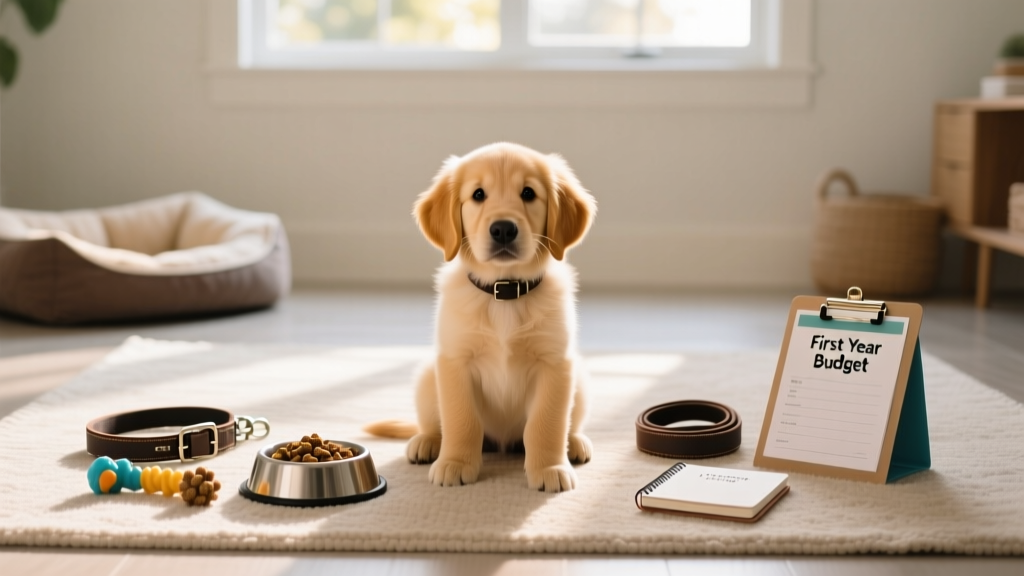
First-Year Cost Breakdown: What Redbone Coonhound Puppies Actually Cost
Budget realistically before bringing your puppy home. These estimates reflect 2026 US averages and vary by region.
| Category | Low Estimate | Mid-Range | High Estimate | Notes |
|---|---|---|---|---|
| Puppy purchase/adoption | $200 (rescue) | $800 (responsible breeder) | $1,500 (show-line breeder) | Avoid puppies under $400 from unknown sources (puppy mill red flag) |
| Veterinary care (vaccines, wellness, spay/neuter) | $600 | $900 | $1,400 | Includes 3 wellness visits, vaccines, heartworm test, fecal exams, spay/neuter |
| Food (large-breed puppy formula) | $360 | $500 | $720 | $30–60/month depending on brand quality |
| Supplies (crate, bed, bowls, leash, collar, toys) | $200 | $350 | $500 | Crate, harness, 4-ft leash, long line, chew toys, grooming tools |
| Preventive medications (heartworm, flea/tick) | $200 | $350 | $500 | Monthly preventives; NexGard, Simparica Trio, or Interceptor Plus |
| Training (group classes or private) | $150 | $300 | $600 | 6-week group class: $150–200; private sessions: $75–120/hour |
| Pet insurance (optional) | $360 | $540 | $720 | $30–60/month; recommended for breeds prone to hip dysplasia |
| Total First Year | $2,070 | $3,740 | $5,940 | Excludes emergency vet visits ($500–3,000+ per incident) |
Set aside an emergency fund of at least $1,000 or enroll in pet insurance before your puppy comes home. Redbones are generally healthy, but puppies of any breed can ingest foreign objects, develop infections, or suffer injuries that require urgent veterinary care.
Frequently Asked Questions About Redbone Coonhound Puppies
How often should I feed my Redbone Coonhound puppy?
Feed 3–4 small meals daily from 8–12 weeks, drop to 3 meals from 3–4 months, and transition to 2 meals daily by 6 months. Free-feeding (leaving food out all day) is not recommended for Redbones — they tend to overeat, which stresses developing joints and increases hip dysplasia risk.
When will my Redbone Coonhound puppy be fully potty trained?
Most Redbone Coonhound puppies achieve reliable house training between 5 and 7 months with consistent scheduling. Some take up to 9 months. Males may take slightly longer than females. "Reliable" means fewer than one accident per month — not perfection. If your puppy is still having daily accidents past 6 months, consult your vet to rule out medical causes before assuming a training issue.
What vaccines does my Redbone Coonhound puppy need and when?
Core vaccines include DHPP (Distemper, Hepatitis, Parainfluenza, Parvovirus) given in a series at 6–8, 10–12, and 14–16 weeks, plus Rabies at 14–16 weeks. Non-core vaccines like Bordetella, Leptospirosis, and Lyme depend on your puppy's lifestyle and local disease risk. Your veterinarian will tailor the schedule to your area and your dog's exposure level.
How do I stop my Redbone Coonhound puppy from biting and nipping?
Redirect every mouth-to-skin contact to an appropriate chew toy. Use the "ouch" vocal interrupter and withdraw attention for 10–15 seconds when nipping occurs. Provide ample chew outlets (frozen KONGs, appropriate chew toys). Ensure your puppy gets sufficient sleep — overtired puppies bite more. Never use physical corrections, which damage trust and can escalate to fear-based aggression. Consistent positive reinforcement redirection typically resolves mouthing by 5–6 months.
When can my Redbone Coonhound puppy go outside and meet other dogs?
Limited outdoor exposure in controlled, low-risk environments (your yard, vaccinated friend's homes) can begin after the first DHPP vaccine at 6–8 weeks. Public areas, dog parks, and group puppy classes should wait until 7 days after the final DHPP booster at 14–16 weeks. Socialization with known, vaccinated, temperament-tested adult dogs can begin earlier in private settings. Avoid unknown dog encounters until the vaccine series is complete — parvovirus is lethal and persists in soil for months.
Are Redbone Coonhound puppies good with children?
Yes, when properly socialized. Redbones are generally gentle and tolerant, making them solid family dogs. However, their size (even as puppies, they're sturdy) and boisterous energy can knock over toddlers. Always supervise interactions, teach children to respect the puppy's sleep and meal times, and never leave any puppy alone with young children. Early positive exposure to children during the socialization window is key.
Raising a Redbone Coonhound puppy is a commitment to patience, consistency, and understanding a breed that thinks with its nose first and its obedience second. The payoff — a loyal, athletic, and deeply affectionate companion — makes every chewed shoe and midnight potty break worthwhile.
Beth Carrasco
All our authors care for dogs every day — read more of their work on the authors page.