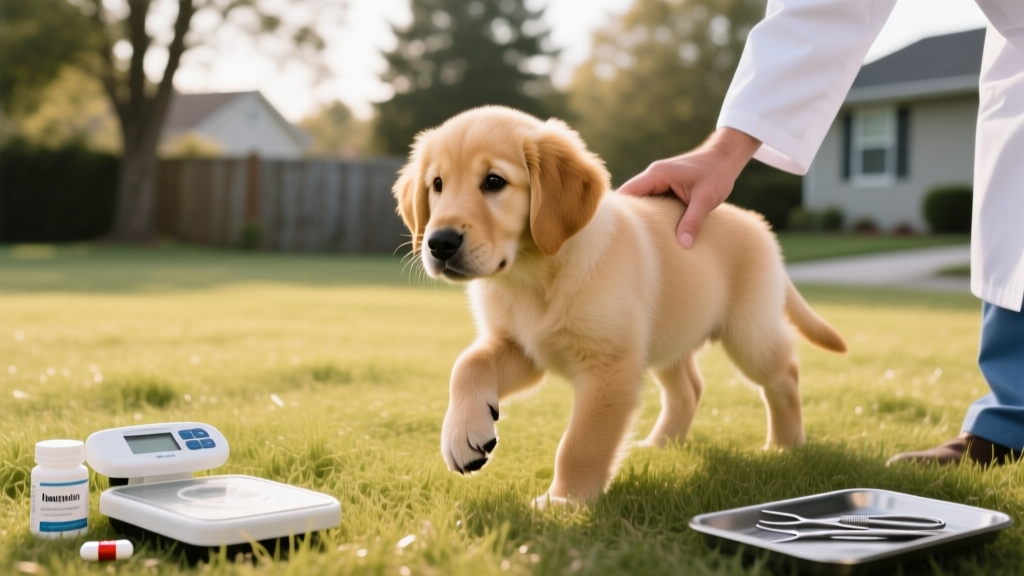
Puppy Socialization Window: 3-14 Weeks Guide
Puppies are most receptive to new experiences between 3-14 weeks. Learn how to safely expose them to people, animals, and environments.

The Critical Socialization Period
Between 3 and 14 weeks of age, a puppy's brain is uniquely wired to accept new experiences as normal. After this window closes, unfamiliar stimuli are more likely to trigger fear responses. This isn't opinion — it's well-documented developmental biology that shapes the rest of your dog's emotional life.
What to Expose Your Puppy To
The goal is positive or neutral experiences with as many novel stimuli as possible:
- People: Men, women, children, people wearing hats, people with mobility aids, people of different ethnicities
- Surfaces: Grass, concrete, tile, gravel, metal grates, unstable surfaces like wobble boards
- Sounds: Vacuum cleaners, thunderstorms (recorded), traffic, doorbells, fireworks at low volume
- Other animals: Vaccinated, calm adult dogs; cats if applicable; livestock for rural dogs
- Handling: Paw touching, ear examination, mouth opening, gentle restraint
Safety During the Vulnerability Gap
Here's the challenge: the socialization window closes at 14 weeks, but puppies aren't fully protected from parvovirus and distemper until 2 weeks after their final vaccination at 16 weeks. This creates a 4-6 week vulnerability gap. The solution is controlled exposure: carry your puppy in public places, visit friends' clean homes, and attend puppy classes that verify vaccination status of all participants.
Quality Over Quantity
One overwhelming experience can cause lasting fear. Introduce new stimuli gradually, pair them with treats and praise, and watch your puppy's body language. A wagging tail with a relaxed body means engagement. A tucked tail, cowering, or freezing means you've pushed too far — back up to a lower intensity and proceed more slowly.
Emma Hartley
All our authors care for dogs every day — read more of their work on the authors page.