How to Set Up a Puppy Pen
Learn how to set up and use a puppy pen for every developmental stage, from 4 weeks to 12 months.

Bringing a new puppy home is exciting, but without the right containment strategy, those first weeks can feel like managing a tiny tornado. A puppy pen (also called an exercise pen or x-pen) is one of the most versatile tools you can own — it's not a cage, it's a safe zone where your puppy can play, rest, and learn boundaries while you cook, work, or simply breathe. But a pen only works if you set it up correctly for your puppy's specific age, breed size, and developmental stage.
This guide walks you through exactly how to use a puppy pen from the day you bring your puppy home through adolescence, with breed-specific adjustments for toy, small, medium, large, and giant breeds. Whether you're raising a 5-pound Chihuahua or a 150-pound Great Dane, the milestones, feeding schedules, and training progressions below will keep you on track.
• Toy breeds (under 12 lb): 24-inch height pen, 8-panel configuration
• Small breeds (12-25 lb): 30-inch height pen, 8-panel configuration
• Medium breeds (25-60 lb): 36-inch height pen, 8-panel configuration
• Large breeds (60-100 lb): 42-inch height pen, 8-panel configuration
• Giant breeds (100+ lb): 48-inch height pen, 8-panel or custom configuration
Source: AKC Puppy First Days Guide
When to Bring Your Puppy Home and Setting Up the Pen Before Arrival
The ideal age to bring a puppy home is 8 to 10 weeks. Puppies separated from their mother and littermates before 8 weeks often develop behavioral issues including excessive biting, separation anxiety, and poor bite inhibition. Reputable breeders following AKC Breeder of Merit standards will not release puppies earlier than 8 weeks, and many working and sporting breed specialists hold puppies until 10-12 weeks for additional socialization.
Before your puppy arrives, set up the pen in a low-traffic but socially connected area of your home — the living room or kitchen works well. Avoid isolating the pen in a basement or garage, as puppies need to observe household activity to develop confidence.
Your pre-arrival pen setup should include:
- A wire or plastic crate (sized to your puppy's expected adult dimensions with a divider) placed inside one end of the pen
- A washable bed or folded towels in the crate
- A water bowl secured to the pen panels (tip-proof) or a heavy ceramic bowl
- An enzymatic cleaner nearby (Nature's Miracle or Rocco & Roxie, approximately $12-$18 per bottle)
- 3-4 chew toys of varying textures (rubber, rope, nylon)
- A potty area at the opposite end of the pen from the crate — use real grass patches (Fresh Patch, ~$30/subscription) or washable pee pad holders for apartment dwellers
Developmental Milestones: What to Expect Week by Week
Understanding your puppy's developmental stages helps you adjust the pen setup, training expectations, and socialization activities appropriately. Here's what's happening at each phase:
Weeks 4-8 (Still with Breeder)
Your puppy is learning bite inhibition from littermates, beginning to eat solid food, and receiving initial deworming. If you're fostering or have a litter at home, the pen should be low-walled (24 inches) with soft bedding and no gaps wider than 2 inches where tiny paws could get stuck.
Weeks 8-12 (Home Adjustment Period)
This is the fear imprint period — negative experiences during this window can create lasting phobias. Keep the pen in a calm area. Expect crying at night for the first 3-5 nights; this is normal. Your puppy's bladder capacity is approximately 1 hour per month of age plus 1 (so a 2-month-old can hold it roughly 3 hours, but aim for potty breaks every 1-2 hours during the day).
Weeks 12-16 (Growing Confidence)
Your puppy is bolder, more coordinated, and testing boundaries. They may start climbing or pushing against pen panels. Upgrade to taller panels if needed. This is prime training time — your puppy can learn "sit," "down," and their name reliably. Teething discomfort begins around week 14.
Weeks 16-24 (Adolescence Begins)
Energy surges, attention spans remain short, and previously learned commands may seem "forgotten" (they're not — your puppy is distracted by hormonal changes). Increase pen enrichment: food puzzles, frozen Kongs, and snuffle mats keep adolescent brains engaged. If your puppy hasn't been spayed or neutered, discuss timing with your veterinarian — current AVMA guidelines recommend considering breed-specific timing.
Months 6-12 (Full Adolescence)
Large and giant breeds may not reach full adolescence until 18-24 months. During this phase, the pen transitions from primary containment to a "chill zone" for decompression after exercise. Many puppies can begin earning supervised freedom in puppy-proofed rooms for 30-60 minute stretches.
Feeding Schedule by Age and Breed Size
Proper nutrition fuels growth, and feeding frequency changes as your puppy matures. Use the table below as a starting point, then adjust based on your puppy's body condition score (BCS) — you should be able to feel ribs without pressing hard but not see them prominently.
| Age | Meals Per Day | Toy/Small (5-20 lb adult) | Medium (20-60 lb adult) | Large/Giant (60-150 lb adult) |
|---|---|---|---|---|
| 8-12 weeks | 4 meals | ¼ - ½ cup per meal | ½ - 1 cup per meal | 1 - 2 cups per meal |
| 12-16 weeks | 3 meals | ⅓ - ⅔ cup per meal | ¾ - 1¼ cups per meal | 1½ - 3 cups per meal |
| 4-6 months | 3 meals | ½ - ¾ cup per meal | 1 - 2 cups per meal | 2 - 4 cups per meal |
| 6-12 months | 2 meals | ¾ - 1 cup per meal | 1½ - 2½ cups per meal | 3 - 5 cups per meal |
Critical feeding tips for pen use: Always feed meals inside the crate (within the pen) to build positive crate associations. Remove uneaten food after 15-20 minutes. For large and giant breeds, use a slow-feeder bowl or puzzle feeder to reduce bloat risk — never allow rapid gulping. Large breed puppy food should meet AAFCO standards for growth and contain controlled calcium/phosphorus ratios (1.1:1 to 1.4:1) to support proper bone development.
Potty Training Timeline and Pen Strategy
The puppy pen is your most powerful potty training tool when used correctly. The principle is simple: dogs naturally avoid soiling their sleeping area, so the crate (inside the pen) stays clean while the pen floor becomes the designated potty zone during early training.
• 8-12 weeks: Accidents daily. Success means getting to the potty spot 50-60% of the time.
• 12-16 weeks: Accidents 2-3 times per week. Puppy begins signaling (circling, sniffing, whining).
• 4-6 months: Occasional accidents (1-2 per week), usually after schedule disruptions.
• 6-9 months: Mostly reliable with supervision. May regress during adolescence.
• 9-12 months: Fully reliable for most breeds. Toy breeds may take up to 14 months due to smaller bladders.
Pen-based potty training protocol:
- Keep the crate door open inside the pen. The puppy sleeps in the crate, exits into the pen to eliminate.
- Place a grass patch or pee pad holder at the far end of the pen from the crate.
- When you're home and actively supervising, take the puppy out of the pen on a leash to the outdoor potty spot every 1-2 hours (8-12 weeks) or every 2-3 hours (12-16 weeks).
- Reward with a high-value treat (small piece of boiled chicken or freeze-dried liver) immediately after outdoor elimination — within 1-2 seconds.
- When you cannot supervise (sleeping, showering, cooking), the puppy stays in the pen with the indoor potty option available.
Troubleshooting common issues: If your puppy is sleeping in their potty area, the pen may be too small — they need enough room to separate sleeping and elimination zones. If they're soiling the crate, the crate may be too large (use the divider to reduce space to just enough room to stand, turn around, and lie down). Never punish accidents — this teaches puppies to hide when they need to eliminate, making training harder.
Socialization Window: The Critical Weeks 3-14 Period
The primary socialization window closes between 12 and 14 weeks of age, according to the American Veterinary Society of Animal Behavior. This means you have a narrow timeframe to expose your puppy to the sights, sounds, surfaces, and experiences they'll encounter throughout life. Missing this window doesn't mean your puppy is doomed to fearfulness, but it does mean you'll need more intensive counter-conditioning work later.
How the pen supports socialization: Use the pen as a "safe base" during socialization sessions. Set it up in new environments (a friend's backyard, a quiet park corner, a pet-friendly store parking lot) and let your puppy observe the world from the security of their pen before venturing out. This prevents overwhelm while building confidence.
Socialization Exposure Checklist (Weeks 8-14)
Aim to check off at least 3-5 new items per week:
- Surfaces: Grass, gravel, sand, wet pavement, metal grates, carpet, tile, hardwood
- People: Children (supervised, calm), elderly individuals, people wearing hats/sunglasses, people with umbrellas, delivery workers, people of different ethnicities and heights
- Sounds: Vacuum cleaner, thunderstorm recordings (start at low volume), traffic, doorbell, clapping, music, construction noise
- Animals: Fully vaccinated adult dogs (known health status), cats (if applicable), livestock from a distance
- Objects: Bicycles, strollers, wheelchairs, shopping carts, plastic bags blowing in wind, flags
- Handling: Paw touching, ear examination, mouth opening, nail clipping practice, gentle restraint, towel wrapping
- Environments: Car rides (short trips), pet-friendly stores, outdoor seating areas, friend's homes, grooming table
Vaccination Schedule and Outdoor Safety
One of the most common questions new puppy owners ask is: "When can my puppy go outside and meet other dogs?" The answer depends on their vaccination progress. Your puppy is not fully protected until approximately 16-18 weeks of age, after their final puppy vaccine series.
| Age | Vaccines | Outdoor Access | Estimated Cost |
|---|---|---|---|
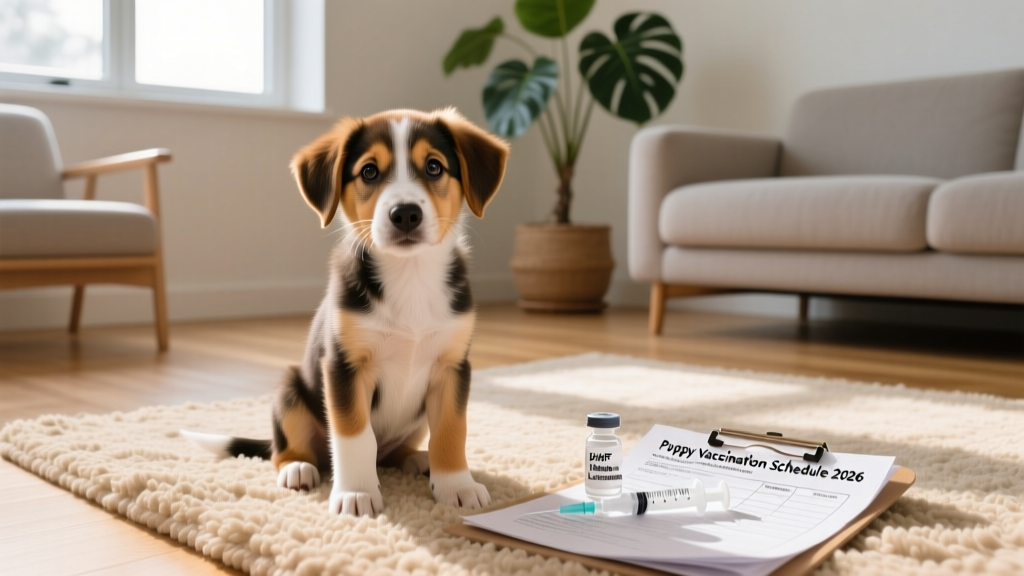
| 6-8 weeks | DHPP (Distemper, Hepatitis, Parainfluenza, Parvovirus) — 1st dose | Private yard only (no public areas, no unknown dogs) | $25-$45 per dose |
| 10-12 weeks | DHPP — 2nd dose; Bordetella (optional, recommended for boarding/daycare); Leptospirosis (risk-area dependent) | Low-traffic outdoor areas, carry puppy in public spaces, avoid dog parks | $40-$75 total visit |
| 14-16 weeks | DHPP — 3rd dose; Rabies (required by law); Leptospirosis booster if started | 1-2 weeks after this visit, full outdoor access begins | $50-$90 total visit |
| 12-16 months | DHPP booster; Rabies booster (1-year or 3-year depending on local law); Bordetella booster if applicable | Full access maintained with current vaccinations | $60-$120 total visit |
Important: The AVSAB position statement recommends that puppies begin socialization classes before completing their vaccine series, as long as all participating puppies have had at least one DHPP dose and the environment is sanitized between sessions. The risk of behavioral problems from inadequate socialization is statistically greater than the risk of disease exposure in controlled settings. Always consult your veterinarian about your specific area's disease risk — parvovirus prevalence varies significantly by region.
Teething, Chewing, and Pen Enrichment (3-6 Months)
Puppy teething follows a predictable pattern. Deciduous (baby) teeth begin erupting at 3-4 weeks, and all 28 baby teeth are typically in by 6-8 weeks. The real chaos begins around 12-16 weeks when adult teeth start pushing baby teeth out. By 6-7 months, all 42 adult teeth should be in place.
During peak teething (14-24 weeks), your puppy needs constant access to appropriate chew outlets. The pen is the perfect place to provide a "chew station" that keeps them safe when unsupervised.
Safe chew recommendations by age:
- 8-12 weeks: Soft rubber toys (Kong Classic puppy size, ~$8-$12), frozen wet washcloths (twist, wet, freeze), Nylabone puppy-specific chews
- 12-16 weeks: Bully sticks (supervised only, 6-inch for small breeds, 12-inch for large, ~$3-$8 each), Benebone puppy line, frozen carrot sticks
- 16-24 weeks: Kong Classic stuffed with peanut butter and frozen, yak cheese chews (size-appropriate), West Paw Zogoflex toys
- 6+ months: Adult-rated chew toys, antlers (split, not whole — reduced fracture risk), durable rubber toys rated for adult dogs
Crate Training Progression and Time Limits
The crate inside the puppy pen serves as your puppy's bedroom. Crate training should be gradual, positive, and never used as punishment. Here's the progression most certified trainers recommend:
Week 1 (8-9 weeks old): Crate door open at all times. Feed all meals inside. Toss treats in for your puppy to retrieve. Let them nap inside voluntarily. At night, place the crate inside the pen with the pen door closed. Expect 1-2 nighttime potty breaks — set an alarm for 3-4 hours after bedtime.
Weeks 2-4 (9-12 weeks): Begin closing the crate door during meals, then opening immediately after. Progress to closing the door for 5-10 minute sessions while you sit nearby. Maximum crated time during the day: 2 hours (with potty breaks in between).
Weeks 5-8 (12-16 weeks): Close the crate door for 15-30 minute sessions while you're in another room. Maximum daytime crating: 3 hours. Nighttime: 4-5 hours between potty breaks.
Months 4-6: Maximum daytime crating: 4 hours. Most puppies can sleep 6-8 hours overnight without a potty break by 5 months. If your puppy is still needing overnight breaks at 6 months, discuss with your vet to rule out urinary issues.
General rule: Maximum crate time (hours) = puppy's age in months + 1, up to a maximum of 6 hours during the day. Adult dogs should not be crated more than 8 hours total in a 24-hour period.
Common Puppy Problems and Solutions
Puppy biting and nipping: This is normal mouthing behavior, not aggression. When teeth touch skin, immediately stop moving, say "ouch" in a calm voice, and redirect to a chew toy. If biting continues, calmly step out of the pen for 10-15 seconds (a brief time-out). Consistency from every household member is essential — mixed signals extend the biting phase. Most puppies show significant improvement by 16-20 weeks with consistent redirection.
Whining and crying in the pen: First, rule out physical needs (potty, hunger, pain). If your puppy was recently put in the pen and has been fed, watered, and exercised, whining is likely protest behavior. Wait for 5-10 seconds of silence before releasing them — releasing during crying teaches that crying opens the pen. Covering the crate with a breathable blanket can reduce visual stimulation and help puppies settle.
Destructive chewing: If your puppy is destroying pen bedding or toys, they need more physical exercise and mental enrichment before pen time. A tired puppy is a calm puppy. Aim for 5 minutes of structured exercise per month of age, twice daily (so a 4-month-old gets 20-minute sessions). Add a frozen Kong or lick mat to pen time for mental engagement.
Pen escape attempts: Climbing or pushing panels usually means the pen is too short or your puppy needs more exercise. For climbers, add a mesh pen cover (available from Midwest or Precision Pet, ~$25-$40). Ensure panel connections are secured with the included clips or carabiners.
First-Year Cost Breakdown
Budgeting for a puppy's first year helps prevent financial surprises. These ranges reflect 2026 pricing based on national averages — costs are higher in major metropolitan areas and lower in rural regions.
| Category | Toy/Small Breed | Medium Breed | Large/Giant Breed |
|---|---|---|---|
| Puppy purchase/adoption | $500-$3,500 | $500-$3,000 | $800-$4,000 |
| Veterinary (vaccines, spay/neuter, exams) | $600-$1,200 | $700-$1,500 | $900-$2,000 |
| Food (12 months) | $250-$500 | $400-$800 | $600-$1,400 |
| Supplies (pen, crate, bowls, leash, collar, bed) | $200-$450 | $250-$550 | $300-$700 |
| Training (group classes or private) | $150-$500 | $150-$500 | $150-$600 |
| Preventive medications (flea/tick, heartworm) | $150-$350 | $200-$450 | $250-$550 |
| Total Estimated First Year | $1,850-$6,500 | $2,200-$6,800 | $3,000-$9,250 |
Pet insurance is worth considering, especially for large breeds prone to hip dysplasia and other hereditary conditions. Average premiums in 2026 range from $35-$65/month for accident-and-illness plans. Companies like Trupanion, Healthy Paws, and Fetch offer puppy enrollment discounts. Always review exclusions for pre-existing conditions and hereditary condition waiting periods.
Frequently Asked Questions
How often should I feed my puppy at 10 weeks old?
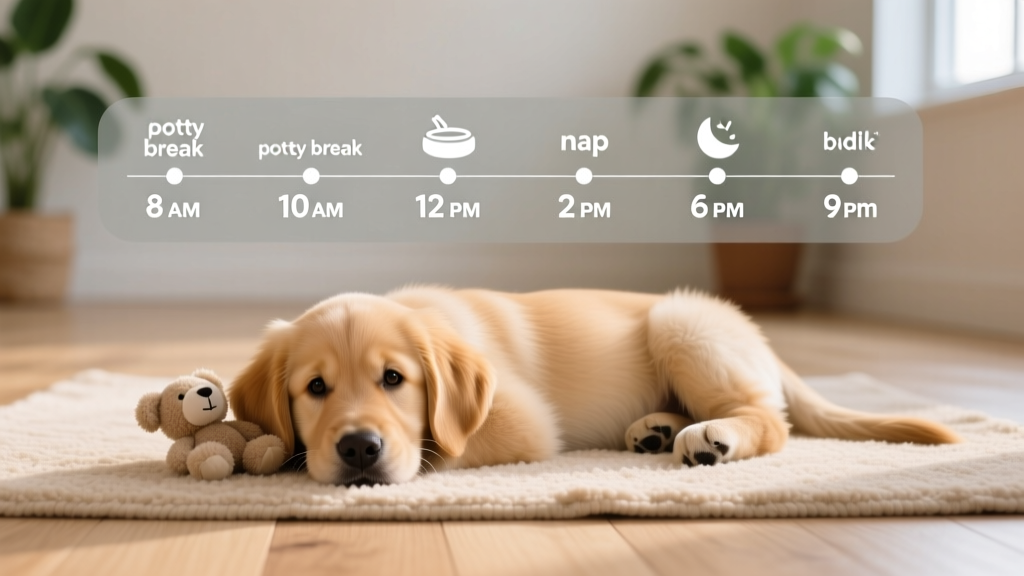
At 10 weeks, feed 4 meals per day, spaced approximately 4-5 hours apart during waking hours. For example: 7 AM, 12 PM, 5 PM, and 9 PM. Remove food after 15-20 minutes to establish a routine. Consistent feeding times lead to more predictable potty schedules.
When will my puppy be fully potty trained?
Most puppies achieve reliable house training between 6 and 9 months. Toy and small breeds may take 10-14 months due to smaller bladder capacity and higher metabolism. Consistency with schedule, supervision, and positive reinforcement are the three factors that determine speed — not intelligence or breed.
What vaccines does my puppy need and when?
Core vaccines include DHPP (given at 6-8, 10-12, and 14-16 weeks) and Rabies (given at 14-16 weeks, required by law). Non-core vaccines your vet may recommend based on risk include Bordetella (kennel cough), Leptospirosis, Lyme disease, and Canine Influenza. Your veterinarian will determine the appropriate protocol based on your geographic location and lifestyle.
How do I stop puppy biting and nipping?
Use the redirect method: when teeth touch skin, calmly say "ouch," withdraw attention for 5-10 seconds, then offer an appropriate chew toy. Praise enthusiastically when they chew the toy. Never hit, yell at, or hold a puppy's mouth shut — these methods increase fear and can worsen biting. If biting is intense and persistent, consult a certified professional dog trainer (CPDT-KA or IAABC certified).
When can my puppy go outside and meet other dogs?
Your puppy can explore your private yard immediately. For public spaces and interactions with other dogs, wait until 1-2 weeks after their final DHPP vaccine at 14-16 weeks (so approximately 16-18 weeks of age). However, controlled socialization with known, fully-vaccinated adult dogs in clean, private environments can begin earlier — this is actually recommended during the critical socialization window. Avoid dog parks, pet store floors, and high-traffic dog areas until the vaccine series is complete.
Should I leave the puppy pen set up permanently?
Most owners keep the pen set up through the first 6-9 months. As your puppy earns reliability, you can begin collapsing the pen for supervised free time and only deploying it during high-distraction moments (guests visiting, repair workers in the home, meal preparation). Many adult dogs continue to enjoy their pen as a designated rest area well into adulthood.
Tom Renshaw
All our authors care for dogs every day — read more of their work on the authors page.