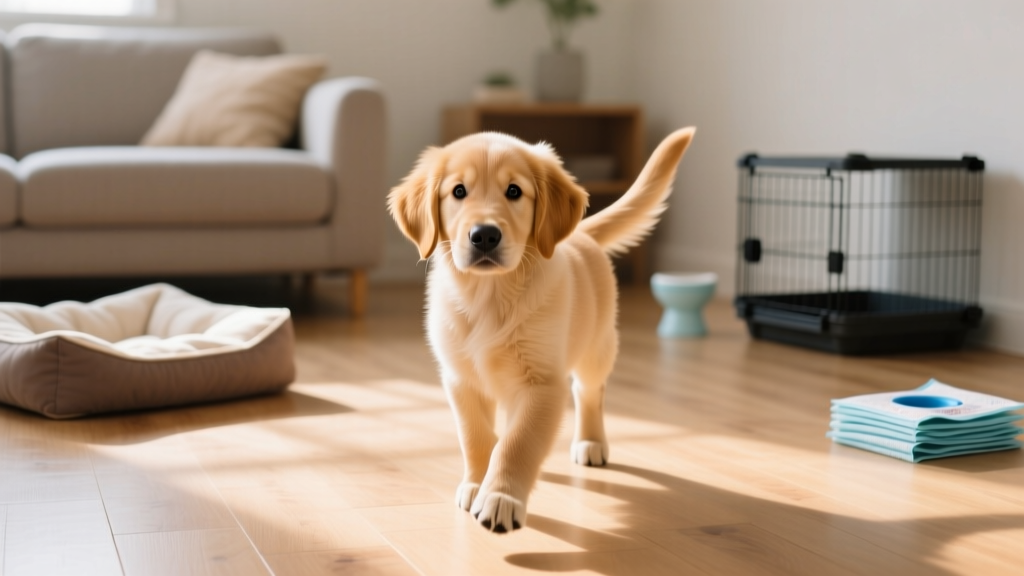
Puppy Licking Air: Why Puppies Do It & Complete First-Year Care Guide
Is your puppy licking air constantly? Learn the causes behind this behavior plus a complete week-by-week puppy care guide covering feeding, vaccines

You bring your new puppy home, and within a few days you notice something odd: they're licking the air. Not a toy, not a bowl — just empty space. If you've been searching for answers about puppy licking air, you're not alone. This behavior shows up across breeds and ages, and while it's often harmless, it can sometimes signal something that needs attention. This guide breaks down exactly why puppies lick the air, when to worry, and pairs that knowledge with a complete first-year care roadmap so you can raise a healthy, well-adjusted dog.
Why Is My Puppy Licking the Air? Understanding the Behavior
Air licking in puppies falls into several categories, ranging from normal developmental behavior to medical red flags. Here's how to tell the difference:
Common Causes of Puppy Licking Air
| Cause | Description | Action Needed |
|---|---|---|
| Exploratory behavior | Puppies under 16 weeks use their mouths and tongues to investigate the world. Air licking during sniffing sessions is normal sensory exploration. | Monitor; no intervention needed |
| Nausea or GI upset | Licking the air repeatedly, often paired with lip smacking, drooling, or swallowing. Common after eating too fast or dietary indiscretion. | Withhold food 4-6 hours; consult vet if vomiting occurs or persists beyond 12 hours |
| Dental or oral pain | Loose baby teeth, fractured teeth, or something stuck in the palate/gums. Puppy may paw at mouth or refuse hard kibble. | Vet exam within 24-48 hours |
| Compulsive behavior | Repetitive, rhythmic air licking that's hard to interrupt. May develop from stress, boredom, or anxiety. More common in certain lines (Dobermans, Bull Terriers, German Shepherds). | Consult a veterinary behaviorist; rule out medical causes first |
| Partial seizure activity | "Fly-biting" or snapping/licking at nothing can indicate focal seizures. Puppy may appear unaware during episodes. | Record a video and consult your veterinarian urgently |
| Anticipation or excitement | Some puppies lick the air before meals, during greetings, or when they see a leash. This is a calming signal or displacement behavior. | Normal; redirect with a sit command if excessive |
According to the Merck Veterinary Manual, compulsive licking behaviors that persist beyond puppyhood warrant professional evaluation, as they can be linked to underlying anxiety disorders or neurological conditions.
Age-Specific Puppy Milestones: Weeks 4 Through 12 Months
Understanding what's developmentally appropriate at each stage helps you distinguish normal puppy licking air from concerning behavior. Here's a week-by-week breakdown:
Weeks 4–8: Neonatal to Early Socialization
- Physical: Baby teeth fully erupted (28 deciduous teeth); eyes and ears fully functional; weaning from mother's milk to gruel/kibble soaked in warm water
- Behavioral: Littermate play intensifies; bite inhibition learning begins from siblings; startle responses to loud sounds develop
- Air licking context: Exploratory licking is extremely common. Puppies are mapping their environment through taste and smell simultaneously
- Your role: Puppies should remain with the breeder/litter during this period. The AKC recommends puppies stay with their mother until at least 8 weeks
Weeks 8–12: The Critical Socialization Window Opens
- Physical: Rapid growth phase; puppy may gain 5-10% of body weight per week depending on breed size
- Behavioral: Fear periods begin (typically weeks 8-11); puppy is highly impressionable; positive experiences now shape lifelong temperament
- Air licking context: Stress-related licking may appear during fear periods. If your puppy licks the air when meeting new people or in new environments, it may be a self-soothing displacement behavior
- Your role: Begin gentle exposure to surfaces, sounds, people of different ages, and handling exercises
Weeks 12–16: Building Confidence
- Physical: Adult coat begins replacing puppy fuzz; bladder control improves significantly; second round of vaccines completed
- Behavioral: Attention span lengthens to 5-10 minutes; puppy can learn basic cues (sit, down, come) reliably with treats
- Air licking context: If licking persists during training sessions, it may signal frustration or confusion — simplify the task and increase reward value
- Your role: Enroll in a positive-reinforcement puppy class; practice handling exercises daily (ear checks, paw handling, mouth inspection)
Weeks 16–24: The Teething Storm
- Physical: Baby teeth fall out and 42 adult teeth erupt; chewing intensity peaks; gums may bleed slightly (normal)
- Behavioral: Independence testing begins; recall may temporarily regress; mouthing/nipping may increase due to oral discomfort
- Air licking context: Teething puppies frequently lick the air, chew on air, or make odd jaw movements as teeth shift. Provide frozen chew relief (details in teething section below)
- Your role: Puppy-proof your home thoroughly; rotate chew toys daily to maintain novelty
Months 6–12: Adolescence
- Physical: Growth rate slows; most breeds reach 75-85% of adult height by 6 months; spay/neuter typically performed between 6-9 months (breed-dependent — discuss timing with your vet)
- Behavioral: Second fear period may occur around 6-14 months; previously confident puppies may suddenly react to familiar stimuli; sexual maturity brings roaming interest in intact dogs
- Air licking context: If compulsive air licking develops or worsens during adolescence, a veterinary behaviorist consultation is recommended. Hormonal changes can amplify anxiety-related behaviors
- Your role: Maintain consistent training; increase physical and mental exercise; revisit socialization exposures
Feeding Schedule: Exact Portions by Age and Weight
Proper nutrition directly impacts behavior — including things like air licking caused by nausea from overfeeding or acid reflux from underfeeding. Here's a precise feeding framework based on AAFCO guidelines for growth-stage puppies:
| Age | Meals Per Day | Small Breed (under 20 lb adult) | Medium Breed (20-50 lb adult) | Large Breed (50-100 lb adult) |
|---|---|---|---|---|
| 6-8 weeks | 4 meals | ¼–½ cup total/day (puppy gruel) | ½–¾ cup total/day | ¾–1 cup total/day |
| 8-12 weeks | 4 meals | ½–¾ cup total/day | 1–1½ cups total/day | 1½–2½ cups total/day |
| 12-16 weeks | 3 meals | ¾–1 cup total/day | 1½–2 cups total/day | 2½–3½ cups total/day |
| 4-6 months | 3 meals | 1–1¼ cups total/day | 2–2¾ cups total/day | 3–4½ cups total/day |
| 6-12 months | 2 meals | ¾–1 cup total/day | 2–3 cups total/day | 3½–5 cups total/day |
Important: These are starting ranges. Adjust based on your puppy's body condition score (BCS). You should be able to feel ribs without pressing hard, and see a visible waist when viewed from above. Always choose an AAFCO-labeled food with a statement reading "formulated for growth" or "for all life stages." Large-breed puppies need food specifically labeled for large-breed growth to prevent rapid bone development linked to hip dysplasia and other orthopedic conditions.
Connection to air licking: Puppies that eat too quickly often swallow air, leading to mild reflux and subsequent air licking. Use a slow-feeder bowl (like the Outward Hound Fun Feeder, ~$12-15) or scatter kibble on a snuffle mat to slow intake.
Potty Training Timeline: Realistic Expectations and Troubleshooting
Let's set honest expectations: most puppies achieve reliable house training between 4 and 6 months of age, with some small breeds taking up to 8-10 months due to smaller bladder capacity. Anyone promising "trained in 3 days" is selling you frustration.
Bladder Capacity by Age
A general rule: puppies can hold their bladder for approximately one hour per month of age, plus one. So a 3-month-old puppy can hold it roughly 4 hours — but that's the maximum, not the target. For successful training, take them out far more frequently.
| Age | Max Hold Time | Recommended Outing Frequency | Accidents Expected Per Week |
|---|---|---|---|
| 8-10 weeks | 1-2 hours | Every 30-60 minutes while awake | 5-10 (normal) |
| 10-12 weeks | 2-3 hours | Every 60-90 minutes | 3-6 |
| 3-4 months | 3-4 hours | Every 2 hours + after meals/naps | 1-3 |
| 4-6 months | 4-6 hours | Every 3-4 hours | 0-2 |
| 6-12 months | 6-8 hours | Every 4-6 hours | 0-1 |
Troubleshooting Common Potty Training Problems
Submissive urination: Puppy pees when greeted or scolded. This is involuntary, not a training failure. Ignore the puppy for the first 2-3 minutes when you arrive home; greet calmly at their level without direct eye contact.
Regression at 4-5 months: Puppies that seemed trained suddenly have accidents. This often coincides with the teething phase and increased independence. Return to higher-frequency outings for 2 weeks and increase treat value (real chicken bits instead of kibble).
Marking behavior (6+ months): Intact puppies, especially males, may begin lifting legs on vertical surfaces. Spay/neuter reduces but doesn't always eliminate this. Manage with supervision and interrupt with a neutral "oops" followed by an outdoor trip.
Socialization Window: Weeks 3–14 Exposure Checklist
The AVMA emphasizes that the primary socialization period for puppies closes around 12-14 weeks of age. Experiences during this window — positive, neutral, and mildly challenging — shape your dog's default reactions for life. This is also when many displacement behaviors like air licking can first appear in response to novel stimuli.
Your Socialization Checklist
Aim for exposure to each category below before 14 weeks. Keep all experiences positive — let the puppy approach at their own pace and pair new things with high-value treats (boiled chicken, cheese, peanut butter on a spoon).
- Surfaces (10+): Grass, gravel, sand, tile, wet pavement, metal grates, tarps, stairs, elevated platforms, wobble boards, bathtub
- People (15+ types): Children (supervised), elderly adults, people in hats, people in sunglasses, people with beards, tall people, people using wheelchairs or crutches, people in uniforms, delivery workers
- Sounds (10+): Vacuum cleaner (at distance, then closer), doorbell, thunderstorm recordings (start at low volume), traffic, construction noise, fireworks recordings, clapping, umbrellas opening
- Objects (10+): Umbrella, broom, plastic bags, balloons (deflated first), skateboard, bicycle, stroller, shopping cart, trash cans
- Animals (5+ types): Friendly vaccinated adult dogs, calm cats (if available), livestock at a distance, birds, other puppies in controlled class settings
- Handling exercises: Ear inspection, paw handling, mouth opening, nail clipping simulation, collar grabbing, gentle restraint, belly rubs from strangers
- Environments (8+): Car rides, pet store (carry if not fully vaccinated), friend's house, outdoor café patio, park bench near traffic, elevator, grooming table, vet exam room (happy visits with no procedures)
Critical safety note: Until your puppy has completed their full vaccination series (typically around 16 weeks), avoid dog parks, pet store floors, and areas with unknown dog traffic. Carry your puppy or use a stroller for socialization outings. The risk of parvovirus outweighs the socialization benefit of uncontrolled dog-to-dog contact during this vulnerable period.
Vaccination Schedule: Exact Weeks and Vaccine Names
Your veterinarian will customize this schedule based on your region, breed, and risk factors. Below is the standard core vaccination protocol recommended by the AVMA and the American Animal Hospital Association (AAHA) canine vaccination guidelines:
| Age | Vaccine | What It Protects Against | Estimated Cost |
|---|---|---|---|
| 6-8 weeks | DHPP (1st dose) | Distemper, Hepatitis (Adenovirus-2), Parainfluenza, Parvovirus | $25-$45 |
| 10-12 weeks | DHPP (2nd dose) + Bordetella (optional) | Same as above; Bordetella adds kennel cough protection | $30-$55 |
| 14-16 weeks | DHPP (3rd dose) + Rabies | Full core protection; Rabies required by law in most US jurisdictions | $45-$75 |
| 12-16 months | DHPP booster + Rabies booster | First adult booster; after this, DHPP typically every 3 years | $40-$70 |
Lifestyle vaccines your vet may recommend based on risk: Leptospirosis (outdoor/water exposure), Lyme disease (tick-endemic regions), Canine Influenza (boarding/daycare attendance). Each adds $25-$45 per dose.
Post-vaccine monitoring: Mild lethargy, soreness at injection site, and decreased appetite for 24 hours are normal. Contact your vet if you see facial swelling, hives, vomiting, diarrhea, or collapse — these suggest a vaccine reaction and require immediate attention.
Teething Timeline: Months 3–6 Relief Strategies
Puppy teething is one of the most common triggers for air licking, air chewing, and excessive mouthing. Here's the precise eruption timeline and what works to help your puppy through it:
Adult Tooth Eruption Schedule
- 3-4 months: Incisors (front teeth) shed first — you may find tiny teeth on the floor or notice gaps
- 4-5 months: Canines (fangs) and premolars shed — this is peak discomfort; chewing intensity is highest
- 5-6 months: Molars erupt in the back — less visible but can cause jaw soreness and odd chewing motions
- By 7 months: All 42 adult teeth should be in place. Retained baby teeth (especially canines) require veterinary extraction
Safe Teething Relief Options
- Frozen wet washcloth: Wet a clean washcloth, twist into a rope, freeze for 2 hours. Supervise use; remove when pieces tear off. Cost: essentially free.
- KONG Classic (puppy rubber, pink/blue): Fill with plain yogurt mixed with a small amount of peanut butter (verify xylitol-free) and freeze. Sizes: Small ($8-10) for dogs under 20 lb, Medium ($10-12) for 20-50 lb.
- Benebone Wishbone (puppy line): Nylon chew with bacon flavor infused. Choose puppy-specific version (softer). ~$13-16. Replace when worn down by 25%.
- Carrots (frozen whole): Natural, low-calorie, and safe. Works well for small-to-medium puppies. Supervise to prevent choking on large pieces.
- Nylabone Puppy Chew Keys: Textured surface massages gums. ~$7-9. Discard when knobs are worn smooth.
Crate Training Progression: Time Limits by Age
A properly introduced crate becomes your puppy's safe den and is invaluable for potty training and managing destructive chewing. The key is gradual progression — never use the crate as punishment.
Maximum Crate Time Guidelines
- 8-10 weeks: 30-60 minutes maximum during the day; crate near you at night with a bathroom break every 2-3 hours
- 10-12 weeks: 1-2 hours maximum during the day; night stretches may reach 3-4 hours
- 3-4 months: 2-3 hours during the day; 4-5 hours at night is achievable for many puppies
- 4-6 months: 3-4 hours during the day; 6-8 hours overnight (if no accidents)
- 6+ months: Up to 4-5 hours during the day; overnight sleeping is typically reliable
Daytime rule: No puppy should be crated for more hours than their age in months plus one. A 3-month-old puppy's daytime maximum is 4 hours — and that should include a midday break if possible. Extended crating leads to distress behaviors including the kind of repetitive air licking and self-soothing that can become compulsive.
Step-by-Step Crate Introduction (Week 1 Home)
- Day 1-2: Leave crate door open. Toss treats inside. Feed meals near the crate, then inside the crate with door open.
- Day 3-4: Close door during meals for 1-2 minutes, then open. Add a stuffed KONG inside.
- Day 5-6: Close door for 5-10 minutes while you sit nearby. Gradually increase to 20 minutes.
- Day 7+: Leave the room briefly (30 seconds to 2 minutes). Return before puppy becomes distressed. Build duration slowly over weeks.
Whining protocol: If your puppy whines in the crate, wait for a 10-second pause in vocalization before opening the door or letting them out. This prevents reinforcing whining as a door-opening strategy. If whining persists beyond 20-30 minutes consistently, your crate duration may be too long or the puppy may need a bathroom break.
Common Puppy Problems: Biting, Whining, and Chewing Solutions
Puppy Biting and Nipping
Puppies explore the world with their mouths, and bite inhibition is a skill they must learn. Here's a force-free protocol:
- Redirect: When teeth touch skin, say a neutral marker word ("oops" or "too bad"), immediately offer an appropriate chew toy, and praise when they bite the toy instead.
- Withdraw attention: If redirecting fails, stand up, cross your arms, and be still for 10-15 seconds. Resume play only when puppy is calm. This mimics littermate behavior — siblings stop playing when bitten too hard.
- Manage energy: Nipping peaks when puppies are overtired or overstimulated. A puppy biting at 7 PM often needs a nap, not more play. Enforce 2-3 hours of crate/pen rest between active sessions for puppies under 16 weeks.
- Never do: Hold the mouth shut, alpha roll, yell, or use physical punishment. These methods increase fear and can escalate biting. The American Veterinary Society of Animal Behavior (AVSAB) explicitly recommends against dominance-based training methods.
Excessive Whining and Crying
Identify the trigger before responding:
- Bathroom need: Take outside immediately; reward for elimination.
- Attention-seeking: Wait for silence, then reward. Do not pick up or soothe whining puppies — this reinforces the behavior.
- Anxiety/distress: If puppy is panting, drooling, or frantically trying to escape the crate, they're past the "training" threshold. Reduce crate duration and rebuild confidence more gradually.
- Pain/illness: Sudden, unexplained whining paired with air licking, hunched posture, or loss of appetite warrants a vet visit.
Destructive Chewing
Management is more effective than correction at this stage:
- Provide 8-12 appropriate chew toys, rotating 3-4 at a time to maintain novelty
- Use baby gates or an exercise pen ($35-55 for a 24-inch, 8-panel pen) to limit access to chewable household items
- Apply bitter apple spray (~$8-12) to furniture legs and baseboards as a deterrent, but pair with positive chew toy reinforcement — deterrents alone rarely work
- Ensure adequate physical exercise: 5 minutes of structured exercise per month of age, twice daily (so a 4-month-old gets 20-minute walks, twice a day)
First-Year Cost Breakdown: What to Budget
New puppy owners are often surprised by the true cost of the first year. Here's a realistic breakdown based on 2026 US averages:
| Category | Low Estimate | Medium Estimate | High Estimate |
|---|---|---|---|
| Puppy purchase/adoption | $150 (rescue) | $1,500 (responsible breeder) | $3,500+ (specialty breeds) |
| Initial vet visits + vaccines | $200 | $450 | $700 |
| Spay/neuter | $200 (low-cost clinic) | $500 | $900 (large breed, specialty hospital) |
| Food (12 months) | $300 | $600 | $1,100 |
| Supplies (crate, bed, leash, bowls, toys) | $150 | $350 | $600 |
| Training (group classes + private sessions) | $100 | $400 | $800+ |
| Preventive medications (flea/tick/heartworm) | $150 | $300 | $500 |
| Pet insurance (optional but recommended) | $360/year | $600/year | $900/year |
| Emergency fund (recommended reserve) | $500 | $1,000 | $2,000+ |
| TOTAL First Year | $2,110 | $5,700 | $11,000+ |
Money-saving tip: Enrolling in pet insurance during the puppy's first months locks in lower premiums and ensures pre-existing condition exclusions don't apply later. Companies like Trupanion, Healthy Paws, and Fetch offer puppy-specific plans starting around $30-50/month for comprehensive coverage.
Frequently Asked Questions
When should I bring my puppy home?
The ideal age is 8 to 10 weeks. Puppies younger than 8 weeks have not completed critical littermate socialization and may develop behavioral problems including excessive mouthing, fearfulness, and difficulty with bite inhibition. Some breeders of toy breeds prefer to keep puppies until 10-12 weeks due to fragility and hypoglycemia risk. Never accept a puppy younger than 7 weeks unless you are an experienced handler managing a medical emergency.
How often should I feed my puppy?
Feed 4 meals per day from 8-12 weeks, 3 meals per day from 12 weeks to 6 months, then transition to 2 meals per day from 6 months onward. See the detailed feeding table above for portion amounts by expected adult weight. Free-feeding (leaving food out all day) is not recommended — it makes potty training unpredictable and can contribute to air licking caused by grazing-related acid reflux.
When will my puppy be fully potty trained?
Most puppies are reliably house trained by 4 to 6 months, with occasional accidents possible through 8-10 months. Small breeds (under 15 lb) often take longer — up to 8-12 months — because their bladders are physically smaller and fill faster. Consistency in schedule, high-value outdoor rewards, and zero punishment for indoor accidents are the three factors most correlated with faster training success.
What vaccines does my puppy need and when?
Core vaccines follow a 3-dose series: DHPP at 6-8 weeks, 10-12 weeks, and 14-16 weeks, plus a Rabies vaccine at 14-16 weeks. Your vet may add Bordetella, Leptospirosis, Lyme, or Canine Influenza based on your puppy's lifestyle and regional disease prevalence. See the full vaccination table above for details and cost ranges.
How do I stop puppy biting and nipping?
Use a three-step force-free approach: (1) Redirect to an appropriate chew toy the moment teeth touch skin; (2) Withdraw attention by standing still for 10-15 seconds if redirection fails; (3) Manage energy by enforcing nap periods, as overtired puppies bite more. Expect nipping to decrease significantly by 5-6 months as adult teeth erupt and impulse control develops. Never use physical punishment — it damages trust and can create fear-based aggression.
When can my puppy go outside and meet other dogs?
Your puppy can explore your own yard (if no unknown dogs have access) immediately. For public spaces, wait until 7 days after the final DHPP dose at 14-16 weeks — typically around 17 weeks of age. For controlled playdates with fully vaccinated, healthy adult dogs known to you, many veterinarians approve these as early as 10-12 weeks in a private, clean environment. The socialization window closes around 14 weeks, so waiting until 17 weeks for ALL outdoor exposure creates a significant gap. Carry your puppy in public spaces, use a stroller, and arrange known-dog playdates to balance disease risk with developmental needs.
Is puppy licking air always a medical emergency?
No. Occasional air licking during exploration, before meals, or during exciting moments is normal developmental behavior. However, consult your veterinarian if the licking is repetitive and hard to interrupt, occurs alongside drooling, vomiting, or pawing at the mouth, appears after eating something unusual, or is accompanied by glassy eyes or apparent disorientation (possible focal seizure). Recording a 30-second video of the behavior helps your vet assess whether it's behavioral, gastrointestinal, or neurological in origin.
Beth Carrasco
All our authors care for dogs every day — read more of their work on the authors page.