Pomeranian Puppy Guide: Milestones, Feeding, Training & First-Year Costs
Complete Pomeranian puppy guide covering age milestones, feeding schedules, potty training, vaccinations, socialization, and first-year costs for new owners.

Bringing Home a Pomeranian Puppy: What Makes This Breed Unique
Pomeranians may weigh just 3–7 pounds (1.4–3.2 kg) as adults, but raising a Pomeranian puppy demands as much planning and attention as any large-breed dog — just in a smaller package. Their tiny bladders, rapid growth rate, bold personalities, and vulnerability to hypoglycemia mean that generic puppy advice simply doesn't apply here. This guide walks you through every developmental stage of your Pomeranian puppy's first year with breed-specific numbers, schedules, and strategies drawn from AKC breed standards and veterinary references.
Adult weight: 3–7 lb (1.4–3.2 kg) · Adult height: 6–7 in (15–18 cm)
Lifespan: 12–16 years · Coat: Double coat, heavy shedder
Energy level: Moderate (30–45 min/day) · Trainability: High but stubborn
Litter size: 1–3 puppies (small litters are the norm)
When Should I Bring My Pomeranian Puppy Home?
Most toy-breed specialists recommend waiting until a Pomeranian puppy is 10–12 weeks old before bringing them home — two to four weeks longer than the standard 8-week benchmark for larger breeds. Here's why: Pomeranian puppies are exceptionally small at 8 weeks (often under 1.5 lb / 0.7 kg), making them vulnerable to hypoglycemia (dangerously low blood sugar), stress-induced illness, and injury from rough handling. The extra weeks with the breeder allow for better immune development, more complete weaning, and critical socialization with littermates that teaches bite inhibition.
Reputable Pomeranian breeders registered with the American Kennel Club will typically keep puppies until 10–12 weeks and will have already begun basic handling, sound desensitization, and initial vaccinations. If a breeder offers a Pomeranian puppy at 6 weeks, consider this a red flag — early separation in toy breeds correlates with increased fear-based behaviors and health complications.
Pomeranian Puppy Milestones: Week-by-Week Development Timeline
| Age Range | Weight (approx.) | Developmental Milestones | Your Role |
|---|---|---|---|
| Weeks 4–8 | 0.5–1.5 lb (0.2–0.7 kg) | Eyes/ears fully open; weaning begins; first baby teeth erupt; littermate play teaches bite inhibition; fear period begins ~week 8 | Usually still with breeder. If you have the puppy: feed 4x/day, maintain 75–80°F (24–27°C) environment, gentle handling only |
| Weeks 8–12 | 1.0–2.5 lb (0.5–1.1 kg) | Peak socialization window opens; first DHPP vaccine given (if not already); bladder control ~1 hour per month of age; chewing and mouthing intensify | Establish routine; begin crate training; start positive-reinforcement name recognition; carry puppy for outdoor socialization (no ground contact until vaccinated) |
| Weeks 12–16 | 2.0–4.0 lb (0.9–1.8 kg) | Second fear period possible ~week 14; adult coat begins replacing puppy fuzz; bladder control extends to 2 hours; basic commands (sit, come) start clicking | Increase socialization outings; begin short leash walks (5 min per month of age); keep training sessions under 5 minutes |
| Weeks 16–24 | 3.0–5.5 lb (1.4–2.5 kg) | Teething peaks (baby teeth shed, adult teeth emerge); may show "Pom stubbornness" in training; near adult height; energy bursts followed by long naps | Provide safe teething chews; stay consistent with commands; begin grooming desensitization (daily brushing of double coat) |
| 6–12 Months | Approaching 3–7 lb (1.4–3.2 kg) adult weight | Sexual maturity (spay/neuter typically recommended 6–9 months); adolescent testing of boundaries; full adult coat develops; growth plateaus ~10–12 months | Transition to adult food at 10–12 months; discuss spay/neuter timing with your vet; maintain daily exercise and mental enrichment |
Breed-specific note: Pomeranian puppies go through an awkward "puppy uglies" phase between 4–7 months where they shed their puppy coat before the full adult double coat grows in. They may look patchy or moth-eaten — this is completely normal and not a sign of skin disease. Continue brushing daily to prevent matting of the undercoat.
Pomeranian Puppy Feeding Schedule: Portions, Frequency & What to Feed
Toy-breed puppies have a faster metabolism per pound than large breeds and are at risk for hypoglycemia — a condition where blood sugar drops dangerously low, potentially causing weakness, tremors, seizures, or even death. Frequent, measured meals are non-negotiable for Pomeranian puppies under 4 months.
| Puppy Age | Meals Per Day | Portion Per Meal (approx.) | Daily Total | Notes |
|---|---|---|---|---|
| 8–12 weeks | 4 meals | 2–3 Tbsp (kibble, moistened) | ⅓–½ cup/day | Keep food available between meals to prevent hypoglycemia; use small-breed puppy formula (min 22% protein, min 8% fat per AAFCO) |
| 12–16 weeks | 3–4 meals | 3–4 Tbsp | ½–⅔ cup/day | Begin transitioning to dry kibble; kibble size should be extra-small (e.g., Royal Canin X-Small Puppy, Purina Pro Plan Toy Breed Puppy) |
| 4–6 months | 3 meals | ¼ cup | ¾ cup/day | Monitor body condition score (BCS) — ribs should be palpable with light pressure but not visible |
| 6–12 months | 2 meals | ¼–⅓ cup | ½–⅔ cup/day | Reduce calories if growth plateaus; transition to adult small-breed food at 10–12 months |
If your Pom puppy becomes lethargic, wobbly, or unresponsive, rub a small amount of Karo syrup or honey on their gums immediately and contact your veterinarian or emergency clinic. Keep a tube of Nutri-Cal (a high-calorie gel, ~$8–$12 at pet stores) on hand for emergencies. Puppies under 3 months are most at risk, especially if they skip a meal or experience stress.
What to feed: Choose an AAFCO-labeled small-breed or toy-breed puppy food with extra-small kibble size. Brands consistently recommended by veterinary nutritionists include Royal Canin Pomeranian Puppy, Hill's Science Diet Small Paws Puppy, and Purina Pro Plan Toy Breed Puppy. Avoid grain-free boutique diets unless your vet has diagnosed a specific allergy — the FDA has investigated a potential link between grain-free diets and dilated cardiomyopathy (DCM) in dogs.
Pomeranian Puppy Vaccination Schedule
Your Pomeranian puppy's immune system is still developing, and their small size means they may have a more sensitive reaction to vaccines than larger breeds. Always consult your veterinarian about the specific protocol for your puppy, but here is the standard schedule recommended by the American Veterinary Medical Association:
| Age | Vaccine(s) | What It Protects Against | Notes |
|---|---|---|---|
| 6–8 weeks | DHPP (1st dose) ± Bordetella | Distemper, Hepatitis (Adenovirus), Parainfluenza, Parvovirus; Kennel cough | Often given by breeder before you bring puppy home. Ask for records. |
| 10–12 weeks | DHPP (2nd dose), Bordetella (if not given earlier), ± Leptospirosis | Booster for core diseases; kennel cough; leptospirosis (zoonotic — transmissible to humans) | Puppy still NOT fully protected. Avoid dog parks, pet stores, and unvaccinated dogs. |
| 14–16 weeks | DHPP (3rd dose), Rabies | Final core booster; rabies (legally required in most US states) | Full protection achieved ~2 weeks after final DHPP. Puppy can now safely explore public areas. |
Toy-breed vaccine tip: Some veterinarians recommend splitting vaccines for toy breeds — giving DHPP and Rabies two weeks apart rather than on the same day — to reduce the risk of adverse reactions. Pomeranians have a slightly higher rate of vaccine-related reactions (facial swelling, lethargy, vomiting) than larger breeds. Discuss this with your vet at the first appointment.
The Critical Socialization Window: Weeks 3–14
Behavioral research shows that a puppy's primary socialization period closes between 12–14 weeks of age. For Pomeranians — a breed prone to excessive barking, fear-based reactivity, and wariness of strangers — what happens during this window shapes their temperament for life. The challenge: your puppy isn't fully vaccinated until ~16 weeks, so you must socialize safely.
- People: Meet at least 10–15 different people (men, women, children, people wearing hats/glasses/masks, delivery workers, tall/short individuals)
- Surfaces: Walk on grass, tile, carpet, gravel, metal grates, wet pavement (carry puppy if not fully vaccinated)
- Sounds: Expose to vacuum cleaner, doorbell, thunderstorm recordings (start at low volume), traffic noise, children playing, clapping
- Handling: Daily gentle touching of paws, ears, mouth, tail — critical for future grooming sessions (Pomeranians need professional grooming every 4–8 weeks)
- Other animals: Controlled meetings with fully vaccinated, calm adult dogs; observe cats from a safe distance
- Objects: Umbrellas opening, plastic bags rustling, bicycles, strollers, car rides
- Environments: Visit (carried) a pet-friendly store, a friend's house, a park bench, a car wash, a parking garage
- Grooming tools: Introduce slicker brush, comb, nail clippers, and hair dryer sound — reward with treats for calm behavior
Rule of thumb: Every new experience should be paired with high-value treats (small bits of boiled chicken or freeze-dried liver). If puppy shows fear, increase distance and let them observe — never force interaction.
Potty Training Your Pomeranian Puppy: Realistic Timelines & Troubleshooting
Here's the honest truth that many Pomeranian breeders and owners won't tell you upfront: Pomeranians are among the more challenging breeds to potty train. Their tiny bladders (a 3-pound puppy holds roughly 1–2 ounces of urine) mean they physically cannot "hold it" for long. Combine this with the breed's independent streak, and you're looking at a 4–6 month potty training timeline, with some Poms taking up to 8 months for full reliability.
Bladder capacity guideline: A puppy can hold their bladder for approximately 1 hour per month of age (plus 1 hour at night when sleeping). So a 3-month-old Pom puppy can hold it for roughly 3 hours during the day — and will need overnight potty breaks until about 4–5 months.
Track these for the first 4 weeks to identify patterns:
| Time | Activity | Went Potty? | Location | Accident? |
|---|---|---|---|---|
| 7:00 AM | Wake up → outside immediately | Yes ✓ | Designated spot | No |
| 7:30 AM | After breakfast (15 min) | Yes ✓ | Designated spot | No |
| 8:00 AM | After play session | No | — | Small puddle on rug |
Key triggers to take puppy out: Immediately after waking, 15–20 minutes after eating, after play sessions, after naps, and before bedtime. Set a timer every 1.5–2 hours as backup.
Common Pomeranian potty training problems:
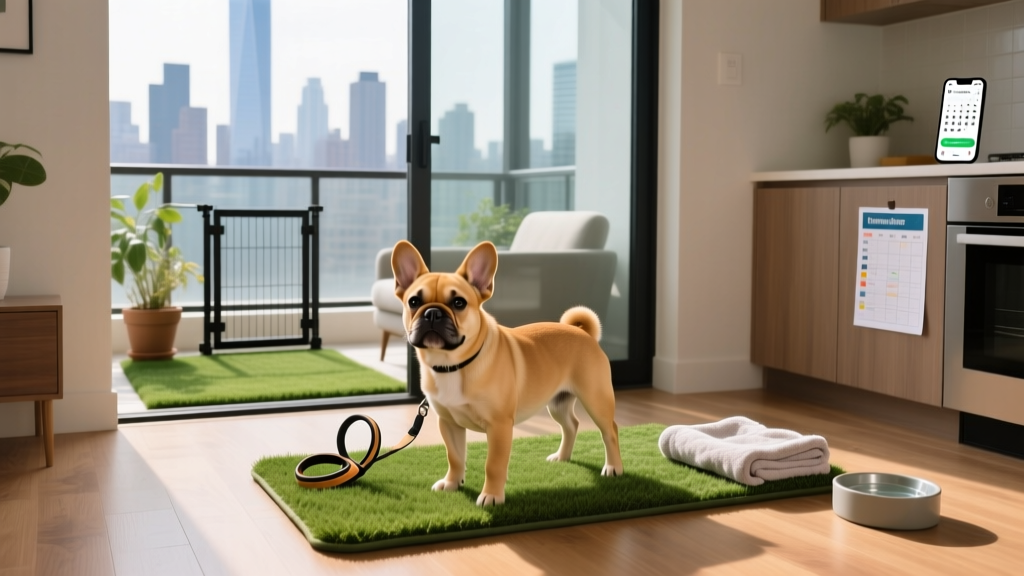
- Rain/cold refusal: Pomeranians dislike wet and cold weather. Consider an indoor grass patch (e.g., Fresh Patch, ~$29/subscription) or covered potty area for bad weather days.
- Submissive/excited urination: Common in young Poms. Avoid excited greetings; crouch to their level and greet calmly.
- Marking behavior: Unneutered males may begin marking as early as 5–6 months. Spay/neuter discussion with your vet is relevant here.
- "Sneaky" accidents: Poms are small and can urinate behind furniture without you noticing. Use an enzymatic cleaner (Nature's Miracle or Rocco & Roxie, ~$12–$18) to fully eliminate odor — regular cleaners leave residual scent that attracts repeat accidents.
Crate Training Progression & Time Limits
A crate is essential for Pomeranian puppies — it provides a safe den, aids potty training (dogs instinctively avoid soiling their sleeping area), and protects your tiny puppy from household hazards when unsupervised. Choose a crate sized for an adult Pomeranian (approximately 24" x 18" x 19") with a divider panel to reduce the space while your puppy is small.
| Puppy Age | Max Daytime Crate Duration | Max Nighttime Duration | Tips |
|---|---|---|---|
| 8–10 weeks | 30–60 minutes | 2–3 hours (set alarm) | Keep crate in bedroom; use a soft blanket that smells like littermates |
| 10–12 weeks | 1–1.5 hours | 3–4 hours | Feed meals in crate; provide a safe chew toy (Kong puppy, frozen) |
| 3–4 months | 2 hours | 4–5 hours | Begin moving crate to a quieter area if puppy sleeps through the night |
| 4–6 months | 3 hours | 6–7 hours | Puppy should be comfortable entering voluntarily for naps |
| 6+ months | 4 hours max | 7–8 hours | Never crate any dog longer than 4 hours during the day — arrange a midday break |
Crate training method: Use positive reinforcement only. Toss high-value treats into the crate, feed meals inside with the door open, then gradually close the door for increasing durations. Never use the crate as punishment. If your Pom puppy whines, wait for a brief moment of silence before opening the door — opening during whining teaches them that vocalizing works.
Teething Timeline & Safe Chew Strategies
Pomeranian puppies begin teething around 3–4 months, with the process continuing through 6–7 months. Because Poms have small mouths and 42 adult teeth must fit into a compact jaw, overcrowding and retained baby teeth are common breed-specific concerns. Your vet should check for retained deciduous teeth at every visit during this period — if baby teeth don't fall out on their own, they may need surgical extraction to prevent dental disease later.
Teething relief strategies:
- Frozen washcloth: Wet a clean washcloth, twist into a rope, freeze for 2 hours, and let puppy chew under supervision. The cold numbs sore gums.
- Kong Puppy (small/extra-small): Fill with plain yogurt mixed with a small amount of peanut butter (xylitol-free — xylitol is extremely toxic to dogs) and freeze. ~$8–$12.
- Nylabone Puppy Chew (petite size): Designed for puppies under 25 lb, softer than adult versions. ~$5–$8.
- Benebone Puppy (small): Bacon-flavored nylon chew with ergonomic shape for tiny paws to grip. ~$10–$14.
- Rawhide (choking hazard, digestive blockage risk for small breeds)
- Hard antlers or weight-bearing bones (can fracture puppy teeth)
- Any chew larger than the puppy's head (too heavy to manipulate)
- Pig ears (high fat, potential Salmonella risk — FDA has issued warnings)
- Cooked bones of any kind (splinter easily)
If you suspect your puppy has swallowed a dangerous object or toxic substance, call the ASPCA Animal Poison Control Center at (888) 426-4435 (24/7, consultation fee applies) or the Pet Poison Helpline at (855) 764-7661.
Common Pomeranian Puppy Problems & Solutions
Puppy Biting & Nipping
Pomeranian puppies explore the world with their mouths, and their needle-sharp baby teeth can surprise new owners. Biting typically peaks between 8–16 weeks and again during teething at 3–6 months.
Solution: When teeth touch skin, say "ouch" in a calm but firm tone and immediately redirect to an appropriate chew toy. If nipping continues, end the play session by standing up and walking away for 30 seconds (a "time-out" from attention). This mimics how littermates teach bite inhibition — a puppy that bites too hard gets ignored. Never hit, yell at, or hold the puppy's mouth shut — these aversive methods damage trust and can create fear-based aggression.
Excessive Barking & Whining
Pomeranians are a vocal breed — they were originally bred as alert dogs, and barking is hardwired. Puppy whining in the crate, especially at night, is nearly universal in the first 1–2 weeks home.
Solution: For crate whining, ensure all needs are met (potty, exercise, not hungry) before crating. Use a white noise machine or a Snuggle Puppy toy with a heartbeat (~$30–$40) to ease the transition. For barking at stimuli, begin teaching a "quiet" cue: when the puppy barks, say "quiet," wait for a pause, then reward the silence with a treat. Consistency over weeks — not days — produces results.
Destructive Chewing
A bored Pomeranian puppy will find something to chew — and at 3–7 lb, they can squeeze behind furniture, under beds, and into dangerous spaces.
Solution: Puppy-proof one room thoroughly (cover electrical cords with split loom tubing, ~$10; use baby gates; remove small objects). Provide a rotation of 4–5 approved chew toys so novelty is maintained. Rotate toys every 2–3 days. A mentally stimulated puppy (5 minutes of training twice daily, puzzle feeders, sniffing walks) is far less destructive than one who only gets physical exercise.
First-Year Cost Breakdown: What to Budget for Your Pomeranian Puppy
| Category | Estimated Cost (Low) | Estimated Cost (High) | Details |
|---|---|---|---|
| Puppy purchase | $1,500 | $5,000+ | AKC-registered, health-tested breeder. Adoption/rescue: $200–$600. |
| Veterinary care | $600 | $1,200 | 3–4 puppy vaccine visits ($100–$200 each), spay/neuter ($300–$600), fecal tests, heartworm prevention |
| Food & treats | $180 | $360 | Premium small-breed puppy food ($15–$30/bag, lasts 3–4 weeks for a Pom); training treats |
| Supplies | $250 | $500 | Crate ($40–$80), harness ($15–$30), leash, bowls, grooming tools ($30–$60), bed, toys, puppy pads, enzymatic cleaner, baby gates |
| Grooming | $300 | $600 | Professional grooming every 6–8 weeks ($50–$75/session × 6–8 sessions/year) |
| Training | $100 | $400 | Group puppy class ($100–$200 for 6 weeks) or private sessions ($50–$100/hour) |
| Pet insurance | $300 | $600 | $25–$50/month for accident/illness plan. Recommended for Poms due to patellar luxation and tracheal collapse risk. |
| FIRST-YEAR TOTAL | $3,230 | $8,660+ | Excluding emergency vet visits (budget an additional $500–$2,000 emergency fund) |
Breed-specific financial note: Pomeranians are predisposed to patellar luxation (kneecap dislocation, affecting an estimated 8–10% of toy breeds) and tracheal collapse (weakening of the windpipe cartilage). Both may require surgical intervention later in life at costs of $1,500–$5,000+. Pet insurance enrolled during puppyhood (before any conditions are documented) is strongly recommended for this breed.
Frequently Asked Questions
When can my Pomeranian puppy go outside and meet other dogs?
Your puppy can explore the outdoors in controlled, low-risk environments (your own yard, being carried in a sling through quiet neighborhoods) immediately. However, they should not walk on the ground in public areas, visit dog parks, or interact with dogs of unknown vaccination status until approximately 2 weeks after their final DHPP vaccine at 14–16 weeks — so roughly 16–18 weeks of age. During the socialization window before full vaccination, carry your puppy to expose them to sights, sounds, and people without ground contact with unknown dogs.
How do I stop my Pomeranian puppy from biting and nipping?
Use the redirect-and-withdraw method: when teeth contact skin, say "ouch" calmly, offer an appropriate chew toy, and if biting continues, withdraw attention for 30 seconds. Ensure your puppy gets adequate physical exercise (two 10–15 minute walks daily for puppies 3–6 months) and mental stimulation (short training sessions, puzzle toys). Biting typically decreases significantly after adult teeth fully erupt around 6–7 months. Consistency from all household members is critical — if one person allows mouthing and another scolds for it, the puppy becomes confused and the behavior persists.
How often should I feed my Pomeranian puppy at each age?
At 8–12 weeks: 4 meals per day (keep kibble available between meals to prevent hypoglycemia). At 12–16 weeks: 3–4 meals per day. At 4–6 months: 3 meals per day. At 6–12 months: 2 meals per day. Never free-feed an adult Pomeranian long-term — obesity puts dangerous stress on their tiny joints and increases the risk of patellar luxation and tracheal collapse.
When will my Pomeranian puppy be fully potty trained?
Most Pomeranian puppies achieve reliable potty habits between 4–6 months, though some take up to 8 months. Small bladder capacity is the primary limiting factor — a 3-month-old Pom simply cannot physically hold urine for more than 3 hours during the day. Consistent scheduling, crate training, and positive reinforcement for outdoor elimination are the three most impactful strategies. If your puppy is having frequent accidents beyond 6 months despite consistent training, consult your veterinarian to rule out urinary tract infection or other medical causes.
This guide provides general education for Pomeranian puppy owners. Every puppy is an individual with unique health needs. Always consult your veterinarian before making decisions about vaccinations, diet changes, medications, or if your puppy shows any concerning symptoms. Your vet is your most important partner in raising a healthy Pomeranian.
Jonas Cole
All our authors care for dogs every day — read more of their work on the authors page.