Golden Retriever Puppy Classes: A Week-by-Week Training & Care Guide
Everything you need to know about Golden Retriever puppy classes, socialization windows, feeding schedules, and milestones from 8 weeks to 12 months.

Golden Retrievers are consistently one of America's most popular breeds — and for good reason. Their gentle mouths, eager-to-please temperament, and trainable nature make them wonderful family dogs. But those same traits mean Goldens need structured guidance early on. Without proper socialization, consistent puppy classes, and a solid care routine, even this famously easy-going breed can develop leash reactivity, separation anxiety, or resource guarding behaviors.
This guide walks you through every critical milestone from the day you bring your Golden Retriever puppy home through their first year, with exact feeding amounts, vaccination timelines, crate training progressions, and when to enroll in puppy classes for maximum developmental benefit.
When Should You Bring Your Golden Retriever Puppy Home?
The ideal window for bringing a Golden Retriever puppy home is 8 to 10 weeks of age. Responsible breeders affiliated with the AKC Golden Retriever breed standard typically keep puppies until at least 8 weeks to ensure they receive critical littermate socialization and the first round of vaccinations.
Some breeders hold puppies until 10 or even 12 weeks, particularly for show-line Goldens. This isn't a red flag — it often means the breeder is running an early neurological stimulation (ENS) program and beginning crate training foundations. However, puppies removed from their litter before 7 weeks miss essential bite-inhibition lessons learned through sibling play, and research published in the Journal of Veterinary Behavior links early separation to higher rates of fear-based aggression later in life.
Golden Retriever Puppy Milestones: Week by Week
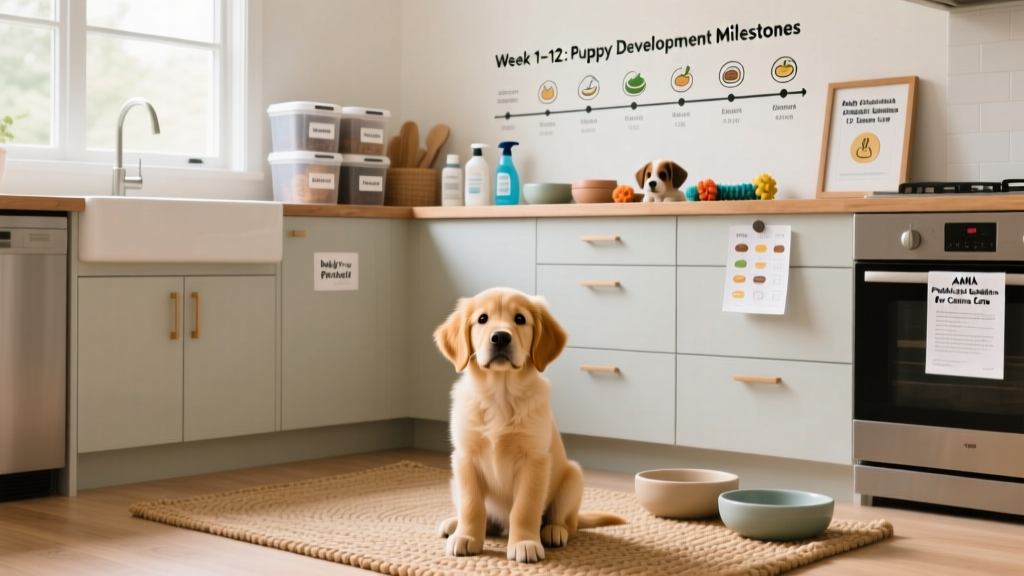
Understanding developmental stages helps you set realistic expectations. Golden Retrievers mature more slowly than smaller breeds — they often retain puppy behaviors (mouthing, clumsiness, short attention spans) until 18–24 months. Here's what to expect at each phase.
Weeks 4–8 (Breeder Phase)
- Physical: Eyes fully open, baby teeth erupting, coordination improving rapidly. Weight typically 5–10 lb (2.3–4.5 kg).
- Behavioral: Learning bite inhibition from littermates, beginning to explore away from the whelping box, startle responses to loud noises developing.
- Your role: If visiting the breeder, handle the puppy gently for short sessions. Observe how the puppy interacts with siblings — a Golden that consistently hides or shows excessive fear may need extra socialization support.
Weeks 8–12 (Home Transition)
- Physical: Weight 10–20 lb (4.5–9 kg). Rapid growth; sleeping 18–20 hours per day.
- Behavioral: Peak fear imprint period (8–11 weeks). Traumatic experiences during this window can create lasting phobias. Curiosity outweighs caution in most Goldens.
- Training: Begin name recognition, sit for treats, handling exercises (touching paws, ears, mouth). This is the ideal time to start structured puppy classes — many facilities accept puppies after their first DHPP vaccine.
- Common issues: Whining at night (normal separation distress), nipping hands (exploratory mouthing), accidents indoors (bladder capacity roughly 1 hour per month of age).
Weeks 12–16 (Confidence Building)
- Physical: Weight 20–35 lb (9–16 kg). Adult teeth begin pushing out baby teeth around week 14.
- Behavioral: Fear periods may recur around 12–14 weeks. Attention span lengthening to 5–10 minutes per session.
- Training: Leash walking foundations, recall games in low-distraction areas, "leave it" and "drop it" commands. Enroll in a structured puppy class series (typically 6–8 weeks of weekly sessions) if you haven't already.
- Socialization priority: Meeting vaccinated adult dogs, experiencing varied surfaces (gravel, grass, metal grates), exposure to children, umbrellas, and household appliances.
Weeks 16–24 (Adolescent Onset)
- Physical: Weight 35–55 lb (16–25 kg). Full adult teeth in place by 6 months. Growth plates still open.
- Behavioral: Testing boundaries, "forgetting" previously learned commands (normal adolescent regression), increased independence and environmental distraction.
- Training: This is when many owners get frustrated and consider aversive tools — don't. Stick with positive reinforcement and increase criteria gradually. Intermediate puppy classes or "manners" courses build on foundations.
- Exercise caution: The AVMA recommends avoiding repetitive high-impact exercise (long runs, agility jumps) until growth plates close around 14–18 months to reduce hip dysplasia risk.
Months 6–12 (Young Adult Transition)
- Physical: Weight 50–70 lb (23–32 kg) for males, 45–60 lb (20–27 kg) for females. Approaching adult height but still filling out in chest and muscle.
- Behavioral: Sexual maturity (spay/neuter timing should be discussed with your vet — many Golden specialists recommend waiting until 12–18 months for joint health). Possible second fear period around 8–10 months.
- Training: Canine Good Citizen (CGC) preparation classes, off-leash recall proofing, impulse control around other dogs. Many Golden Retriever clubs offer breed-specific activities like field work and tracking introductions.
Feeding Schedule: Exact Portions by Age and Weight
Golden Retrievers are prone to obesity, which directly increases the risk of hip and elbow dysplasia — conditions affecting an estimated 20% of the breed according to the Orthopedic Foundation for Animals. Controlled growth through proper portioning is one of the most impactful things you can do for your Golden's long-term joint health.
Feed a large-breed puppy formula (AAFCO-designated for growth or all life stages) until at least 12 months. These formulas maintain a calcium-to-phosphorus ratio between 1.1:1 and 1.4:1, which supports steady bone development without the rapid growth spurts linked to skeletal disorders.
| Age | Expected Weight | Meals Per Day | Total Daily Food (Cups) |
|---|---|---|---|
| 8–12 weeks | 10–20 lb / 4.5–9 kg | 3–4 | 1.5–2 cups |
| 3–4 months | 20–35 lb / 9–16 kg | 3 | 2–3 cups |
| 4–6 months | 35–50 lb / 16–23 kg | 2–3 | 2.5–3.5 cups |
| 6–9 months | 45–60 lb / 20–27 kg | 2 | 3–4 cups |
| 9–12 months | 55–70 lb / 25–32 kg | 2 | 3.5–4.5 cups |
Important: These are starting points. Adjust based on your puppy's body condition score (BCS) — you should be able to feel ribs easily without pressing hard, and see a visible waist when viewed from above. If your Golden puppy looks "chunky," reduce portions by 10–15%. Treats should never exceed 10% of daily caloric intake.
Vaccination Schedule for Golden Retriever Puppies
Golden Retrievers follow the standard core vaccination protocol recommended by the AVMA and the American Animal Hospital Association (AAHA). Your vet may adjust timing based on local disease risk and maternal antibody levels.
| Age | Vaccines | Notes |
|---|---|---|
| 6–8 weeks | DHPP (Distemper, Hepatitis, Parainfluenza, Parvovirus) #1 | Often given by breeder before pickup |
| 10–12 weeks | DHPP #2, Bordetella (optional), Leptospirosis #1 (risk areas) | Bordetella recommended if attending puppy classes or boarding |
| 14–16 weeks | DHPP #3, Rabies, Leptospirosis #2 (if started) | Rabies legally required in most US states |
| 12–16 months | DHPP booster, Rabies booster (1-yr or 3-yr) | First adult booster establishes long-term immunity |
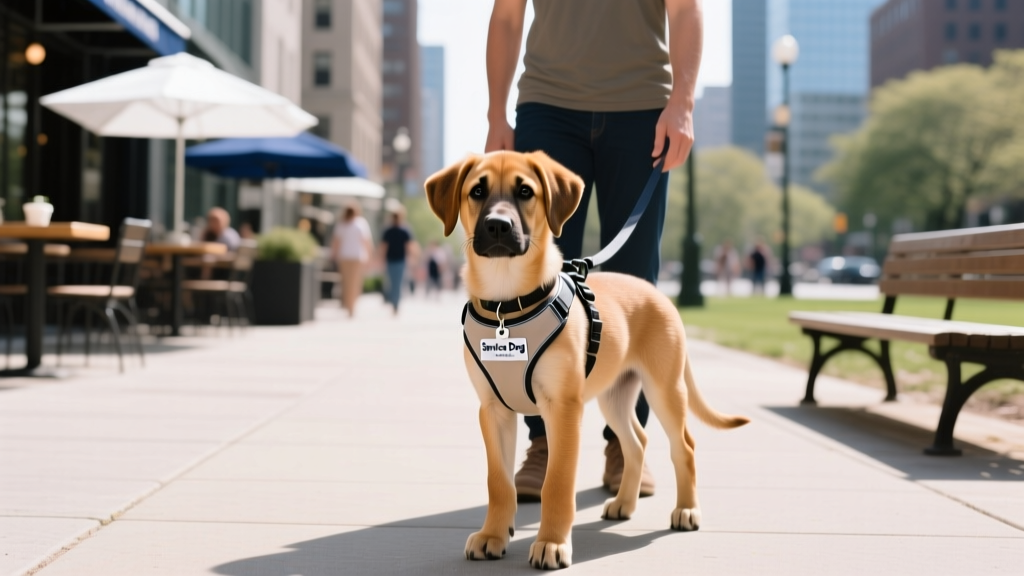
When can your puppy go outside and meet other dogs? Until your Golden completes the full DHPP series (around 16 weeks), avoid high-traffic dog areas like dog parks, pet store floors, and unvaccinated dog playgroups. However, socialization shouldn't wait — carry your puppy to outdoor cafés, invite fully vaccinated adult dogs to your home, and attend puppy classes that require proof of at least one DHPP vaccine. The American Veterinary Society of Animal Behavior (AVSAB) emphasizes that the risk of behavioral problems from inadequate socialization outweighs the disease risk when basic precautions are taken.
The Socialization Window: Weeks 3–14
The primary socialization period for puppies closes around 12–14 weeks. After this window, novel experiences trigger caution rather than curiosity by default. For Golden Retrievers — a breed already predisposed to sensitivity — missing this window can result in fearfulness around strangers, other dogs, or new environments.
Here's a breed-specific socialization checklist to work through before 14 weeks:
Golden Retriever Socialization Checklist
People (aim for 50+ different people by 14 weeks):
- Children of various ages (supervised interactions)
- People wearing hats, sunglasses, uniforms, hoodies
- People using wheelchairs, crutches, or walkers
- People of different heights, builds, and skin tones
- Men with beards or deep voices (often underrepresented in puppy exposure)
Environments:
- Car rides (start with 2-minute trips, build to 15+ minutes)
- Veterinary clinic ("happy visits" with treats, no procedures)
- Various floor surfaces: tile, carpet, gravel, wet grass, metal grates
- Elevator rides, automatic doors, revolving doors
- Outdoor seating areas, parking lots, schoolyards (observing from distance)
Sounds (pair with treats to build positive associations):
- Thunderstorms, fireworks recordings (start at low volume)
- Vacuum cleaner, blender, doorbell
- Construction noise, sirens, garbage trucks
Other animals:
- Fully vaccinated, temperament-tested adult dogs (3–5 different dogs)
- Cats (if safe and supervised)
- Livestock or horses from a safe distance (excellent for future field work exposure)
Golden-specific tip: Goldens are mouth-oriented and love carrying things. Use this trait during socialization — let your puppy carry a familiar toy when meeting new people or visiting new places. Having something in their mouth provides a calming outlet and reduces nervous mouthing of strangers.
Potty Training Timeline and Troubleshooting
When will your Golden Retriever puppy be fully potty trained? Most Golden Retrievers achieve reliable house training between 4 and 6 months of age, though some individuals — particularly males — may have occasional accidents until 8–9 months. This is a realistic timeline; any program promising full training in days sets you up for frustration.
A Golden Retriever puppy's bladder capacity follows a rough rule: one hour per month of age, plus one. So a 3-month-old can hold it approximately 4 hours during the day, less at night initially.
Structured Potty Schedule
- Immediately upon waking — carry or leash-walk outside to the same spot every time.
- 15–20 minutes after each meal — Goldens have efficient digestive systems and predictable post-meal elimination.
- After play sessions — excitement stimulates bladder activity.
- Before and after crate time — never expect a puppy to hold it longer than their age-appropriate limit.
- Before bedtime — a final trip outside, then crate for the night. Expect one overnight potty break until about 12–14 weeks.
Potty Training Log Template
Track patterns with a simple daily log:
| Time | Activity | Potty Result | Notes |
|---|---|---|---|
| 6:30 AM | Wake up → outside | Pee + poop | Good — reward given |
| 7:00 AM | Breakfast | — | 1 cup kibble + water |
| 7:20 AM | Outside (post-meal) | Pee | — |
| 8:00 AM | Play → crate | Outside before crate | No accident in crate |
After 5–7 days of logging, you'll identify your puppy's natural elimination rhythm and can set a proactive schedule rather than reacting to accidents.
Troubleshooting Common Potty Issues
- Submissive urination when greeting: Extremely common in young Goldens. Ignore the puppy for the first 30 seconds of any greeting, crouch sideways rather than looming over them, and greet outdoors when possible. This typically resolves by 6–8 months.
- Excitement urination during play: Schedule potty breaks more frequently during high-activity periods. Don't punish — it increases anxiety and worsens the problem.
- Regression around 4–5 months: Often coincides with teething discomfort or environmental changes. Return to a tighter schedule for 1–2 weeks.
Crate Training Progression and Time Limits
Crate training is essential for Golden Retrievers — a breed that will happily destroy your baseboards, eat your shoes, and potentially ingest dangerous objects if left unsupervised during puppyhood. The crate should be a positive retreat, never a punishment.
Maximum crate time by age:
- 8–10 weeks: 30–60 minutes during the day, 3–4 hours overnight (with one potty break)
- 10–12 weeks: 1–2 hours during the day, 4–5 hours overnight
- 3–4 months: 2–3 hours during the day, 6 hours overnight
- 4–6 months: 3–4 hours during the day, 7–8 hours overnight
- 6+ months: 4–5 hours during the day maximum; arrange midday breaks via dog walkers or coming home
Progression steps:
- Week 1: Leave crate door open, feed meals inside, scatter treats. Goal: puppy enters voluntarily.
- Week 2: Close door for 30 seconds while puppy eats, gradually increase to 5 minutes post-meal.
- Week 3: Close door, step away for 1–2 minutes, return before puppy vocalizes. Build to 10 minutes.
- Week 4: Leave room briefly. Return calmly — no excited greetings that reinforce whining as an attention-getting strategy.
- Ongoing: Use a frozen Kong stuffed with peanut butter or yogurt to create positive crate associations during longer sessions.
For Golden Retrievers specifically, choose a 42-inch crate with a divider panel. This allows the crate to grow with your puppy while preventing them from soiling one end and sleeping in the other — a key house training advantage.
Teething Timeline and Relief Strategies
Golden Retriever puppies begin losing their 28 baby teeth around 12–14 weeks, with all 42 adult teeth typically in place by 6–7 months. The peak discomfort period — and peak destructive chewing — falls between 3 and 6 months of age.
Signs your Golden is teething: increased drooling, reluctance to eat hard kibble, bleeding gums (small amounts are normal), finding baby teeth around the house, and a dramatic increase in chewing everything within reach.
Safe Chew Recommendations
- Frozen washcloths: Soak a clean washcloth in low-sodium chicken broth, twist into a rope, and freeze. Provides cold relief and satisfies the Golden urge to hold things in their mouth.
- Rubber chew toys (Kong Classic, West Paw Toppl): Stuff with plain yogurt and blueberries, freeze for 2–4 hours. The cold numbs gums while the puzzle element engages their retriever brain.
- Bully sticks (supervised only): Choose 6-inch or longer to prevent choking. Remove when worn down to 2 inches. High-value and long-lasting.
- Carrots (whole, cold): A cheap, low-calorie option many Goldens enjoy crunching. Supervise to prevent large pieces being swallowed whole.
Common Golden Retriever Puppy Problems and Solutions
Problem: Puppy Biting and Nipping
Golden Retrievers are a "mouthy" breed — they were developed to carry waterfowl, and that genetic drive to hold things in their mouths persists as puppy nipping. This is the number one complaint from new Golden owners and a top reason people seek puppy classes.
What works:
- Redirect to a toy: Every time teeth touch skin, say "oops" calmly, withdraw attention for 3–5 seconds, then offer an appropriate chew toy. Reward when puppy mouths the toy.
- Time-outs: If nipping continues after 2–3 redirects, calmly place the puppy in their crate or a pen for 30–60 seconds to reset. This is not punishment — it's an emotional regulation break.
- Satisfy the mouth drive: Give your Golden a "job" — carrying a toy on walks, holding a retrieve bumper during training sessions. A Golden with something in their mouth is a Golden that isn't nipping.
What doesn't work: Yelling, holding the muzzle shut, or physical corrections. These increase anxiety and can trigger fear-based biting — the opposite of your goal. Force-free methods backed by the American Veterinary Society of Animal Behavior consistently produce better long-term results.
Problem: Whining and Crying at Night
Nighttime vocalization typically peaks during the first 1–2 weeks home and diminishes as the puppy adjusts. Set up the crate in your bedroom initially — your presence and scent reduce isolation distress. Cover the crate with a light blanket to create a den-like environment.
If the puppy whines after a recent potty break, wait 2–3 minutes before responding. Often, they settle on their own. If crying escalates, take them outside on leash (no play), then return to crate. This prevents reinforcing whining with fun activities while still meeting legitimate potty needs.
Problem: Destructive Chewing
Goldens explore the world with their mouths, and adolescent Goldens (4–8 months) can cause significant damage. Management is more effective than training at this stage: use baby gates, exercise pens, and the crate to limit access to tempting items. Rotate chew toys every 2–3 days to maintain novelty. Provide at least 30 minutes of structured enrichment daily — sniff walks, food puzzles, and short training sessions tire a Golden puppy faster than physical exercise alone.
When and Why to Enroll in Puppy Classes
Structured puppy classes serve two distinct purposes for Golden Retrievers: socialization with other puppies in a controlled setting, and foundation training using positive reinforcement techniques. Here's when each type of class makes sense:
| Class Type | Ideal Age | Vaccine Requirement | Typical Cost (6–8 Week Course) |
|---|---|---|---|
| Puppy socialization/playgroup | 8–14 weeks | At least 1 DHPP | $80–$150 |
| Basic puppy manners | 10–20 weeks | 2+ DHPP, Bordetella | $150–$300 |
| Intermediate/adolescent manners | 5–10 months | Full vaccination series | $150–$350 |
| CGC preparation | 8–12 months | Full vaccination series | $120–$250 |
| Breed-specific activities (field, tracking) | 6–12 months | Full vaccination series | $50–$200 per session |
Look for classes taught by certified professionals (CPDT-KA, KPA-CTP, or IAABC credentials) that explicitly state force-free or positive reinforcement methods. The AKC Canine Good Citizen program is an excellent goal for Golden owners — the breed's natural temperament makes them strong CGC candidates.
First-Year Cost Breakdown for a Golden Retriever
Budgeting accurately prevents surprises. Here's a realistic first-year cost range based on 2025–2026 pricing data from veterinary industry surveys and consumer reports:
| Category | Low Estimate | High Estimate | Details |
|---|---|---|---|
| Puppy purchase/adoption | $500 (rescue) | $3,500 (AKC breeder) | Responsible breeders: $1,500–$3,500; rescues: $300–$600 |
| Veterinary (wellness + vaccines) | $400 | $800 | Includes spay/neuter ($300–$600) |
| Food (large-breed puppy formula) | $400 | $700 | $40–$60/month for quality kibble |
| Supplies (crate, bed, leash, toys) | $250 | $500 | 42" crate, washable bed, 6-ft leash, chew toys |
| Training (puppy classes) | $150 | $600 | 1–3 class series depending on goals |
| Pet insurance (optional) | $400 | $700 | $35–$60/month; enroll before conditions develop |
| Preventive medications | $200 | $400 | Heartworm, flea/tick year-round |
| Grooming | $0 (home) | $400 | Goldens need brushing 3–4x/week; professional grooming optional |
Total first-year estimate: $2,300–$7,600 depending on puppy source, insurance choice, and training investment. Emergency veterinary care is not included — a single ER visit for foreign body ingestion (common in Goldens) can cost $2,000–$5,000, making pet insurance a financially sound decision for this breed.
Frequently Asked Questions
How often should I feed my Golden Retriever puppy at each age?
Feed 3–4 meals daily from 8–12 weeks, transition to 3 meals from 12–16 weeks, and move to 2 meals daily from 4 months onward. Consistent meal timing also supports predictable potty scheduling — a key house training advantage.
How do I stop my Golden puppy from biting my hands and clothes?
Redirect every bite to an appropriate chew toy, withdraw attention for 3–5 seconds when teeth touch skin, and provide plenty of legal chewing outlets. Golden Retrievers are mouth-driven by genetics — the goal is redirecting that drive, not eliminating it. Most Goldens significantly reduce nipping by 5–6 months with consistent management. Enrolling in puppy classes early accelerates bite inhibition through structured play with other puppies.
When can my Golden Retriever puppy go to dog parks?
Wait until at least 1–2 weeks after the final DHPP vaccine (typically given at 14–16 weeks), so around 16–18 weeks minimum. However, dog parks are unpredictable environments. For Goldens — who are friendly but sometimes overly enthusiastic greeters — structured playdates with known, vaccinated dogs are safer for developing appropriate social skills.
Should I spay or neuter my Golden before or after puppy classes?
Discuss timing with your veterinarian. Current research on Golden Retrievers specifically (including studies from UC Davis) suggests that delaying spay/neuter until after 12–18 months may reduce the risk of hip dysplasia, cranial cruciate ligament tears, and certain cancers. Early-age classes don't require sterilization — puppy classes are designed for young, intact puppies.
My Golden puppy seems scared of everything — is this normal?
Brief fear responses during the 8–11 week and 12–14 week fear imprint periods are developmentally normal. Pair novel experiences with high-value treats (boiled chicken, cheese), let the puppy approach at their own pace, and never force interaction. If fear responses persist beyond 2–3 weeks or include shutdown behaviors (freezing, refusing treats, hiding), consult a certified behavior consultant (IAABC) or veterinary behaviorist for early intervention.
Dr. Hannah Wickes
All our authors care for dogs every day — read more of their work on the authors page.