Pit Puppy Care Guide: Milestones, Feeding & Training From 8 Weeks On
Complete pit puppy guide covering age milestones, feeding schedules, potty training timelines, socialization checklists, and first

Bringing home a pit puppy — whether that's an American Pit Bull Terrier, American Staffordshire Terrier, Staffordshire Bull Terrier, or a mix of these athletic breeds — is equal parts thrilling and overwhelming. These dogs are known for their muscular build, clownish energy, and deep loyalty, but raising one from 8 weeks to adulthood requires a structured plan grounded in developmental science, not guesswork.
This guide maps out exactly what to expect during your pit puppy's first year, with breed-specific context for their high energy, strong jaw drive, and social needs. All timelines and recommendations align with guidance from the American Kennel Club and the American Veterinary Medical Association.
Pit Puppy Age Milestones: What to Expect and When
Understanding developmental stages helps you set realistic expectations. Pit bull-type puppies tend to be physically precocious — they're strong and mouthy early — but emotionally they mature slower than many owners expect, often retaining puppy behavior until 18–24 months.
| Age Range | Developmental Stage | What to Expect | Your Job |
|---|---|---|---|
| Weeks 4–8 | Transitional & early socialization (with breeder) | Eyes/ears fully functional, learning bite inhibition from littermates, first solid foods | If still with breeder: visit regularly, handle puppy daily. If adopting at 8 weeks: prepare your home |
| Weeks 8–12 | Human socialization peak, fear imprint period begins | Maximum learning capacity, forms strong bonds, may startle easily at new stimuli, teething discomfort begins | Positive exposure to 100+ novel experiences, establish routine, begin crate training |
| Weeks 12–16 | Testing boundaries, confidence building | Increased independence, may "forget" learned cues, chewing intensifies, bladder control improves | Consistent rules, puppy kindergarten classes, redirect destructive chewing |
| Weeks 16–24 | Second fear period possible, teething peak | May suddenly fear previously familiar things, adult teeth erupting, high energy bursts, sexual maturity approaching | Don't force feared stimuli — use counter-conditioning, provide appropriate chews, schedule spay/neuter |
| Months 6–12 | Adolescence | Hormonal surges (if intact), leash reactivity may emerge, dog-selectiveness can develop, high stamina | Advanced training, structured exercise (not free-running on hard surfaces until growth plates close ~14 months), maintain socialization |
Breed-specific note: Pit bull-type breeds often develop dog-selectiveness or same-sex aggression as they reach social maturity (18–36 months). This is a breed trait, not a training failure. Early positive dog-dog exposure helps but does not guarantee lifelong dog-friendliness.
Feeding Your Pit Puppy: Schedule and Portions by Age
Pit bull-type puppies are prone to both rapid growth (which stresses developing joints) and food-motivated obesity later in life. Feed a large-breed puppy formula if your puppy is expected to exceed 50 lb (23 kg) as an adult, as these formulas control calcium and phosphorus ratios to protect growth plates.
Look for an AAFCO statement on the bag confirming "complete and balanced for growth" or "all life stages." Avoid grain-free boutique diets unless recommended by your vet, given the FDA's ongoing investigation into diet-associated dilated cardiomyopathy.
| Age | Meals Per Day | Daily Amount (Dry Kibble) | Notes |
|---|---|---|---|
| 8–12 weeks | 3–4 | 1.5–2.5 cups (varies by brand and expected adult size) | Soak kibble in warm water for first 1–2 weeks if transitioning from breeder's softened food |
| 12–16 weeks | 3 | 2–3 cups | Begin phasing out midday meal gradually over 1 week at 16 weeks |
| 4–6 months | 2–3 | 2.5–3.5 cups | Transition to 2 meals/day by 6 months; monitor body condition score (BCS) — you should feel ribs without pressing hard |
| 6–12 months | 2 | 3–4 cups (adjust to maintain lean BCS of 4–5/9) | Switch to adult food between 10–14 months depending on expected adult weight; consult your vet |
Portion note: These are starting ranges for a puppy expected to reach 45–65 lb (20–29 kg) as an adult. Caloric density varies by brand — a cup of Purina Pro Sport 30/20 contains roughly 468 kcal, while a cup of Royal Canin Medium Puppy contains about 389 kcal. Always adjust based on your puppy's body condition, not the bag's recommendation alone.
Potty Training Your Pit Puppy: Realistic Timeline and Methods
Pit puppies are generally quick learners when it comes to housebreaking — they're eager to please and respond well to routine. But "quick" still means weeks, not days. Here's what a realistic timeline looks like:
- Weeks 8–10: Accidents every 1–3 hours. Take puppy out after every meal, nap, and play session. Expect 8–12 trips outside per day.
- Weeks 10–14: Bladder control improves. Puppy may signal (sniffing, circling, whining at door). Accidents drop to 1–3 per week if you're consistent.
- Weeks 14–20: Most pit puppies are reliably house-trained during the day with scheduled outings. Nighttime control typically follows 2–4 weeks later.
- Months 5–7: Full reliability for most puppies. Regression can occur during adolescence (months 6–10) — revisit basics if needed.
Troubleshooting common issues:
- Submissive/excitement urination: Common in pit puppies under 6 months. Don't punish — ignore wet greetings, take puppy outside immediately when you arrive home, greet calmly.
- Crate accidents: Crate may be too large (puppy eliminates in one corner, sleeps in another). Use a divider to size the crate so puppy can stand, turn, and lie down — no more.
- Regression at 6–8 months: Often coincides with hormonal changes. Reinforce schedule, increase outdoor time, and rule out urinary tract infection with your vet if accidents suddenly spike.
The Critical Socialization Window: Weeks 3–14
The Merck Veterinary Manual identifies weeks 3–14 as the primary socialization period for puppies. For pit bull-type breeds, this window is especially important because these dogs can develop wariness of unfamiliar stimuli if under-socialized, and breed-specific legislation in some areas means your dog will encounter more public scrutiny than other breeds.
Important: The AVMA and the American Veterinary Society of Animal Behavior (AVSAB) recommend that puppies begin socialization classes before they've completed their full vaccination series, provided the class environment requires proof of at least one DHPP vaccine and maintains clean facilities. The risk of behavioral problems from inadequate socialization outweighs the disease risk in controlled settings.
Each experience must be positive — pair novel stimuli with high-value treats (boiled chicken, cheese bits). If your pit puppy shows fear, increase distance and let them observe before approaching. Never force interaction.
Vaccination Schedule for Your Pit Puppy
Your vet will tailor this schedule to your area's disease risk, but the core protocol for pit puppies follows the AAHA canine vaccination guidelines. Pit bull-type breeds do not have breed-specific vaccine reactions at higher rates than other breeds, but monitor your puppy for 24–48 hours after each round.
| Age | Vaccine | What It Protects Against | Cost Range (2026) |
|---|---|---|---|
| 6–8 weeks | DHPP (Distemper, Hepatitis/Adenovirus, Parainfluenza, Parvovirus) — 1st dose | Core viral diseases; parvo is especially lethal in puppies | $25–$45 |
| 10–12 weeks | DHPP — 2nd dose; Bordetella (optional, recommended if attending puppy class) | Booster for core immunity; kennel cough prevention | $30–$55 |
| 14–16 weeks | DHPP — 3rd (final puppy) dose; Rabies (required by law in most US states) | Final core puppy series; rabies is zoonotic and fatal | $40–$70 |
| 12–16 months | DHPP booster; Rabies booster (1-year or 3-year depending on local law) | Adult immunity confirmation | $35–$65 |
Non-core vaccines to discuss with your vet: Leptospirosis (recommended in areas with wildlife or standing water), Lyme disease (tick-endemic regions), and Canine Influenza (H3N2/H3N8 — recommended in boarding/daycare settings).
When can your puppy go outside? After the final DHPP dose at 14–16 weeks, wait 5–7 days for immunity to build before visiting high-traffic dog areas (dog parks, pet store floors). Controlled walks in low-traffic areas and carried outings can begin much earlier — socialization should not wait for full vaccination.
Teething, Crate Training, and Managing Common Pit Puppy Problems
Teething Timeline (3–6 Months)
Pit puppies have powerful jaws and a strong drive to chew, which intensifies during teething. Here's the eruption timeline:
- 3–4 months: Incisors (front teeth) begin loosening and falling out. You may find tiny teeth in bedding or notice minor gum bleeding.
- 4–5 months: Canines and premolars erupt. This is peak discomfort — chewing becomes relentless.
- 5–6 months: Molars come in. By 6–7 months, all 42 adult teeth should be present. Ask your vet to check for retained baby teeth at the spay/neuter appointment.
Safe chew strategies for pit puppies:
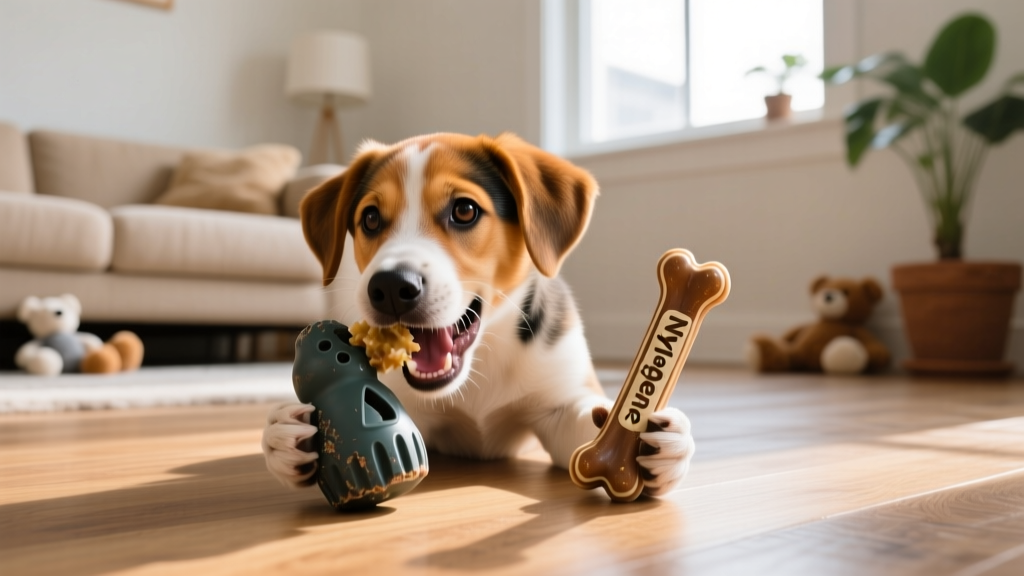
- Frozen Kong Classic (size appropriate — Medium or Large for pit puppies) stuffed with plain yogurt and banana
- Benebone Wishbone (puppy formula, softer nylon) — sized to prevent swallowing whole
- Frozen wet washcloths twisted into a rope — supervise to prevent ingestion of fabric
- Yak cheese chews (supervised — remove when small enough to be a choking hazard)
Avoid: Rawhide (choking and intestinal blockage risk), weight-bearing bones from large animals (tooth fractures), and any chew smaller than your puppy's muzzle width.
Crate Training Progression
Crate training protects your home and gives your pit puppy a safe den. Follow these time limits — puppies cannot hold their bladder longer than their age in months plus one hour:
- 8–10 weeks: 30–60 minutes maximum during the day; overnight, set an alarm for one potty break around 2–3 AM
- 10–14 weeks: 1–2 hours during the day; overnight may stretch to 4–5 hours
- 4–5 months: 2–3 hours during the day; overnight 6–7 hours for most puppies
- 6+ months: Up to 4 hours during the day; overnight 8 hours is typical
Never use the crate as punishment. Feed meals in the crate, provide a stuffed Kong for long stretches, and cover with a breathable blanket to create a den feel. A 36-inch wire crate with a divider panel works well — upgrade to a 42-inch crate for your adult pit bull.
Stopping Puppy Biting and Nipping
Pit puppies are notoriously mouthy. Their breed heritage as gripping/holding dogs means they use their mouths to explore and communicate. This is normal but must be managed early.
- Redirect: When teeth touch skin, immediately offer a chew toy. Reward chewing the toy with praise.
- Reverse timeout: If biting continues after one redirect, calmly stand up and leave the room for 15–30 seconds. Return and resume play. This teaches that biting ends fun.
- Provide adequate outlets: 15–20 minutes of structured play (tug with rules — "drop it" cue, restart only when calm) reduces pent-up mouthing energy.
- Never: Hold the muzzle shut, alpha-roll, or yell. These methods increase fear and can escalate biting in a breed that responds poorly to physical confrontation.
Other Common Pit Puppy Challenges
- Destructive chewing (months 4–8): Pit puppies chew more intensely and for longer than many breeds. Puppy-proof rooms, use bitter apple spray on baseboards, and provide 5+ approved chew options rotated weekly to maintain novelty.
- Whining in crate: Ensure puppy has been exercised and has eliminated before crating. If whining starts, wait 5 minutes before responding (to avoid reinforcing demand-barking). If it continues past 15 minutes, take puppy out for a quick, boring potty trip, then return to crate.
- Jumping up: Pit puppies are athletic and may leap 2+ feet by 5 months. Teach "sit to greet" and reward all four paws on the floor. Ask guests to ignore jumping entirely.
First-Year Cost Breakdown for a Pit Puppy
Budgeting accurately prevents surprises. These ranges reflect 2026 US pricing and assume a pit bull-type puppy expected to reach 50–65 lb (23–29 kg) as an adult.
| Category | Low Estimate | Mid Estimate | High Estimate | Notes |
|---|---|---|---|---|
| Puppy purchase/adoption | $150 (rescue) | $800 (responsible breeder, pet quality) | $2,500 (show-line breeder) | Adoption fees often include initial vaccines and spay/neuter |
| Veterinary (first year) | $500 | $900 | $1,500 | Includes 3 puppy vaccine rounds, spay/neuter, fecal tests, heartworm prevention, microchip |
| Food (12 months) | $360 | $540 | $840 | Based on $30–$70/bag premium puppy food, 1 bag per 3–5 weeks |
| Supplies | $200 | $400 | $700 | Crate, bed, leash/harness, bowls, chew toys, puppy gate, grooming tools |
| Training | $0 (self-guided) | $300 (group puppy class, 6–8 weeks) | $800 (private trainer + group class) | Recommended for first-time pit bull owners; look for CCPDT-certified trainers |
| Pet insurance (annual) | $480 | $660 | $960 | $40–$80/month; enroll at 8 weeks to avoid pre-existing condition exclusions |
| Total First Year | $1,690 | $3,600 | $7,300 | Ongoing annual cost after year 1: $1,200–$2,800 |
Breed-specific cost note: Some municipalities require pit bull-type dogs to carry liability insurance riders on homeowner's or renter's policies, which can add $100–$300/year. Check local breed-specific legislation (BSL) before bringing your puppy home, as requirements vary by city and state.
Frequently Asked Questions
When should I bring my pit puppy home?
Eight weeks is the earliest responsible age. Puppies separated before 8 weeks miss critical littermate lessons — bite inhibition, social signaling, and stress coping. Many responsible breeders of pit bull-type breeds keep puppies until 9–10 weeks to provide additional socialization foundation. If adopting from a rescue, puppies are typically available at 8–10 weeks once they've been medically cleared.
How often should I feed my pit puppy?
At 8–12 weeks: 3–4 meals per day. At 12–16 weeks: 3 meals. At 4–6 months: transition to 2–3 meals. By 6 months: 2 meals per day is standard. Split daily portions evenly across meals. Free-feeding is not recommended for pit puppies, as these breeds are prone to rapid eating and bloat risk increases with large, single meals.
When will my pit puppy be fully potty trained?
Most pit puppies achieve reliable daytime house-training between 16–20 weeks (4–5 months) with a consistent schedule. Full reliability — including overnight and during exciting situations — typically solidifies by 6–7 months. Some puppies, especially males, may mark indoors during adolescence (6–10 months) even after being reliably trained. Neutering before sexual maturity (around 6 months, per your vet's recommendation) reduces marking behavior.
What vaccines does my pit puppy need and when?
Core vaccines: DHPP at 6–8, 10–12, and 14–16 weeks, plus Rabies at 14–16 weeks. Non-core vaccines your vet may recommend based on lifestyle and geography: Bordetella (before puppy class), Leptospirosis, Lyme, and Canine Influenza. A DHPP booster is given at 12–16 months, after which your vet may recommend 3-year intervals or titer testing to confirm immunity.
How do I stop my pit puppy from biting and nipping?
Use the redirect-and-withdraw method: when teeth touch skin, say a calm "oops" and immediately offer a chew toy. If biting persists, stand up and leave the room for 15–30 seconds (reverse timeout). Provide 15–20 minutes of structured tug play daily as an appropriate mouth outlet. Ensure your puppy gets 2–3 short training sessions (5 minutes each) per day to mentally tire them — an under-stimulated pit puppy mouths more. Expect mouthing to decrease significantly by 5–6 months as adult teeth come in, though some play-biting may continue into adolescence.
When can my pit puppy go outside and meet other dogs?
Controlled outdoor exposure can begin immediately in low-risk environments — your own yard, quiet residential sidewalks, or carried in a sling to observe the world. Avoid dog parks, pet stores, and areas with unknown dog traffic until 5–7 days after the final DHPP vaccine at 14–16 weeks (roughly 16–17 weeks of age). Puppy socialization classes that require proof of at least one DHPP dose are safe to start at 8–10 weeks and strongly recommended. One-on-one playdates with fully vaccinated, temperament-tested adult dogs in private yards are also appropriate from 8 weeks onward.
When to call your vet immediately: If your pit puppy shows vomiting with lethargy, bloody diarrhea, refusal to eat for more than 12 hours, difficulty breathing, seizures, collapse, or a swollen/hard abdomen (potential bloat — a life-threatening emergency in deep-chested breeds). For suspected toxin ingestion, contact ASPCA Animal Poison Control at (888) 426-4435 (24/7, consultation fee applies).
This guide provides general educational information and does not replace professional veterinary care. Always consult your veterinarian for personalized advice regarding your puppy's health, vaccination protocol, and nutrition. Breed-specific legislation varies by jurisdiction — check your local laws regarding pit bull-type breeds.
Beth Carrasco
All our authors care for dogs every day — read more of their work on the authors page.