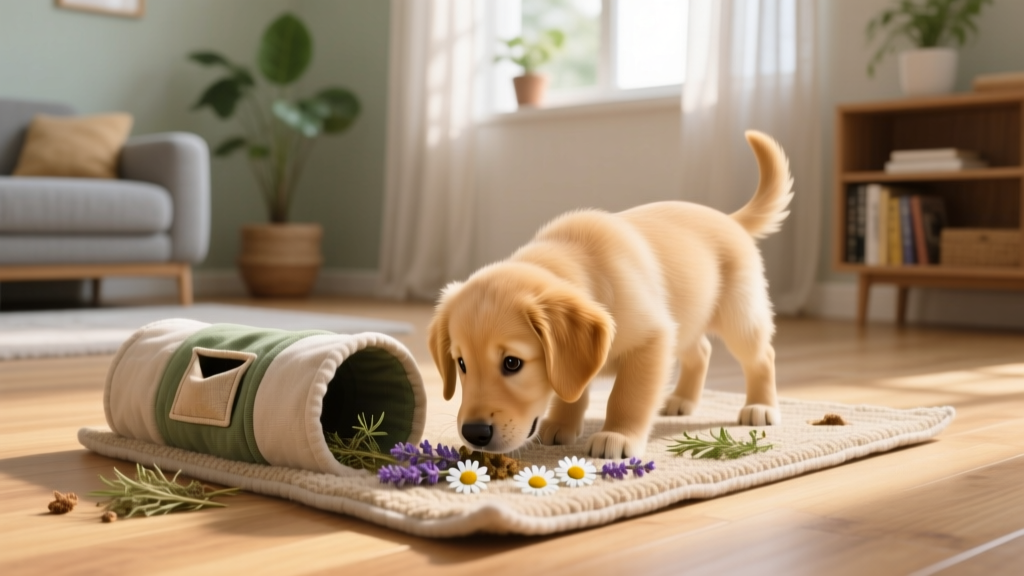
Norwegian Elkhound Puppy Care Guide: Milestones, Feeding & Training
Complete Norwegian Elkhound puppy guide covering milestones, feeding schedules, potty training, vaccination timelines, and first-year costs for new owners.

Bringing Home a Norwegian Elkhound Puppy: What Makes This Breed Different
Norwegian Elkhounds are ancient spitz-type hunting dogs originally bred to track and hold moose (elk) in rugged Scandinavian terrain. That heritage shapes everything about your puppy: the independent streak, the vocal nature, the prey drive, and the thick double coat that will start transitioning around 4-6 months. Unlike retriever-type breeds that live to please, an Elkhound puppy thinks for itself — a trait that makes early training both critical and uniquely challenging.
Adult Norwegian Elkhounds typically weigh 48-55 lb (22-25 kg) for males and 40-48 lb (18-22 kg) for females, standing 19.5-20.5 inches at the shoulder per the AKC breed standard. Your puppy will grow rapidly in the first six months, reaching roughly 60-70% of adult weight by month four. Understanding breed-specific developmental patterns helps you set realistic expectations and avoid common first-time Elkhound owner mistakes.
When should I bring my Norwegian Elkhound puppy home? The ideal window is 8-10 weeks of age. Responsible breeders keep Elkhound puppies until at least 8 weeks because this breed matures slowly and benefits from extended littermate socialization. Puppies removed before 8 weeks often show heightened fear responses and bite inhibition problems later. Some experienced breeders prefer holding until 10 weeks to complete the first critical socialization phase in a controlled environment.
Norwegian Elkhound Puppy Milestones: Week by Week
Weeks 4-8: The Litter Phase (With Breeder)
At this stage, your puppy is still with its mother and littermates. Key developments include:
- Sensory: Eyes fully open (around week 4), hearing sharpens, first attempts at walking steadily
- Social: Littermate play teaches bite inhibition — puppies learn that biting too hard ends the game
- Nutrition: Weaning begins around week 4; by week 6-7, puppies should be eating gruel (puppy kibble soaked in warm water or puppy formula) 3-4 times daily
- Health: First deworming typically at weeks 2, 4, 6, and 8; first DHPP vaccine at 6-8 weeks
- What you should verify with your breeder: OFA hip certification of parents, CERF eye clearances, and a written health guarantee covering genetic conditions for at least 2 years
Weeks 8-12: Homecoming and Bonding
This is your primary bonding window. Expect:
- Sleep: 18-20 hours per day — enforce naps in the crate every 1-2 hours of wakefulness
- Vocalization: Elkhounds are a vocal breed; expect howling, "talking," and barking as your puppy adjusts. This is normal breed behavior, not separation anxiety (yet)
- Potty frequency: Every 30-60 minutes when awake, plus immediately after meals, naps, and play
- Weight gain: Expect roughly 1.5-2 lb (0.7-0.9 kg) per week during this period
- First vet visit: Within 48-72 hours of bringing puppy home for a full wellness exam
Weeks 12-16: Confidence Building
- Energy surge: Wake windows extend to 1.5-2 hours; play sessions become more intense
- Testing boundaries: Your Elkhound puppy will start ignoring known cues — this is developmentally normal, not regression
- Prey drive emergence: Watch for chasing squirrels, birds, or fast-moving objects. Begin recall training in enclosed areas immediately
- Fear periods: A common fear imprint period occurs around 8-11 weeks, with another around 6-14 months. During fear periods, avoid forcing interactions with scary stimuli
- Weight at 16 weeks: Typically 18-24 lb (8-11 kg)
Weeks 16-24 (4-6 Months): The Adolescent Transition
- Teething peak: Adult teeth erupt, chewing intensifies dramatically (see teething section below)
- Coat change: Puppy coat begins shedding; adult double coat grows in. Expect significant fur around your home starting around month 4
- Independence: Elkhounds become noticeably more independent around 5-6 months. Recall reliability often drops — keep your puppy on a long line (15-30 ft) in unfenced areas
- Weight at 6 months: Approximately 30-40 lb (14-18 kg), roughly 65-75% of adult weight
- Spay/neuter discussion: Many veterinarians now recommend waiting until 6-12 months for medium-large breeds to allow growth plate closure. Discuss timing with your vet
Months 6-12: Adolescence
- Energy plateau: Your Elkhound puppy will have near-adult stamina by 8-9 months but won't be mentally mature until 2-3 years
- Second fear period: Often hits between 6-14 months; previously confident puppies may suddenly fear familiar objects or people
- Weight: Growth slows after 8 months; most Elkhounds reach adult height by 10-12 months and fill out until 18-24 months
- Training milestone: This is when consistent training pays off — or when gaps become painfully obvious. Consider enrolling in intermediate obedience or canine sports foundations (agility, nosework) to channel Elkhound intelligence
Feeding Your Norwegian Elkhound Puppy: Schedule and Portions
Norwegian Elkhounds are prone to obesity as adults, so establishing proper feeding habits early matters. Feed a high-quality puppy food that meets AAFCO standards for growth (look for the AAFCO statement on the bag: "formulated to meet the nutritional levels established by the AAFCO Dog Food Nutrient Profiles for growth").
| Age | Meals Per Day | Estimated Daily Amount (Large-Breed Puppy Kibble) | Estimated Puppy Weight |
|---|---|---|---|
| 8-12 weeks | 3-4 meals | 1.0-1.5 cups/day | 10-15 lb (4.5-6.8 kg) |
| 12-16 weeks | 3 meals | 1.5-2.0 cups/day | 15-24 lb (6.8-10.9 kg) |
| 4-6 months | 3 meals → transition to 2 | 2.0-2.75 cups/day | 24-40 lb (10.9-18.1 kg) |
| 6-9 months | 2 meals | 2.5-3.25 cups/day | 35-48 lb (15.9-21.8 kg) |
| 9-12 months | 2 meals | 2.5-3.5 cups/day | 42-55 lb (19.1-24.9 kg) |
Important: These are starting estimates. Adjust based on your puppy's body condition score (BCS). You should be able to feel ribs without pressing hard, and see a visible waist when viewed from above. Elkhounds with a BCS of 4-5/9 are ideal. If your puppy looks round or you can't feel ribs easily, reduce portions by 10-15%.
Use a large-breed puppy formula (not regular puppy food) for Elkhounds. Large-breed formulas have controlled calcium and phosphorus ratios that support steady bone growth and reduce hip dysplasia risk. Brands like Purina Pro Plan Large Breed Puppy, Royal Canin Giant Puppy, or Hill's Science Diet Large Breed Puppy are widely recommended.
How often should I feed my Norwegian Elkhound puppy at each age? Feed 3-4 meals daily from 8-12 weeks, drop to 3 meals at 12-16 weeks, then transition to 2 meals per day around 5-6 months. Never free-feed an Elkhound — their food motivation makes overeating likely.
Vaccination Schedule for Your Norwegian Elkhound Puppy
Your puppy's vaccination timeline follows core protocols recommended by the American Veterinary Medical Association. Elkhounds don't have breed-specific vaccine reactions at higher rates than other breeds, but always monitor your puppy for 30-60 minutes after any injection.
| Age | Vaccine | What It Protects Against |
|---|---|---|
| 6-8 weeks | DHPP (1st dose) | Distemper, Hepatitis (Adenovirus), Parainfluenza, Parvovirus |
| 10-12 weeks | DHPP (2nd dose) + Bordetella (optional) | Booster for core diseases; kennel cough if attending puppy classes |
| 14-16 weeks | DHPP (3rd dose) + Rabies | Final core booster; rabies (legally required in most US states) |
| 12-16 months | DHPP booster + Rabies booster | First adult boosters; subsequent boosters per vet recommendation (often every 3 years) |
When can my puppy go outside and meet other dogs? Your puppy can explore your own yard immediately (assuming no parvo risk from unknown dogs). However, avoid public dog areas — parks, pet stores, dog beaches — until 7 days after the final DHPP at 14-16 weeks (roughly 16-17 weeks of age). Controlled playdates with fully vaccinated, healthy adult dogs in private yards are generally safe from 10 weeks onward. Puppy socialization classes that require proof of at least one DHPP dose are considered acceptable by most veterinary behaviorists.
- Facial swelling or hives within 1-4 hours of vaccination
- Vomiting or diarrhea lasting more than 12 hours
- Lethargy persisting beyond 24 hours
- Difficulty breathing or collapse (emergency — go to nearest open clinic immediately)
Socialization Window: Weeks 3-14 (The Critical Period)
The primary socialization window for puppies closes around 12-14 weeks of age, according to the Merck Veterinary Manual. For Norwegian Elkhounds — a breed that can be aloof with strangers and dog-aggressive if poorly socialized — this window is non-negotiable. Every positive exposure now prevents behavioral problems later.
Key principle: Every exposure must be positive or neutral. If your puppy shows fear (cowering, tail tucked, freezing), increase distance from the stimulus and offer high-value treats. Never force an Elkhound puppy into a frightening situation — forced flooding creates lasting fear imprints, especially during the 8-11 week fear period.
Potty Training Your Norwegian Elkhound Puppy
Elkhounds are generally clean dogs and pick up housebreaking faster than some breeds, but their independent nature means they won't "ask" to go out the way a Golden Retriever might. You need to be the schedule-keeper.
When will my puppy be fully potty trained? Most Norwegian Elkhound puppies achieve reliable housebreaking between 4-6 months of age, with occasional accidents possible until 8-9 months. Males may take slightly longer due to emerging marking behavior around 6-8 months. If accidents persist beyond 7 months with consistent training, consult your vet to rule out urinary tract infection.
Daily Potty Training Schedule (8-16 Weeks)
| Time | Action | Notes |
|---|---|---|
| 6:00-6:30 AM | Carry puppy outside immediately upon waking | Use consistent cue word: "go potty" or "hurry up" |
| After each meal | Outside within 5-15 minutes of eating | Puppies typically need to defecate 15-30 min after meals |
| After each nap | Carry or leash directly outside | Do not let puppy wander — they'll get distracted |
| Every 30-60 min (awake) | Scheduled potty break | Set a phone timer; don't wait for puppy to signal |
| Before crate time | Always potty before crating | Reduces whining and crate soiling |
| 9:30-10:00 PM | Final potty break before bed | Limit water 1-1.5 hours before bedtime |
| 2:00-3:00 AM (8-12 wk) | One overnight potty break | Set alarm; phase out by 14-16 weeks as bladder capacity increases |
Troubleshooting common potty training problems:
- Puppy pees inside 10 minutes after coming in: You didn't wait long enough outside. Stay out until puppy eliminates, then praise and treat. Some Elkhounds are easily distracted outdoors.
- Puppy pees in crate: Crate is too large (use a divider) or puppy is inside too long. Maximum crate time = puppy's age in months + 1 hour during the day.
- Puppy pees when greeting you (submissive urination): Common in young dogs. Ignore puppy for first 2 minutes when entering; greet calmly at their level. Never punish — it worsens the behavior.
- Regression at 4-5 months: Often coincides with teething distraction or increased independence. Return to tighter schedule for 1-2 weeks.
Teething, Crate Training, and Common Puppy Problems
Teething Timeline (3-6 Months)
Norwegian Elkhound puppies begin losing deciduous (baby) teeth around 12-16 weeks, with the process typically complete by 6-7 months. The peak chewing intensity occurs between 4-5 months when adult canines and premolars erupt.
Safe chew recommendations for Elkhound puppies:
- KONG Classic (puppy rubber, pink/blue): Stuff with plain canned pumpkin, plain yogurt, or soaked kibble and freeze. The puppy-grade rubber is softer than adult KONG and appropriate for developing jaws.
- Benebone Puppy (wishbone shape): Made of softer nylon for puppies; discard when worn down to nubs.
- Frozen washcloth: Wet a clean washcloth, twist into a rope, freeze. Supervise use and remove if pieces tear off.
- Yak cheese chews (puppy size): Hard, long-lasting, and digestible. Supervise to prevent choking on large broken pieces.
Avoid: Rawhide (choking and digestive blockage risk), cooked bones (splinter hazard), antlers (too hard — risk of tooth fracture), and any chew small enough to swallow whole.
Crate Training Progression
Elkhounds generally accept crates well because they have a den-seeking instinct. Use the crate as a positive space — never as punishment.
| Puppy Age | Maximum Daytime Crate Duration | Overnight Duration |
|---|---|---|
| 8-10 weeks | 30-60 minutes | 3-4 hours (with one potty break) |
| 10-12 weeks | 1-1.5 hours | 4-5 hours (with one potty break) |
| 12-16 weeks | 1.5-2 hours | 5-6 hours |
| 4-6 months | 2-3 hours | 7-8 hours |
| 6+ months | 3-4 hours | 8 hours |
Crate size: A 36-inch crate (with divider panel) fits an adult Elkhound. Start with the divider set so your puppy can stand, turn around, and lie down comfortably — no more. Too much space invites soiling one corner and sleeping in another.
Common Norwegian Elkhound Puppy Problems and Solutions
How do I stop puppy biting and nipping? Elkhound puppies mouth heavily — it's part of their hunting heritage. Use these force-free methods:
- Redirect: When puppy mouths skin, immediately offer a chew toy. Praise when they bite the toy instead.
- Reverse time-out: If biting continues after redirect, stand up and leave the room for 15-30 seconds. Return when puppy is calm. This teaches that biting ends play — the same lesson littermates teach.
- Manage arousal: Biting spikes when puppies are overtired. If biting intensifies, your puppy likely needs a nap, not more stimulation. Enforce a crate nap.
- Never: Hold the mouth shut, yell, alpha roll, or use any physical punishment. These methods damage trust and can trigger defensive aggression in a breed already prone to independence.
Excessive howling/barking: Elkhounds are among the most vocal breeds. Puppies will howl when crated, when bored, and when they hear triggers outside. Solutions:
- Provide mental enrichment: snuffle mats, frozen KONGs, scent games (hide treats around the room)
- Don't reward demand barking — wait for 3 seconds of silence before giving attention
- Use white noise or a fan near the crate to mask outside sounds
- Accept that some vocalization is breed-typical and will not be fully eliminated
Destructive chewing: Channel the chewing instinct into appropriate outlets. Puppy-proof your home by removing shoes, cords, and small objects from floor level. Use bitter apple spray on furniture legs as a deterrent while teaching the "leave it" cue.
First-Year Cost Breakdown for a Norwegian Elkhound Puppy
Budgeting realistically prevents surprises. Below is a 2026 estimate for first-year costs based on US national averages. Prices vary by region — expect 15-25% higher costs in major metro areas.
| Category | Items | Estimated Cost Range |
|---|---|---|
| Puppy Purchase | Responsible breeder (health-tested parents, AKC registered) | $1,500 - $2,500 |
| Adoption (alternative) | Breed rescue or shelter | $300 - $600 |
| Veterinary — Preventive | Wellness exams (3-4 visits), DHPP series, rabies, fecal tests, heartworm prevention | $400 - $700 |
| Veterinary — Spay/Neuter | Surgical sterilization at 6-12 months | $300 - $700 |
| Food | Large-breed puppy formula, ~12 months supply | $400 - $650 |
| Supplies | Crate (36"), bed, leash, harness, collar, ID tags, bowls, grooming tools (undercoat rake, slicker brush), chew toys, training treats, enzymatic cleaner, puppy gate | $300 - $500 |
| Training | Puppy socialization class + basic obedience (6-8 week sessions) | $200 - $450 |
| Insurance (optional) | Accident/illness policy, monthly premium | $400 - $700/year |
| Microchip | Implant + registration (if not done by breeder) | $25 - $50 |
| Grooming | Elkhounds are self-maintaining but need undercoat raking; professional grooming optional 2-4x/year for sanitary trims | $0 - $200 |
| Emergency Fund | Set aside for unexpected illness/injury | $500 - $1,000 (reserve) |
Total estimated first-year cost (excluding puppy purchase): $2,525 - $4,950. With puppy purchase from a breeder: $4,025 - $7,450.
Money-saving tips specific to Elkhounds: Their double coat rarely needs professional grooming — invest in a good undercoat rake ($15-25) and brush 2-3 times weekly instead. Pet insurance purchased at 8-10 weeks locks in lower premiums and covers hereditary conditions that appear later. Look for policies covering hip dysplasia and eye conditions, which are the breed's primary genetic concerns.
Frequently Asked Questions
Are Norwegian Elkhound puppies good with children?
Elkhounds are generally good with respectful children they're raised with. However, their herding/hunting instincts may cause them to chase running children or nip at heels. Always supervise interactions between puppies and children under 10. Teach children not to disturb a sleeping or eating puppy. Elkhounds tend to bond strongly with one person but are friendly with the whole family.
How much exercise does a Norwegian Elkhound puppy need?
Follow the 5-minutes-per-month-of-age guideline for structured walks: a 4-month-old puppy gets roughly 20 minutes of walking per day, split into two sessions. Free play in a fenced yard doesn't count toward this limit. Avoid forced running, jogging, or repetitive jumping until growth plates close around 12-18 months to protect developing joints. Mental exercise (training sessions, puzzle toys, scent work) tires an Elkhound puppy more effectively than physical exercise alone.
Do Norwegian Elkhound puppies shed a lot?
Yes. Elkhounds have a dense double coat that sheds moderately year-round and heavily during seasonal coat blows (typically spring and fall). Your puppy coat transition around 4-6 months will be your first major shedding event. Invest in a high-quality undercoat rake and a good vacuum. Daily brushing during coat blows reduces loose fur by 60-70%. Never shave an Elkhound — the double coat regulates temperature and protects against sunburn.
What health tests should the breeder have done on the parents?
Responsible Norwegian Elkhound breeders should provide OFA (Orthopedic Foundation for Animals) hip evaluations rated Good or Fair (not just "passing"), CERF/OFA eye examinations updated within 12 months, and ideally genetic testing for progressive retinal atrophy (PRA). Ask for documentation — verbal assurances are not sufficient. The AKC Norwegian Elkhound page lists breed-specific health testing recommendations from the parent club.
My Elkhound puppy howls when left alone — is this separation anxiety?
Not necessarily. Elkhounds are a vocal breed, and puppies often howl when crated or left alone simply because it's breed-typical communication. True separation anxiety includes destructive behavior directed at exit points (doors, windows), excessive drooling, self-injury, and panic that doesn't subside within 15-20 minutes. If howling is the only symptom, practice gradual desensitization: leave for 30 seconds, return, leave for 1 minute, return, building up slowly. Provide a frozen KONG when departing. If symptoms include destruction and panic, consult a veterinary behaviorist.
When should I start formal training classes?
Enroll in a puppy socialization class at 10-12 weeks (after first DHPP vaccine). Begin basic obedience at 16 weeks or after the final puppy vaccine. Elkhounds respond best to positive reinforcement methods using food rewards and play — they shut down under harsh corrections. Look for trainers certified by CCPDT (Certification Council for Professional Dog Trainers) or IAABC who use force-free methods.
This guide provides general educational information. Always consult your veterinarian for personalized health, nutrition, and vaccination advice for your Norwegian Elkhound puppy. Individual puppies may develop at different rates, and your vet can assess your puppy's specific needs during wellness visits.
Marcus Aldridge
All our authors care for dogs every day — read more of their work on the authors page.