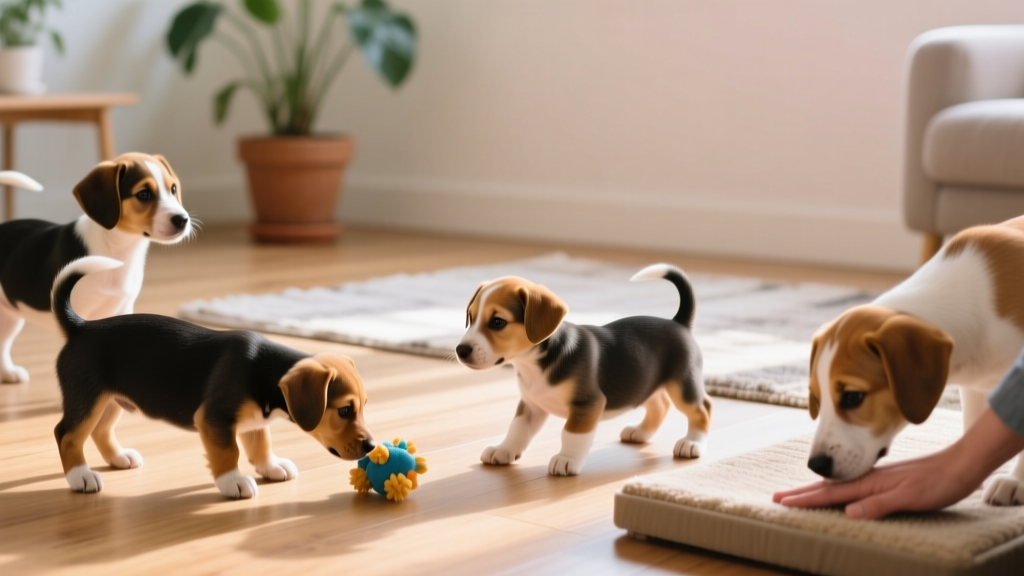
Miniature Aussie Puppies: Complete Week-by-Week Care & Training Guide
Everything you need to raise miniature Aussie puppies: week-by-week milestones, feeding schedules, potty training timelines, vaccination charts, and

Bringing Home Miniature Aussie Puppies: What to Expect
Miniature American Shepherds (often called Mini Aussies) are compact herding dogs with outsized intelligence and energy. Standing 13–18 inches tall and weighing 20–40 pounds at maturity, these puppies pack the drive of a full-size Australian Shepherd into a smaller frame. That combination — brilliant brain, relentless work ethic, and strong bonding instinct — makes raising miniature Aussie puppies both deeply rewarding and genuinely challenging.
This guide covers every developmental stage from week 4 through month 12, with breed-specific advice on feeding, socialization, training, and health. If you're preparing for a new Mini Aussie, bookmark this page — you'll reference it often.
When Should I Bring My Miniature Aussie Puppy Home?
The ideal age to bring a Mini Aussie puppy home is 8 to 10 weeks. While some states permit sales at 7 weeks, veterinary behaviorists strongly recommend waiting until at least 8 weeks. Mini Aussies are a sensitive, handler-oriented breed — those extra two weeks with littermates teach bite inhibition, canine communication, and emotional regulation that no human can replicate.
Puppies removed before 8 weeks show statistically higher rates of fear-based reactivity, resource guarding, and difficulty settling — problems that compound in an already-intense herding breed. If your breeder offers a 10- or 12-week start (common with show-potential puppies), consider it. A puppy with 4 extra weeks of socialization and crate training from the breeder often transitions more smoothly than one brought home at 8 weeks.
Age-Specific Milestones for Miniature Aussie Puppies
Mini Aussies mature faster mentally than physically. Their herding instincts can surface as early as 8 weeks — you may see stalking, nipping at heels, or circling behavior. Understanding what's normal at each stage prevents unnecessary panic and helps you respond appropriately.
| Age Range | Weight Range | Key Milestones | What to Expect |
|---|---|---|---|
| 4–8 weeks | 2–5 lb / 0.9–2.3 kg | Weaning, littermate play, early socialization by breeder | Puppy learns bite inhibition from siblings, starts eating gruel/kibble, begins exploring environment. Breeder should handle daily and expose to novel surfaces/sounds. |
| 8–12 weeks | 5–10 lb / 2.3–4.5 kg | Primary fear period (8–11 weeks), bonding, crate introduction | Highly impressionable. Negative experiences can create lasting phobias. Expect clingy behavior, startle responses, and testing boundaries. Peak cuteness — and peak mischief. |
| 12–16 weeks | 10–16 lb / 4.5–7.3 kg | Teething begins, bladder control improves, first group training classes | Chewing intensifies. Puppy starts showing preferences and mild stubbornness. Recall training becomes critical before independence grows. |
| 16–24 weeks | 16–25 lb / 7.3–11.3 kg | Fear period #2 (around 6 months), adult teeth emerge, spay/neuter window | Previously confident puppy may suddenly fear familiar objects/people. Herding behaviors (nipping, chasing) peak. Impulse control training is essential. |
| 6–12 months | 25–40 lb / 11.3–18.1 kg | Adolescent rebellion, sexual maturity, advanced training readiness | Known commands may be "forgotten." Energy output peaks at 2–3 hours of activity needed daily. Growth plates close around 12–14 months — avoid forced running on hard surfaces until then. |
Feeding Schedule: Portions, Frequency, and Puppy Food Selection
Mini Aussies are active, lean dogs prone to becoming overweight if overfed — which stresses developing joints and increases hip dysplasia risk. Feed a food formulated for small-to-medium breed puppies (not large-breed formula, which restricts calories too aggressively for their metabolic rate). Look for an AAFCO statement confirming "growth" or "all life stages" suitability.
Choose a kibble with 22–28% protein and 12–18% fat on a dry matter basis. First ingredient should be a named animal protein (chicken, lamb, salmon). Avoid grain-free diets unless your veterinarian specifically recommends one — the FDA has flagged a potential link between grain-free diets and dilated cardiomyopathy (DCM).
| Puppy Age | Meals Per Day | Estimated Daily Amount (cups) | Notes |
|---|---|---|---|
| 8–12 weeks | 4 meals | ¾ to 1 cup total | Soak kibble in warm water for first week home if puppy struggles with hard pieces. Divide into 4 equal meals spaced 3–4 hours apart. |
| 12–16 weeks | 3 meals | 1 to 1¼ cups total | Drop to 3 meals as bladder capacity increases. Morning, midday, and early evening (no later than 6 PM to aid potty training). |
| 4–6 months | 3 meals → 2 meals | 1¼ to 1¾ cups total | Transition to 2 meals around 5 months. Increase portions gradually over 7–10 days when switching meal frequency. |
| 6–12 months | 2 meals | 1½ to 2 cups total | Adjust based on body condition score (BCS). You should feel ribs easily without pressing, and see a defined waist from above. Active puppies in training may need the higher end. |
Potty Training Timeline and Realistic Expectations
Mini Aussies are highly trainable, but their small bladders and high metabolism mean frequent outings in the early months. Here's a realistic timeline — not the "fully trained in 3 days" fantasy some blogs promote.
The general rule: A puppy can hold their bladder roughly one hour per month of age, plus one. So a 3-month-old puppy can hold it about 4 hours maximum — and that's during the day, awake. Overnight capacity is slightly longer because metabolism slows during sleep.
| Age | Maximum Hold Time (Day) | Maximum Hold Time (Night) | Outings Per 24 Hours | Accident Expectation |
|---|---|---|---|---|
| 8–10 weeks | 1–2 hours | 3–4 hours | 10–14 | Multiple daily accidents are normal. Not a training failure. |
| 10–14 weeks | 2–3 hours | 5–6 hours | 8–10 | 1–2 accidents per week. Frequency should be declining. |
| 14–20 weeks | 3–4 hours | 6–8 hours | 6–8 | Rare accidents. If frequent, revisit schedule and supervision. |
| 5–6 months | 4–5 hours | 8+ hours | 5–6 | Near-reliable with consistent schedule. Regression possible during fear periods. |
| 6–12 months | 6–8 hours | 8–10 hours | 4–5 | Most Mini Aussies are fully reliable by 6–7 months. Some males mark indoors until neutered. |
Potty Training Protocol for Mini Aussies
- Take puppy out immediately after: waking, eating, drinking, playing, and crate release. These are the highest-probability moments.
- Use a consistent cue word ("go potty" or "do your business") as the puppy eliminates. Reward with a high-value treat (freeze-dried liver, small cheese pieces) within 2 seconds of finishing — not after coming back inside.
- Supervise or confine. When you can't watch your puppy 100%, they go in a crate or puppy-proofed pen. Unsupervised roaming is the #1 cause of potty training setbacks.
- Never punish accidents. Mini Aussies are sensitive dogs — yelling or rubbing their nose in it creates fear of eliminating in front of you, which leads to hiding behind furniture to pee. Clean accidents with enzymatic cleaner (Nature's Miracle or Rocco & Roxie) to remove scent markers.
Troubleshooting Common Potty Training Issues
Problem: Puppy pees in crate.
Cause: Crate is too large (puppy eliminates in one corner, sleeps in another), or puppy was left too long. Size the crate so puppy can stand, turn, and lie down — no more. Use a divider panel in a wire crate to adjust as they grow.
Problem: Puppy pees outside, then immediately pees inside after coming in.
Cause: Incomplete emptying. Stay outside 5–10 minutes until puppy fully empties. Some Mini Aussies get distracted by yard stimuli and don't fully void.
Socialization Window: Weeks 3–14 (Don't Miss This)
The primary socialization period for puppies closes around 12–14 weeks of age. After this window, novel experiences trigger caution rather than curiosity. For Mini Aussies — a breed predisposed to wariness of strangers and environmental sensitivity — this window is the most critical investment you'll make.
The AVMA recommends structured socialization beginning as early as possible, even before all vaccines are complete. The risk of behavioral euthanasia from poor socialization statistically exceeds the risk of infectious disease in controlled environments.
Mini Aussie Socialization Checklist (Weeks 3–14)
- People (minimum 30 different people): Men with beards, children ages 4–12, people wearing hats/sunglasses/hoodies, people in wheelchairs, people carrying umbrellas, delivery workers, tall people, short people, people of different ethnicities
- Dogs (minimum 10 vaccinated, friendly dogs): Large breeds, small breeds, floppy ears, prick ears, different energy levels. Avoid dog parks until fully vaccinated — use structured puppy playgroups instead.
- Surfaces: Grass, gravel, metal grates, wet pavement, carpet, tile, plastic tarps, wobble boards
- Sounds: Vacuum cleaners, doorbells, thunderstorm recordings (start at low volume), traffic, children screaming, clapping, power tools (at distance)
- Handling: Paw touching, ear inspection, mouth opening, nail clipping practice, being held in different positions, gentle restraint
- Environments: Car rides (short trips to fun places, not just vet), pet store visits (carried before vaccines complete), outdoor seating areas, parking lots, school playgrounds (observing from distance)
- Objects: Bicycles, skateboards, trash cans, flags, balloons, plastic bags blowing in wind
Vaccination Schedule for Miniature Aussie Puppies
Follow the core vaccination protocol recommended by the American Kennel Club and your veterinarian. Mini Aussies don't require a modified schedule, but be aware that this breed can carry the MDR1 gene mutation (multi-drug resistance 1), which affects drug sensitivity. Ask your vet about MDR1 testing before any procedures requiring sedation or certain medications like ivermectin.
| Age | Vaccines Administered | Notes |
|---|---|---|
| 6–8 weeks | DHPP (Distemper, Hepatitis/Adenovirus, Parainfluenza, Parvovirus) — 1st dose | Often given by breeder. Confirm and get records. Bordetella (kennel cough) may also be given if puppy will attend group classes. |
| 10–12 weeks | DHPP — 2nd dose; Bordetella (if not given earlier); Leptospirosis — 1st dose (recommended in most US areas) | Leptospirosis is increasingly common in suburban areas with wildlife. Discuss with your vet based on local prevalence. |
| 14–16 weeks | DHPP — 3rd (final) dose; Rabies (required by law); Leptospirosis — 2nd dose | After the final DHPP at 14–16 weeks, wait 1–2 weeks before visiting high-traffic dog areas (parks, trails with unknown dog traffic). |
| 12–16 months | DHPP booster; Rabies booster; Leptospirosis annual booster | After first adult boosters, DHPP may move to 3-year intervals depending on vaccine type. Rabies intervals vary by state law. |
Teething Timeline and Relief Strategies (3–6 Months)
Mini Aussie puppies begin losing baby teeth around 12–16 weeks, with the process typically complete by 6–7 months. During this window, your puppy will chew everything — not out of defiance, but because chewing relieves gum pain from erupting adult teeth.
Teething Stages
- 12–16 weeks: Incisors (front teeth) loosen and fall out. You may find tiny teeth on the floor or in food bowls. Mild bleeding from gums is normal.
- 16–20 weeks: Canines (fangs) and premolars emerge. This is peak chewing intensity. Puppies seek hard, cold objects for relief.
- 20–28 weeks: Molars come in at the back. Chewing may decrease slightly but continues. Retained baby teeth (especially canines) should be evaluated by your vet — Mini Aussies occasionally need retained deciduous teeth extracted.
Safe Chew Recommendations
- Kong Classic (size Small for puppies under 20 lb, Medium for 20–35 lb): Fill with plain yogurt mixed with pumpkin puree and freeze for 4 hours. The cold numbs sore gums.
- Benebone Puppy Wishbone: Designed for puppies under 30 lb. Softer nylon than adult versions. Replace when worn smooth.
- Frozen wet washcloth: Wet a clean washcloth, twist into a rope, freeze for 2 hours. Supervise use — remove if puppy starts tearing and ingesting fabric.
- Whimzees Puppy Chews: Edible, digestible dental chews appropriate for puppies 3+ months. Size appropriately for your puppy's weight.
Avoid: Rawhide (choking and intestinal blockage risk), real bones (tooth fractures), antlers (too hard for puppy teeth), and any chew small enough to swallow whole.
Crate Training Progression and Time Limits
Mini Aussies bond intensely with their people and can develop separation anxiety if crating is rushed or used punitively. Done correctly, the crate becomes their chosen retreat — many adult Mini Aussies voluntarily nap in open crates.
| Puppy Age | Maximum Crate Time (Day) | Maximum Crate Time (Night) | Training Goal |
|---|---|---|---|
| 8–10 weeks | 1–2 hours | 3–4 hours (expect one potty break) | Build positive association. Feed meals in crate. Nap in crate with door open. Short absences (5–15 minutes) while puppy naps. |
| 10–14 weeks | 2–3 hours | 4–6 hours (one potty break may be needed) | Puppy enters crate voluntarily for treats. Practice leaving room for 30–60 minutes. Use puzzle toys (Kong, Toppl) for longer sessions. |
| 14–20 weeks | 3–4 hours | 6–8 hours | Comfortable with door closed during household activity. Begin crating in different rooms. White noise machine helps light-sleeping Mini Aussies. |
| 5–6 months | 4–5 hours | 8 hours (overnight) | Settles quickly when crated. No whining beyond initial protest. Can handle being crated while you do errands. |
| 6–12 months | 5–6 hours maximum | 8–10 hours | Transition to free-roaming during day can begin if puppy is reliable. Keep crate available as den. Never crate more than 6 hours during waking hours. |
Crate sizing for Mini Aussies: A 30-inch wire crate (with divider) fits most Mini Aussies from puppyhood through adulthood. The mature dog should be able to stand without ducking, turn in a full circle, and lie stretched out. Midwest iCrate and Frisco double-door crates in the 30" size are reliable, well-ventilated options in the $45–$70 range.
Common Miniature Aussie Puppy Problems and Solutions
Every breed has its challenges. Mini Aussies are no exception — their herding heritage creates specific puppy behaviors that catch first-time owners off guard.
Problem: Nipping and Heel-Biting
Why it happens: Herding dogs are genetically programmed to nip at the heels of moving animals. Your ankles, children's legs, and other pets' tails are all fair game to a Mini Aussie puppy practicing instinctive behavior.
Solution: Redirect to an appropriate chew toy the moment nipping starts. If puppy continues, immediately stop moving (freeze like a tree) — moving targets trigger the herding drive. Once puppy sits or disengages, reward with a toy or treat. For persistent nipping, implement a "three strikes" rule: redirect, redirect, then a 30-second timeout in the pen. Consistency from every family member is essential.
Problem: Excessive Whining and Vocalization
Why it happens: Mini Aussies are communicative dogs. Whining in the crate typically signals one of three things: need to eliminate, boredom, or anxiety. Learn to distinguish them — a puppy who needs to potty whines differently (urgent, escalating) than one who is bored (intermittent, self-soothing).
Solution: For potty whining: always take puppy out immediately (even at 3 AM — this reinforces that the crate is not a bathroom). For boredom whining: provide a frozen Kong or lick mat before crating. For anxiety whining: move the crate to your bedroom initially, then gradually relocate over 2–3 weeks. Covering the crate with a breathable blanket reduces visual stimulation that triggers alertness.
Problem: Destructive Chewing
Why it happens: Beyond teething, Mini Aussies chew when under-stimulated. A bored herding dog will create their own entertainment — usually involving your shoes, baseboards, or furniture legs.
Solution: Provide a minimum of 45–60 minutes of structured physical exercise and 20–30 minutes of mental stimulation (training sessions, puzzle feeders, scent work) daily for puppies 4+ months. Rotate toys every 3 days to maintain novelty. Puppy-proof one room rather than trying to protect the entire house.
First-Year Cost Breakdown for a Miniature Aussie
Budget realistically. Mini Aussies are generally healthy, but their active nature means higher food costs than similarly-sized sedentary breeds, and their intelligence demands investment in training.
| Expense Category | Low Estimate | Mid Estimate | High Estimate | Details |
|---|---|---|---|---|
| Puppy purchase | $1,500 | $2,500 | $4,000+ | From health-tested breeder. Adoption/rescue: $200–$500. |
| Initial vet (vaccines, exam, deworming, microchip) | $350 | $500 | $700 | 3 puppy visits, DHPP series, rabies, bordetella, fecal tests. |
| Spay/neuter | $300 | $500 | $800 | Varies by clinic and region. Typically done at 6–9 months. |
| Food (12 months) | $360 | $540 | $720 | Quality puppy food at $40–$60/bag (25 lb), 1–2 cups/day. |
| Supplies (crate, bed, leash, harness, bowls, gates, toys) | $250 | $400 | $600 | One-time purchases. Plan for toy replacement every 2–3 months. |
| Training (puppy class + basic obedience) | $200 | $400 | $800 | Group classes: $150–$300 for 6-week session. Private sessions: $75–$125/hour. |
| Preventive medications (flea/tick, heartworm) | $200 | $350 | $500 | Year-round prevention recommended in most US regions. NexGard, Simparica Trio, or Interceptor Plus. |
| Pet insurance (optional but recommended) | $360 | $540 | $720 | $30–$60/month. Covers accidents and illnesses. Enroll at 8 weeks before any pre-existing conditions. |
| Total First Year | $3,520 | $5,730 | $8,840+ |
Ongoing annual costs after year one typically range from $1,500 to $2,800 (food, preventives, annual exam, insurance, toy replacement, and occasional grooming).
When Can My Puppy Go Outside and Meet Other Dogs?
This question balances disease risk against the closing socialization window. Here's the practical approach most veterinary behaviorists recommend:
- Before any vaccines (under 6 weeks): Carry puppy in arms to outdoor environments. Let them observe from a safe height. No ground contact in public areas.
- After first DHPP (6–8 weeks): Short walks in your own yard are safe. Invite known, fully-vaccinated adult dogs to your home for socialization. Avoid public dog areas.
- After second DHPP (10–12 weeks): Attend structured puppy socialization classes (most require proof of at least 2 DHPP doses and a negative fecal test). Puppy classes in clean, indoor facilities are generally low-risk.
- After final DHPP (14–16 weeks) + 1–2 week wait: Full access to dog parks, hiking trails, pet stores, and public areas. This is typically around 16–18 weeks of age.
Parvovirus survives in soil for months to years and is the primary concern. Areas with high, unknown dog traffic (dog parks, rest stop grass, pet store floors) carry the highest risk until vaccination is complete.
Frequently Asked Questions
How often should I feed my 10-week-old Mini Aussie puppy?
Four meals per day, spaced roughly 3–4 hours apart (e.g., 7 AM, 11 AM, 3 PM, 7 PM). Total daily portion is approximately ¾ to 1 cup of high-quality puppy kibble, divided equally across meals. Always provide fresh water. Remove uneaten food after 15–20 minutes to establish a feeding routine.
When will my Miniature Aussie puppy be fully potty trained?
Most Mini Aussies achieve reliable house training between 5 and 7 months of age with consistent scheduling. "Fully trained" means fewer than one accident per month. Males may take slightly longer, particularly if intact — marking behavior can persist until neutering. If your puppy is still having daily accidents past 6 months, consult your veterinarian to rule out urinary tract infection or anatomical issues.
How do I stop my Mini Aussie puppy from biting my hands?
Use the redirect-and-reward method: when puppy mouths your skin, say "ouch" in a calm voice (not a sharp yelp, which can excite some herding breeds), immediately offer a chew toy, and praise enthusiastically when they bite the toy instead. If nipping continues after two redirects, end the interaction by stepping over a baby gate for 30 seconds. This teaches that teeth on skin ends play. Never use physical punishment — it damages the trust-based bond Mini Aussies need.
Are Mini Aussie puppies good with children?
Well-socialized Mini Aussies are excellent family dogs, but their herding instinct means they may nip at running children's heels. Always supervise interactions between puppies and children under 10. Teach children to be calm around the puppy — no ear pulling, tail grabbing, or disturbing the puppy while sleeping. Enroll in a "puppy and kids" training session if available in your area.
Do Mini Aussies need professional grooming?
Mini Aussies have a moderate double coat that sheds year-round with heavier seasonal blows (spring and fall). They don't require professional haircuts — their coat is self-maintaining at a functional length. Weekly brushing with an undercoat rake and slicker brush (15–20 minutes) keeps shedding manageable. Professional grooming is optional but helpful for nail trims and sanitary trims if you're uncomfortable doing them at home. Budget $40–$65 per grooming session, 4–6 times per year if desired.
Robin Maitland
All our authors care for dogs every day — read more of their work on the authors page.