American Pitbull Dog Puppy Care: Week-by-Week Growth & Training Guide
Complete week-by-week guide to raising an American Pitbull dog puppy — feeding schedules, vaccination timelines, potty training, socialization, and first-year costs.

Bringing Home Your American Pitbull Dog Puppy: What to Expect
Raising an American Pitbull dog puppy is a rewarding commitment that demands preparation, consistency, and a solid understanding of how this breed develops. Pitbull puppies are muscular, energetic, and mouthy — traits that are endearing at eight weeks but require proactive management by the time they hit thirty pounds at four months. This guide gives you a concrete, week-by-week roadmap covering nutrition, health, behavior, and budgeting so you're never guessing what comes next.
Before we get into milestones, one important note: the term "American Pitbull" is often used broadly. The United Kennel Club (UKC) recognizes the American Pit Bull Terrier as a distinct breed, while the AKC recognizes the closely related American Staffordshire Terrier. Many puppies labeled "pitbull" are mixes of these and related bully breeds. Regardless of exact lineage, the developmental timeline and care principles below apply broadly to stocky, athletic bully-type puppies.
When Should I Bring My Pitbull Puppy Home?
The ideal age to bring your American Pitbull dog puppy home is 8 to 10 weeks. Reputable breeders and rescue organizations keep puppies with their littermates until at least 8 weeks because this is when critical bite inhibition and canine social skills develop through sibling play. Puppies removed earlier often struggle with mouthy behavior and poor dog-to-dog communication later in life.
If your puppy is from a rescue and was separated early (6–7 weeks), you'll need to compensate with extra structured socialization and redirect-heavy bite inhibition training during weeks 8–14. More on that in the socialization section below.
First 48 hours home: Expect some whining, loose stools from stress, and a reduced appetite. Keep the environment quiet, limit visitors to immediate family, and stick to whatever food the breeder or rescue was feeding — even if you plan to transition later. Sudden diet changes on top of environmental stress is a recipe for gastrointestinal upset.
Week-by-Week Milestones for Your American Pitbull Dog Puppy
Pitbull puppies are stocky and dense — your puppy will likely feel heavier than expected for their height. A 12-week-old American Pitbull puppy at 25 lb is not overweight; they're simply built with substantial bone and muscle. Use body condition scoring (ribs should be palpable without pressing, visible waist from above) rather than scale weight alone to assess fitness.
Feeding Schedule: Exact Portions for Your Pitbull Puppy
American Pitbull puppies need a high-quality, AAFCO-certified large-breed or all-life-stages puppy food to support their rapid musculoskeletal development. Despite being medium-sized dogs, their dense build and growth velocity benefit from controlled-growth formulas designed to prevent joint stress.
Recommended food criteria: Look for an AAFCO statement reading "formulated for growth" or "all life stages." The first ingredient should be a named animal protein (chicken, beef, lamb — not "meat meal" generically). Target crude protein of 22–28% and crude fat of 12–18% for controlled growth. Brands consistently meeting these standards include Purina Pro Plan Puppy, Royal Canin Medium Puppy, and Hill's Science Diet Puppy.
Food transition protocol: If switching foods, mix 25% new food with 75% old food for days 1–3, then 50/50 for days 4–6, then 75% new for days 7–9, fully transitioning by day 10. Rushing this causes diarrhea — and a pitbull puppy with diarrhea is a significant cleanup challenge.
Cost: A 30 lb bag of quality puppy kibble runs $55–$85 and lasts roughly 3–4 weeks during the 3–6 month appetite peak. Budget approximately $600–$900 for food in the first year.
Vaccination Schedule: Protecting Your Pitbull Puppy
Your American Pitbull dog puppy arrives with maternal antibodies that gradually wane, which is why vaccines are given in a series. Until the full series is complete, your puppy is vulnerable to parvovirus, distemper, and other potentially fatal diseases.
The American Veterinary Medical Association (AVMA) recommends core vaccines (DHPP and Rabies) for all puppies regardless of breed or lifestyle. Non-core vaccines like Bordetella, Leptospirosis, and Lyme depend on your geographic region and your dog's exposure risk — discuss these with your veterinarian at your puppy's first exam.
Parvovirus warning: Parvo is devastating and disproportionately fatal in puppies under 16 weeks. It survives in soil for months. Until your puppy has completed the full DHPP series (typically after the 16-week dose), avoid public dog parks, pet store floors, and areas where unknown dogs defecate. Carry your puppy in public spaces and limit dog-to-dog contact to known, fully vaccinated dogs in private yards.
The Critical Socialization Window: Weeks 3–14
This is arguably the most important section of this entire guide. The American Kennel Club (AKC) and veterinary behaviorists agree that the primary socialization window for puppies closes around 12–14 weeks of age. What your American Pitbull dog puppy experiences — positively — during this window will shape their temperament for life.
For a breed that faces public stigma and breed-specific restrictions, a well-socialized pitbull is not just a happier dog — it's an ambassador. Under-socialized pitbulls who develop fear-based reactivity or dog aggression face disproportionate consequences compared to other breeds exhibiting identical behaviors.
Socialization Exposure Checklist (Weeks 8–14)
Aim to expose your puppy to each category below. Every exposure should be paired with high-value treats (small pieces of chicken, cheese, or commercial training treats) and should be at your puppy's pace — never forced.
- People (minimum 20 unique individuals): Men with beards, women in hats, children (supervised), people in wheelchairs, people wearing sunglasses, delivery workers, people of different ethnicities and heights
- Other animals: Fully vaccinated adult dogs (calm, tolerant ones), cats (if household has them), livestock if rural
- Surfaces: Gravel, metal grates, wet grass, sand, tarps, tile floors, stairs
- Sounds: Vacuum cleaner (start distant, gradually closer), thunderstorms (play recordings at low volume), fireworks recordings, doorbells, car horns, construction noise
- Handling exercises: Paw handling, ear touching, mouth opening, nail clipping simulation, being held gently on their side, wearing a harness and collar
- Environments: Car rides, vet clinic waiting room (happy visits with treats, no procedures), outdoor café patios, quiet sidewalks, parking lots, friends' houses
- Objects: Umbrellas opening, brooms, plastic bags rustling, bicycles passing, skateboards, shopping carts
Quantity target: Aim for 5–10 new positive exposures per day during weeks 8–12. Keep sessions short (2–5 minutes) and always end on a positive note. If your puppy shows fear (cowering, tucked tail, frozen), increase distance from the trigger and toss treats — don't force the interaction.
Potty Training: Realistic Timeline and Troubleshooting
Here's the honest truth: most American Pitbull dog puppies are not reliably house-trained until 4–6 months of age. Some achieve consistency by 16 weeks; others take longer. Bladder capacity develops on a rough formula of one hour per month of age plus one — so a 3-month-old puppy can hold it approximately 4 hours maximum, and that's during the day while relatively calm. Overnight capacity is slightly longer because metabolism slows.
Potty Training Schedule by Age
Method that works: Take your puppy to the same outdoor spot every time. Use a consistent cue word ("go potty" or "do your business") said calmly while they eliminate. Reward immediately after they finish — treat within 2 seconds, not after they come back inside. Timing is everything.
Troubleshooting common problems:
- Accidents inside: Clean with enzymatic cleaner (Nature's Miracle or Rocco & Roxie), not ammonia-based products. Ammonia smells like urine to dogs and attracts repeat elimination.
- Submissive/excited urination: Common in pitbull puppies. Greet calmly, ignore the puppy for 30 seconds upon entering, take them outside immediately. Do not punish — this is involuntary and worsens with scolding.
- Regression at 4–5 months: Normal developmental phase. Return to higher-frequency outdoor trips for 1–2 weeks. Also rule out urinary tract infection with your vet if accidents suddenly increase.
Crate Training Progression and Time Limits
A crate is your pitbull puppy's den and your most effective potty training tool. Pitbulls generally accept crates well if introduced properly because they're den-oriented dogs who seek enclosed, cozy spaces.
Introduction protocol (Day 1–7):
- Place crate in a common area with door open, soft bedding inside, and scatter high-value treats and a stuffed Kong in the back.
- Feed all meals inside the crate with door open for the first 3–4 days.
- Begin closing the door during meals, opening immediately when finished.
- Progress to closing the door while puppy eats, then sitting nearby for 5 minutes, then 10, then leaving the room for 1 minute, gradually increasing.
- Never use the crate as punishment. It must remain a positive space.
Maximum crate time limits:
- 8–10 weeks: 1–2 hours (daytime), 2–3 hours (overnight with potty break)
- 10–14 weeks: 2–3 hours (daytime), 4–5 hours (overnight with possible potty break)
- 14–20 weeks: 3–4 hours (daytime), 6–8 hours (overnight)
- 5–6 months: 4–5 hours (daytime), 8 hours (overnight)
Exceeding these limits causes distress, whining, and potential crate-soiling that undermines potty training. If you work full-time, arrange a midday dog walker or come home during lunch for the first 4 months.
Teething Timeline and Relief Strategies (3–6 Months)
American Pitbull puppies are notoriously mouthy, and teething amplifies this trait significantly. Baby teeth (deciduous teeth) begin erupting at 3–4 weeks and are fully in by 6–8 weeks. Adult teeth begin pushing out baby teeth around 3.5–4 months, with the process typically complete by 6–7 months.
Teething signs: Increased chewing, drooling, mild gum bleeding (pink-tinged drool is normal), decreased appetite for hard kibble, irritability, and finding small teeth around the house.
Safe Chew Recommendations by Stage
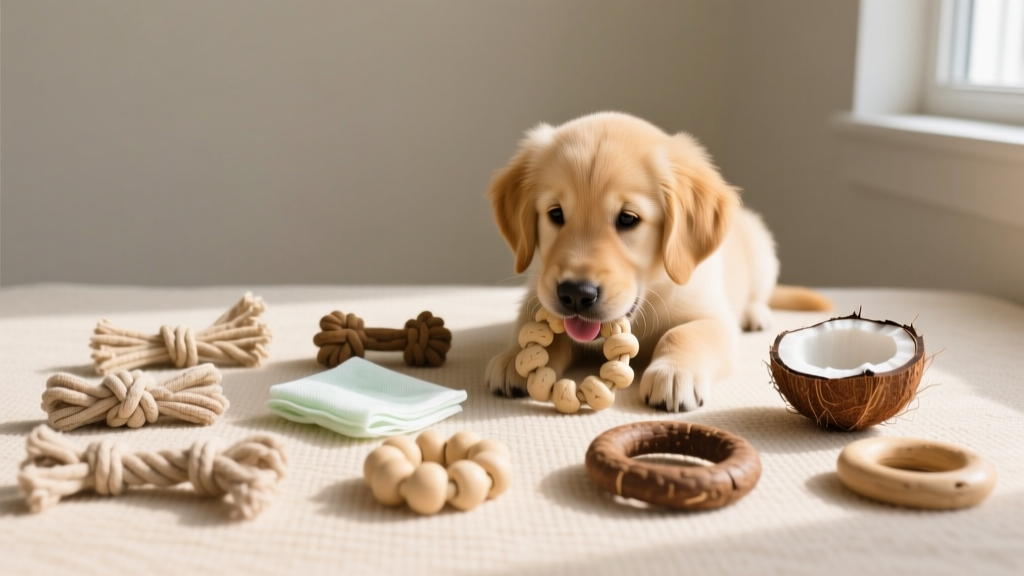
- 3–4 months (baby teeth loosening): Frozen wet washcloths (twist, wet, freeze), rubber KONG Classic (puppy size, stuffed with peanut butter and frozen), Nylabone Puppy Chew (soft formula)
- 4–5 months (peak teething): Benebone Puppy (wishbone shape, softer nylon), frozen carrot sticks (supervised), West Paw Zogoflex Hurley (indestructible rubber, dishwasher safe)
- 5–7 months (adult teeth settling): Transition to adult Nylabone or Benebone, bully sticks (supervised, remove when small enough to swallow), antlers are NOT recommended — they fracture teeth
Common Pitbull Puppy Problems and Solutions
Every breed has its quirks. Here are the three most common behavioral challenges specific to American Pitbull dog puppies, with actionable solutions rooted in positive reinforcement methods.
1. Excessive Biting and Nipping
Pitbull puppies are mouth-oriented by nature — they explore the world with their jaws. This is normal but must be managed early. Between 8–16 weeks, your puppy is learning bite inhibition (how much pressure is acceptable).
Solution: When teeth touch skin, say "ouch" in a calm, slightly surprised tone (not yelling), then immediately redirect to an appropriate chew toy. If the puppy continues, withdraw attention for 15–20 seconds (stand up, turn away, or step behind a baby gate). Resume play and repeat. Consistency from every family member is critical — mixed signals (sometimes allowing mouthing, sometimes scolding) confuse the puppy and prolong the behavior. Expect improvement within 2–4 weeks of consistent application.
2. Destructive Chewing
A pitbull puppy's jaw strength is exceptional for their size. By 4–5 months, they can destroy furniture legs, baseboards, and shoes in minutes if left unsupervised.
Solution: Puppy-proof your home by removing accessible items, using bitter apple spray on furniture legs, and providing a rotation of appropriate chews. The crate is your management tool when you cannot directly supervise. A tired puppy is less likely to chew destructively — ensure your pitbull puppy gets adequate physical exercise (see exercise guidelines below) and mental stimulation (food puzzles, training sessions, snuffle mats).
3. Jumping and Overexcitement
Pitbulls are physical, exuberant dogs who express joy with their whole body. Jumping on people starts cute at 15 lb and becomes problematic at 55 lb.
Solution: Teach "four on the floor" from day one. When puppy jumps, turn your back and cross your arms (remove all attention). The instant all four paws are on the ground, turn and reward with a treat and calm praise. Ask visitors to do the same. An alternative behavior to teach is "sit to greet" — the puppy learns that sitting, not jumping, earns attention.
Exercise Requirements by Age
Pitbull puppies have bursts of intense energy followed by long naps (puppies sleep 18–20 hours per day). The general rule is 5 minutes of structured exercise per month of age, twice daily. This protects developing joints while burning energy.
- 8–12 weeks: 10–15 minute play sessions, 2x/day (indoor fetch, gentle tug, free play in yard)
- 3–4 months: 15–20 minute walks + play sessions, 2x/day
- 4–6 months: 20–30 minute walks + play, 2x/day
- 6–12 months: 30–45 minute walks + structured play, 2x/day
Avoid forced running (jogging alongside you), jumping from heights, and repetitive high-impact activity until growth plates close around 12–14 months. This protects against joint injuries in a breed already predisposed to hip dysplasia and cranial cruciate ligament tears.
First-Year Cost Breakdown
Raising an American Pitbull dog puppy is a significant financial commitment. Here's a realistic budget for year one based on 2026 pricing.
Consult your veterinarian about the appropriate preventive medication schedule for your region, as heartworm prevalence and flea/tick species vary significantly across the United States.
When Can My Pitbull Puppy Go Outside and Meet Other Dogs?
This is one of the most common questions from new pitbull puppy owners, and the answer balances disease risk against socialization urgency.
Safe immediately (from day one home):
- Private yard (if no unknown dogs have access)
- Carrying your puppy in public (parks, outdoor cafés, sidewalks) for environmental exposure
- Playdates in private homes with known, fully vaccinated, temperament-tested adult dogs
Safe after full vaccination (typically 18–20 weeks, 2 weeks post-final DHPP):
- Public dog parks (though many trainers advise against dog parks for pitbulls due to breed-specific liability and unpredictable dog dynamics)
- Pet store floors
- Grooming salons
- Group training classes (many accept puppies after second DHPP at 12 weeks — check with the facility)
The Merck Veterinary Manual recommends that socialization not be delayed until full vaccination is complete. The risk of behavioral problems from under-socialization outweighs the disease risk when exposures are managed carefully (controlled environments, known-vaccination-status dogs only).
Frequently Asked Questions
How often should I feed my pitbull puppy at 10 weeks?
At 10 weeks, feed your American Pitbull puppy 4 meals per day, spaced roughly 4 hours apart during waking hours (e.g., 7 AM, 11 AM, 3 PM, 7 PM). Each meal should be approximately ⅓ to ½ cup of high-quality puppy kibble, depending on your puppy's weight and appetite. Adjust based on body condition — you should feel ribs easily without seeing them prominently.
When will my pitbull puppy be fully potty trained?
Most pitbull puppies achieve reliable house training between 4–6 months with consistent scheduling and positive reinforcement. Some may be reliable by 16 weeks; others take until 7–8 months, especially males. Occasional accidents during excitement or routine disruptions can happen through the first year. If accidents persist beyond 8 months despite consistent training, consult your veterinarian to rule out medical causes.
How do I stop my pitbull puppy from biting my hands and ankles?
Redirect every bite to an appropriate chew toy immediately. If biting continues, withdraw attention for 15–20 seconds (turn away or step behind a gate). Teach family members to do the same. Provide adequate exercise and mental stimulation — an under-exercised pitbull puppy bites more. Expect noticeable improvement within 2–4 weeks. Never hit, hold the mouth shut, or use physical punishment — this damages trust and can escalate to defensive biting.
Are pitbull puppies good with children?
Well-bred, well-socialized pitbull puppies are typically affectionate and tolerant with children. However, no puppy of any breed should be left unsupervised with young children. Teach children to respect the puppy's crate and sleeping space, not to pull ears or tail, and to let the puppy come to them. Pitbulls are strong and exuberant — a 40 lb adolescent can accidentally knock over a toddler during play.
Should I spay or neuter my pitbull puppy, and when?
Current veterinary guidance for medium-to-large breeds recommends spaying or neutering between 6–12 months, after the puppy has reached physical maturity but before sexual behaviors become entrenched. Early spay/neuter (before 6 months) may increase risk of certain orthopedic conditions. Discuss timing with your veterinarian based on your individual puppy's development, household composition, and lifestyle.
📞 Emergency Resources:
If your puppy ingests something potentially toxic, contact ASPCA Animal Poison Control: (888) 426-4435 (24/7, consultation fee applies) or Pet Poison Helpline: (855) 764-7661.
For urgent medical concerns after hours, locate your nearest emergency veterinary clinic before you need one — save their number in your phone now.
Anouk Beaumont
All our authors care for dogs every day — read more of their work on the authors page.