Lhasa Apso Puppies: Complete Week-by-Week Care Guide
Everything you need to know about raising Lhasa Apso puppies — milestones, feeding schedules, potty training timelines, vaccinations, and first-year costs.

Bringing Home Your Lhasa Apso Puppy: What to Expect
The Lhasa Apso is a small but mighty companion breed with a 2,000-year history as sentinel dogs in Tibetan monasteries. Weighing just 12–18 lb (5.4–8.2 kg) at maturity, these dogs punch well above their weight in personality — independent, alert, and deeply loyal to their families. But raising Lhasa Apso puppies requires breed-specific preparation that generic puppy guides simply don't cover.
This guide walks you through every developmental stage from 8 weeks to 12 months, with exact feeding portions, vaccination dates, potty training benchmarks, and a realistic first-year budget. Whether you've already reserved a puppy from a breeder or you're researching before committing, this is your roadmap.
Responsible breeders typically release Lhasa Apso puppies between 8 and 10 weeks of age. Because this breed matures slowly — both physically and emotionally — many experienced breeders prefer to hold puppies until 10 weeks. The extra two weeks with littermates helps develop bite inhibition and social confidence. Never accept a Lhasa puppy younger than 8 weeks; the AKC recommends small breeds stay with their mother a minimum of 8 weeks to avoid developmental and behavioral setbacks.
Lhasa Apso Puppy Milestones: Week by Week
Understanding what's normal at each stage prevents unnecessary panic and helps you provide the right support at the right time. Lhasa Apsos develop more slowly than many breeds — don't expect the same timeline you'd see in a Labrador Retriever.
Weeks 4–8: The Breeder's Window (Before You)
- Physical: Baby teeth fully erupted; eyes and ears fully functional; weight approximately 1.5–3 lb (0.7–1.4 kg)
- Behavioral: Learning bite inhibition from littermates; first fear imprint period begins around week 8
- Socialization: Critical exposure to varied surfaces, sounds, and gentle human handling should be underway
- Your role: Ask your breeder for documentation of early neurological stimulation (ENS) and a socialization log
Weeks 8–12: The Homecoming Phase
- Physical: Weight gain of roughly 0.5–1 lb per week; sleeping 18–20 hours per day
- Behavioral: Bonding intensely with primary caregiver; may show wariness with strangers (normal for breed); second fear imprint period peaks around week 8–10
- Household: Learning name recognition, crate acceptance, and first potty routines
- Exercise limit: 5 minutes of structured leash walking per month of age (so ~10 minutes at 8 weeks)
Weeks 12–16: Confidence Building
- Physical: Adult coat beginning to emerge beneath puppy coat; weight reaching 5–8 lb (2.3–3.6 kg)
- Behavioral: Testing boundaries; may begin selective hearing with recall commands; guarding instincts may surface as alert barking
- Training: Ideal window for puppy kindergarten classes (after second DHPP vaccine); start leash manners
- Socialization window closing: This is your last chance for easy, positive first exposures — use it aggressively
Weeks 16–24: The Adolescent Shift
- Physical: Teething begins around 16 weeks; adult teeth pushing out baby teeth; reaching 60–70% of adult weight
- Behavioral: Independence increases; may seem to "forget" training; fear periods can recur around 6 months
- Grooming: Transition from puppy coat to adult coat requires increased brushing — mats form rapidly during this coat change
- Training: Increase difficulty gradually; introduce duration and distance in commands
6–12 Months: Approaching Maturity
- Physical: Growth plateaus around 9–10 months; adult weight of 12–18 lb (5.4–8.2 kg) typically reached by 10–12 months
- Behavioral: Full personality emerges — expect the classic Lhasa independence, keen watchdog alertness, and strong family loyalty
- Spay/Neuter: Most veterinarians recommend between 6–9 months for small breeds; discuss timing with your vet
- Exercise: Can handle 25–35 minutes of daily activity split into two sessions
Feeding Schedule: Exact Portions by Age and Weight
Lhasa Apsos are prone to obesity as adults, so establishing proper portion control from puppyhood matters more than with many breeds. Use a kitchen scale rather than relying on cup measurements alone — kibble density varies significantly between brands.
| Age | Meals Per Day | Daily Amount (kibble) | Estimated Puppy Weight | Notes |
|---|---|---|---|---|
| 8–12 weeks | 4 meals | ⅜ – ½ cup/day (35–50 g) | 2–5 lb (0.9–2.3 kg) | Use puppy-specific small-breed formula; moisten kibble slightly if teeth are still settling |
| 3–6 months | 3 meals | ½ – ⅔ cup/day (50–65 g) | 5–10 lb (2.3–4.5 kg) | Switch to dry kibble fully; monitor body condition score — ribs should be palpable but not visible |
| 6–9 months | 2 meals | ⅔ – ¾ cup/day (65–75 g) | 10–15 lb (4.5–6.8 kg) | Growth slowing; adjust portions if BCS exceeds 5/9 |
| 9–12 months | 2 meals | ¾ – 1 cup/day (75–95 g) | 12–18 lb (5.4–8.2 kg) | Begin transitioning to adult small-breed formula around 10–12 months |
What to feed: Look for an AAFCO statement confirming "complete and balanced" nutrition for growth or all life stages. Brands like Royal Canin Small Puppy, Hill's Science Diet Small Paws Puppy, or Purina Pro Plan Small Breed Puppy are formulated for the higher caloric density small-breed puppies need. Always ensure fresh water is available — Lhasa Apsos can be finicky drinkers, so consider a pet fountain to encourage hydration.
At 8–12 weeks: 4 meals daily (approximately every 4 hours during waking hours). At 3–6 months: 3 meals daily. At 6+ months: 2 meals daily. Small-breed puppies are prone to hypoglycemia if meals are skipped, so consistency matters more than with larger breeds.
Vaccination Schedule for Lhasa Apso Puppies
Your veterinarian will customize this schedule based on your location and local disease prevalence, but the following represents the standard protocol recommended by the American Veterinary Medical Association and the AAHA canine vaccination guidelines.
| Age | Vaccines | What It Protects Against | Estimated Cost |
|---|---|---|---|
| 6–8 weeks | DHPP (1st dose) | Distemper, Hepatitis (Adenovirus), Parainfluenza, Parvovirus | $25–$45 |
| 10–12 weeks | DHPP (2nd dose), Bordetella, Leptospirosis (if recommended) | Booster for core diseases; kennel cough; bacterial infection from contaminated water | $40–$70 |
| 14–16 weeks | DHPP (3rd dose), Rabies | Final core booster; rabies (legally required in most US states) | $45–$85 |
| 12–16 months | DHPP booster, Rabies booster | Annual or 3-year boosters depending on vaccine type and local law | $40–$80 |
When can my puppy go outside or meet other dogs? Until your Lhasa Apso puppy has received their second DHPP vaccine at 10–12 weeks, avoid public areas where unvaccinated dogs may have been — this includes dog parks, pet stores, and sidewalks in high-traffic dog areas. Parvovirus can survive in soil for months. However, controlled socialization with known, fully vaccinated dogs in private yards is safe and encouraged. After the 14–16 week DHPP booster, your puppy has reliable protection and can explore public spaces freely.
Socialization Window: Weeks 3–14
The Merck Veterinary Manual identifies the primary socialization period in puppies as roughly 3 to 14 weeks of age. For Lhasa Apsos — a breed naturally inclined toward wariness with strangers — this window is critical. Missing it doesn't mean your dog is doomed to be fearful, but it does mean significantly more effort later.
Your goal during this period isn't to overwhelm your puppy but to provide positive, controlled exposures to as many novel stimuli as possible. Every experience should end on a good note — pair new things with treats and praise using positive reinforcement methods.
Breed-specific note: Lhasa Apsos were bred as alert dogs, so barking at novel stimuli is instinctive. Rather than punishing alert barking during socialization, acknowledge it ("Thank you!") and redirect attention with a treat. You're teaching your puppy that new things predict good outcomes, not threats.
Potty Training Timeline and Troubleshooting
Small breeds are notoriously harder to house-train than larger dogs, and Lhasa Apsos are no exception. Their small bladders mean they physically cannot hold it as long, and their independent streak means they may not feel motivated to "please" you the way a Golden Retriever would. Set realistic expectations.
| Age | Max Bladder Hold Time | Expected Accidents/Week | Milestone |
|---|---|---|---|
| 8–10 weeks | 1–2 hours | Daily (multiple) | Learning the concept of "outside = potty" |
| 10–14 weeks | 2–3 hours | 3–5 | Beginning to signal (sniffing, circling, going to door) |
| 14–20 weeks | 3–4 hours | 1–3 | Reliably going outside when taken; occasional regression |
| 5–8 months | 4–6 hours | 0–2 | Mostly reliable; accidents usually from schedule disruption |
| 8–12 months | 6–8 hours | 0–1 | Fully house-trained for most dogs |
When will my puppy be fully potty trained? Most Lhasa Apsos achieve reliable house-training between 6 and 9 months, though some take up to 12 months. This is longer than larger breeds and is normal for the breed. Consistency is the single biggest factor in your success.
Troubleshooting common problems:
- Submissive urination when greeting: Common in young Lhasas. Ignore the puppy for the first 30 seconds when arriving home; greet calmly at their level without looming over them.
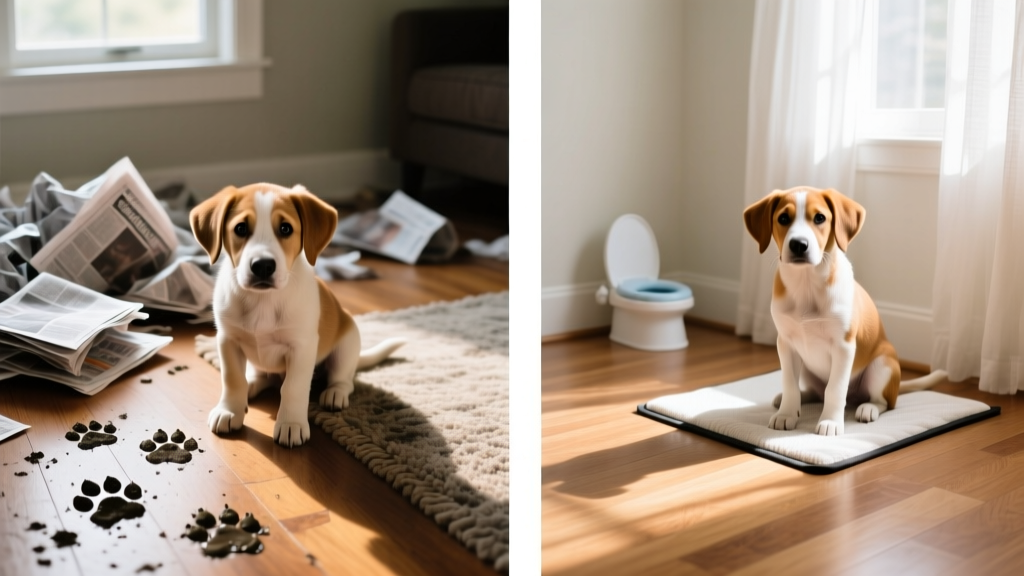
- Refusing to go outside in bad weather: Their long coat gets heavy when wet. Consider a covered potty area or a rain jacket for your puppy. Some owners successfully litter-train Lhasas as a weather backup — this is acceptable for the breed.
- Marking indoors (males): Can begin as early as 4–5 months. Neutering before sexual maturity (discuss with your vet) reduces but doesn't always eliminate this behavior. Interrupt with a neutral "oops" and redirect outside immediately.
- Nighttime accidents: Set an alarm for one overnight potty break until your puppy is 14–16 weeks old. Place the crate near your bedroom so you can hear whining.
Crate Training Progression and Time Limits
A crate is your most powerful tool for house-training and preventing destructive behavior, but Lhasa Apsos can be vocal about their displeasure. Expect protest barking the first 3–7 nights — this is normal and will pass if you remain consistent.
Crate time limits by age:
- 8–10 weeks: Maximum 1–2 hours during the day; overnight with one potty break
- 10–14 weeks: Maximum 2–3 hours during the day; overnight 5–6 hours possible
- 14–20 weeks: Maximum 3–4 hours during the day; overnight 6–7 hours
- 5–8 months: Maximum 4–5 hours during the day; overnight 7–8 hours
Progression steps:
- Week 1: Leave crate door open with bedding and treats inside. Feed all meals in the crate. Praise entry voluntarily.
- Week 2: Close door for 1–2 minutes while you sit beside the crate. Gradually increase to 5 minutes, then 10.
- Week 3: Step away from the crate for 1–5 minutes while puppy is inside. Return before distress escalates.
- Week 4+: Begin leaving the room for 15–30 minutes. Build duration slowly — rushing this step causes separation anxiety.
Breed-specific tip: Lhasa Apsos are companion dogs bred to stay close to their people. Place the crate in your bedroom at night and in the main living area during the day. Covering the crate with a light blanket can reduce visual stimulation and help them settle. Never use the crate as punishment.
Teething Timeline and Relief Strategies (3–6 Months)
Lhasa Apso puppies begin losing their 28 baby teeth around 16 weeks, with all 42 adult teeth typically in place by 6–7 months. During this period, expect increased chewing, drooling, occasional bleeding gums, and possible decreased appetite.
Safe chew recommendations by stage:
- 3–4 months (teeth loosening): Frozen washcloths soaked in low-sodium chicken broth; soft rubber toys like the KONG Puppy (size XS for Lhasas); Nylabone Puppy chew toys in the soft formula
- 4–5 months (peak discomfort): Chilled (not frozen solid) carrot sticks; Benebone Puppy in the smallest size; frozen KONG stuffed with plain yogurt and mashed banana
- 5–6 months (adult teeth settling): Transition to medium-firm rubber toys; dental chews sized for small breeds (e.g., Greenies Teenie size, approved by the Veterinary Oral Health Council)
What to avoid: Rawhide chews (choking and intestinal blockage risk for small breeds), antlers or hooves (too hard — can fracture developing teeth), and any chew toy larger than your puppy's muzzle width. Always supervise chewing sessions.
Common Lhasa Apso Puppy Problems and Solutions
Puppy Biting and Nipping
How do I stop puppy biting/nipping? Lhasa Apso puppies mouth and nip as part of normal play and teething. Use the following force-free protocol:
- When teeth touch skin, say "Ouch!" in a calm, slightly surprised tone — not a yell.
- Immediately withdraw attention: stand up, turn away, or step behind a baby gate for 10–15 seconds.
- Return and redirect to an appropriate chew toy. Praise enthusiastically when they chew the toy.
- If biting continues after 3 redirects in a row, your puppy is overtired — put them down for a nap in their crate.
Most Lhasa puppies show significant improvement in bite inhibition by 16–20 weeks if this protocol is applied consistently by every household member.
Excessive Whining and Barking
Lhasa Apsos are vocal dogs — they were bred to alert monks to intruders. Some barking is genetic and should be managed, not eliminated. However, demand barking and separation-distress whining can be shaped:
- Demand barking: Completely ignore barking for attention (no eye contact, no verbal response). Reward the first 3 seconds of silence with attention or a treat. This requires patience — extinction bursts (temporary worsening) are normal around day 3–5.
- Crate whining at night: Ensure puppy has been recently pottied, isn't too hot/cold, and has a comfort item. If whining persists past 20 minutes, take outside for a boring, silent potty trip, then return to crate. Avoid rewarding whining with play or cuddling.
Destructive Chewing
Peak chewing occurs between 3–6 months during teething but can persist if the puppy is under-stimulated. Lhasa Apsos aren't typically heavy chewers like retrievers, but they will destroy shoes, cords, and remote controls if left accessible. Management is key: puppy-proof every room, provide 4–6 appropriate chew options rotated weekly to maintain novelty, and ensure adequate mental stimulation through training sessions and food puzzle toys (the KONG Classic size Small or Outward Hound Hide-A-Squirrel work well for this breed's size).
First-Year Cost Breakdown for a Lhasa Apso Puppy
Budgeting accurately prevents unpleasant surprises. The figures below reflect 2026 US averages for small-breed puppies in suburban and urban areas. Costs in major metropolitan areas (NYC, SF, LA) may run 20–40% higher for veterinary services.
| Category | Items | Estimated Cost |
|---|---|---|
| Puppy Purchase | Responsible breeder (health-tested parents, AKC registration) | $1,200–$2,500 |
| Veterinary (Year 1) | Initial exam, 3 rounds of vaccines, rabies, fecal tests, deworming, heartworm prevention, spay/neuter | $600–$1,100 |
| Food & Treats | Small-breed puppy formula, training treats, dental chews (12 months) | $250–$450 |
| Supplies | Crate, bed, leash/harness, bowls, grooming tools, chew toys, puppy pads, baby gates | $200–$400 |
| Grooming | Professional grooming every 6–8 weeks starting at 4 months (Lhasas require regular coat maintenance) | $350–$600 |
| Training | Puppy kindergarten (6–8 weeks of group classes), optional private sessions | $150–$400 |
| Pet Insurance | Monthly premium for small breed puppy (accident + illness plan) | $300–$500/year |
| TOTAL (First Year) | $3,050–$5,950 |
Ongoing annual costs after year one typically range from $1,500–$2,800, covering food, routine veterinary care, grooming, insurance, and supplies replacement.
Adoption alternative: If you adopt a Lhasa Apso puppy or young adult from a breed-specific rescue (such as the American Lhasa Apso Club rescue network), expect adoption fees of $300–$600, which typically includes initial veterinary care and spay/neuter.
Frequently Asked Questions
Are Lhasa Apso puppies good with children?
Lhasa Apsos can do well with respectful, older children (age 8+) who understand not to pick up, squeeze, or startle a small puppy. They are not typically recommended for families with toddlers, as the breed's patience has limits and their small size makes them vulnerable to accidental injury. Always supervise interactions between any puppy and children under 12.
How much exercise does a Lhasa Apso puppy need?
Follow the 5-minutes-per-month-of-age rule for structured walks: a 3-month-old gets about 15 minutes of leash walking per day, split into two sessions. Supplement with indoor play and training sessions. Avoid forced running, jumping from heights, or long stair climbing until growth plates close around 10–12 months.
When should I start grooming my Lhasa Apso puppy?
Begin daily brushing from the day you bring your puppy home, even though the puppy coat doesn't mat easily. This builds tolerance for the extensive grooming they'll need as adults. Schedule the first professional grooming visit at 12–16 weeks (after the second DHPP vaccine) for a positive introductory session — a bath, light trim around the eyes and paws, and nail trim. Full coat styling can wait until the adult coat comes in around 8–10 months.
Do Lhasa Apso puppies shed a lot?
No — Lhasa Apsos are considered a low-shedding breed. They have hair rather than fur, similar to human hair, which grows continuously and sheds minimally. This makes them a reasonable choice for allergy-sensitive households, though no breed is truly hypoallergenic. The trade-off is significant grooming commitment: daily brushing and professional grooming every 6–8 weeks.
My Lhasa puppy won't eat — should I be worried?
Occasional meal-skipping can be normal, especially during teething or after vaccinations. However, if your puppy refuses food for more than 12 hours, shows lethargy, vomiting, or diarrhea, contact your veterinarian promptly. Small-breed puppies are at risk for hypoglycemia, which can become dangerous quickly. Try warming food slightly or adding a teaspoon of low-sodium chicken broth to encourage eating.
Should I get pet insurance for my Lhasa Apso puppy?
Yes, enrolling while your puppy is young and healthy is strongly recommended. Lhasa Apsos are predisposed to conditions like hip dysplasia, patellar luxation, progressive retinal atrophy (PRA), and intervertebral disc disease (IVDD) — all of which can be expensive to treat. Policies from providers like Trupanion, Healthy Paws, or Nationwide typically cost $25–$45/month for a Lhasa puppy with an accident-and-illness plan. Enroll before any pre-existing conditions are documented.
Priya Sutaria
All our authors care for dogs every day — read more of their work on the authors page.