Leonberger Puppies: The Complete First-Year Care & Training Guide
Everything you need to raise Leonberger puppies: age-specific milestones, feeding schedules, vaccination timelines, potty training, socialization, and first-year costs.

Leonberger puppies are among the most rewarding — and demanding — giant-breed pups you can bring home. Bred originally in Leonberg, Germany, as versatile farm and family dogs, these gentle giants can reach 120–170 lb (54–77 kg) as adults. That explosive growth trajectory makes every decision in the first 12 months critical for long-term joint health, temperament, and trainability.
This guide covers the first year of your Leonberger puppy's life with breed-specific timelines, portions, vaccination schedules, and real cost figures so you can plan with confidence. Always consult your veterinarian before making changes to your puppy's diet, vaccination plan, or exercise routine — giant breeds have unique orthopedic risks that require professional oversight.
When to Bring Your Leonberger Puppy Home
Responsible Leonberger breeders typically release puppies between 8 and 10 weeks of age. The AKC recommends that large and giant-breed puppies stay with their littermates until at least 8 weeks to learn bite inhibition and social cues. Some Leonberger breeders prefer holding puppies to 10 weeks because the extra litter time produces calmer, more confident dogs.
Before pickup day, have these supplies ready:
- Extra-large wire crate (48–54 inch) with a divider panel — you'll adjust the divider as your puppy grows
- Orthopedic bed rated for 150+ lb (look for 4-inch minimum foam thickness; brands like Big Barker or K9 Ballistics)
- Stainless steel bowls (2-quart capacity minimum)
- Giant-breed puppy kibble — AAFCO-approved for large/giant breeds with calcium-to-phosphorus ratio between 1.1:1 and 1.4:1
- 6-foot leather or biothane leash and front-clip harness (size XL puppy, e.g., Ruffwear Front Range)
Leonberger Puppy Milestones: Week by Week
Understanding developmental windows helps you set realistic expectations. Giant breeds like the Leonberger mature more slowly than smaller dogs — expect full physical maturity around 2.5–3 years and emotional maturity around 3–4 years.
| Age Range | Weight Estimate | Key Milestones | What to Expect |
|---|---|---|---|
| Weeks 4–8 | 8–18 lb (4–8 kg) | Socialization with littermates, first deworming, weaning onto solid food | Still with breeder; puppy learns bite inhibition and canine body language |
| Weeks 8–12 | 18–35 lb (8–16 kg) | Home transition, first vet visit, first DHPP vaccine, crate training begins | High sleep needs (18–20 hrs/day), frequent potty breaks, bonding period |
| Weeks 12–16 | 35–55 lb (16–25 kg) | Second and third DHPP boosters, socialization peak, basic obedience starts | Fear imprint period (8–11 weeks may linger); teething begins around 14–16 weeks |
| Weeks 16–24 | 55–90 lb (25–41 kg) | Rabies vaccine, spay/neuter discussion, advanced teething, leash manners critical | Rapid growth spurts, occasional "clumsy" phases, testing boundaries |
| Months 6–12 | 90–140 lb (41–64 kg) | Transition to 2 meals/day, adolescent regression in training, growth plates still open | Energy surges, possible fear periods, coat blows out (heavy shedding) |
Feeding Schedule: Exact Portions by Age
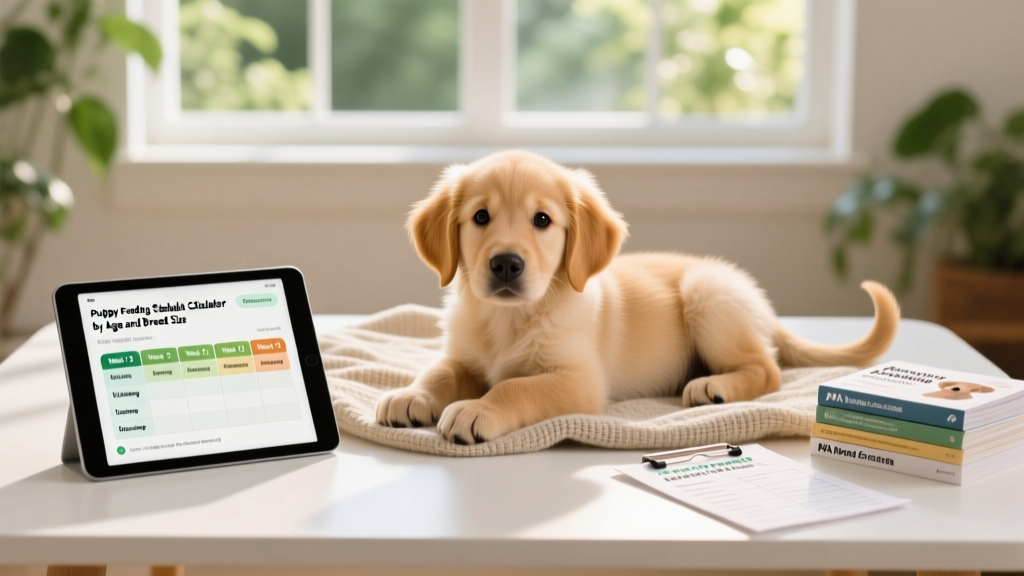
Giant-breed puppies require controlled growth diets to prevent developmental orthopedic disease (DOD). Feed a formula specifically labeled for large or giant-breed puppies — these contain reduced calcium (1.0–1.8% DM) and controlled caloric density.
| Age | Meals Per Day | Approximate Daily Amount (dry kibble) | Notes |
|---|---|---|---|
| 8–12 weeks | 3–4 | 2.5–4 cups (divided across meals) | Soften kibble with warm water for first 1–2 weeks home if puppy struggles with hard pieces |
| 12–16 weeks | 3 | 3.5–5 cups | Monitor body condition score (BCS) — ribs should be palpable but not visible |
| 16–24 weeks | 3 | 4.5–6.5 cups | Growth rate peaks here; adjust based on weekly weigh-ins at vet |
| 6–9 months | 2–3 | 5–8 cups | Transition to 2 meals by 9 months; males will eat significantly more than females |
| 9–12 months | 2 | 6–9 cups | Begin discussing transition to adult giant-breed formula with your vet around 12 months |
Recommended brands that meet WSAVA guidelines and have undergone AAFCO feeding trials for giant-breed growth: Royal Canin Giant Puppy, Purina Pro Plan Large Breed Puppy, Hill's Science Diet Large Breed Puppy. Expect to spend $80–$130/month on kibble alone during the 4–9 month peak-growth window.
Never supplement calcium unless directed by your veterinarian. Excess calcium in giant-breed puppies is directly linked to hypertrophic osteodystrophy (HOD) and hip dysplasia.
Vaccination Schedule for Leonberger Puppies
The AVMA and AAHA recommend the following core vaccination timeline. Your vet may adjust based on local disease prevalence and your puppy's risk profile.
| Age | Vaccine | Type | Notes |
|---|---|---|---|
| 6–8 weeks | DHPP (Distemper, Hepatitis/Adenovirus, Parainfluenza, Parvovirus) | Core | Often administered by breeder before pickup |
| 10–12 weeks | DHPP booster | Core | Second dose — immunity still incomplete |
| 10–12 weeks | Bordetella (optional) | Non-core | Recommended if attending puppy classes or boarding |
| 14–16 weeks | DHPP final booster | Core | This dose is critical — maternal antibodies have waned by now |
| 14–16 weeks | Rabies | Core (legally required) | Required by law in all US states; timing varies by jurisdiction |
| 12+ months | DHPP booster + Rabies booster | Core | Then every 3 years per AAHA guidelines |
Socialization Window: Weeks 3–14
The primary socialization period closes around 14 weeks. For Leonberger puppies — who will become powerful 150-lb dogs — early positive exposure is non-negotiable. A poorly socialized Leonberger is difficult to manage at full size.
Target: 100+ positive novel experiences before 16 weeks. Here's your exposure checklist:
People
- Men with beards, hats, and sunglasses
- Children of different ages (supervised, gentle interactions only)
- People using wheelchairs, crutches, or walkers
- Delivery drivers and uniformed workers
- People of different skin tones, heights, and body types
Environments & Surfaces
- Car rides (start with 5-minute trips, build to 20+ minutes)
- Vet clinic waiting room (happy visits with treats, no procedures)
- Gravel, mulch, metal grates, wet grass, sand
- Elevator rides, automatic doors, revolving doors
- Dark rooms, bright fluorescent lighting, flashing lights
Sounds & Objects
- Vacuum cleaners, hair dryers, power tools (start at distance, pair with treats)
- Thunderstorm recordings played at low volume during meals
- Umbrellas opening, balloons, plastic bags blowing
- Bicycles, skateboards, strollers passing nearby
Handling & Body Awareness
- Paw handling (prepares for nail trims — start daily from week 8)
- Ear inspection, mouth opening, tail touching
- Being gently restrained on side (simulates vet exam table)
- Wearing a harness, coat, and booties
Use positive reinforcement only — pair every novel experience with high-value treats (boiled chicken, cheese, freeze-dried liver). If your puppy shows fear, increase distance and reduce intensity. Never force a fearful puppy into a situation.
Potty Training Timeline & Troubleshooting
Realistic expectation: most Leonberger puppies achieve reliable house training between 4 and 6 months of age. Giant breeds have larger bladders, which helps — but their slower cognitive maturation can mean occasional accidents through 7–8 months.
Frequency Guide
| Age | Max Time Between Potty Breaks (daytime) | Nighttime Holds |
|---|---|---|
| 8–10 weeks | Every 1–1.5 hours | 3–4 hours (set an alarm) |
| 10–14 weeks | Every 1.5–2 hours | 4–5 hours |
| 14–20 weeks | Every 2–3 hours | 6–7 hours |
| 5–6 months | Every 3–4 hours | 7–8 hours (through the night) |
Potty Training Protocol
- Take puppy out immediately after waking, eating, drinking, playing, and crate release.
- Use a consistent cue word ("go potty") while puppy is eliminating — say it during the act, not before.
- Reward immediately with a high-value treat within 2 seconds of finishing outdoors.
- Supervise or confine — if puppy is loose indoors, you must have eyes on them. If you can't supervise, they go in the crate.
- Clean accidents with enzymatic cleaner (Nature's Miracle or Rocco & Roxie) — standard household cleaners leave residual scent that attracts repeat accidents.
Teething, Crate Training & Common Puppy Problems
Teething Timeline (3–6 Months)
Leonberger puppies begin losing deciduous (baby) teeth around 14–16 weeks, with the process typically complete by 6–7 months. During this window, expect increased chewing, drooling, and occasional blood on toys.
Safe chew recommendations:
- Kong Classic (XL or XXL) stuffed with frozen peanut butter and banana — provides 20–30 minutes of soothing relief
- Benebone Wishbone (Giant size) — nylon chew rated for 100+ lb dogs; discard when worn down significantly
- Frozen carrot sticks — cheap, low-calorie, and the cold numbs sore gums
- Wet washcloth twisted and frozen — supervise use, remove when puppy starts tearing fabric
Avoid: rawhide (choking and intestinal blockage risk), cooked bones (splintering), antlers (tooth fracture risk in young dogs with softer developing teeth).
Crate Training Progression
| Age | Max Crate Time (daytime) | Nighttime | Notes |
|---|---|---|---|
| 8–10 weeks | 1–1.5 hours | 3–4 hours (crate beside your bed) | Expect whining first 3–5 nights; this is normal |
| 10–14 weeks | 2 hours | 4–5 hours | Move crate to permanent location if desired |
| 14–20 weeks | 2.5–3 hours | 6–7 hours | Puppy should enter crate willingly for meals and treats |
| 5–6 months | 3–4 hours | 8 hours | Begin leaving crate door open when home — puppy should choose to nap inside |
Use a 48–54 inch wire crate with a divider panel to limit space as your puppy grows. The crate should be large enough for your Leonberger to stand, turn around, and lie down — but not so large they can eliminate in one corner and sleep in another.
Stopping Puppy Biting & Nipping
Leonberger puppies explore the world with their mouths, and at 150-lb adult size, bite inhibition training is essential. Here's a force-free protocol:
- Redirect — when puppy mouths your hand, immediately offer an appropriate chew toy. Praise enthusiastically when they bite the toy instead.
- Withdraw attention — if puppy continues to nip, stand up, fold your arms, and be still for 10–15 seconds. No eye contact, no talking. Resume play only when puppy is calm.
- Time-outs — for persistent biting, calmly place puppy in their crate or a puppy-proofed pen for 30–60 seconds. Release when calm. This teaches that biting ends fun.
- Reward gentle play — any time puppy interacts with your hands using a soft mouth or no mouth at all, mark with "yes!" and deliver a treat.
Expect biting to peak around 12–16 weeks (coinciding with early teething) and gradually decrease through 5–6 months with consistent training. If biting intensifies rather than decreases after 5 months, consult a certified professional dog trainer (CPDT-KA or IAABC-credentialed).
Breed-Specific Whining & Chewing
Leonberger puppies are velcro dogs — they bond intensely and vocalize when separated. Expect crate whining for the first 1–2 weeks. Strategies:
- Place a Snuggle Puppy (heat pack + heartbeat simulator, ~$35–$45) in the crate for the first 2 weeks
- Cover the crate with a breathable blanket to reduce visual stimulation
- Play white noise or soft classical music near the crate
- Never release puppy from crate while whining — wait for 3–5 seconds of silence, then open
For destructive chewing (baseboards, shoes, furniture): management is more effective than correction. Puppy-proof your home by using baby gates, bitter apple spray on furniture legs, and keeping all chewable items elevated. Provide 5–7 approved chew options rotated weekly to maintain novelty.
First-Year Cost Breakdown
Raising a Leonberger puppy is a significant financial commitment. Here's a realistic first-year budget based on 2025–2026 pricing data:
| Category | Estimated Cost Range | Details |
|---|---|---|
| Puppy purchase | $1,800–$5,000 | AKC/FCI registered, health-tested parents |
| Veterinary (wellness + vaccines) | $600–$1,200 | 3 DHPP rounds, rabies, Bordetella, 2–3 wellness exams, fecal tests, heartworm prevention |
| Spay/neuter | $400–$900 | Giant-breed surgery costs more due to anesthesia requirements; many vets recommend waiting until 12–18 months for Leonbergers |
| Food | $1,200–$2,000 | Giant-breed puppy formula; costs escalate as puppy grows |
| Supplies (crate, bed, leash, bowls, gates) | $400–$800 | Everything must be oversized for giant breed |
| Training (puppy class + basic obedience) | $300–$700 | Group classes $150–$250 per 6-week session; private sessions $80–$150/hour |
| Pet insurance | $600–$1,200 | $50–$100/month for giant-breed puppy; enroll before 6 months to cover future hip/elbow issues |
| Grooming | $200–$500 | Leonbergers need brushing 3–4x/week; professional grooming every 8–12 weeks ($60–$100/session) |
| Preventive medications | $200–$400 | Heartworm, flea/tick prevention year-round |
| Total Estimated First Year | $5,700–$12,700 | Excluding emergency veterinary care |
Frequently Asked Questions About Leonberger Puppies
How often should I feed my Leonberger puppy at 8 weeks?
At 8 weeks, feed 3–4 meals per day, totaling approximately 2.5–4 cups of giant-breed puppy kibble daily. Divide portions evenly across meals. Consistent meal timing (e.g., 7 AM, 12 PM, 5 PM, 9 PM) helps regulate digestion and supports predictable potty breaks.
When will my Leonberger puppy be fully potty trained?
Most Leonberger puppies achieve reliable house training by 5–6 months, though some may have occasional accidents through 7–8 months. Consistency in schedule, supervision, and reward-based training is the biggest predictor of success. If accidents increase suddenly at any age, consult your veterinarian to rule out urinary tract infections or other medical causes.
What vaccines does my Leonberger puppy need and when?
Core vaccines include DHPP (given at 6–8 weeks, 10–12 weeks, and 14–16 weeks) and Rabies (given at 14–16 weeks, legally required). Non-core vaccines like Bordetella and Leptospirosis may be recommended based on your geographic area and lifestyle. Your veterinarian will customize the protocol for your puppy.
How do I stop my Leonberger puppy from biting?
Use a redirect-and-withdraw protocol: offer an appropriate chew toy when puppy mouths skin, and withdraw all attention (stand still, no eye contact) for 10–15 seconds if biting continues. Consistency from all household members is essential. Puppy biting typically peaks at 12–16 weeks and diminishes by 5–6 months with positive reinforcement training. Never use physical punishment — it damages trust and can create fear-based aggression in a dog that will weigh 150 lb.
When can my Leonberger puppy go outside and meet other dogs?
Your puppy can explore your own fenced yard immediately after coming home. For public spaces and dog-dog interactions, wait until 7 days after the final DHPP booster (typically around 15–17 weeks of age). Before that, carry your puppy in public, arrange playdates with known-vaccinated adult dogs, and attend structured puppy classes that require proof of vaccination for all attendees.
Should I get pet insurance for my Leonberger puppy?
Yes — strongly recommended. Leonbergers are predisposed to hip dysplasia (OFA data shows approximately 16–20% of tested Leonbergers have dysplastic hips), elbow dysplasia, osteosarcoma, and bloat. Enrolling before 6 months ensures these conditions won't be excluded as pre-existing. Compare providers like Trupanion, Healthy Paws, and Nationwide — look for plans covering hereditary conditions with annual limits of $10,000+.
Raising a Leonberger puppy is a marathon, not a sprint. Their slow maturation means you'll be actively training, socializing, and managing growth for the first 2–3 years. But the payoff — a calm, confident, deeply bonded giant companion — is worth every 3 AM potty break. Lean on your veterinarian, a certified force-free trainer, and your breed's community (the Leonberger Club of America is an excellent resource) for ongoing support.
Marcus Aldridge
All our authors care for dogs every day — read more of their work on the authors page.