How Often Can You Bathe a Puppy? The Complete First-Year...
Learn how often you can bathe a puppy by age, plus complete first-year milestones for feeding, potty training, vaccines, socialization, and costs.

New puppy parents ask me this question more than almost any other: how often can you bathe a puppy without damaging their skin or coat? The short answer is less frequently than you think — but the full picture depends on your puppy's age, breed, coat type, and what they've gotten into. This guide walks you through bathing frequency by developmental stage, plus every other milestone you need to navigate your puppy's first year with confidence.
- Under 8 weeks: No full baths unless medically necessary — use a warm, damp washcloth for spot cleaning
- 8–12 weeks: Once per month maximum, only if soiled or smelly
- 3–6 months: Every 3–4 weeks as needed
- 6–12 months: Every 4–6 weeks for most breeds; adjust for coat type
Why Puppy Bathing Frequency Matters More Than You Think
A puppy's skin is fundamentally different from an adult dog's. The epidermis (outer skin layer) in puppies under six months is thinner and still developing its lipid barrier — the natural oil layer that protects against moisture loss, bacteria, and environmental irritants. Every bath strips some of those protective oils. Over-bathing a puppy can lead to dry, flaky skin, increased itching, and even secondary bacterial or yeast infections.
According to the Merck Veterinary Manual, puppies have a higher skin surface-area-to-body-weight ratio than adults, making them more susceptible to transdermal absorption of chemicals and more vulnerable to dehydration from frequent bathing.
The general veterinary consensus is clear: bathe puppies only when necessary, using a puppy-specific, pH-balanced shampoo (never human shampoo, which has a different pH and can disrupt the acid mantle of canine skin). Puppies have a skin pH around 7.0–7.5, compared to human skin at roughly 5.5.
Puppy Development Timeline: Weeks 4 Through 12 Months
Understanding your puppy's developmental stages helps you know when baths are appropriate and when other care priorities take precedence. Here's a milestone-by-milestone breakdown.
Weeks 4–8: Neonatal to Transitional Period
Bathing: Do not bathe. The mother handles grooming. If orphaned or soiled, use a warm (not hot), damp washcloth and gently wipe. Dry immediately with a soft towel. Puppies this young cannot regulate body temperature well, and hypothermia is a real risk.
Key milestones: Eyes fully open (10–14 days), start walking (3 weeks), begin eating gruel/moistened kibble (3.5–4 weeks), primary socialization with littermates begins (4 weeks).
What to expect: Rapid neurological development. Puppies learn bite inhibition from siblings. This is not the time to separate them from the litter.
Weeks 8–12: Homecoming and Adjustment
Bathing: Limit to once during this period, only if the puppy arrives home dirty or has an accident. Use lukewarm water (100–102°F / 38–39°C), a tearless puppy shampoo like Burt's Bees Puppy Shampoo or Earthbath Puppy Wash, and keep the session under 5 minutes. Towel dry — avoid blow dryers, which can frighten puppies and overheat thin skin.
Key milestones: Fear imprint period begins (8–11 weeks). Negative experiences during this window can create lasting phobias. Make any necessary bath calm, positive, and brief. Pair with high-value treats (small pieces of boiled chicken or freeze-dried liver).
What to expect: Sleep 18–20 hours per day. Frequent potty breaks needed (every 1–2 hours). Separation anxiety behaviors may emerge.
Weeks 12–16: Growing Confidence
Bathing: You can begin gentle desensitization to the bathing process — running lukewarm water nearby, letting the puppy stand in an empty tub with treats, practicing with a handheld sprayer on low pressure. Actual baths: once if needed.
Key milestones: Second round of vaccinations. Puppy kindergarten classes can begin (per AVMA puppy care guidelines, socialization should not wait for full vaccination). Teething discomfort starts as deciduous teeth begin loosening.
What to expect: Increased independence, testing boundaries, possible regression in potty training. Attention span lengthens to 5–10 minutes for training sessions.
Weeks 16–24: Adolescence Begins
Bathing: Every 3–4 weeks as needed. Your puppy's adult coat starts coming in, and you'll learn their actual coat type (especially relevant for doodle mixes, double-coated breeds, and wire-haired breeds). This is the time to establish a regular grooming routine.
Key milestones: Final puppy vaccinations. Adult teeth erupt (pushing out baby teeth). Spay/neuter typically scheduled around 16–24 weeks for smaller breeds, 6+ months for large/giant breeds per current veterinary recommendations.
What to expect: Second fear period may occur (around 6–14 months depending on breed size). Previously confident puppies may suddenly become wary of novel stimuli. Patience and continued positive exposure are critical.
Months 6–12: Young Adulthood
Bathing: Transition to adult grooming schedule. For most breeds, every 4–6 weeks. For double-coated breeds (Golden Retrievers, German Shepherds), bathing too frequently can disrupt the undercoat's insulating properties — every 6–8 weeks with thorough brushing between baths is often sufficient. For hair breeds (Poodles, Bichons), professional grooming every 4–6 weeks with baths included.
Key milestones: Sexual maturity (if not yet spayed/neutered). Growth plates close in small breeds; large breeds continue growing until 18–24 months. Transition from puppy food to adult food typically occurs between 9–12 months (12–18 months for large breeds).
What to expect: Energy levels remain high. Continued training and mental stimulation prevent destructive behaviors. Many puppies test boundaries again around 8–10 months.
Feeding Schedule: Exact Portions by Age and Weight
Puppy nutritional needs change rapidly. The following table uses AAFCO guidelines for growth-stage feeding and assumes a high-quality, AAFCO-labeled puppy kibble (minimum 22% protein, 8.5% fat for growth). Always check your specific food's feeding chart, as caloric density varies significantly between brands.
| Age | Meals Per Day | Small Breed (10–25 lb adult) | Medium Breed (25–55 lb adult) | Large Breed (55–100 lb adult) |
|---|---|---|---|---|
| 6–12 weeks | 4 meals | ¼–½ cup/day total | ½–1 cup/day total | 1–2 cups/day total (large-breed formula) |
| 3–6 months | 3 meals | ½–¾ cup/day total | 1–1¾ cups/day total | 2–3½ cups/day total (large-breed formula) |
| 6–12 months | 2 meals | ¾–1 cup/day total | 1¾–2½ cups/day total | 3–5 cups/day total (transition to adult at 12–18 mo) |
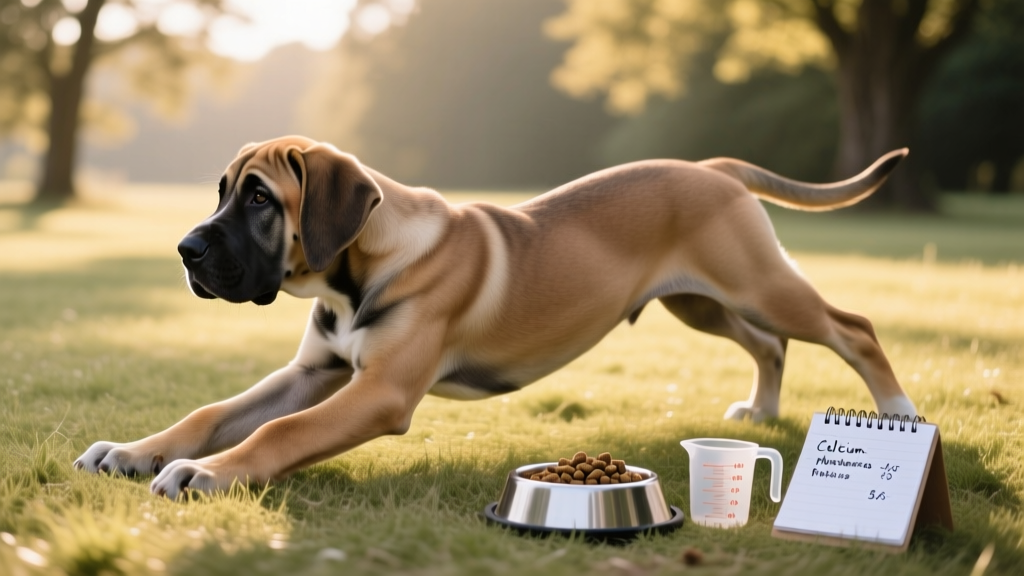
Critical note for large breeds: Use a large-breed puppy formula with controlled calcium (1.0–1.8% on a dry matter basis) and phosphorus to reduce the risk of developmental orthopedic diseases like hip dysplasia and osteochondrosis. According to the AKC's nutrition guidance, large-breed puppies should grow slowly and steadily — a body condition score (BCS) of 4–5 out of 9 is ideal, meaning ribs are easily felt but not visible.
Vaccination Schedule: What Your Puppy Needs and When
Core vaccines protect against life-threatening diseases. Your veterinarian will tailor this schedule based on local disease prevalence, but the standard protocol follows AAHA (American Animal Hospital Association) canine vaccination guidelines.
| Age | Vaccine | Notes |
|---|---|---|
| 6–8 weeks | DHPP (Distemper, Hepatitis/Adenovirus-2, Parainfluenza, Parvovirus) — 1st dose | Often given by breeder/rescue before pickup |
| 10–12 weeks | DHPP — 2nd dose; Bordetella (optional based on lifestyle) | Required for puppy classes, grooming, boarding |
| 14–16 weeks | DHPP — 3rd (final puppy) dose; Rabies (required by law) | Maternal antibodies wane; this dose is critical for lasting immunity |
| 12–16 months | DHPP booster; Rabies booster (1-year or 3-year depending on local law) | Completes the initial series |
Non-core vaccines your vet may recommend based on risk: Leptospirosis (common in areas with wildlife/standing water), Lyme disease (tick-endemic regions), and Canine Influenza (H3N2/H3N8 — recommended for dogs in boarding, daycare, or dog show environments). Always consult your veterinarian to determine which vaccines are appropriate for your puppy's lifestyle and region.
The Critical Socialization Window: Weeks 3–14
Behavioral science tells us that the primary socialization period for puppies closes around 12–14 weeks of age. What your puppy experiences (or doesn't experience) during this window shapes their lifelong responses to the world. The AVMA emphasizes that the risk of under-socialization — leading to fear, aggression, and behavioral euthanasia — far exceeds the disease risk of careful, controlled exposure before full vaccination.
Your Socialization Exposure Checklist
Aim for positive experiences with the following by 14 weeks. Every exposure should be paired with treats, praise, or play. Never force a fearful puppy — let them approach at their own pace.
- People (aim for 100+ positive encounters): Men, women, children of various ages, people wearing hats/sunglasses/masks, people using wheelchairs/walkers/crutches, people of different ethnicities and body types, delivery workers, uniformed workers
- Surfaces: Grass, gravel, metal grates, wet pavement, sand, mulch, tile floors, carpet, plastic tarps, wobble boards
- Sounds: Thunderstorms (play recordings at low volume, gradually increase), fireworks, vacuum cleaners, doorbells, car horns, construction noise, crying babies, loud laughter
- Handling: Paw handling, ear touching, mouth opening, nail clipping simulation, being lifted, being examined on a table (prep for vet visits), wearing a harness/collar, gentle restraint
- Objects: Umbrellas opening, trash cans, plastic bags rustling, bicycles, skateboards, strollers, balloons, flags
- Other animals: Vaccinated, friendly adult dogs (avoid dog parks until fully vaccinated), cats (if applicable), livestock (if rural)
- Environments: Car rides, pet-friendly stores, outdoor café patios, parking lots, elevators, stairs, friends' houses
Potty Training Timeline: Realistic Expectations
Let's set honest expectations: most puppies are not reliably house-trained until 4–6 months of age, and some small breeds take until 8–12 months due to smaller bladder capacity. Any program promising "trained in 3 days" is setting you up for frustration.
The basic rule: A puppy can typically hold their bladder for approximately one hour per month of age, plus one. So a 3-month-old puppy can hold for roughly 4 hours — but that's a maximum, not a target. Take them out far more frequently.
- 8–10 weeks: Every 30–60 minutes during the day; every 2–3 hours overnight
- 10–14 weeks: Every 1–2 hours during the day; every 3–4 hours overnight
- 3–4 months: Every 2 hours during the day; every 4–5 hours overnight
- 4–6 months: Every 3–4 hours during the day; overnight holding typically achieved
- 6+ months: Every 4–6 hours; most puppies can hold overnight (8 hours)
Troubleshooting common setbacks:
- Regression at 4–5 months: Extremely common. Often coincides with teething distraction or increasing independence. Return to more frequent outings and higher-value rewards for outdoor elimination.
- Submissive/excitement urination: Not a housetraining failure — it's an involuntary response. Avoid greeting the puppy with high excitement. Crouch sideways, speak softly, and ignore until calm.
- Small breed challenges: Chihuahuas, Yorkies, and similar breeds have tiny bladders and higher metabolisms. Consider a designated indoor potty area (real grass patch or pee pad station) as a supplement, especially in extreme weather.
Teething Timeline and Safe Relief Strategies
Puppies have 28 deciduous (baby) teeth that erupt between 3–6 weeks of age. These are replaced by 42 permanent teeth between 3–6 months. The process is uncomfortable, and your puppy will seek relief by chewing — on everything.
| Age | Teething Stage | Safe Relief Options |
|---|---|---|
| 3–6 weeks | Baby teeth erupting | Soft chew toys, damp frozen washcloth (supervised) |
| 3–4 months | Incisors begin loosening | KONG Puppy (softer rubber than adult KONG), frozen carrot sticks, Nylabone Puppy Chew |
| 4–5 months | Canines and premolars shedding | Frozen KONG stuffed with puppy-safe peanut butter (xylitol-free), chilled Benebone Puppy, wet frozen rope toy |
| 5–6 months | Molars erupting (most painful phase) | Frozen blueberries, West Paw Toppl with frozen yogurt, ice cubes (supervised to prevent tooth fracture) |
Retained baby teeth: Small breeds are prone to deciduous teeth that don't fall out when the permanent tooth erupts, creating a "double tooth" that traps food and causes periodontal disease. If you notice a baby tooth hasn't fallen out within two weeks of the adult tooth appearing, your veterinarian should extract it — typically done during spay/neuter anesthesia to avoid a separate procedure.
Crate Training Progression and Time Limits
A crate is your puppy's den — a safe space, not a punishment. Proper crate training prevents destruction when unsupervised, aids potty training (dogs avoid soiling their sleeping area), and provides security during travel. However, puppies should never be crated longer than they can physically hold their bladder.
- 8–10 weeks: 30–60 minutes maximum (except overnight with potty breaks)
- 11–14 weeks: 1–2 hours during the day
- 15–16 weeks: 2–3 hours during the day
- 4–5 months: 3–4 hours during the day
- 6+ months: 4–5 hours during the day (with exercise before and after)
No dog of any age should be crated more than 8 hours total in a 24-hour period. Puppies crated for excessive durations develop behavioral problems including barrier frustration, excessive barking, and self-injury.
Crate training steps: Start with the crate door open, toss treats inside, feed meals in the crate, and gradually close the door for short intervals while you remain in the room. Build duration before distance. If your puppy whines, wait for a brief pause in vocalization before releasing — opening the crate during whining teaches that noise opens the door.
Common Puppy Problems and Solutions
Puppy Biting and Nipping
This is the number one complaint I hear from new puppy owners. Puppies explore the world with their mouths, and those needle-sharp deciduous teeth hurt. Here's how to manage it using force-free methods:
- Redirect: When teeth touch skin, immediately offer an appropriate chew toy. Praise enthusiastically when they bite the toy instead.
- Reverse time-out: If biting continues after one redirect, stand up, cross your arms, and withdraw attention for 10–15 seconds. Resume play when calm. This mimics how littermates respond — they stop playing when bitten too hard.
- Never do: Hold the mouth shut, alpha roll, yell, or use physical punishment. These methods increase fear and can escalate biting into defensive aggression. The ASPCA's behavioral guidance specifically advises against confrontational training methods.
- Enrichment: Overtired puppies bite more. Ensure 18–20 hours of sleep for young puppies. A puppy who's been awake more than 2 hours often needs an enforced nap in their crate.
Nighttime Whining
Expect 1–3 weeks of adjustment when your puppy first comes home. Place the crate in your bedroom initially so the puppy can hear and smell you. A Snuggle Puppy (with heartbeat simulator and heat pack) can ease the transition. Gradually move the crate to the desired permanent location over 2–3 weeks. If whining persists past the initial adjustment, rule out a potty need first — take them out on leash, keep it boring, and return to the crate.
Destructive Chewing
Puppies chew for two reasons: teething discomfort and exploration/boredom. Manage the environment by puppy-proofing (use bitter apple spray on furniture legs, block access to shoes and cords) and providing a rotation of 5–7 appropriate chew toys. Rotate every 2–3 days to maintain novelty. A stuffed, frozen KONG can occupy a puppy for 20–30 minutes — use these during times when chewing typically peaks (early evening, after exercise).
First-Year Cost Breakdown
Budgeting realistically prevents unpleasant surprises. These ranges reflect 2026 national averages and will vary by region (urban areas typically cost 20–40% more).
| Category | Low Estimate | Average | High Estimate |
|---|---|---|---|
| Veterinary (vaccines, wellness exams, spay/neuter, fecal tests, heartworm prevention) | $600 | $1,100 | $2,000 |
| Food (quality puppy kibble, treats, supplements) | $300 | $600 | $1,200 |
| Supplies (crate, bed, leash/harness, bowls, grooming tools, puppy pads, gates) | $200 | $450 | $800 |
| Training (puppy kindergarten, basic obedience classes) | $150 | $350 | $700 |
| Grooming (bathing supplies, professional grooming for applicable breeds) | $50 | $300 | $900 |
| Pet insurance (annual premium) | $360 | $600 | $960 |
| Total First Year | $1,660 | $3,400 | $6,560 |
Hidden costs to budget for: Emergency veterinary visits (puppies eat things they shouldn't — plan for at least one urgent visit, averaging $250–$1,500), microchipping ($45–$75 if not included by breeder/rescue), dog license ($10–$25 annually), and puppy-proofing supplies (baby gates, cord protectors, cabinet locks).
Frequently Asked Questions
When should I bring my puppy home?
No earlier than 8 weeks of age. The AKC recommends 8–12 weeks for most breeds, and some responsible breeders keep small breeds until 10–12 weeks due to their fragility and risk of hypoglycemia. Puppies separated from their litter before 8 weeks miss critical bite inhibition learning and social development that only littermates can provide.
How often should I feed my puppy?
Feed 4 meals per day from 6–12 weeks, 3 meals per day from 3–6 months, and transition to 2 meals per day from 6 months onward. Never feed a single large meal — this increases the risk of gastric dilatation-volvulus (bloat), particularly in deep-chested breeds. Space meals evenly throughout the day.
When will my puppy be fully potty trained?
Most puppies achieve reliable housetraining between 4–6 months, with some small breeds taking up to 12 months. "Reliable" means fewer than one accident per month. If your puppy is still having frequent accidents past 6 months, consult your veterinarian to rule out urinary tract infections, anatomical abnormalities, or diabetes.
What vaccines does my puppy need and when?
Core vaccines are DHPP (at 6–8, 10–12, and 14–16 weeks) and Rabies (at 14–16 weeks, required by law). Non-core vaccines like Bordetella, Leptospirosis, and Lyme depend on your puppy's lifestyle and geographic location. Your veterinarian will customize the protocol — always follow their specific recommendations over any general schedule.
How do I stop puppy biting and nipping?
Redirect to appropriate chew toys, use reverse time-outs (withdraw attention for 10–15 seconds when teeth touch skin), ensure adequate sleep (18–20 hours for young puppies), and provide sufficient physical and mental exercise. Biting typically peaks around 3–5 months during teething and decreases as adult teeth come in. Consistency from all household members is essential — mixed signals confuse puppies and prolong the behavior.
When can my puppy go outside and meet other dogs?
Your puppy can explore your own yard (if private and not used by unvaccinated dogs) immediately. For public spaces, carry your puppy or use a stroller/wagon for socialization outings before full vaccination. Structured puppy classes with vaccinated peers can begin after the first DHPP vaccine (per the AVMA and AAHA). Avoid dog parks, pet store floors, and high-traffic dog areas until 7 days after the final puppy DHPP dose (typically around 16–17 weeks of age). Parvovirus can survive in soil for months to years and is the primary risk in uncontrolled environments.
Dr. Hannah Wickes
All our authors care for dogs every day — read more of their work on the authors page.