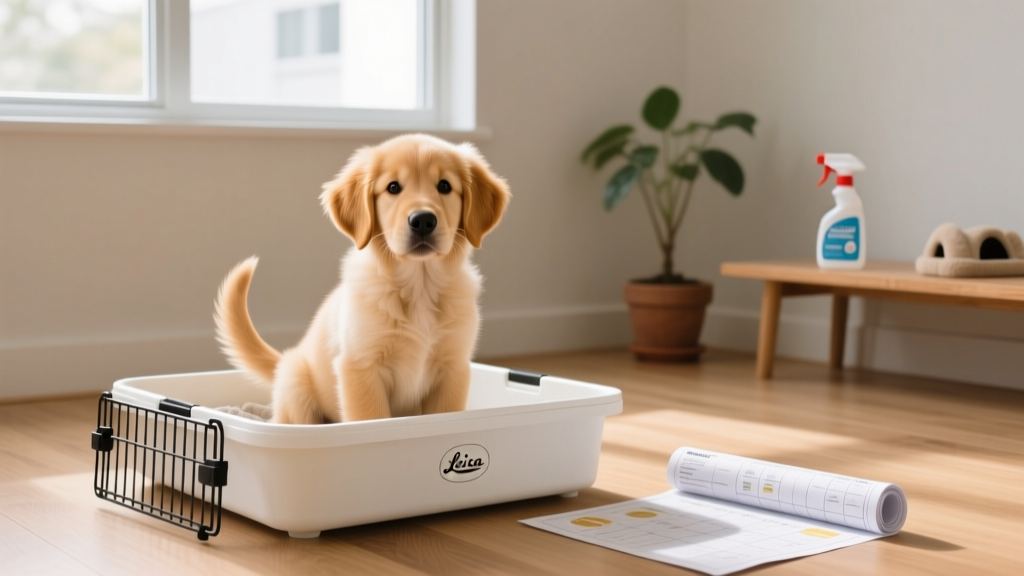
Labrador Golden Retriever Puppy: Complete Care Guide by Age & Stage
Your complete Labrador Golden Retriever puppy guide covering feeding, potty training, vaccinations, socialization, and milestones from 8 weeks to 12 months.

Bringing home a Labrador Golden Retriever puppy — whether a purebred Labrador, a Golden Retriever, or a Goldador cross — means preparing for one of the most rewarding but demanding experiences in dog ownership. These retriever-type puppies share a cluster of traits that shape every aspect of early care: high oral fixation (they mouth and carry everything), rapid growth rates that demand precise nutrition, and a socialization window that closes faster than most new owners realize.
This guide walks you through each developmental stage with concrete numbers, timelines, and troubleshooting strategies drawn from AKC puppy care guidelines and Merck Veterinary Manual recommendations. If at any point your puppy's development seems off-track, consult your veterinarian rather than relying on internet advice alone.
When Should I Bring My Labrador Golden Retriever Puppy Home?
The optimal age to bring a retriever puppy home is 8 to 10 weeks. The American Veterinary Medical Association (AVMA) and most reputable breeders agree that puppies benefit from remaining with their litter until at least 8 weeks. During weeks 6–8, puppies learn critical bite inhibition from siblings — a lesson that is nearly impossible to replicate in a human household.
For Goldadors (Labrador × Golden Retriever crosses), confirm which generation you're getting. F1 crosses (one Lab parent, one Golden parent) tend to have more predictable temperaments than F2 or multigen crosses, where trait expression varies more widely. Reputable breeders will provide OFA or PennHIP hip scores for both parents, eye clearances from a veterinary ophthalmologist, and results from genetic panels covering EIC (Exercise-Induced Collapse), PRA (Progressive Retinal Atrophy), and CNM (Centronuclear Myopathy).
Developmental Milestones: What to Expect Week by Week
Weeks 4–8 (At the Breeder)
You likely won't have your puppy yet, but here's what's happening: deciduous (baby) teeth are fully erupted, the puppy is eating gruel-to-solid food, learning social hierarchy from littermates, and beginning to explore beyond the whelping box. A good breeder introduces novel surfaces (tarps, grates, wobble boards) and sounds during this period.
Weeks 8–12 (Home Transition)
- Weight range: 10–20 lb (4.5–9 kg) depending on parent size and sex
- Sleep: 18–20 hours per day — this is normal, not a sign of illness
- Bladder control: Approximately 1 hour per month of age (so a 2-month-old puppy can hold it roughly 2 hours max, often less during active play)
- Behavior: Crying at night is expected for the first 3–7 nights. The puppy is processing separation from littermates.
- Teething: All 28 deciduous teeth are in; chewing and mouthing intensify
Weeks 12–16 (Learning Phase)
- Weight range: 20–35 lb (9–16 kg)
- Coordination: Noticeably improved; puppy can navigate stairs (supervised) and begins to understand basic cue associations
- Attention span: 3–5 minutes per training session — do not push beyond this
- Fear periods: A developmental fear period typically occurs around 8–11 weeks and again around 6–14 months. During these windows, avoid flooding the puppy with overwhelming stimuli.
Weeks 16–24 (Adolescence Begins)
- Weight range: 35–55 lb (16–25 kg)
- Teething: Adult teeth erupt between 4–6 months; you may find baby teeth on the floor or notice increased chewing
- Energy: Significant increase. Expect 45–60 minutes of structured exercise daily, split into multiple sessions to protect developing joints
- Regression: Previously reliable behaviors (potty training, recall) may temporarily deteriorate. This is neurologically normal.
Months 6–12 (Maturing Adolescent)
- Weight range: 50–75 lb (23–34 kg), approaching adult size
- Growth plates: Still open — avoid repetitive high-impact exercise (long-distance running, frequent jumping from heights, agility equipment) until your vet confirms closure, typically around 12–18 months for large breeds
- Sexual maturity: Females may enter first estrus (heat cycle) between 6–12 months; males begin marking. Discuss spay/neuter timing with your veterinarian — current evidence from AVMA spay/neuter guidelines supports waiting until after growth plate closure for large breeds to reduce orthopedic risk.
Feeding Schedule: Exact Portions by Age and Weight
Retriever puppies grow rapidly, and overfeeding is a genuine orthopedic risk. Excess calories accelerate growth rate and increase the likelihood of hip dysplasia and osteochondritis dissecans (OCD). Feed a large-breed puppy formula (AAFCO-approved, labeled for "growth" or "all life stages") with calcium content between 1.0–1.8% on a dry matter basis.
| Age | Meals Per Day | Daily Amount (Large-Breed Puppy Kibble) | Notes |
|---|---|---|---|
| 8–12 weeks | 3–4 meals | 1.5–2.5 cups/day | Soak kibble in warm water for first 1–2 weeks if puppy struggles with dry pieces |
| 3–6 months | 3 meals | 2.5–4 cups/day | Adjust based on body condition score (BCS) — ribs should be palpable but not visible |
| 6–12 months | 2 meals | 3–5 cups/day | Transition to adult formula around 12 months (or as vet recommends) |
Brand examples that meet large-breed puppy nutritional profiles (2026 pricing): Purina Pro Plan Large Breed Puppy ($45–55 per 34 lb bag), Royal Canin Labrador Retriever Puppy ($50–60 per 30 lb bag), Hill's Science Diet Large Breed Puppy ($48–58 per 30 lb bag). Expect to spend $50–80/month on food during the first year.
Vaccination Schedule and Outdoor Access Timeline
Your Labrador Golden Retriever puppy needs a series of core vaccines administered at specific intervals. Maternal antibodies interfere with vaccine response in young puppies, which is why boosters are required at set intervals rather than a single shot.
| Age | Vaccine | Details |
|---|---|---|
| 6–8 weeks | DHPP (1st dose) | Distemper, Hepatitis (Adenovirus), Parainfluenza, Parvovirus. Often given by breeder. |
| 10–12 weeks | DHPP (2nd dose) + Bordetella | Bordetella (kennel cough) recommended if puppy will attend group classes or boarding. |
| 14–16 weeks | DHPP (3rd dose) + Rabies | Rabies is legally required. Some vets also administer Leptospirosis and Lyme vaccines at this visit based on regional risk. |
| 12–16 months | DHPP booster + Rabies booster | After this, DHPP and Rabies typically move to 3-year intervals. |
When Can My Puppy Go Outside and Meet Other Dogs?
This is where many owners receive conflicting advice. The traditional "keep puppy inside until all vaccines are complete" approach causes irreversible socialization damage. The AVMA and the American Veterinary Society of Animal Behavior (AVSAB) recommend that puppies begin controlled socialization as early as 7–8 weeks, at least 7 days after the first DHPP vaccine.
Safe outdoor activities before full vaccination (8–16 weeks):
- Carrying puppy in a sling or carrier through public areas (parks, outdoor markets)
- Visiting homes of known, fully vaccinated dogs
- Puppy kindergarten classes that require proof of first vaccination and maintain sanitized floors
- Walking on your own yard (if no unknown dogs have access)
Avoid until fully vaccinated (after 16-week DHPP):
- Dog parks (high parvovirus risk from unknown vaccination status)
- Shared grassy areas at pet stores or rest stops
- Unknown dogs with unverifiable vaccination history
Socialization Window: The Critical Weeks 3–14 Checklist
The primary socialization period closes around 14 weeks. After this window, unfamiliar stimuli trigger fear responses rather than curiosity. This is not a soft recommendation — it is a neurologically defined developmental stage. Puppies with inadequate socialization during this window have significantly higher rates of fear-based aggression and anxiety disorders throughout life.
The rule for every exposure: The puppy must be able to approach voluntarily and retreat if uncomfortable. Forcing a frightened puppy to "face their fear" (flooding) creates deeper trauma. Pair every novel experience with high-value treats (boiled chicken, cheese, freeze-dried liver). If the puppy shows fear (tucked tail, flattened ears, refusal to take treats), increase distance and reduce intensity.
Potty Training Timeline and Troubleshooting
Let's set realistic expectations: most Labrador and Golden Retriever puppies are reliably house-trained between 4 and 6 months of age, with occasional accidents through 8–10 months. "Reliably" means fewer than 1–2 accidents per month when the owner follows a consistent schedule. Claims of training in 3 days are misleading — the puppy may learn the routine, but bladder maturity and impulse control develop over months, not days.
| Age | Max Hold Time (Awake) | Max Hold Time (Crate/Sleep) | Expected Accidents Per Week |
|---|---|---|---|
| 8–10 weeks | 30–60 minutes | 2–3 hours | 5–10+ |
| 3–4 months | 1–2 hours | 3–4 hours | 3–6 |
| 4–6 months | 2–4 hours | 5–6 hours | 1–3 |
| 6–12 months | 4–6 hours | 7–8 hours | 0–1 |
Protocol that works for retriever puppies:
- Take puppy outside immediately after: waking up, eating, drinking, playing, and every 30–60 minutes during active periods
- Use a consistent verbal cue ("go potty" or "do your business") while the puppy is eliminating — not before or after
- Reward with a high-value treat immediately after elimination finishes (within 1 second — timing matters)
- Supervise 100% of indoor time, or confine to crate/pen when you cannot watch
- Clean accidents with enzymatic cleaner (Nature's Miracle, Rocco & Roxie) — ammonia-based cleaners attract puppies back to the same spot
When accidents persist beyond 6 months: Rule out urinary tract infection (common in female puppies), ectopic ureters (a congenital condition with higher prevalence in Labrador Retrievers), and incomplete housetraining management. Your vet can perform a urinalysis ($35–65) to check for infection.
Crate Training Progression and Time Limits
A crate is a management tool and a safe space, not a punishment zone. Retriever puppies generally adapt to crates more readily than many breeds due to their den-seeking instincts, but the introduction must be gradual and positive.
Time limits by age (absolute maximums — less is better):
- 8–10 weeks: 1–2 hours max during the day, 2–3 hours overnight (set an alarm for a potty break)
- 3–4 months: 2–3 hours during the day, 4–5 hours overnight
- 4–6 months: 3–4 hours during the day, 6–7 hours overnight
- 6+ months: 4–5 hours during the day, up to 8 hours overnight
Crate sizing for a growing retriever: Purchase a 42-inch crate (suitable for adult Labs/Goldens at 55–75 lb / 25–34 kg) with a divider panel. Adjust the divider so the puppy has room to stand, turn around, and lie down — but not enough space to eliminate in one corner and sleep in another. This typically costs $60–120 for a quality wire crate (MidWest iCrate, Frisco Ultimate).
Introduction protocol:
- Days 1–3: Leave crate door open, toss treats and meals inside, place a worn t-shirt with your scent on the bed
- Days 4–7: Close door for 30-second to 2-minute intervals while you remain visible, gradually increasing duration
- Week 2: Begin leaving the room for short periods (1–5 minutes) while puppy is crated with a stuffed Kong or chew
- Week 3+: Build toward your target duration, always returning before the puppy becomes distressed
Teething Timeline and Safe Chew Strategies
Retriever puppies are notorious chewers — this is a breed trait amplified by the teething process. Understanding the timeline helps you prepare appropriate outlets rather than losing furniture and shoes.
Teething stages:
- 3–4 weeks: Deciduous (baby) teeth begin erupting (at breeder)
- 6–8 weeks: All 28 baby teeth are in — sharp and needle-like
- 12–16 weeks: Baby teeth begin loosening as adult teeth push through beneath the gums
- 4–6 months: Peak teething discomfort. All 42 adult teeth should erupt by 6–7 months. You may find baby teeth on the floor, notice mild bleeding from gums, or see the puppy chewing more intensely than ever.
Safe chew recommendations by age:
- 8–16 weeks: Frozen wet washcloths (twist, soak in water, freeze), Nylabone Puppy Chew (soft formula), rubber Kongs stuffed with soaked kibble and frozen
- 4–6 months: Benebone Puppy (softer rubber), Kong Classic (red rubber, medium size), bully sticks (supervised — remove when small enough to swallow)
- 6+ months: Kong Classic (blue/black rubber for power chewers), Himalayan yak chews (supervised), West Paw Zogoflex Hurley
Common Puppy Problems and Breed-Specific Solutions
Puppy Biting and Nipping
Retriever puppies use their mouths to explore the world — it's baked into their genetics as carrying breeds. Biting peaks between 8–16 weeks and should gradually diminish with consistent management. Here's what works:
- Redirect: When puppy teeth touch skin, immediately offer an appropriate chew toy. Reward chewing on the toy with calm praise.
- Reverse time-out: If biting continues after redirection, stand up and leave the interaction area for 15–30 seconds. This teaches that biting ends play — the opposite of what the puppy wants.
- Pre-management: Ensure the puppy gets adequate sleep (overtired puppies bite more), provide 3–4 appropriate chews daily, and avoid rough-hand play that encourages mouthing.
- What NOT to do: Never hold the puppy's mouth shut, yell, use bitter sprays on hands, or perform alpha rolls. These methods increase fear and can escalate biting.
Destructive Chewing
Between 4–8 months, retriever puppies often go through a phase of intense environmental destruction. Solutions: puppy-proof every room (shoes in closets, cords in conduit covers, remotes on high shelves), provide rotation of 4–6 approved chews, use bitter apple spray on furniture legs as a deterrent (test on a hidden area first), and ensure the puppy receives adequate physical and mental exercise. A 5-month-old retriever puppy needs 30–45 minutes of structured activity (training sessions, sniff walks, puzzle toys) beyond free play to prevent boredom-driven destruction.
Jumping on People
Retrievers are greeting-enthusiastic dogs. Teach an incompatible behavior: a sit-for-greeting protocol. Ask visitors to ignore the puppy completely (no eye contact, no touch, no talking) until all four paws are on the floor. Reward the sit with calm attention. Consistency from every person who interacts with the puppy is essential — one person allowing jumping undermines weeks of training.
First-Year Cost Breakdown
Budgeting accurately prevents financial stress and ensures your puppy receives proper care. Here's a realistic 2026 cost breakdown for a Labrador Golden Retriever puppy's first year:
| Category | Low Estimate | Average | High Estimate |
|---|---|---|---|
| Puppy purchase (breeder) | $1,500 | $2,500 | $4,000 |
| Puppy purchase (rescue/adoption) | $200 | $400 | $600 |
| Veterinary (vaccines, wellness, spay/neuter) | $800 | $1,200 | $1,800 |
| Food (large-breed puppy formula) | $500 | $700 | $1,000 |
| Supplies (crate, bed, leash, bowls, toys, gates) | $300 | $500 | $800 |
| Training (group classes or private sessions) | $150 | $400 | $1,200 |
| Pet insurance (annual premium) | $400 | $600 | $900 |
| Preventive medications (flea/tick, heartworm) | $200 | $350 | $500 |
| TOTAL (excluding puppy purchase) | $2,350 | $3,750 | $6,200 |
Emergency fund recommendation: Set aside an additional $1,000–2,000 for unexpected veterinary costs (foreign body ingestion, ear infections, and GI upset are extremely common in retriever puppies). Pet insurance purchased before any conditions develop will cover the most — pre-existing condition exclusions are universal across providers.
Frequently Asked Questions
How often should I feed my 10-week-old Labrador Golden Retriever puppy?
At 10 weeks, feed 3–4 meals per day, totaling approximately 1.5–2.5 cups of large-breed puppy kibble daily. Divide evenly across meals. For example, if feeding 2 cups daily across 4 meals, that's ½ cup per meal. Adjust based on your puppy's body condition score and your veterinarian's guidance at each wellness visit.
When will my puppy be fully potty trained?
Most retriever puppies achieve reliable house training between 4 and 6 months with consistent management. "Reliable" means fewer than 1–2 accidents per month. Some puppies, particularly males, may have occasional marking accidents through 10–12 months. If accidents increase suddenly at any age, consult your veterinarian to rule out urinary tract infection or other medical causes.
What vaccines does my Labrador Golden Retriever puppy need and when?
Core vaccines include DHPP (Distemper, Hepatitis, Parainfluenza, Parvovirus) given as a series at 6–8, 10–12, and 14–16 weeks, plus Rabies at 14–16 weeks. Non-core vaccines your veterinarian may recommend based on your region and lifestyle include Bordetella, Leptospirosis, Lyme disease, and Canine Influenza. Your vet will determine the appropriate protocol for your puppy's specific risk profile.
How do I stop my retriever puppy from biting and nipping?
Redirect biting to appropriate chew toys every time teeth touch skin. If biting continues, implement a reverse time-out by calmly leaving the interaction for 15–30 seconds. Ensure the puppy gets adequate sleep (18–20 hours/day for young puppies — overtired puppies bite more) and provide structured enrichment (snuffle mats, frozen Kongs, training sessions). Biting typically diminishes significantly by 5–6 months as adult teeth come in and the puppy matures. Never use physical punishment, which damages trust and can escalate aggression.
When can my puppy go to the dog park?
Wait until at least 7 days after the final DHPP booster, typically given at 14–16 weeks — so approximately 16–17 weeks of age minimum. Even then, choose dog parks carefully: avoid overcrowded parks, watch for rough play styles that could overwhelm a young puppy, and leave immediately if any dog shows aggressive behavior. Many trainers recommend structured playdates with known, vaccinated dogs as a safer alternative to public dog parks during the first year.
Should I get pet insurance for my retriever puppy?
Strongly consider it. Labrador Retrievers and Golden Retrievers are predisposed to expensive conditions including hip dysplasia ($3,000–7,000 per hip for surgical repair), elbow dysplasia, cranial cruciate ligament tears ($2,500–5,000), and certain cancers later in life. Enrolling while the puppy is young and healthy ensures no pre-existing condition exclusions. Popular providers in 2026 include Trupanion, Healthy Paws, and Lemonade, with premiums for large-breed puppies averaging $45–75/month.
Aaron Whyte
All our authors care for dogs every day — read more of their work on the authors page.